İşbirliği
SANAT
GÜZELLİK & SAĞLIK
ZANAAT
KÜLTÜR & TARİH
EĞLENCE
ÇEVRE
YİYECEK & İÇECEK
TERS MÜHENDİSLİK
BİLİMLER
SPOR
TEKNOLOJİ
GİYİLEBİLİR ÜRÜNLER


Roman Sun-Dried Bricks: Chalky or Red Clay with Straw, Moulded in Spring or Autumn, Dried Two Years (Vitruvius)
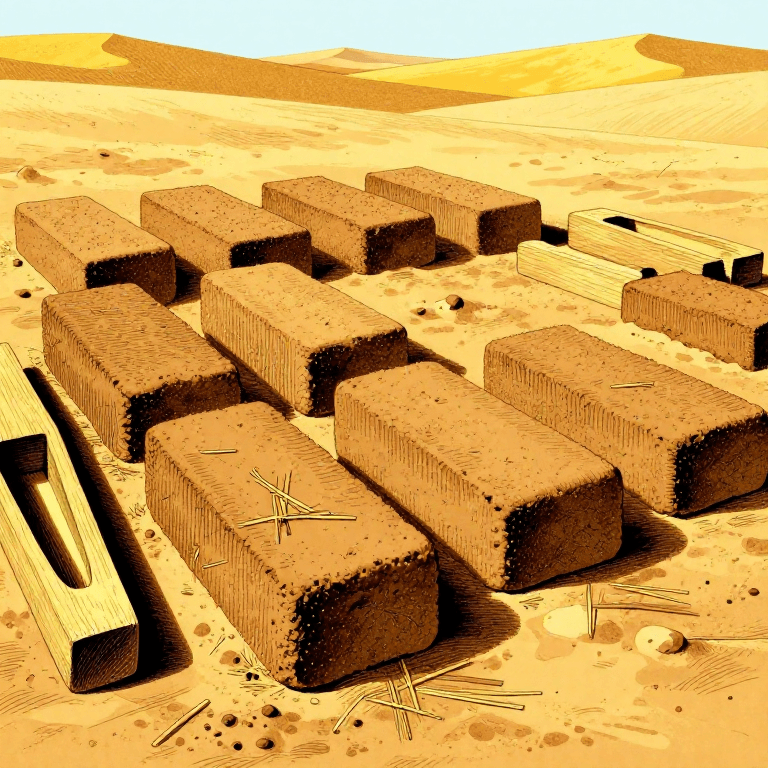
Unburnt brick as Vitruvius describes it in Book II: smooth white-chalky or red clay (never sandy or pebbly) with straw, moulded in spring or autumn so it dries evenly, and left two years before building, in the Roman Lydian size of 1 1/2 by 1 foot or the Greek four- and five-palm squares.
Başlangıç
A day to mould; two years to dry
Talimatlar
1
1
His sizes
His sizes
Jupyter defteri yükleniyor…
2
2
Read Vitruvius
Read Vitruvius
"Bricks will be most serviceable if made two years before using; for they cannot dry thoroughly in less time."
3
3
Choose the clay
Choose the clay
Use white chalky clay, red clay, or even a coarse-grained gravelly clay. Not sandy or pebbly clay or fine gravel: such bricks are heavy, break up in the rain, and the straw will not hold in them.
Bu adım için malzemeler:
 Kil1 adet
Gerekli aletler:
 Kürek
4
4
Temper with straw
Temper with straw
Work the clay with water and straw into a stiff mass (amounts ours).
Bu adım için malzemeler:
Kil1 adet Kıyılmış Saman1 adet
 Su1 adet
Gerekli aletler:
 Çapa
 Kova
5
5
Mould in spring or autumn
Mould in spring or autumn
Mould the bricks in spring or autumn, never summer, when the sun bakes the face dry over a wet core and the shrinking cracks them. Size: Lydian 1 1/2 x 1 ft (about 440 x 300 mm) for Roman work, or the Greek tetradoron (4 palms square) and pentadoron (5 palms square). Make half-bricks too.
Gerekli aletler:
 Ahşap tuğla kalıbı
6
6
Dry two years
Dry two years
Stack and let them dry two years before building. Fresh bricks shrink and settle in the wall, the stucco parts from them and breaks off. (At Utica only bricks five years old, passed by a magistrate, were allowed.)
Gerekli aletler:
Kürek7
7
Troubleshooting
Troubleshooting
Brick troubleshooting.
Flow
Loading...
8
8
History and honest limits
History and honest limits
From Vitruvius, **The Ten Books on Architecture**, Book II ch. III, tr. M. H. Morgan (1914), pp. 42-44 (checked on the archive.org scan vitruviustenbook00vitruoft). He gives no thickness, mould or straw amount; those and the metric sizes (Roman foot taken as about 296 mm) are ours.
Bu planla yapılan
İlgili Blueprint'ler
Bu blueprint'ler bilgi paylaşır — teknikler, malzemeler veya ilkeler

CC0 Kamu Malı
Bu plan CC0 lisansıyla yayınlanmıştır. İzin almadan kopyalayabilir, değiştirebilir, dağıtabilir ve herhangi bir amaçla kullanabilirsiniz.
Planı üzerinden ürün satın alarak Maker'ı destekleyin, böylece Maker Komisyonu Satıcılar tarafından belirlenen komisyonu kazanırlar veya bu Planın yeni bir versiyonunu oluşturun ve gelir paylaşımı için kendi Planınıza bağlantı olarak ekleyin.