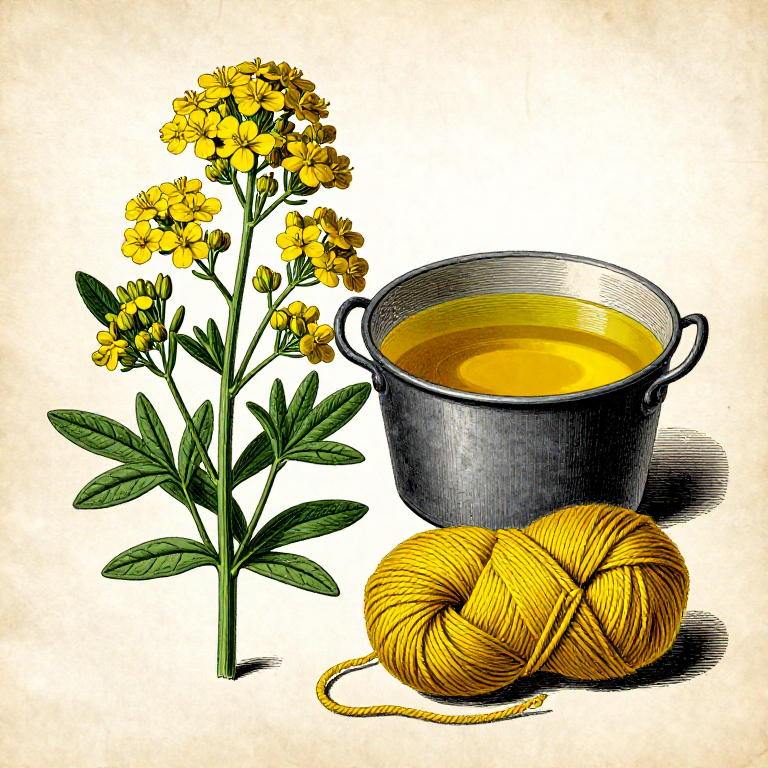


Extracting Yellow Dye from Weld Plant — The Oldest European Yellow
Інструкції
Harvest Weld
Harvest Weld
Harvest weld stalks (Reseda luteola) when the plant is at full flower — this is peak luteolin content
Матеріали для цього кроку:
 Резеда жовта (Reseda luteola)200 grams
Необхідні інструменти ({count})
 Ніж
НіжChop Plant Material
Chop Plant Material
Chop the stalks, leaves, and flowers into 5 cm pieces to increase the surface area for extraction
Необхідні інструменти ({count})
НіжWeigh Plant and Fibre
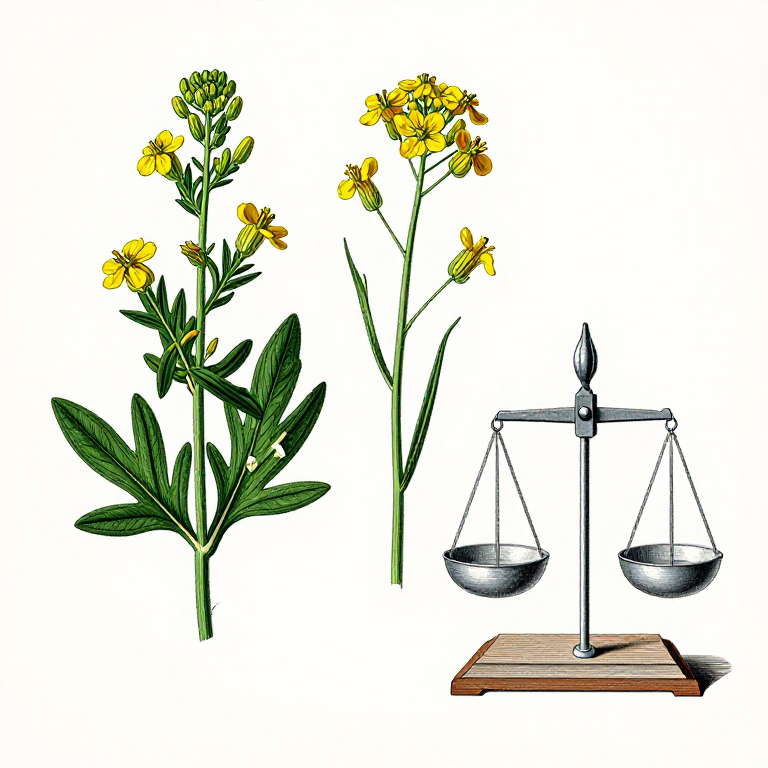
Weigh Plant and Fibre
Weigh the chopped plant material — you need equal weight of plant to the weight of fibre you plan to dye
Add to Cold Water
Add to Cold Water
Fill a dye pot with cold water and add the chopped weld, submerging all plant matter completely
Матеріали для цього кроку:
 Вода10 літрів
Необхідні інструменти ({count})
 Каструля для бульйону
Heat to 80°C
Heat to 80°C
Heat the dye bath slowly to 80°C — do not let it boil, as temperatures above 90°C dull the yellow
Матеріали для цього кроку:
 Дрова1 пучок
Hold Temperature
Hold Temperature
Maintain the bath at 80°C for 45 minutes to extract the luteolin pigment from the plant cells
Strain the Bath
Strain the Bath
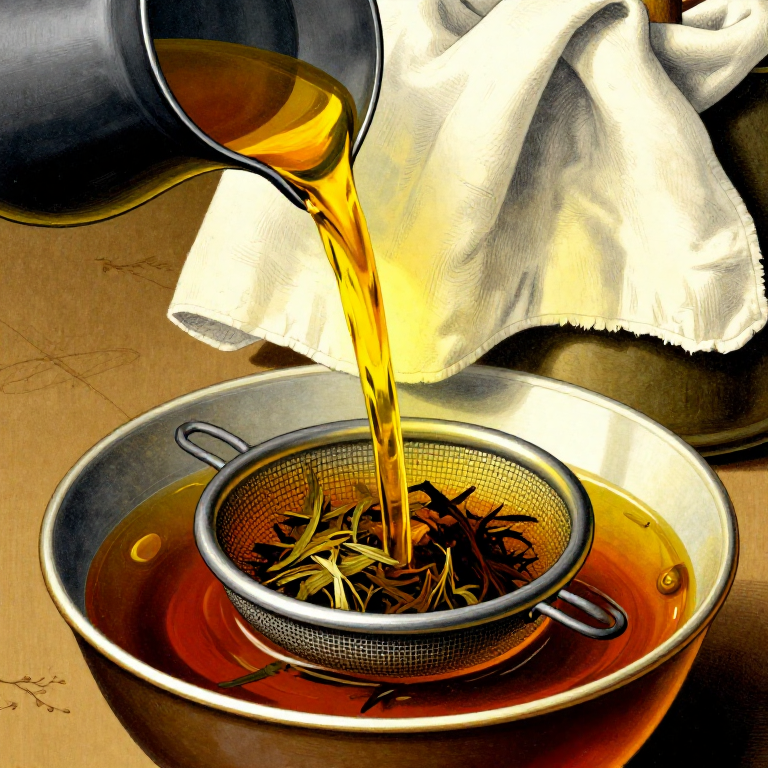
Strain the dye bath through cloth to remove all plant matter — the liquid should be a deep gold
Необхідні інструменти ({count})
 Тканина (для проціджування)
Reheat Strained Dye
Reheat Strained Dye
Return the strained dye liquid to the pot and reheat to 70°C
Dissolve Alum
Dissolve Alum
Dissolve alum at 10% weight-of-fibre (e.g. 20 g alum for 200 g wool) in a cup of hot water
Матеріали для цього кроку:
 Галун (калієвий алюмокалієвий)20 grams
Add Alum to Bath
Add Alum to Bath
Pour the dissolved alum into the dye bath and stir thoroughly to distribute it evenly
Wet the Wool
Wet the Wool
Wet the wool or fabric thoroughly in warm water before adding it to the dye bath
Матеріали для цього кроку:
 Сира вовна200 grams
Submerge in Dye
Submerge in Dye
Lower the wetted fabric gently into the alum-dye bath, pressing it below the surface
Dye at 80°C
Dye at 80°C
Heat gently to 80°C and hold for 1 hour, turning the fabric every 10 minutes with a stick
Check Colour
Check Colour
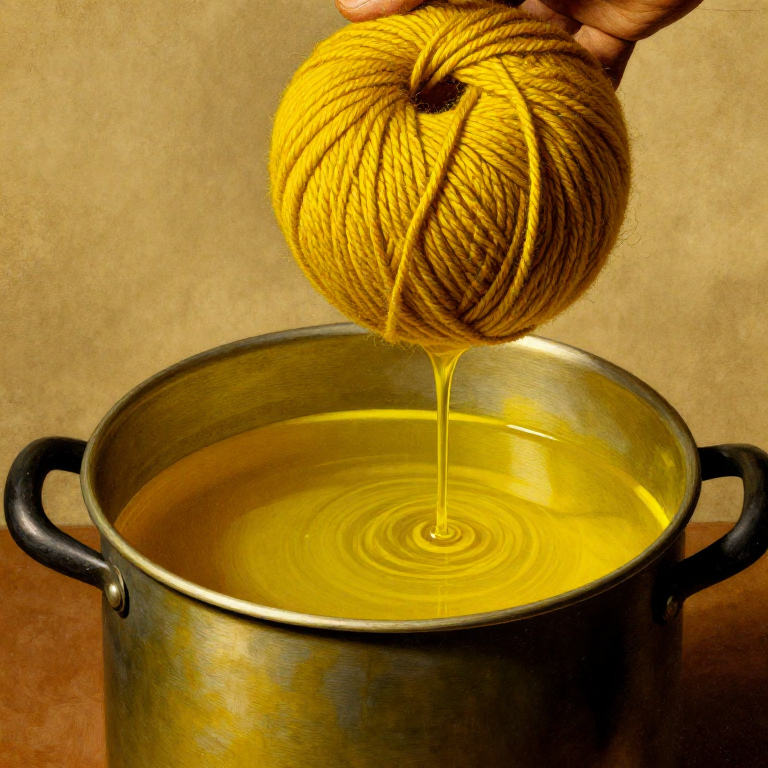
Lift a corner of the fabric to check the colour — it should be a rich golden yellow when wet
Remove Fabric
Remove Fabric
Remove the dyed fabric from the pot when the desired depth of colour is reached
Rinse Progressively
Rinse Progressively
Rinse the fabric in progressively cooler water until the rinse water runs clear
Матеріали для цього кроку:
Вода10 літрівSqueeze Gently
Squeeze Gently
Squeeze out excess water gently between your palms — never wring or twist the dyed wool
Dry in Shade
Dry in Shade
Hang the dyed fabric in shade to dry completely — direct sun on wet dye can cause uneven fading
Матеріали
5- 200 gramsЗаповнювач
- 10 літрівЗаповнювач
- 1 пучокЗаповнювач
- 20 gramsЗаповнювач
- 200 gramsЗаповнювач
Матеріали з пов'язаних креслень

CC0 Суспільне надбання
Це креслення випущено під ліцензією CC0. Ви можете вільно копіювати, змінювати, поширювати та використовувати цю роботу для будь-яких цілей без запиту дозволу.
Підтримайте мейкера, купуючи продукти через його креслення, де він отримує Комісію мейкера встановлену вендорами, або створіть нову ітерацію цього креслення та включіть його як зв'язок у власне креслення для розподілу доходу.