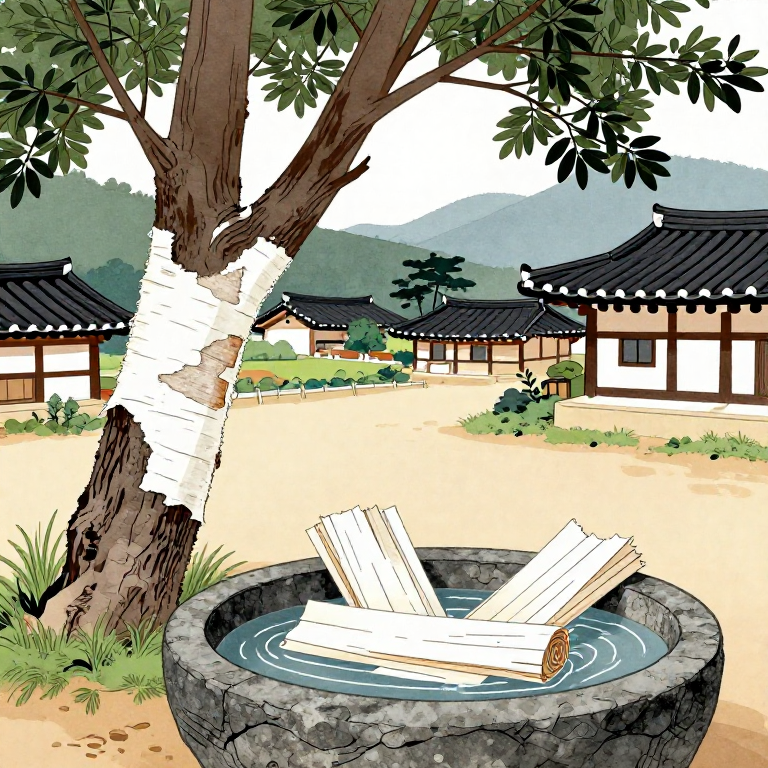


닥나무 껍질 벗기기 — 한지의 원료 수확
Інструкції
닥나무 알아보기
닥나무 알아보기
닥나무(Broussonetia papyrifera)는 뽕나무과에 속하는 낙엽수로, 높이 3~10m까지 자랍니다. 잎은 크고 거칠며, 어린 가지에 잔털이 있습니다. 한국 전역에서 자라며, 특히 전라도와 경상도에서 한지용으로 재배합니다.
벌채 시기 확인
벌채 시기 확인
닥나무 벌채는 11월에서 1월 사이, 잎이 모두 진 후에 합니다. 이 시기에는 수액의 흐름이 멈추어 껍질이 깨끗하게 벗겨지고, 섬유질의 품질이 가장 좋습니다. 봄이나 여름에 벤 닥나무는 섬유가 약합니다.
1~3년생 가지 선택
1~3년생 가지 선택
한지용 섬유는 1~3년생 가지에서 얻습니다. 직경 1.5~3cm, 곧고 가지가 적은 것을 선택합니다. 너무 굵은(3년 이상) 가지는 섬유가 거칠고, 너무 가는(1년 미만) 가지는 양이 적습니다.
Матеріали для цього кроку:
 Гілки паперової шовковиці (1-3 роки)20 штук
가지 자르기
가지 자르기
전지가위 또는 낫으로 지면에서 5~10cm 높이에서 자릅니다. 비스듬히 자르면 빗물이 고이지 않아 그루터기가 썩지 않습니다. 다음 해에 같은 그루터기에서 새 가지가 자랍니다.
Необхідні інструменти ({count})
 Секатор
 Серп
Серп가지를 일정 길이로 자르기
가지를 일정 길이로 자르기
벤 가지를 1~1.2m 길이로 자릅니다. 한지 제작에서 표준적으로 사용하는 길이입니다. 곁가지는 모두 잘라냅니다.
Необхідні інструменти ({count})
 Пилка
Пилка가지 묶기
가지 묶기
자른 가지 20~30개를 한 묶음으로 묶습니다. 짚이나 끈으로 양쪽 끝과 중간을 묶어 고정합니다. 묶음이 너무 크면 찜통에 넣기 어렵습니다.
Матеріали для цього кроку:
 Обв'язувальний шпагат3 метрів
가지 찌기 (증자)
가지 찌기 (증자)
큰 솥이나 드럼통에 물을 넣고 그 위에 닥나무 묶음을 세워 놓습니다. 뚜껑을 덮고 2~3시간 동안 쪄냅니다. 증기로 쪄야 껍질이 부드러워져 깨끗하게 벗겨집니다.
Матеріали для цього кроку:
 Вода30 літрів
Необхідні інструменти ({count})
 Великий котел для парування
 Дрова
Дрова껍질 벗기기
껍질 벗기기
찐 가지가 아직 따뜻할 때, 윗부분에 칼집을 내고 아래로 당기면 껍질이 통째로 벗겨집니다. 한 손으로 가지를 잡고 다른 손으로 껍질을 잡아당깁니다. 식으면 벗기기 어려우니 빨리 작업합니다.
Необхідні інструменти ({count})
 Маленький ніж
 Бавовняні рукавички
흑피(黑皮) 분리
흑피(黑皮) 분리
벗긴 껍질은 바깥 검은 층(흑피)과 안쪽 흰 층(백피)으로 구성됩니다. 칼로 흑피를 긁어냅니다. 흑피가 남으면 한지에 검은 반점이 생기므로 깨끗이 제거해야 합니다.
Необхідні інструменти ({count})
 Скребковий ніж
백피(白皮) 확인
백피(白皮) 확인
흑피를 제거한 백피는 크림색에서 연한 갈색을 띱니다. 손으로 찢어보면 길고 질긴 섬유가 보입니다. 이것이 한지의 원료인 인피(靭皮) 섬유입니다. 섬유 길이가 길수록 강한 한지를 만들 수 있습니다.
백피 씻기
백피 씻기
흐르는 차가운 물에 백피를 씻어 잔여 찌꺼기와 수액을 제거합니다. 가볍게 문질러 씻되, 섬유를 손상시키지 않도록 주의합니다.
Матеріали для цього кроку:
 Дистильована вода20 літрів
Необхідні інструменти ({count})
 Таз для промивання
백피 건조
백피 건조
씻은 백피를 펴서 햇볕에 건조합니다. 빨래줄에 걸거나 대나무 선반 위에 펼칩니다. 2~3일간 완전히 건조될 때까지 말립니다. 비가 오면 즉시 거둡니다.
Необхідні інструменти ({count})
 Сушарка для посуду
 Мотузка для білизни
건조 상태 확인
건조 상태 확인
완전히 건조된 백피는 딱딱하고 가벼우며, 구부리면 '딱' 소리가 납니다. 아직 축축한 부분이 있으면 곰팡이가 필 수 있으니 완전히 건조시켜야 합니다.
건조된 백피 묶어 보관
건조된 백피 묶어 보관
건조된 백피를 가지런히 모아 끈으로 묶습니다. 통풍이 잘 되는 서늘한 장소에 보관합니다. 습기와 직사광선을 피하면 1년 이상 보관할 수 있습니다. 사용할 때 물에 불려 사용합니다.
Матеріали для цього кроку:
Обв'язувальний шпагат2 метрів닥나무 그루터기 관리
닥나무 그루터기 관리
벌채 후 그루터기 주변의 잡초를 제거합니다. 건강한 그루터기에서는 봄에 5~8개의 새 가지가 자랍니다. 3년 후에 다시 수확할 수 있으며, 한 그루터기에서 30년 이상 반복 수확이 가능합니다.
Матеріали
6- Заповнювач
- 5 метрівЗаповнювач
- 30 літрівЗаповнювач
- 20 літрівЗаповнювач
- 1 штукаЗаповнювач
- 1 штукаЗаповнювач
Необхідні інструменти
11- Заповнювач
- Заповнювач
- Заповнювач
- Заповнювач
- Заповнювач
- Заповнювач
- Заповнювач
- Заповнювач
- Заповнювач
- Заповнювач
- Заповнювач
CC0 Суспільне надбання
Це креслення випущено під ліцензією CC0. Ви можете вільно копіювати, змінювати, поширювати та використовувати цю роботу для будь-яких цілей без запиту дозволу.
Підтримайте мейкера, купуючи продукти через його креслення, де він отримує Комісію мейкера встановлену вендорами, або створіть нову ітерацію цього креслення та включіть його як зв'язок у власне креслення для розподілу доходу.