МИСТЕЦТВО
КРАСА ТА ЗДОРОВ'Я
РЕМЕСЛО
КУЛЬТУРА ТА ІСТОРІЯ
РОЗВАГИ
СЕРЕДОВИЩЕ
ЇЖА ТА НАПІЇ
ЗБОРНА ІНЖЕНЕРІЯ
НАУК
СПОРТ
ТЕХНОЛОГІЯ
НОСИМО
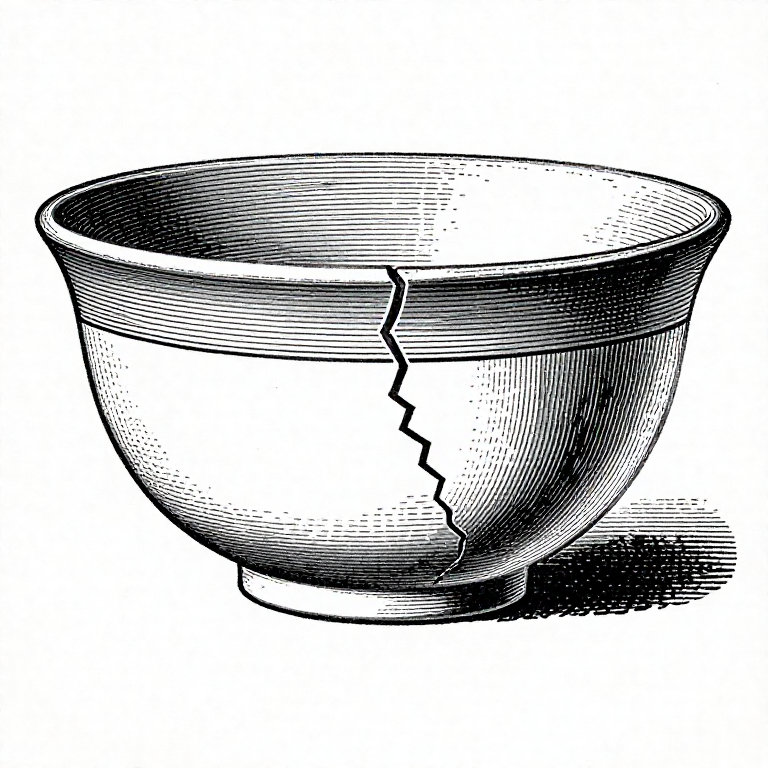
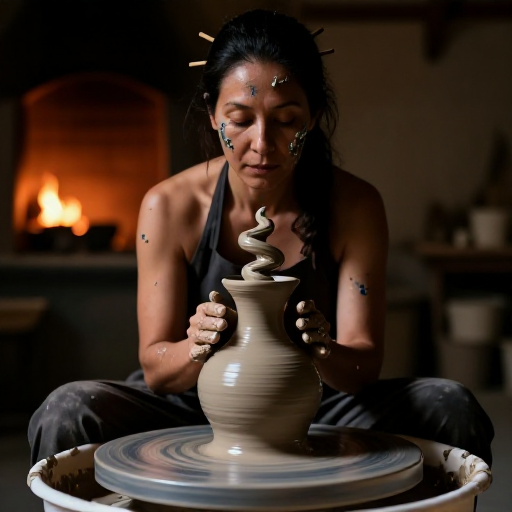

Even Walls, Even Drying: Why Pots Crack, and Where
A crack is clay being pulled harder than it can hold. That pull comes from one part shrinking while another part, still wetter, refuses to move — so every crack is a record of uneven drying, and uneven drying is nearly always a record of uneven thickness.
Which makes wall thickness the quiet skill underneath everything. A pot of even thickness dries at one rate throughout and is almost impossible to crack; a pot with a heavy base and thin walls is difficult to save however carefully it is dried.
The useful part is that cracks are DIAGNOSTIC. Where a crack appears tells you what went wrong and when, and that is worth far more than knowing that cracking is bad.
Середній
3 hours
Інструкції
1
1
Feel the thickness, and check the base
Feel the thickness, and check the base
Pinch the wall between finger and thumb as you work. On a thrown pot the wall should be roughly even from base to rim, or slightly thicker at the bottom where it carries the weight.
The base is where thickness hides. It is under the pot, it feels solid, and it is very easy to leave twice as thick as the walls — after which the walls dry, shrink and are held by a base that is still wet.
Check it with a needle tool: push it through the base until it touches the wheel head, mark where your finger sits on the needle, and pull it out. A few millimetres more than the wall is right; a centimetre is a pot that will crack or be a nuisance to trim.
Матеріали для цього кроку:
 Глина2 кг
Необхідні інструменти ({count})
 Набір гончарних інструментів
 Цифровий штангенциркуль 6 дюймів
 Дерев'яне гончарне ребро
2
2
Where a crack appears tells you what happened
Where a crack appears tells you what happened
An S-CRACK in the middle of the base, often only visible after firing, means either the base was too thick and dried last, or the clay was not compressed there while throwing. Ribbing the inside of the base firmly before pulling the walls prevents most of them.
A crack at a HANDLE or a spout means the two parts were at different states when joined, or the handle dried faster than the body. Cover the handles, not the pot.
A crack around the RIM means the rim dried far ahead of the wall. A crack that appeared only in the kiln, with sharp clean edges, usually means water still in the clay — a drying fault presenting itself late rather than a firing fault.
Матеріали для цього кроку:
Глина2 кгНеобхідні інструменти ({count})
Набір гончарних інструментівДерев'яне гончарне ребро3
3
Compress the base, and compress the rim
Compress the base, and compress the rim
COMPRESSION is running a rib or fingers firmly across clay to push its particles together. It is what stops an S-crack, and it costs one pass across the inside of the base before the walls go up.
The rim gets the same treatment for a different reason: a compressed rim is denser, stronger and far less likely to go wavy or split, and it is the part of the pot a hand and a mouth touch most.
Compress while the clay is still plastic. Once it stiffens, running a rib over it only smears the surface and does nothing to the particles underneath.
Матеріали для цього кроку:
Глина2 кг Вода1 літр
Необхідні інструменти ({count})
Дерев'яне гончарне ребро Губка
Губка Гончарний круг
4
4
Add grog when the piece is big or thick
Add grog when the piece is big or thick
GROG is fired clay crushed to a gritty powder and mixed back into plastic clay. It has already shrunk everything it is going to shrink, so it reduces the total shrinkage and gives water channels to escape through.
That makes grogged clay much more forgiving for large pieces, thick sculpture and anything with an awkward join. The trade is texture: grog is gritty to throw, hard on the hands, and shows in the finished surface.
Fine work takes fine smooth clay and careful drying; big work takes grog and less worry. Choosing between them is a real decision rather than a question of quality — which is the same choice as quartersawn versus flatsawn timber.
Матеріали для цього кроку:
 Шамот (потовчена випалена кераміка)1 кгГлина3 кг
Необхідні інструменти ({count})
 Робоча парусина для кераміки
 Прецизійні ваги
 Струна для різання глини
Матеріали
3- 9 кгЗаповнювач
- 1 літрЗаповнювач
- Заповнювач
Необхідні інструменти
8- Заповнювач
- Заповнювач
- Заповнювач
- Заповнювач
- Заповнювач
- Заповнювач
- Заповнювач
- Заповнювач
Пов'язані креслення
Ці креслення діляться знаннями — техніки, матеріали або принципи
CC0 Суспільне надбання
Це креслення випущено під ліцензією CC0. Ви можете вільно копіювати, змінювати, поширювати та використовувати цю роботу для будь-яких цілей без запиту дозволу.
Підтримайте мейкера, купуючи продукти через його креслення, де він отримує Комісію мейкера встановлену вендорами, або створіть нову ітерацію цього креслення та включіть його як зв'язок у власне креслення для розподілу доходу.