
МИСТЕЦТВО
КРАСА ТА ЗДОРОВ'Я
РЕМЕСЛО
КУЛЬТУРА ТА ІСТОРІЯ
РОЗВАГИ
СЕРЕДОВИЩЕ
ЇЖА ТА НАПІЇ
ЗБОРНА ІНЖЕНЕРІЯ
НАУК
СПОРТ
ТЕХНОЛОГІЯ
НОСИМО
Rosewater Distillation — Distilling Damask Rose for Pure Rosewater
English
UstadPich

Створено

UstadPich

23. квітень 2026IR
60
0
0
0
0

Rosewater Distillation — Distilling Damask Rose for Pure Rosewater

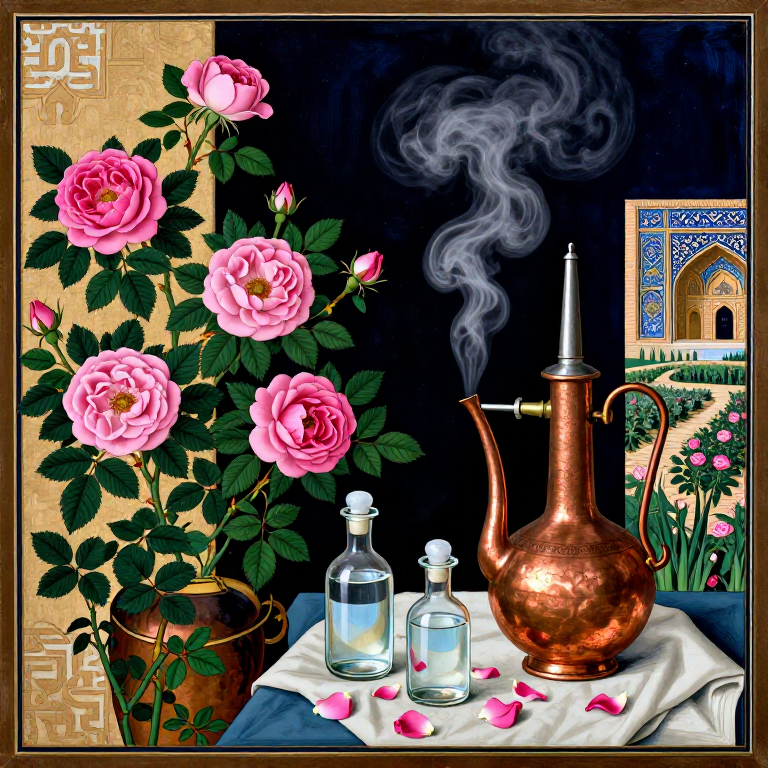
Comprehensive guide to traditional Iranian rosewater distillation from Damask rose (Rosa damascena). Iran is the world's largest producer of rosewater, with Kashan and Qamsar in Isfahan province being the centre of this industry. The 30-petalled Damask rose blooms in late spring for about 20 days and must be harvested at dawn.

Середній
4-6 hours per batch

Інструкції

1

Understanding the Damask Rose

The Damask rose (Rosa damascena) is a species of the rose family native to Iran, with a cultivation history of over 2,500 years. The flower has 30 pink petals and produces a very strong, distinctive fragrance. Damask roses grow best in arid and semi-arid regions with hot climates and calcareous soil. Main cultivation areas in Iran include Kashan, Qamsar, Niasar, Lalehzar in Kerman, and Meymand in Fars. Iran produces approximately 15,000 tons of rosewater annually.
2

Determining the Right Harvest Time

The blooming season for Damask roses in Iran is from mid-Ordibehesht to early Khordad (mid-May to early June), lasting only about 20 days. Harvesting must be done at dawn, between 4 and 7 AM. During these hours, the concentration of volatile essential oils in the petals is at its peak. After sunrise, as temperatures rise, the oils evaporate and petal quality declines. Flowers that have just opened (not buds or wilted) provide the best quality.
3

Picking the Petals

Pick the flowers gently by hand from the stem. Avoid crushing, pressing, or crumpling the petals as mechanical damage destroys the essential oils. Pick the flowers whole (with petals) and place them in wicker or cloth baskets. Do not use plastic baskets as they cause sweating and spoilage of the petals. Petals should be distilled within 2 to 3 hours of harvest to preserve quality.

Матеріали для цього кроку:

Свіжі квітки Rosa damascenaСвіжі квітки Rosa damascena35 кг

Необхідні інструменти ({count})

Лозовий кошик для збирання врожаюЛозовий кошик для збирання врожаю
4

Preparing the Copper Distillation Apparatus

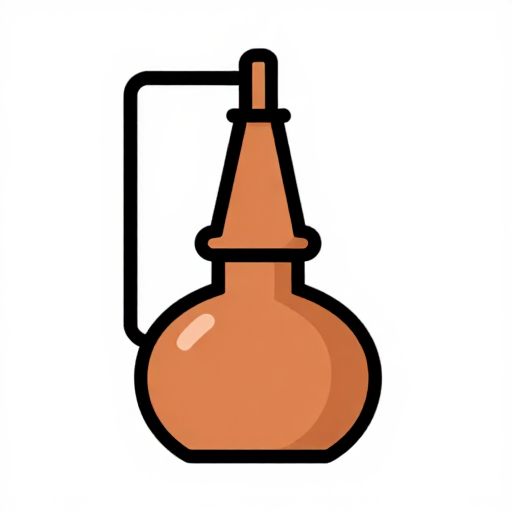
The traditional Iranian distillation apparatus (aragh-kesh) is made of copper and consists of three main parts: the copper pot (where petals and water are placed), the conical lid (for collecting steam), and the coiled copper tube (condenser) that passes through a cold water reservoir. Before use, seal all joints with flour-and-water paste to prevent steam leaks. The pot must be completely clean and free of residue from previous distillations.

Матеріали для цього кроку:

Замазка з борошна й водиЗамазка з борошна й води500 г

Необхідні інструменти ({count})

Мідний аламбікМідний аламбік
Набір щіток для чищення деталейНабір щіток для чищення деталей
5

Filling the Pot with Petals and Water

Pour fresh petals into the copper pot. The standard ratio is 30-40 kilograms of petals to 60-80 liters of water. The water must be clean and chlorine-free (well or spring water is preferred). Petals should be completely submerged. Do not fill the pot more than two-thirds of its capacity to leave sufficient space for steam production.

Матеріали для цього кроку:

Чиста джерельна водаЧиста джерельна вода70 літрів
6

Sealing and Starting the Heating

Place the lid on the pot and thoroughly seal all joints and connections with flour-and-water paste. This step is critical; any steam leak means loss of aromatic essential oils. Light the fire under the pot and gradually increase the heat. The goal is a gentle boil, not a vigorous one. Vigorous boiling burns the petals and produces an unpleasant odor in the rosewater. Reaching boiling point takes approximately 45-60 minutes.

Матеріали для цього кроку:

ДроваДрова15 кг

Необхідні інструменти ({count})

ВогнищеВогнище
7

Controlling the Distillation Process

Once boiling begins, steam carrying volatile compounds (citronellol, geraniol, nerol) separates from the petals and is directed through the conical lid to the coiled tube. The coiled tube passes through the cold water reservoir, and the steam condenses into liquid (rosewater). Keep the fire intensity steady so that rosewater drops flow at a uniform rate (approximately one drop per second). The condenser water must be regularly replaced to keep it cold.

Матеріали для цього кроку:

Холодна вода для холодильникаХолодна вода для холодильника100 літрів
8

Collecting the Condensate (Raw Rosewater)

Collect the liquid exiting the condenser tube in clean glass vessels. Do not use plastic or metal containers as they react with the essential oil compounds. The distillation process takes approximately 3-4 hours. From every 30-40 kilograms of petals, approximately 10 liters of rosewater is obtained. The first-distillation rosewater is called yek-atesheh (single-fire).

Необхідні інструменти ({count})

Скляні приймачіСкляні приймачі
9

Re-distillation for Double-Distilled Rosewater

To produce higher-quality rosewater (do-atesheh / double-fire), re-distill the single-fire rosewater with fresh new petals instead of plain water. Double-fire rosewater has a higher essential oil concentration and produces a stronger, more lasting fragrance. This method is used in Kashan and Qamsar to produce the finest rosewater. Double-fire rosewater costs approximately twice as much as regular rosewater.

Матеріали для цього кроку:

Пелюстки Rosa damascena для другої перегонкиПелюстки Rosa damascena для другої перегонки35 кг

Необхідні інструменти ({count})

Мідний аламбікМідний аламбік
10

Separating the Rose Essential Oil

During distillation, a thin layer of essential oil (rose otto or attar of rose) forms on the surface of the rosewater. This oil is extremely valuable (5,000-10,000 dollars per kilogram). Using a spoon or glass pipette, carefully skim the oil from the rosewater surface. Producing 1 kilogram of rose oil requires approximately 3,000-3,500 kilograms of petals. Store the separated oil in dark-colored glass vials.

Необхідні інструменти ({count})

Скляна піпеткаСкляна піпетка
Флакон із темного склаФлакон із темного скла
11

Testing Rosewater Quality

Quality rosewater must be clear and free of suspended particles. Its color ranges from colorless to slightly pale yellow. The fragrance should be natural, strong, and free of burnt or fermented odors. For a simple test, pour a few drops of rosewater on the back of the hand: pure rosewater is quickly absorbed by the skin and its fragrance is lasting. Diluted rosewater evaporates quickly with a weak fragrance. If you shake the rosewater, the foam produced should disappear within a few seconds.
12

Bottling the Rosewater

Pass the finished rosewater through a fine cloth filter to remove any fine particles. Then pour into clean, sterilized glass bottles. Dark glass bottles (brown or dark green) are preferable because light causes decomposition of aromatic compounds. Seal bottle caps tightly. Label each bottle with the distillation date, type (single-fire or double-fire), and quantity.

Матеріали для цього кроку:

Темні скляні пляшечки з кришкамиТемні скляні пляшечки з кришками10 штук
Фільтр із тонкої тканиниФільтр із тонкої тканини1 штука

Необхідні інструменти ({count})

Ділильна лійкаДілильна лійка
13

Preservation and Storage

Store bottled rosewater in a cool, dry, dark place. The ideal temperature is 15-20 degrees Celsius. Avoid direct sunlight and high heat. Pure, properly stored rosewater retains its quality for 2 years or more. The fragrance of rosewater in the first months after distillation is very sharp and becomes milder and more pleasant over time (natural curing).
14

Uses and Cleaning the Equipment

Iranian rosewater has wide-ranging uses: in food and sweets (faloodeh, ice cream, baklava), in traditional medicine (heart tonic, calming, anti-inflammatory), in religious and traditional ceremonies, and in the cosmetics and hygiene industry. After distillation, wash the pot and all copper parts with warm water and vinegar, then dry. The residue of distilled petals can be used as organic fertilizer in the garden. Store the copper apparatus in a dry place to prevent corrosion.

Матеріали для цього кроку:

Білий оцет для чищенняБілий оцет для чищення500 мл

Необхідні інструменти ({count})

Набір щіток для чищення деталейНабір щіток для чищення деталей

Матеріали

11

Необхідні інструменти

8

CC0 Суспільне надбання

Це креслення випущено під ліцензією CC0. Ви можете вільно копіювати, змінювати, поширювати та використовувати цю роботу для будь-яких цілей без запиту дозволу.

Підтримайте мейкера, купуючи продукти через його креслення, де він отримує Комісію мейкера встановлену вендорами, або створіть нову ітерацію цього креслення та включіть його як зв'язок у власне креслення для розподілу доходу.

Обговорення

(0)

Увійти щоб приєднатися до обговорення

Завантаження коментарів...