
Making Batik Wax Java — Mixture of Klowong Wax and Traditional Tembokan
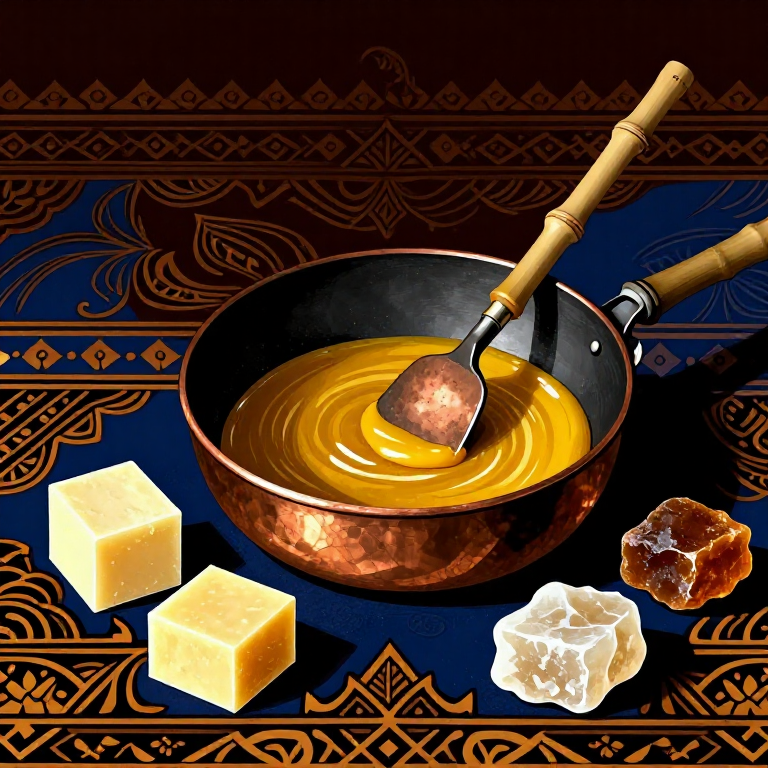
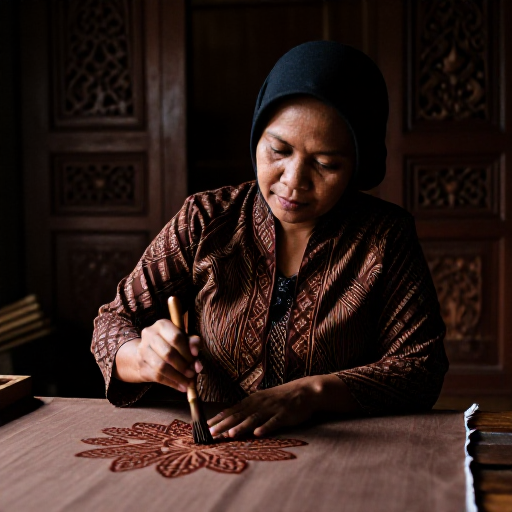
Complete guide to making batik wax (wax for batik) for traditional Javanese written batik. Batik wax is a mixture of beeswax, paraffin, and resin (damar resin) with a specific recipe for different resist effects. Klowong wax (for lines/outline) uses more beeswax so it is flexible and does not break easily. Tembokan wax (for covering large areas) uses more paraffin so it is brittle and breaks easily — these cracks create the characteristic 'crackle' effect in batik. Temperature control is critical: 60-70°C for application using a canting tool, if too hot the wax will drip and be messy, if too cold the wax will not penetrate the fabric. Javanese written batik has been recognized UNESCO as a Human Intangible Cultural Heritage since 2009.
Інструкції
Understand batik wax and its functions
Understand batik wax and its functions
Malam (batik wax) is a resist material used to cover fabric so that dye cannot penetrate the covered areas. This technique is called wax-resist dyeing — a principle that has been used in Java for over 1,000 years. Batik wax is not ordinary wax, but a specific mixture of several materials with different properties. The main ingredients are beeswax, paraffin, and gondorukem (damar resin, from Shorea sp. trees). Each ingredient has a role: beeswax makes the wax flexible and adheres strongly to fabric; paraffin makes the wax harder and easier to crack (for the crackle effect); damar resin makes the wax harder and increases resistance to prolonged dyeing processes. The mixture proportions vary depending on the type of wax desired — malam klowong, malam tembokan, and malam biron.
Select and prepare beeswax
Select and prepare beeswax
Матеріали для цього кроку:
 Beeswax Block (pure, yellow)2 кг
Необхідні інструменти ({count})
 Kitchen Scale (digital, 0-5 kg)
Prepare paraffin
Prepare paraffin
Матеріали для цього кроку:
 Fully Refined Paraffin Wax (52-58°C melt point)2 кг
Необхідні інструменти ({count})
Kitchen Scale (digital, 0-5 kg)Nyiapake gondorukem (damar resin)
Nyiapake gondorukem (damar resin)
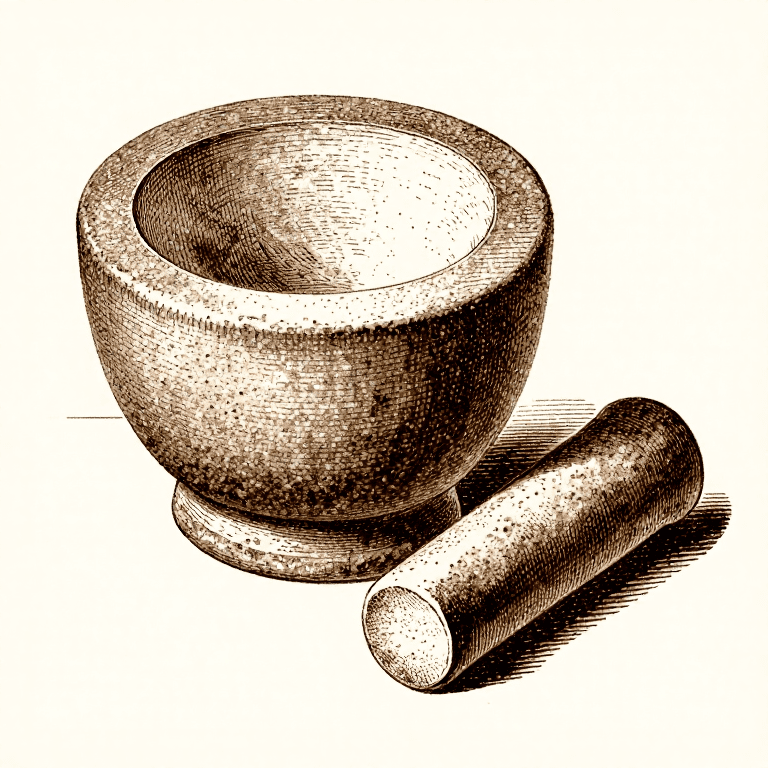
Gondorukem (or damar) is a resin from trees of the genus Shorea (family Dipterocarpaceae), originating from tropical forests in Southeast Asia. The color ranges from clear yellow to light brown, with a hard and brittle (glassy) texture. The softening point is around 75-85°C. Gondorukem makes batik wax harder, increases adhesion to fabric, and increases resistance to prolonged dyeing immersion. Before mixing, gondorukem must be crushed into a coarse powder — large pieces take a long time to melt and do not mix evenly. Crush gondorukem in a mortar or wrap it in cloth and then pound it with a hammer until it breaks into small pieces (size 5-10 mm). If there is too much gondorukem, the wax becomes very hard and is difficult to use with a canting — usually the proportion of gondorukem is only 5-15% of the total mixture.
Матеріали для цього кроку:
 Damar Resin (gondorukem, Shorea sp.)500 gram
Необхідні інструменти ({count})
 Stone Mortar and PestleKitchen Scale (digital, 0-5 kg)
Evening wax recipe klowong (for outline lines)
Evening wax recipe klowong (for outline lines)
Klowong wax is used for drawing main lines (outline) of batik motifs using a tulis canting. This wax must be flexible, stick strongly, and not crack easily so that dye does not leak through cracks. Traditional Central Javanese klowong wax recipe (Solo/Yogyakarta): beeswax 60-70%, paraffin 20-25%, rosin 10-15%. Example for 1 kg of klowong wax: beeswax 650 grams, paraffin 200 grams, rosin 150 grams. Melt the beeswax first in a pan (highest melting point), then add paraffin (melts faster), finally add rosin powder little by little while stirring evenly. Rosin added too much at once can cause the wax to foam (berbusa). Total mixture temperature must not exceed 100°C — if it boils, beeswax is damaged and the wax becomes easily scorched.
Матеріали для цього кроку:
Beeswax Block (pure, yellow)650 gramFully Refined Paraffin Wax200 gramDamar Resin (gondorukem)150 gramНеобхідні інструменти ({count})
 Brass Wax Pot
 Wooden Stirring Stick
 Charcoal Stove
Malam tembokan recipe (for covering large areas)
Malam tembokan recipe (for covering large areas)
Матеріали для цього кроку:
Fully Refined Paraffin Wax550 gramBeeswax Block (pure, yellow)300 gramDamar Resin (gondorukem)150 gramНеобхідні інструменти ({count})
Brass Wax PotWooden Stirring StickCharcoal StoveProcess of melting and mixing wax
Process of melting and mixing wax
Матеріали для цього кроку:
 Lump Charcoal (hardwood)2 кг
Необхідні інструменти ({count})
Charcoal StoveBrass Wax PotWooden Stirring Stick Cooking Thermometer (0-200°C)
Set wax temperature for canting application
Set wax temperature for canting application
Необхідні інструменти ({count})
Cooking Thermometer (0-200°C)Charcoal StoveTest the wax on a sample cloth
Test the wax on a sample cloth
Матеріали для цього кроку:
 Cotton Fabric Sample (primissima grade)3 штук
Необхідні інструменти ({count})
 Copper Canting Tool (medium spout)
Store the finished wax
Store the finished wax
Матеріали для цього кроку:
 Plastic Storage Container (airtight, 5L)2 штук
Необхідні інструменти ({count})
Wooden Stirring StickRecycle used wax (lorodan wax)
Recycle used wax (lorodan wax)
Матеріали для цього кроку:
 Used Batik Wax (malam lorodan)1 кг
 Coarse Cotton Filter Cloth1 штука
Необхідні інструменти ({count})
Brass Wax Pot Metal LadleCharcoal Stove
Prepare batik tools: canting and wax pan
Prepare batik tools: canting and wax pan
After the wax is ready, prepare the equipment for the batik process. Canting is a small copper tool with a bamboo handle used to draw patterns using melted wax. There are several types of canting according to the size of the spout: canting cecek (small spout, for dots and fine details, diameter 0.5-1 mm), canting klowong (medium spout, for main lines/outline, diameter 1-2 mm), and canting tembokan (large spout, for covering wide areas, diameter 2-4 mm). Clean the canting spout with thin wire to remove remaining frozen wax inside. Prepare a cloth to wipe wax drips from the canting before applying it to the fabric. Place the wax pan on a stove with stable heat, fill with wax pieces, and wait until it melts evenly at a temperature of 60-70°C. Now it is ready to start batik.
Матеріали для цього кроку:
 Cotton Rag (for wiping drips)3 штук
Необхідні інструменти ({count})
 Copper Canting Tool (cecek, fine spout)
 Copper Canting Tool (klowong, medium spout)Copper Canting Tool (tembokan, wide spout)
 Thin Brass Wire (for cleaning spouts)Charcoal StoveBrass Wax Pot
Матеріали
10- 950 gramЗаповнювач
- Заповнювач
- 800 gramЗаповнювач
- Заповнювач
- Заповнювач
- Заповнювач
- Заповнювач
- 1 штукаЗаповнювач
- 3 штукЗаповнювач
- 2 кгЗаповнювач
Необхідні інструменти
11- Заповнювач
- Заповнювач
- Заповнювач
- Заповнювач
- Заповнювач
- Заповнювач
- Заповнювач
- Заповнювач
- Заповнювач
- Заповнювач
- Заповнювач
Пов'язані креслення
Ці креслення діляться знаннями — техніки, матеріали або принципи

CC0 Суспільне надбання
Це креслення випущено під ліцензією CC0. Ви можете вільно копіювати, змінювати, поширювати та використовувати цю роботу для будь-яких цілей без запиту дозволу.
Підтримайте мейкера, купуючи продукти через його креслення, де він отримує Комісію мейкера встановлену вендорами, або створіть нову ітерацію цього креслення та включіть його як зв'язок у власне креслення для розподілу доходу.