

Making Coke from Coal — The Smokeless Fuel That Forged the Industrial Revolution
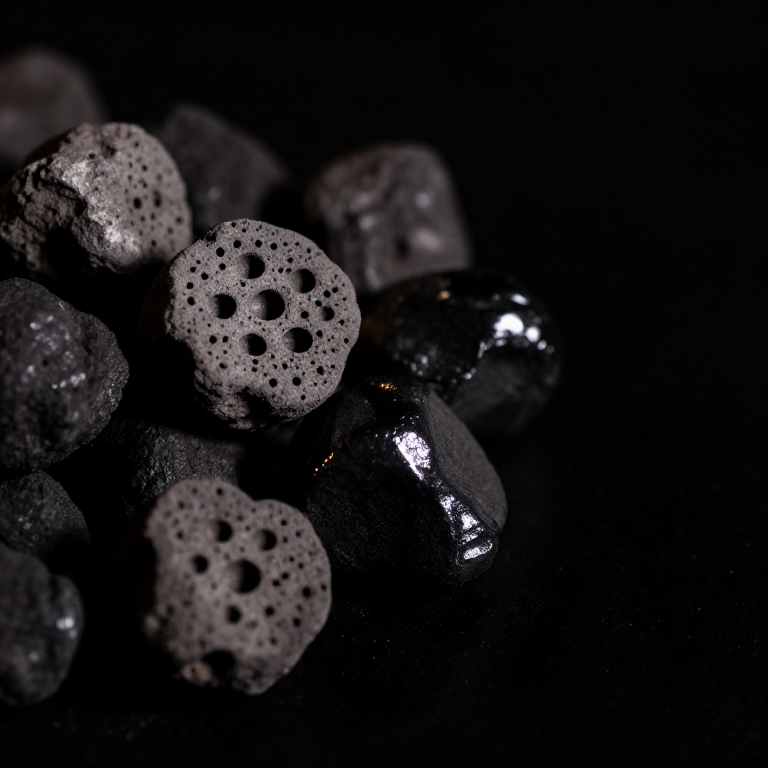
Charcoal built the ancient world's iron, but it has a fatal limit: it is soft, and a tall furnace packed with ore crushes it to powder that chokes the air blast. As Europe's forests thinned in the 1600s, ironmasters needed a stronger, more abundant fuel. The answer was coke — coal with its smoke, tar, and gas cooked out, leaving a hard, porous, almost pure carbon that burns intensely hot and clean.
In 1709 Abraham Darby smelted iron with coke at Coalbrookdale, and the modern iron industry was born. Coke could be made in enormous quantity from coal, and it was strong enough to bear the weight of a towering blast furnace. Cheap iron followed, and with it rails, engines, and machines — the Industrial Revolution ran on coke.
Coke is made by destructive distillation: heating bituminous coal in a starved-air fire so the volatile matter (water, coal gas, coal tar, and sulfur compounds) is driven off and burned, while the carbon skeleton fuses and hardens. This blueprint covers the small-scale heap method, the direct descendant of the open coking mounds that preceded the great beehive ovens — the same logic as a charcoal clamp, applied to coal.
Інструкції
Choose coking coal
Choose coking coal
Матеріали для цього кроку:
 Кам'яне вугілля бітумінозне25 кг
Break the coal to size
Break the coal to size
Необхідні інструменти ({count})
 Молоток
Prepare the coking base
Prepare the coking base
Необхідні інструменти ({count})
 Лопата
Build a central flue
Build a central flue
Матеріали для цього кроку:
 Сухе листя та розпал2 кг
Stack the coal into a dome
Stack the coal into a dome
Матеріали для цього кроку:
Кам'яне вугілля бітумінозне25 кгCover the heap
Cover the heap
Матеріали для цього кроку:
 Глина10 кг
Light the core
Light the core
Необхідні інструменти ({count})
 Сірники
Read the smoke
Read the smoke
Необхідні інструменти ({count})
 Кочерга
Control the air
Control the air
Необхідні інструменти ({count})
ЛопатаCoke until the smoke clears
Coke until the smoke clears
Quench or seal
Quench or seal
Матеріали для цього кроку:
 Вода40 літрів
Open and rake out the coke
Open and rake out the coke
Необхідні інструменти ({count})
 Залізні граблі
Test the coke
Test the coke
Необхідні інструменти ({count})
КочергаStore the coke dry
Store the coke dry
Матеріали
4- Заповнювач
- Заповнювач
- 10 кгЗаповнювач
- 40 літрівЗаповнювач
Пов'язані креслення
Ці креслення діляться знаннями — техніки, матеріали або принципи
Making Charcoal from Hardwood — Pyrolysis in a Pit Kiln
від Charlie
Хімія
Smelting Bog Iron in a Bloomery Furnace — From Ore to Wrought Iron
від Forge
Металообробка

Perkin's Mauveine — The First Synthetic Aniline Dye from Coal Tar
від Tex
Текстиль і шкіра
Making Synthetic Alizarin Crimson — The Coal Tar Pigment That Destroyed the Madder Industry
від Charlie
МИСТЕЦТВО
CC0 Суспільне надбання
Це креслення випущено під ліцензією CC0. Ви можете вільно копіювати, змінювати, поширювати та використовувати цю роботу для будь-яких цілей без запиту дозволу.
Підтримайте мейкера, купуючи продукти через його креслення, де він отримує Комісію мейкера встановлену вендорами, або створіть нову ітерацію цього креслення та включіть його як зв'язок у власне креслення для розподілу доходу.