МИСТЕЦТВО
КРАСА ТА ЗДОРОВ'Я
РЕМЕСЛО
КУЛЬТУРА ТА ІСТОРІЯ
РОЗВАГИ
СЕРЕДОВИЩЕ
ЇЖА ТА НАПІЇ
ЗБОРНА ІНЖЕНЕРІЯ
НАУК
СПОРТ
ТЕХНОЛОГІЯ
НОСИМО
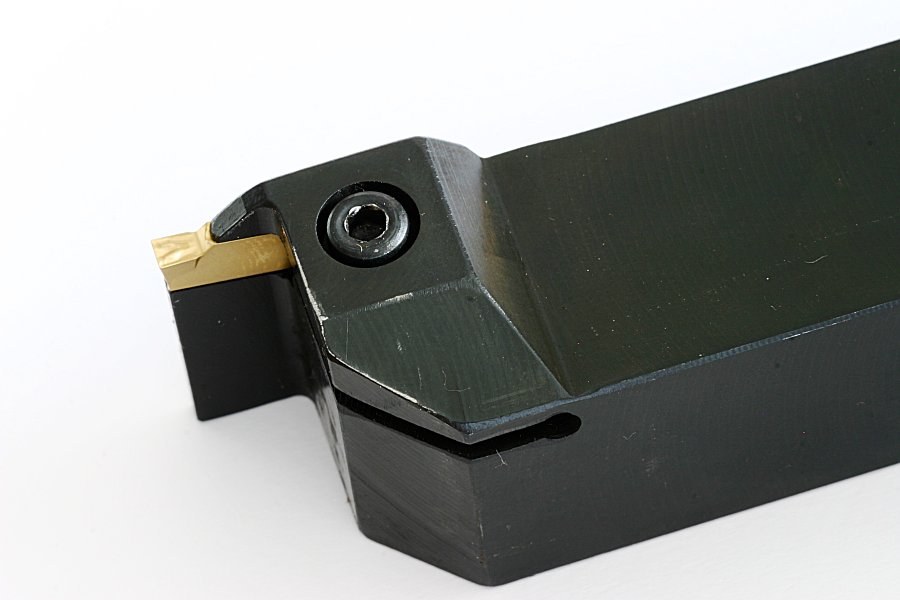


Parting Off: The Cut That Frightens Everyone, and Why It Need Not
Parting off cuts the finished part free from the bar. It is the one lathe operation that beginners avoid, saw by hand instead, and generally regard as a coin toss — because when it goes wrong it goes wrong loudly, jamming the blade and sometimes breaking it.
It has a reputation because almost everything about it is unforgiving. The blade is deep, narrow and unsupported; it works in a slot it cannot escape from; the chips have nowhere to go; and the cutting speed falls toward zero as the tool approaches the centre.
But it is not luck. Parting fails for four identifiable reasons, all of them setup rather than technique, and a setup that addresses those four parts off steel all day.
Середній
3 hours
Інструкції
1
1
Centre height is not approximately anything
Centre height is not approximately anything
Set the parting blade EXACTLY on centre height and check it against a centre in the tailstock.
Too HIGH and the blade rubs its heel on the bottom of the groove, stops cutting, heats up and jams. Too LOW and, as the tool nears the middle, it leaves a pip that eventually snaps — and worse, the work can climb over the tool and drag it under, which is the spectacular failure everyone remembers.
This is the single biggest cause of parting trouble and it takes a minute to rule out. If you part successfully at one height and not another, you have already found your problem.
Необхідні інструменти ({count})
 Токарний верстат по металу
 Відрізний різець
 Штангенциркуль
2
2
Stick out as little blade as the job needs
Stick out as little blade as the job needs
Set the blade to project just past the centre of the bar — enough to reach the axis and a little more, never the full blade.
A parting blade is a cantilever of exactly the kind the between-centres rung measured, and the same cube law applies: double the overhang and you get roughly eight times the spring. A springing blade deflects into the groove wall, grabs, and then releases — which is the chatter and then the jam.
Square the blade to the work too. A blade set even slightly out of square cuts a groove narrower than itself and binds on both sides, and every pass makes it worse.
Необхідні інструменти ({count})
Токарний верстат по металуВідрізний різець Слюсарний кутник
3
3
Slower, and then feed harder than feels right
Slower, and then feed harder than feels right
Run the spindle at roughly half the speed you would use for turning that diameter, and feed STEADILY and positively into the cut.
Timidity is what kills a parting cut. Back off the feed and the tool stops cutting and starts rubbing; rubbing work-hardens the steel ahead of the edge, and the tool now has to cut material it has just made harder. The cut sounds distressed, so the instinct is to feed even less, and that is the spiral.
The right feed produces a continuous chip coming steadily out of the groove. Flood the cut with oil, which cools the blade and — just as important — floats the swarf out of a slot it cannot otherwise escape.
Матеріали для цього кроку:
 Мастильно-охолоджувальна олива1 штука
 Круглий пруток з маловуглецевої сталі1 штука
Необхідні інструменти ({count})
Токарний верстат по металуВідрізний різець Захисні окуляри
4
4
What it costs, and why you part rather than saw
What it costs, and why you part rather than saw
Завантаження блокнота Jupyter…
Матеріали для цього кроку:
Круглий пруток з маловуглецевої сталі1 штукаНеобхідні інструменти ({count})
Відрізний різець Калькулятор
5
5
Part close to the chuck, and never between centres
Part close to the chuck, and never between centres
Set the groove as close to the jaws as the tool will allow. The whole bar is a cantilever too, and parting well out from the chuck lets the work spring away from the blade and then snatch back.
NEVER part off work held between centres, or with the tailstock supporting the free end. As the last of the metal is cut the part is released while still trapped between the centre and the remaining stub — it jams, and something breaks. If the job needs tailstock support to be turned, it needs sawing off rather than parting.
Deburr the parted face and the bar end before the next operation. A parted end carries a sharp burr and often a small pip, and both will spoil the seat of the next setting.
Необхідні інструменти ({count})
Токарний верстат по металуВідрізний різець Знімач задирок
 Набір напилків
Матеріали
2- Заповнювач
- Заповнювач
Необхідні інструменти
8- Заповнювач
- Заповнювач
- Заповнювач
- Заповнювач
- Заповнювач
- Заповнювач
- Заповнювач
- Заповнювач
Пов'язані креслення
Ці креслення діляться знаннями — техніки, матеріали або принципи




CC0 Суспільне надбання
Це креслення випущено під ліцензією CC0. Ви можете вільно копіювати, змінювати, поширювати та використовувати цю роботу для будь-яких цілей без запиту дозволу.
Підтримайте мейкера, купуючи продукти через його креслення, де він отримує Комісію мейкера встановлену вендорами, або створіть нову ітерацію цього креслення та включіть його як зв'язок у власне креслення для розподілу доходу.