МИСТЕЦТВО
КРАСА ТА ЗДОРОВ'Я
РЕМЕСЛО
КУЛЬТУРА ТА ІСТОРІЯ
РОЗВАГИ
СЕРЕДОВИЩЕ
ЇЖА ТА НАПІЇ
ЗБОРНА ІНЖЕНЕРІЯ
НАУК
СПОРТ
ТЕХНОЛОГІЯ
НОСИМО
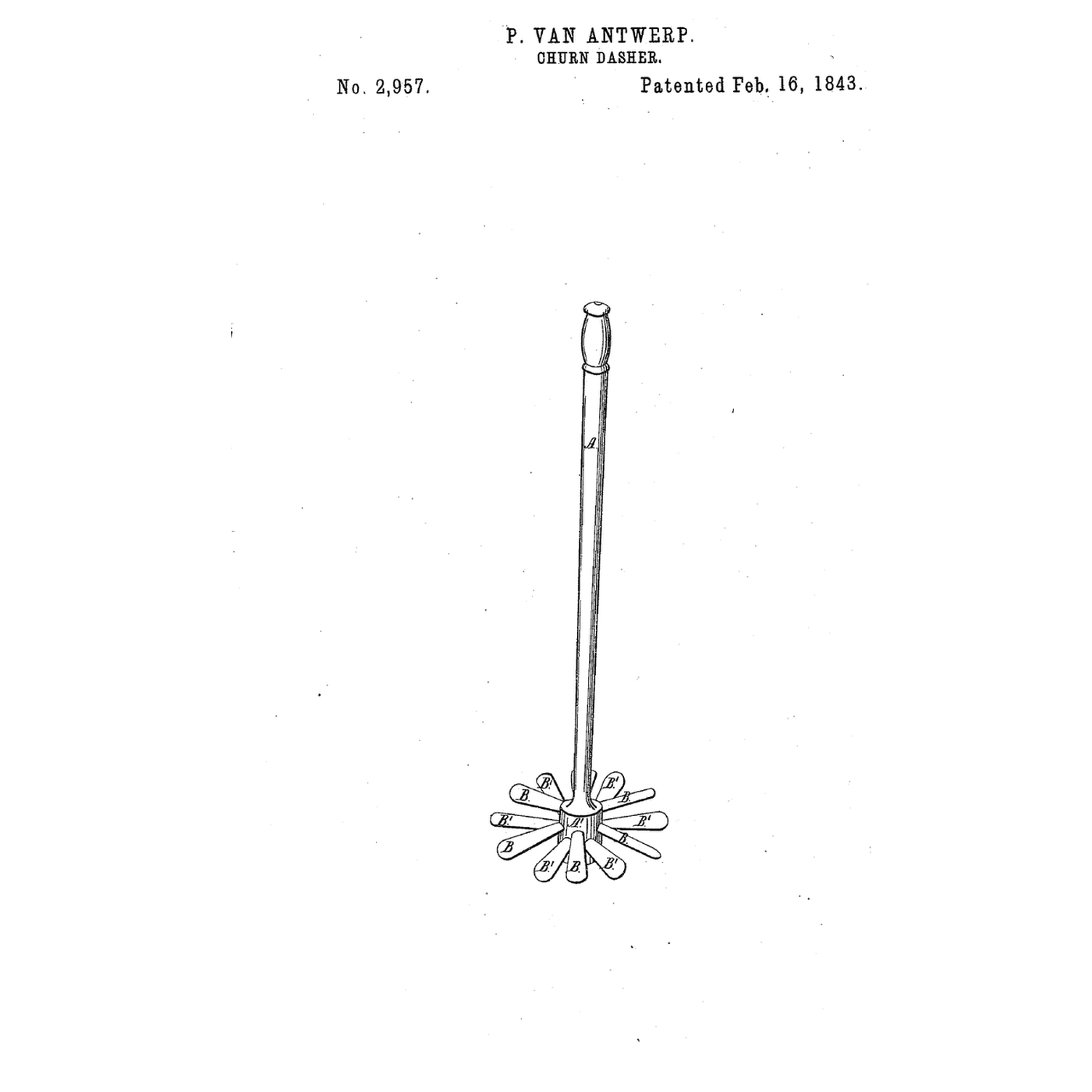


Reacting Churn Dasher: Two Rows of Oars Pitched Opposite Ways
Van Antwerp set out to improve "the common churn or hand dasher," worked up and down in an upright churn.
Peter Van Antwerp of Coeymans, New York, received US 2,957, dated 16 February 1843, for "Van Antwerp's Reacting Churn-Dasher": a knob on the dasher's rod carrying two rows of radial paddles shaped like oars, the upper row pitched one way and the lower row the other, so that "a reaction is also produced in the cream as it is impelled in one direction by the paddles B in the upper series and in the opposite direction by the paddles B' in the lower series." A cork in the end of the knob softens its blow on the churn's bottom.
This rung works out the oars' tilt, then prints the knob and twelve oars, fits them to a rod, and makes butter in a bucket.
Початківець
About 1 hour, plus printing
Інструкції
1
1
Tilt and pitch
Tilt and pitch
Завантаження блокнота Jupyter…
2
2
The common dash churn it improves
The common dash churn it improves
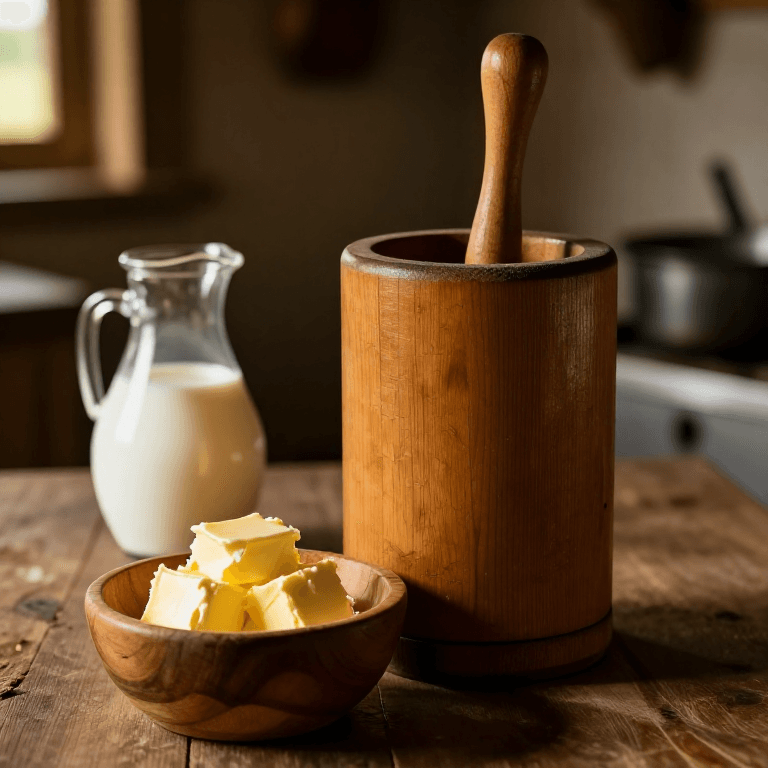
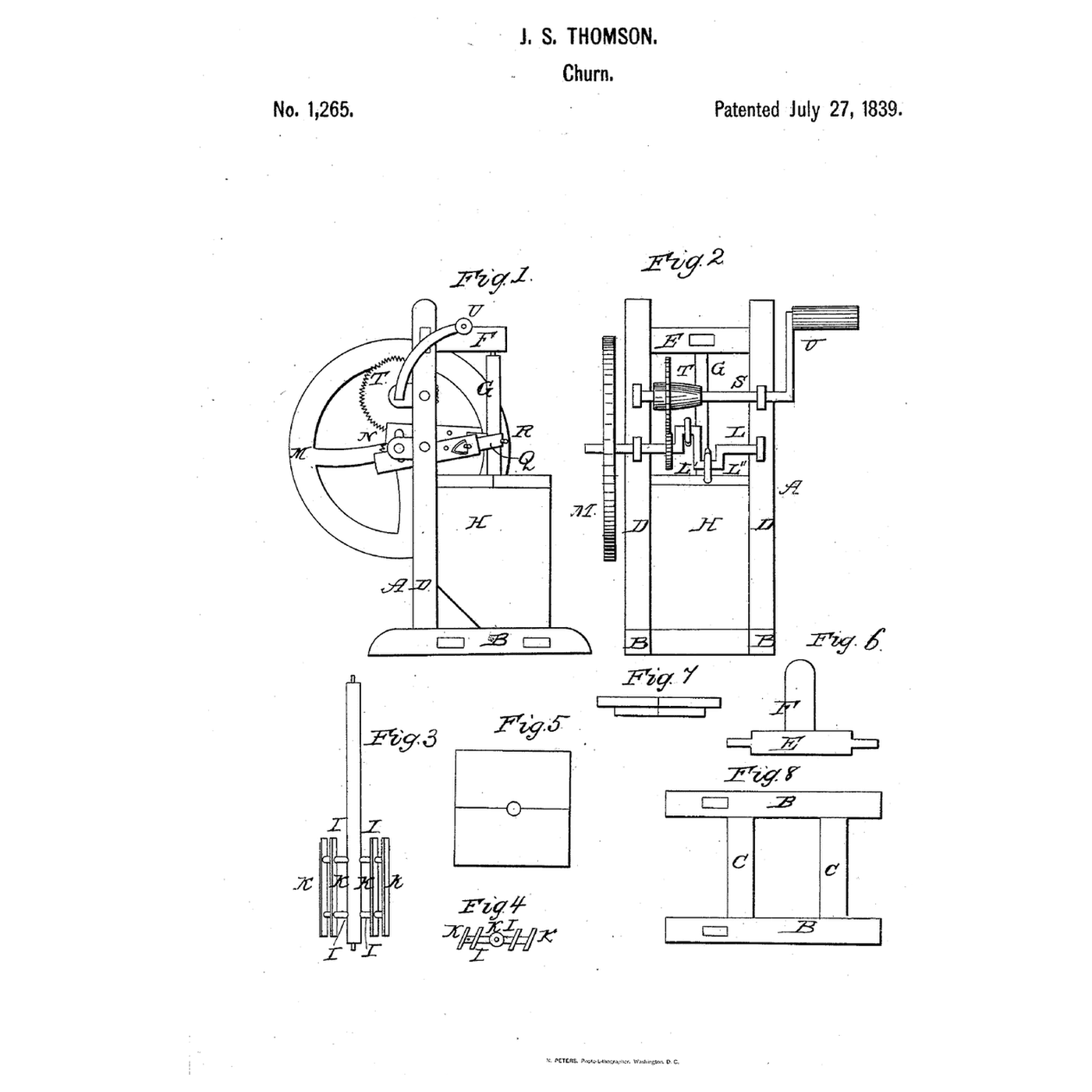
The embedded blueprint makes butter by agitating cream. Van Antwerp's dasher works the same up-and-down way, with pitched oars instead of a flat cross.
3
3
Read US 2,957
Read US 2,957
"This mode of constructing the dasher gives it great advantage over the ordinary churn dasher as by the employment of paddles arranged in the manner stated no vacuum is created interfering with the operation of the churn, consequently there is no mingling of air with the cream to obstruct the gathering of the butter."
4
4
Print the knob and oars
Print the knob and oars
Print the knob upright (/uploads/blueprints/reacting-churn-dasher-knob.stl), with supports in its sockets. Its square sockets are turned 45° so each oar's blade takes its pitch, the upper row one way and the lower row, under the gaps, the other. Print twelve oars flat (/uploads/blueprints/reacting-churn-dasher-oar.stl). Print in PETG at 0.2 mm layers, 30 % infill, 4 walls; wash before first use.
Матеріали для цього кроку:
 Філамент PETG1 штука
Необхідні інструменти ({count})
 3D-принтер FDM
5
5
Assemble the dasher
Assemble the dasher
Glue the twelve oars into their sockets. Glue a 12 mm hardwood dowel, as long as the bucket is deep plus 150 mm, into the top of the knob. Press a cork into the seat under the knob so it stands proud of the end.
Матеріали для цього кроку:
 Шканти з твердої деревини1 штука
 Корки1 штука
 Столярний клей1 штука
Необхідні інструменти ({count})
 Ручна пилка
 Наждачний папір
6
6
Make the churn
Make the churn
Drill a 20 mm hole in the centre of a food-grade 20-litre bucket's lid for the rod.
Матеріали для цього кроку:
 Відро на 20 літрів1 штука
Необхідні інструменти ({count})
 Акумуляторний дриль
 Набір кільцевих пилок
7
7
The build in 3D
The build in 3D
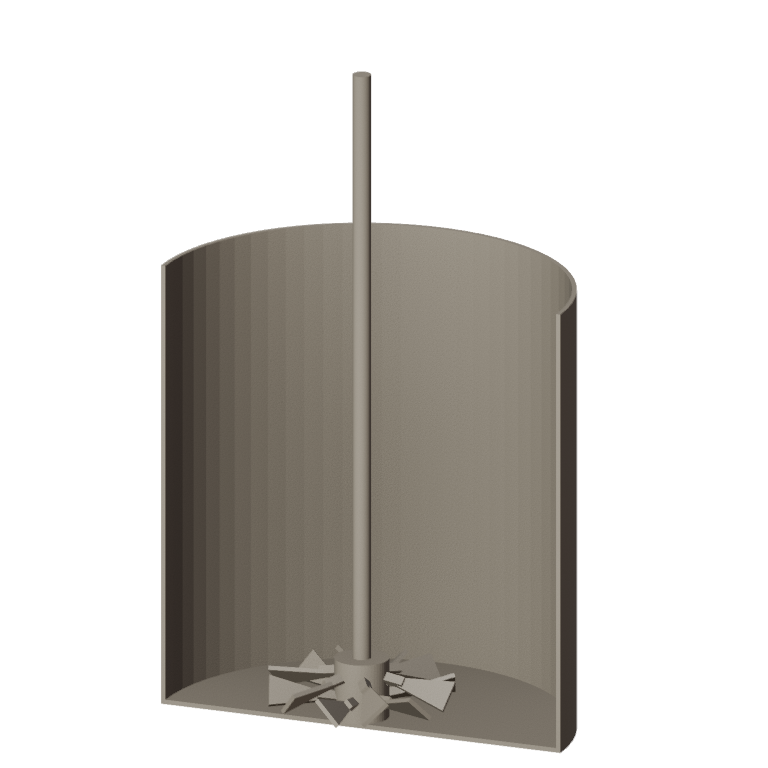
FreeCAD model of this build, not of the patent: the bucket cut away to show the knob on the rod's foot with its upper row of oars tilted down and pitched one way, and the lower row tilted up and pitched the other.
8
8
Dash and make butter
Dash and make butter
Let the heavy cream stand until it reaches about 15 °C, checked with the thermometer. Pour in 1 litre, fit the lid over the rod, and work the dasher up and down like a common dasher. Time until the butter comes. Pour off the buttermilk, add cold water, churn a little and pour off again until it runs clear; work in a pinch of salt and weigh the butter.
Матеріали для цього кроку:
 Жирні вершки1000 мл
 Крупна морська сіль1 штука
 Вода1 штука
Необхідні інструменти ({count})
 Термометр зі щупом, що лишається в страві
 Секундомір
 Цифрові кухонні ваги
 Велика миска з нержавкої сталі
9
9
Oars that loosen, a dasher that thumps
Oars that loosen, a dasher that thumps
Reacting churn dasher troubleshooting.
Flow
Loading...
10
10
History and honest limits
History and honest limits
**Peter Van Antwerp** of Coeymans, Albany County, New York, received US 2,957, dated 16 February 1843. The knob was about three inches of the rod's lower end, enlarged; the paddles were "broad and flattened at their outer ends where they project into the cream, tapering from thence to their inner ends"; the centre hole could be filled with cement or putty and closed with cork "or other elastic substance" to keep the churn's bottom from being bruised. He claimed combining with the rod the two series of paddles arranged above each other and operating as described.
**Honest limits.** A printed knob and oars stand in for his wooden ones, and a bucket for his churn. FDM prints hold food in their layer lines, so wash well and replace when worn. Your times and weights are the result.
Матеріали
8- 1 штукаЗаповнювач
- 1 штукаЗаповнювач
- 1 штукаЗаповнювач
- 1 штукаЗаповнювач
- 1 штукаЗаповнювач
- 1000 млЗаповнювач
- 1 штукаЗаповнювач
- 1 штукаЗаповнювач
Необхідні інструменти
9- Заповнювач
- Заповнювач
- Заповнювач
- 1 vendor sell this, none ship to you yetЗаповнювач
- Заповнювач
- Заповнювач
- Заповнювач
- Заповнювач
Файли дизайну
1Пов'язані креслення
Ці креслення діляться знаннями — техніки, матеріали або принципи
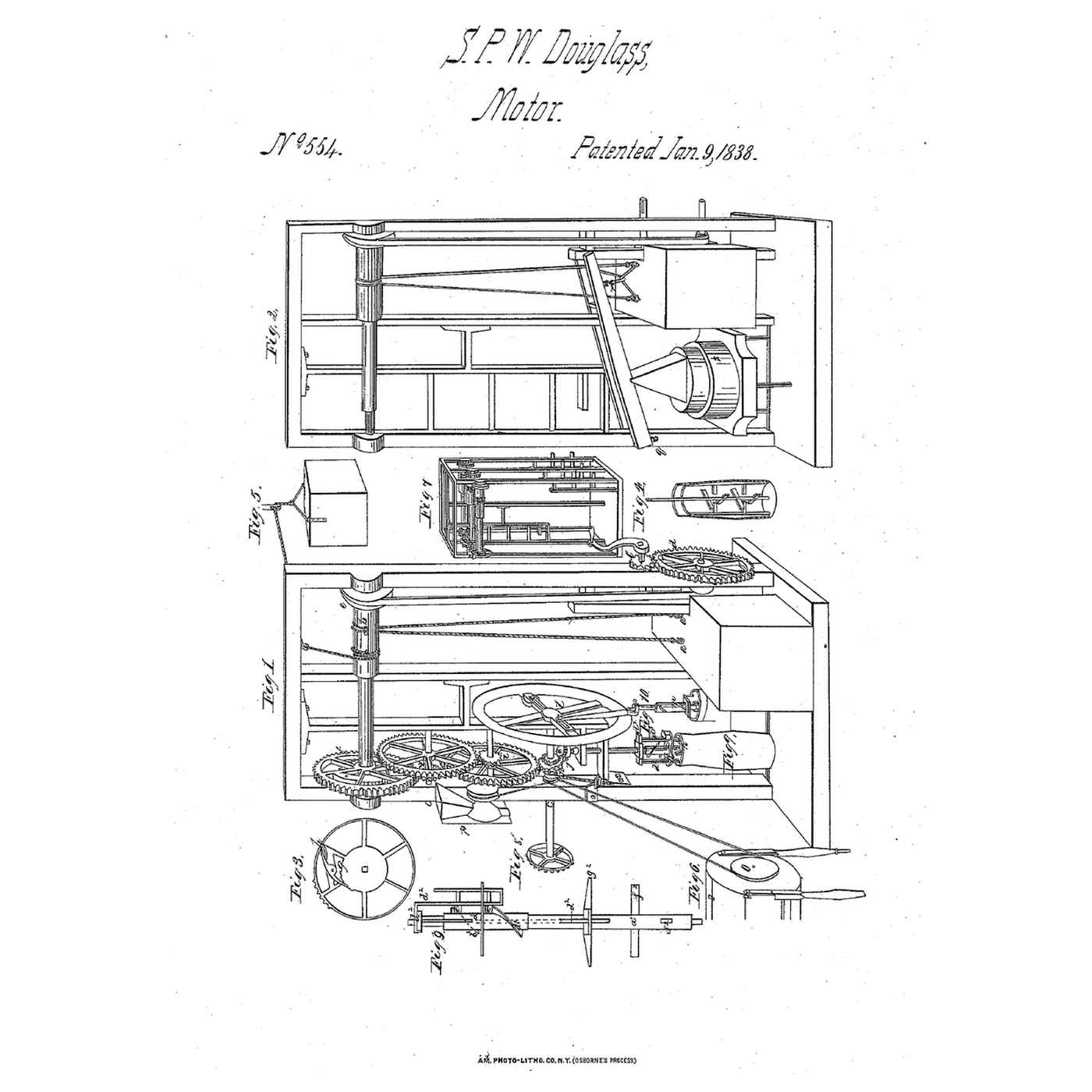


CC0 Суспільне надбання
Це креслення випущено під ліцензією CC0. Ви можете вільно копіювати, змінювати, поширювати та використовувати цю роботу для будь-яких цілей без запиту дозволу.
Підтримайте мейкера, купуючи продукти через його креслення, де він отримує Комісію мейкера встановлену вендорами, або створіть нову ітерацію цього креслення та включіть його як зв'язок у власне креслення для розподілу доходу.