МИСТЕЦТВО
КРАСА ТА ЗДОРОВ'Я
РЕМЕСЛО
КУЛЬТУРА ТА ІСТОРІЯ
РОЗВАГИ
СЕРЕДОВИЩЕ
ЇЖА ТА НАПІЇ
ЗБОРНА ІНЖЕНЕРІЯ
НАУК
СПОРТ
ТЕХНОЛОГІЯ
НОСИМО
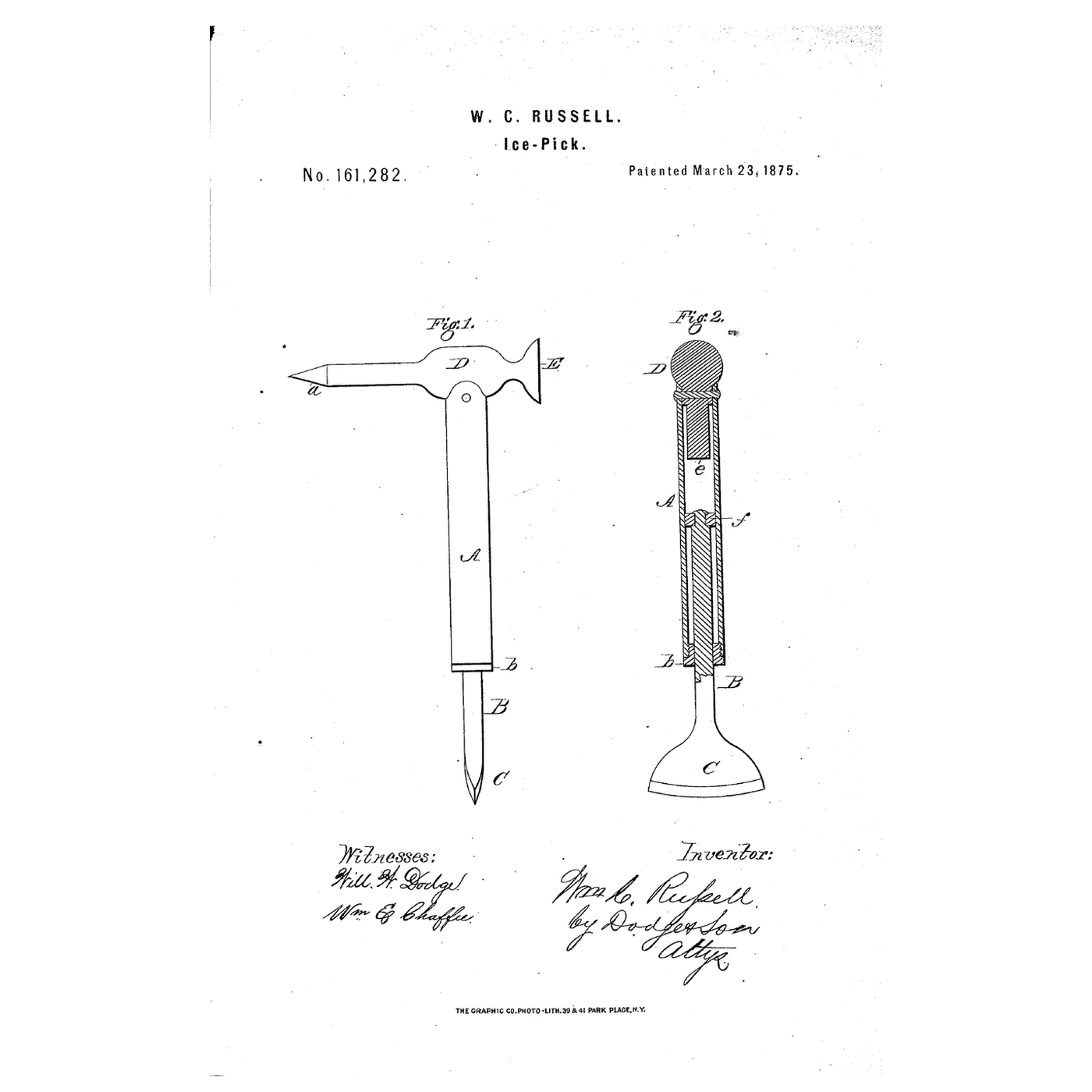


The Ice Pick: A Chisel, a Point and a Sliding Weighted Handle
Ice came to the house in blocks, cut from frozen lakes and delivered by the iceman. It had to be split into pieces for the icebox and the glass, and a household needed several tools for that.
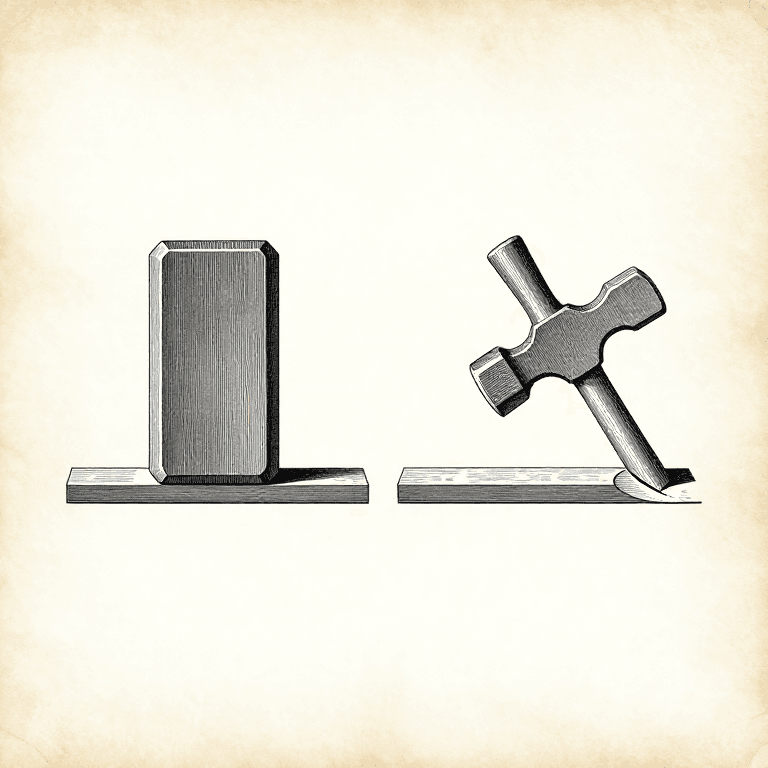
William C. Russell of Philadelphia received US 161,282, dated 23 March 1875 (filed 9 September 1874), for a tool that combines "an ice-chisel, with a sliding handle and weight for operating it, a hammer, and a pick or point". The blade is held on the ice "and struck with the weighted handle, the blade C being moved along without raising it from the ice"; the point breaks ice into lumps and the flat face pulverizes it.
This rung works out the energy of a blow and how little ice needs to crack, then splits a frozen block.
Початківець
About 1 hour plus freezing
Інструкції
1
1
Blow energy and brittle ice
Blow energy and brittle ice
Завантаження блокнота Jupyter…
2
2
Where the block came from
Where the block came from
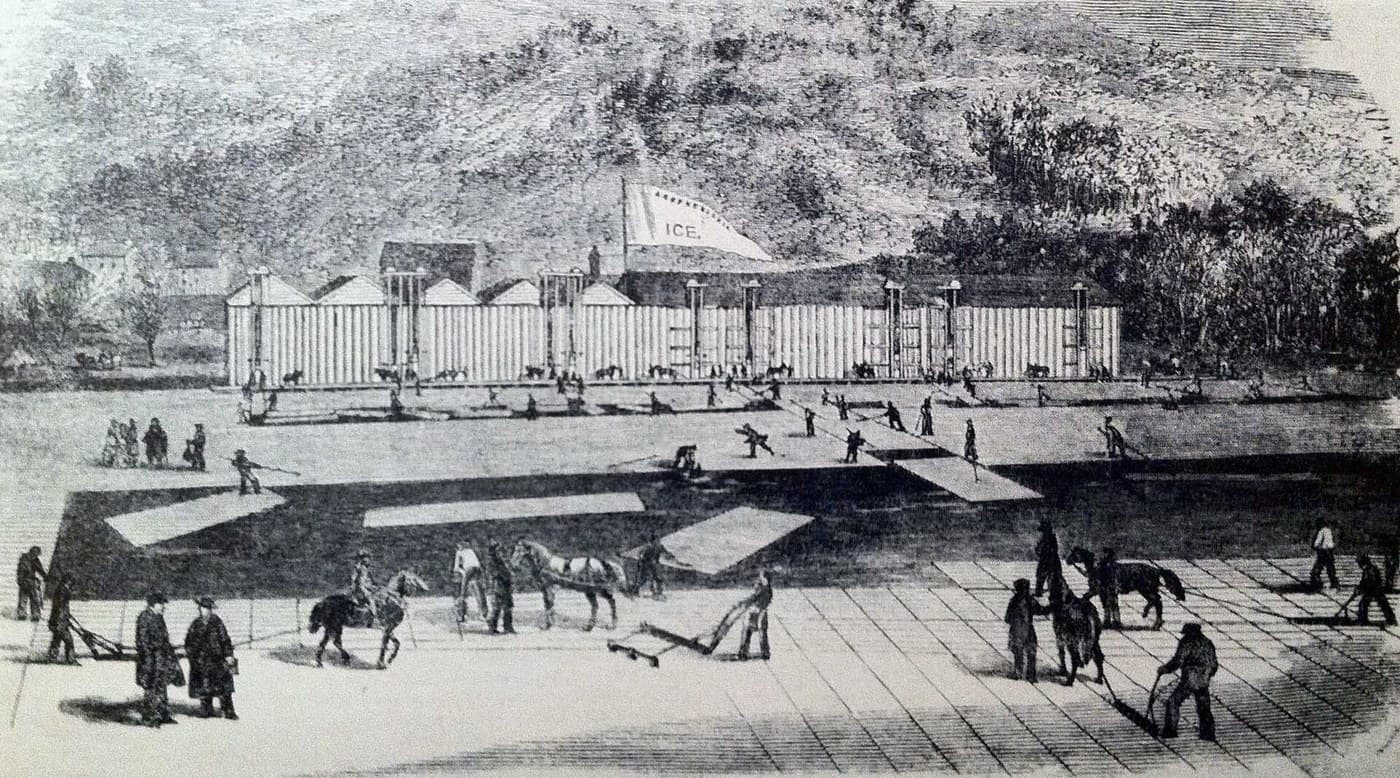
The blocks this tool split were sawn from frozen lakes. The embedded blueprint harvests ice.
3
3
Read US 161,282
Read US 161,282
"My invention relates to ice-picks; and it consists in constructing the tool in such a manner as to combine in one tool an ice-chisel, with a sliding handle and weight for operating it, a hammer, and a pick or point, all as hereinafter more fully set forth."
"To cut ice into regular-shaped pieces the blade C is held upon it and struck with the weighted handle, the blade C being moved along without raising it from the ice. The point a serves to break the ice into irregular lumps, while the flat face E serves to pulverize it when required, the implement thus serving all the various purposes for which, ordinarily, several tools are required."
"I am aware that a sliding weighted handle has been used on an ice-pick, and also that a flat cutting-blade has been used in various ways, and therefore I do not claim these features separately".
4
4
Split a frozen block
Split a frozen block
Freeze water in two loaf pans overnight and turn the blocks out onto a folded towel on a firm surface. Wear safety glasses and gloves: chips fly.
Score a line across the first block with the chisel end, moving it along without lifting as Russell describes, then tap along the line until it splits. Count the blows. Split the second block with the point alone, striking at random, and count those. Compare the pieces: regular along the scored line, irregular lumps from the point. Keep the free hand well away from the point.
Матеріали для цього кроку:
 Вода2 літрів
Необхідні інструменти ({count})
 Шило для льоду
 Форма для випікання хліба
 Прозорі захисні окуляри
 Шкіряні робочі рукавиці
5
5
Ice that shatters, skids or will not split
Ice that shatters, skids or will not split
Ice pick troubleshooting.
Flow
Loading...
6
6
History and honest limits
History and honest limits
**William C. Russell** of Philadelphia filed US 161,282 on 9 September 1874; it is dated 23 March 1875. He did not claim the sliding weight or the flat blade separately, only the combination.
**Honest limits.** The patent gives no weights or sizes. Handle mass, speeds, edge size and blow force are examples; the ice fracture values are order-of-magnitude figures, and the textbook minimum is far below what splitting really takes.
Необхідні інструменти
4- Заповнювач
- Форма для випікання хліба10% комісіяЗаповнювач
- Заповнювач
- Заповнювач
Пов'язані креслення
Ці креслення діляться знаннями — техніки, матеріали або принципи
CC0 Суспільне надбання
Це креслення випущено під ліцензією CC0. Ви можете вільно копіювати, змінювати, поширювати та використовувати цю роботу для будь-яких цілей без запиту дозволу.
Підтримайте мейкера, купуючи продукти через його креслення, де він отримує Комісію мейкера встановлену вендорами, або створіть нову ітерацію цього креслення та включіть його як зв'язок у власне креслення для розподілу доходу.