МИСТЕЦТВО
КРАСА ТА ЗДОРОВ'Я
РЕМЕСЛО
КУЛЬТУРА ТА ІСТОРІЯ
РОЗВАГИ
СЕРЕДОВИЩЕ
ЇЖА ТА НАПІЇ
ЗБОРНА ІНЖЕНЕРІЯ
НАУК
СПОРТ
ТЕХНОЛОГІЯ
НОСИМО


The Reusable Can Opener: A Stop on the Knife and a Rim Left to Use Again
A can hacked open is fit only to be thrown away.
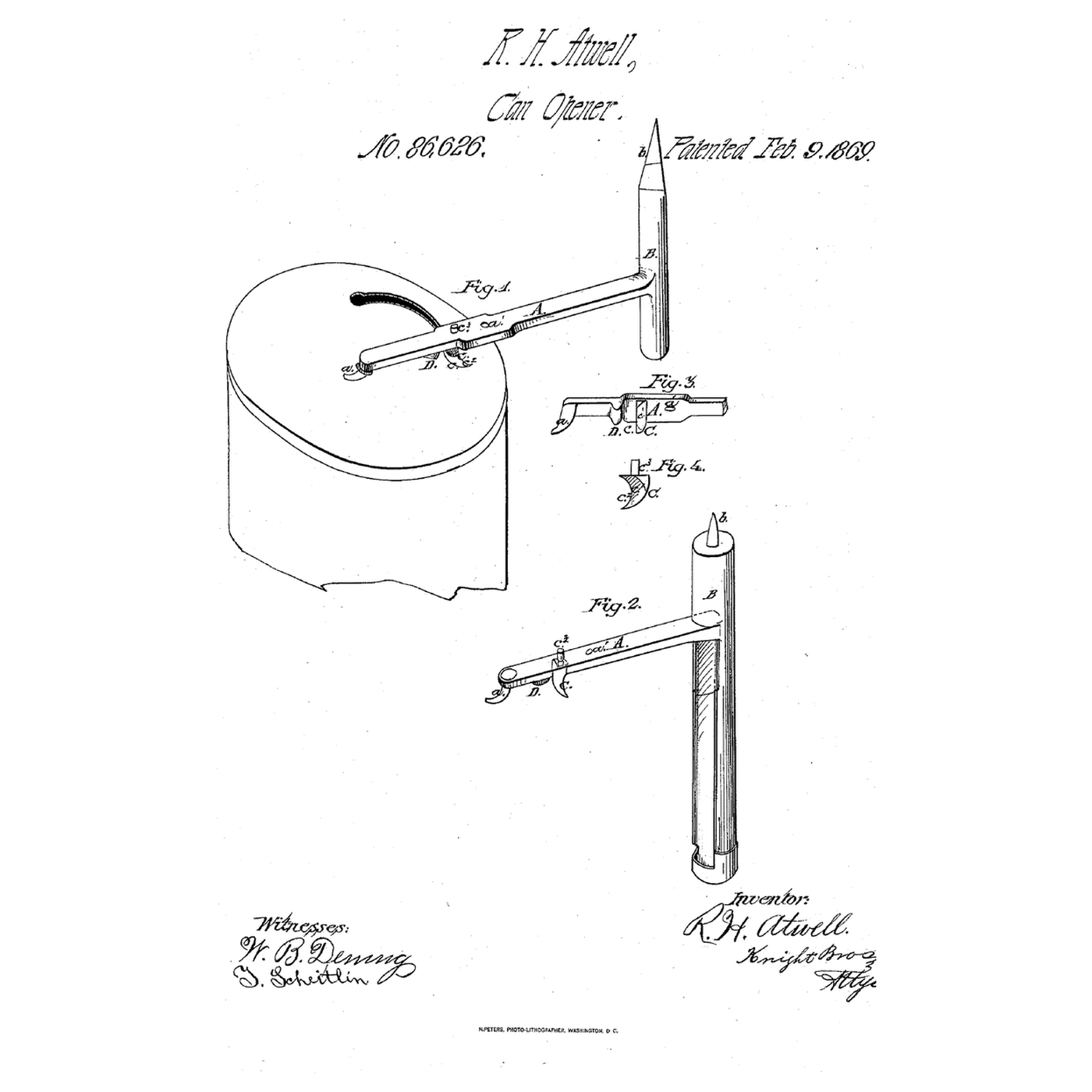
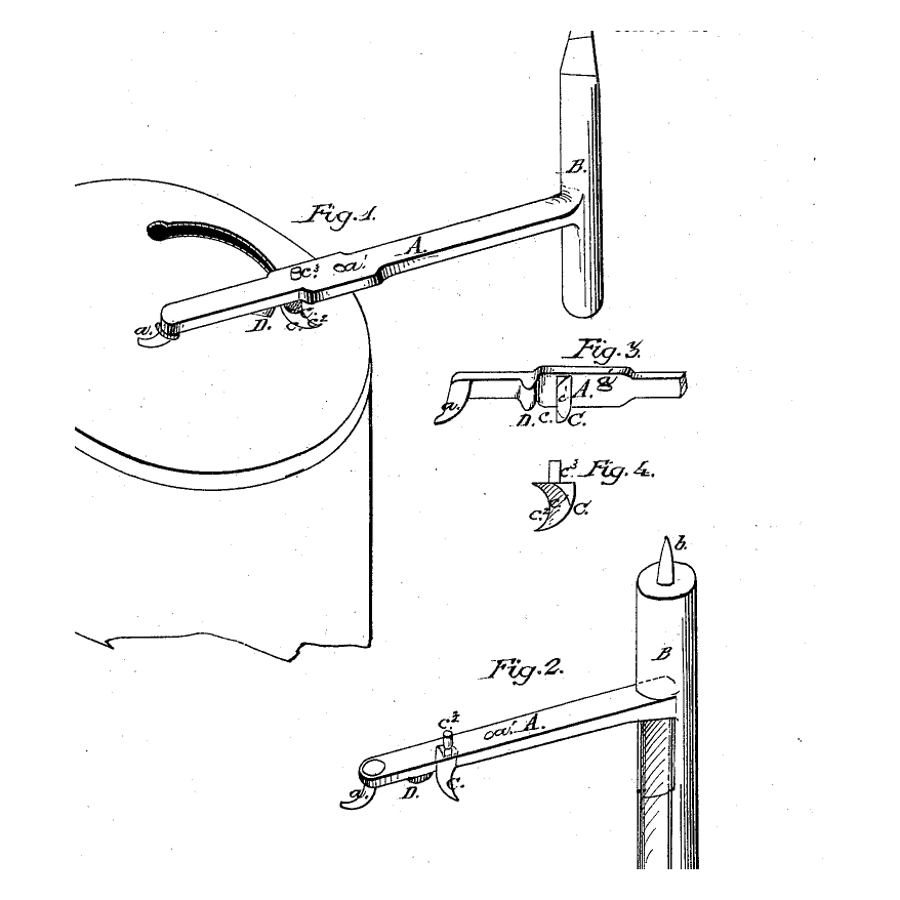
Richard H. Atwell of Baltimore, Maryland, received US 86,626, dated 9 February 1869, for a can opener: a bar at right angles to a handle that carries a piercer, a hook-shaped fulcrum pin in a hole made at the centre of the piece to be removed, a concave knife in one of several holes, and a stop that limits how far the knife goes in; the edges of the opening are so turned "as to adapt the can to be again used."
This rung works out which hole leaves a usable rim, then builds the bar, pin, knife and stop and opens a can cleanly enough to refill.
Середній
About 3 hours
Інструкції
1
1
Which hole leaves a rim
Which hole leaves a rim
Завантаження блокнота Jupyter…
2
2
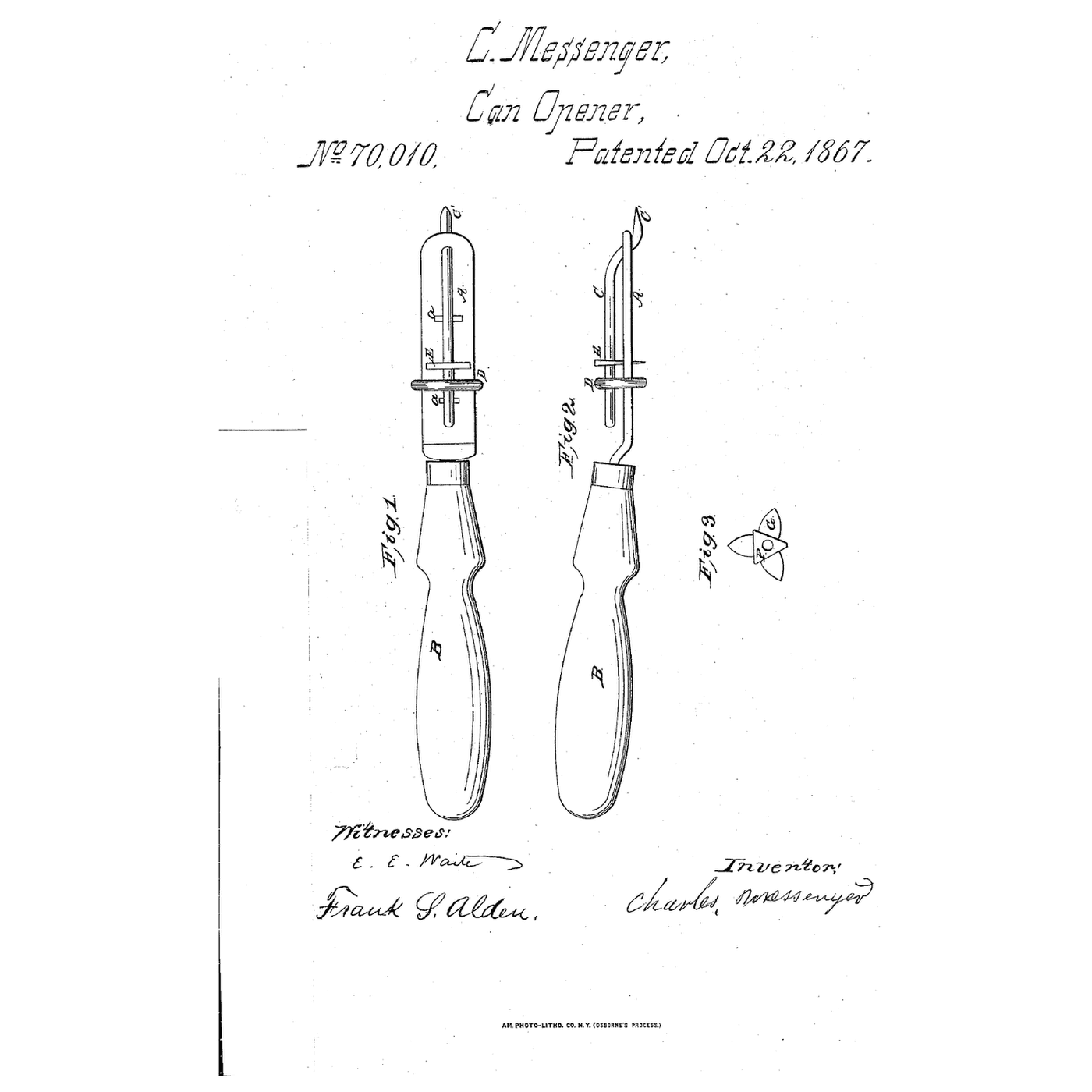
A centre-pivot cutter before it
A centre-pivot cutter before it
The embedded blueprint cuts a round hole round a spike. Atwell adds a stop on the knife and turns the edge so the can is fit to use again.
3
3
Read US 86,626
Read US 86,626
"The edges of the opening made in the can are so turned, by this construction of knife, as to adapt the can to be again used."
"A rest or stop, D, preferably cast on the bar, and arranged between the fulcrum a and knife C, limits the insertion of the knife, and thus prevents its hanging in the tin at its shank."
4
4
Make the bar and handle
Make the bar and handle
Cut 90 mm of 25 × 3 mm flat bar and drill 5 mm holes 20, 28 and 36 mm from one end. Fix its other end at right angles into a hardwood handle with epoxy, and file a point on the handle's far end as the piercer.
Матеріали для цього кроку:
 Смуга з маловуглецевої сталі1 штука
 Шканти з твердої деревини1 штука
 Двокомпонентна епоксидка1 штука
Необхідні інструменти ({count})
 Ножівка по металу
 Кернер
 Акумуляторний дриль
 Набір свердел
 Напилки (ручний напилок)
5
5
Make the hook pin and stop
Make the hook pin and stop
Bend 4 mm steel rod into a hook and fix it through the bar's end as the fulcrum pin. Epoxy a hardwood stop under the bar between the pin and the first hole, 4 mm deep.
Матеріали для цього кроку:
 Круглий пруток із маловуглецевої сталі1 штука
 Брусок твердої деревини1 штукаДвокомпонентна епоксидка1 штука
Необхідні інструменти ({count})
 Слюсарні лещата
 МолотокНожівка по металуАкумуляторний дрильНабір свердел
6
6
Make the knife
Make the knife
Cut a knife from 1 mm steel sheet with a 5 mm shank, file its cutting edge concave and its flat side toward the pin. Fit the shank through a hole and nut it on top.
Матеріали для цього кроку:
 Лист маловуглецевої сталі1 штука
 Шестигранна гайка1 штука
 Машинні гвинти1 штука
Необхідні інструменти ({count})
 Ножиці по металуНапилки (ручний напилок)
 Точильний брусок
 Розвідний ключ
 Прозорі захисні окуляри
7
7
The patent drawing
The patent drawing
US 86,626 drawing sheet, public domain (expired patent).
8
8
Open a can for reuse
Open a can for reuse
Pierce the centre of a sealed can's top with the handle's point and hook the pin in. Press the knife through to the stop and turn the bar round once. Measure the rim left and run a finger-safe check along it with a rag.
Матеріали для цього кроку:
 Бляшанка1 штука
Необхідні інструменти ({count})
 Цифровий штангенциркуль 6 дюймів
 Секундомір
 Шкіряні робочі рукавиці
9
9
A knife that hangs, wanders or leaves a ragged rim
A knife that hangs, wanders or leaves a ragged rim
Reusable can opener troubleshooting.
Flow
Loading...
10
10
History and honest limits
History and honest limits
**Richard H. Atwell** of Baltimore, Maryland, received US 86,626, dated 9 February 1869. His bar may be cast in one piece with the handle or hinged to it; the knife is held from lateral pressure and bending, its edge preferably concave so it need not be pressed down to its work. When the can is not to be refilled, part of the circle may be cut and the piece bent up.
**Honest limits.** Epoxy and a hardwood stop stand in for his casting, and the knife is unhardened sheet. Your rim measurements are the result.
Матеріали
9- 1 штукаЗаповнювач
- 1 штукаЗаповнювач
- 2 штукЗаповнювач
- Заповнювач
- 1 штукаЗаповнювач
- 1 штукаЗаповнювач
- 1 штукаЗаповнювач
- 1 штукаЗаповнювач
- 1 штукаЗаповнювач
Необхідні інструменти
14- Заповнювач
- Заповнювач
- 1 vendor sell this, none ship to you yetЗаповнювач
- Заповнювач
- Заповнювач
- Заповнювач
- Заповнювач
- Заповнювач
- Заповнювач
- Заповнювач
- Заповнювач
- Заповнювач
- Заповнювач
- Заповнювач
Пов'язані креслення
Ці креслення діляться знаннями — техніки, матеріали або принципи


CC0 Суспільне надбання
Це креслення випущено під ліцензією CC0. Ви можете вільно копіювати, змінювати, поширювати та використовувати цю роботу для будь-яких цілей без запиту дозволу.
Підтримайте мейкера, купуючи продукти через його креслення, де він отримує Комісію мейкера встановлену вендорами, або створіть нову ітерацію цього креслення та включіть його як зв'язок у власне креслення для розподілу доходу.