
Співпраця
МИСТЕЦТВО
КРАСА ТА ЗДОРОВ'Я
РЕМЕСЛО
КУЛЬТУРА ТА ІСТОРІЯ
РОЗВАГИ
СЕРЕДОВИЩЕ
ЇЖА ТА НАПІЇ
ЗБОРНА ІНЖЕНЕРІЯ
НАУК
СПОРТ
ТЕХНОЛОГІЯ
НОСИМО
Shoe Horn With a Rolled Tubular Tang, Cut From One Sheet (Williams, 1901)
Forge

Створено

Forge

13. листопад 2026NO
10
0
0
0
0

Shoe Horn With a Rolled Tubular Tang, Cut From One Sheet (Williams, 1901)

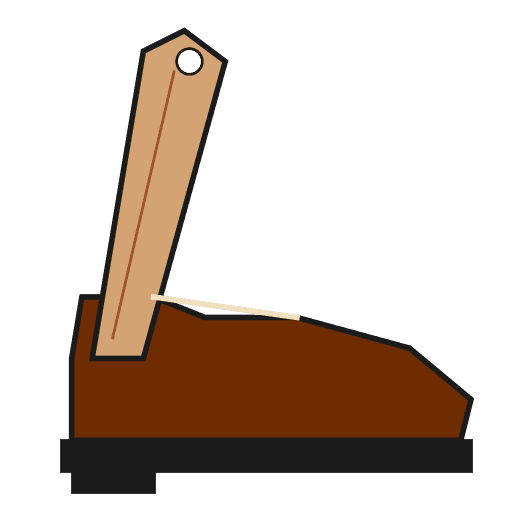
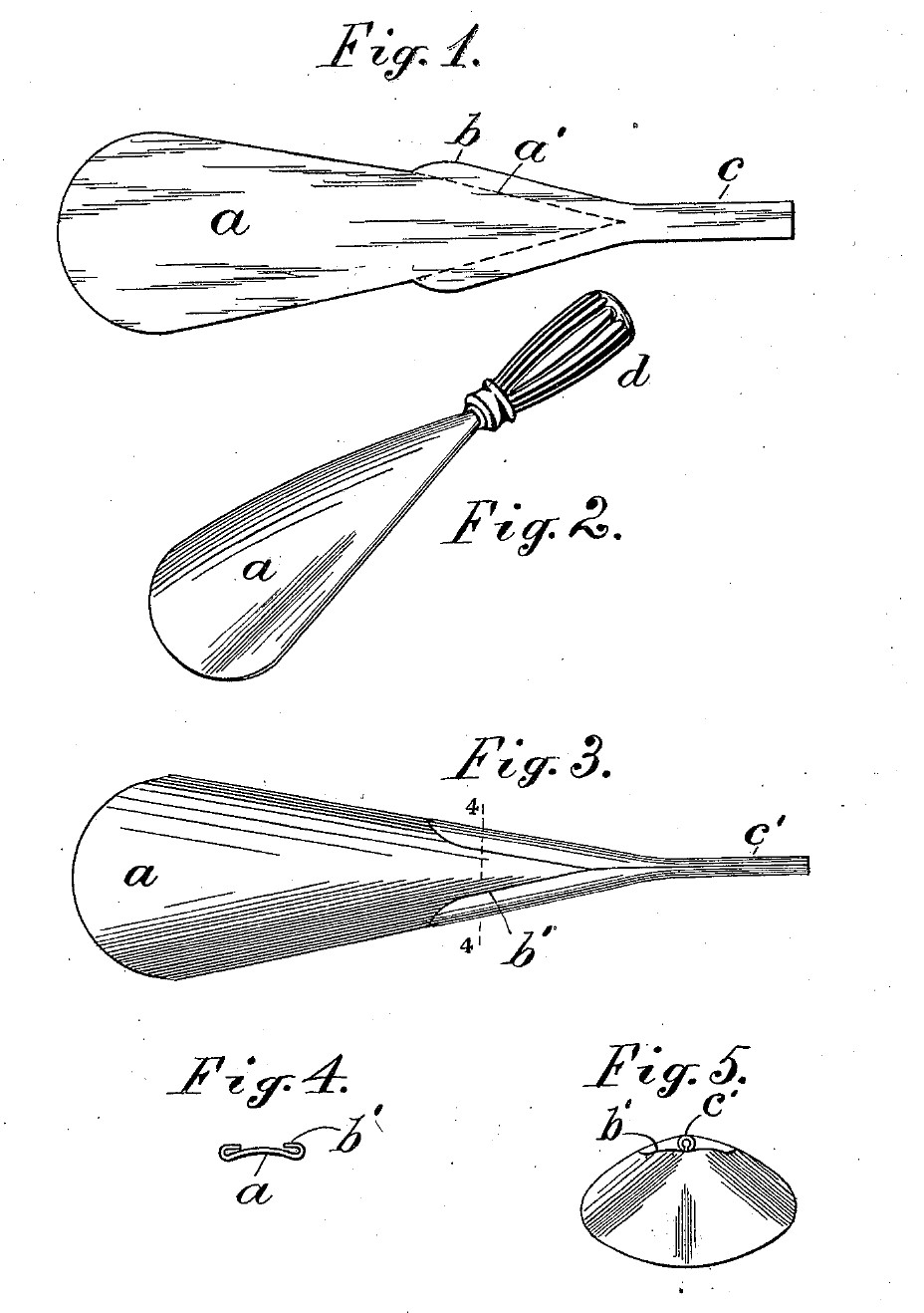
Alfred G. Williams of Newark received US 685,548, dated 29 October 1901, for a sheet-metal shoe horn whose handle tang is part of the same blank. A tongue at the narrow end is rolled into a close tube, and two wings beside it are folded over the edges of the horn, so the weak neck is stiffened where it meets the tang. A handle fits on the tang. We cut it from brass sheet with a 1:1 template and fit a hardwood handle. All sizes are ours.
Початківець
About 3 hours

Інструкції

1

How wide to cut the tongue

Завантаження блокнота Jupyter…
2

Read US 685,548

"I construct the tang by extending the sheet metal from the upper or smaller end of the horn in a tongue of suitable width to roll into a tubular tang and form integral with such tongue lateral wings or flanges upon the upper end of the horn, which can be folded or curved upon the edges of the horn to stiffen the same at its junction with the tang."
3

Print the template

The blank at 1:1 as his Fig. 1: body a, wings b, tongue c, with the fold lines a' dashed: they run from where each wing starts in to the root of the tongue. print at 100 % (check the 50 mm bar).
Файл дизайнуPDFCC0 - Free
4

Cut the blank

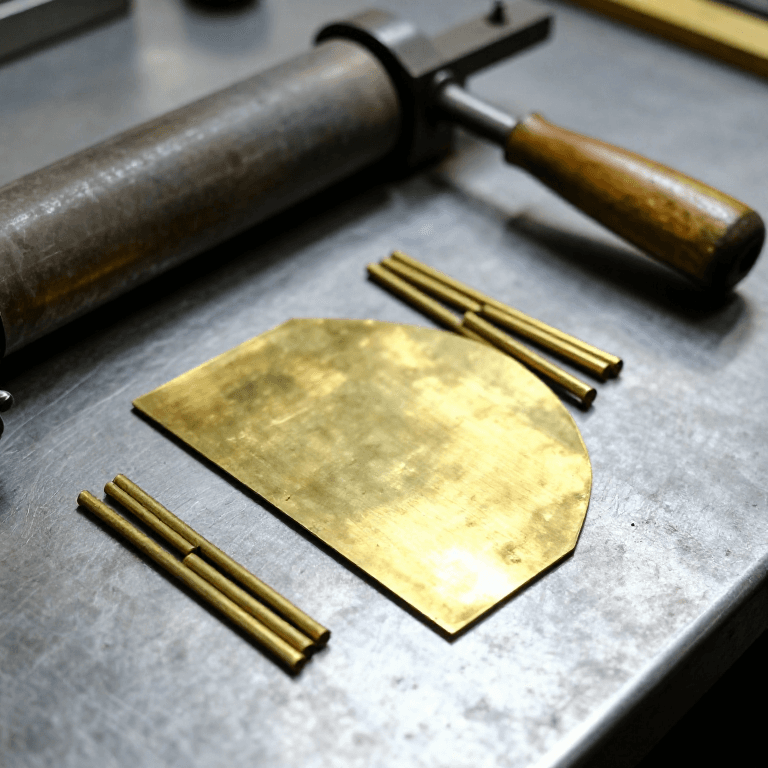
Cut the paper blank out and lay it on 0.8 mm brass sheet. Scribe round it. Cut just outside the line with tin snips, then file to the line. Keep the tongue an even 15 mm wide.

Матеріали для цього кроку:

Латунний листЛатунний лист1 штука

Необхідні інструменти ({count})

РисувалкаРисувалка
Ножиці по металуНожиці по металу
Набір напилківНабір напилків
Слюсарні лещатаСлюсарні лещата
5

Smooth the edges

Round every edge of the body with a file and sandpaper. The mouth slides against the heel and the sock, so it must be smooth all round.

Необхідні інструменти ({count})

Набір напилківНабір напилків

Наждачний папірНаждачний папір
6

Roll the tang

Lay a 4 mm rod along the middle of the tongue. With round-nose pliers, curl one edge of the tongue up round the rod, then the other, a little at a time along its length, until the edges meet: his "close-rolled cylindrical" tang c'. Slide the rod out.

Необхідні інструменти ({count})

КруглогубціКруглогубці
ПлоскогубціПлоскогубці
Круглий пруток із маловуглецевої сталіКруглий пруток із маловуглецевої сталі
7

Fold the wings

Fold each wing b along its dashed line a' over the edge of the horn, onto the underside, with the flat-nose pliers and then light taps of the rubber mallet, until it lies close. His Figs. 3 and 4 show the horn turned over, with the wings b' lying on the edges and running into the tang.

Необхідні інструменти ({count})

ПлоскогубціПлоскогубці
Гумовий молотокГумовий молоток
8

Dish the body

His body is "slightly concave transversely". Lay it, inside up, across a rod held in the vice and tap the edges down with the rubber mallet, working from the neck to the mouth, until it is evenly hollow across its width. Keep the curve slight; it should still lie nearly flat on the bench along its length.

Необхідні інструменти ({count})

Гумовий молотокГумовий молоток
Круглий пруток з маловуглецевої сталіКруглий пруток з маловуглецевої сталі
Слюсарні лещатаСлюсарні лещата
9

Make the handle

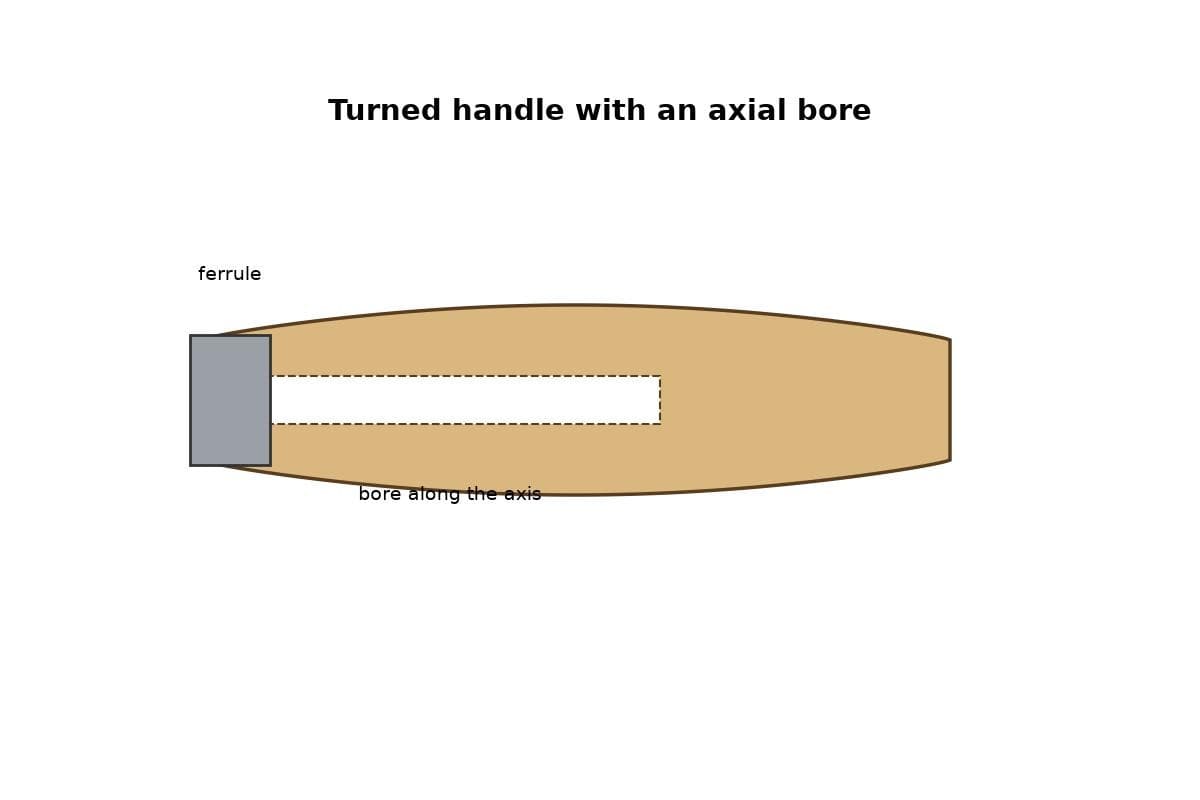
Saw 75 mm of hardwood handle stock (ours) and shape it with a rasp and sandpaper. Drill a 6 mm hole 40 mm deep in one end, straight down the middle, to take the tang. His handle is "more for ornament than for support", so any shape you like will do.

Матеріали для цього кроку:

Заготовка держака з твердої деревиниЗаготовка держака з твердої деревини1 штука

Необхідні інструменти ({count})

Ножівка по металуНожівка по металу
Рашпіль по деревуРашпіль по дереву
Наждачний папірНаждачний папір
Ручний дрильРучний дриль
Слюсарні лещатаСлюсарні лещата
10

Fit the handle

Roughen the tang with sandpaper, mix the epoxy, fill the hole and push the handle onto the tang until it meets the wings. Line the handle up with the horn and leave it to set as the epoxy's label says.

Матеріали для цього кроку:

Двокомпонентна епоксидкаДвокомпонентна епоксидка1 штука

Необхідні інструменти ({count})

Наждачний папірНаждачний папір
11

Polish

Polish the horn with polishing compound on a soft cloth.

Необхідні інструменти ({count})

Полірувальна пастаПолірувальна паста
12

Troubleshooting

Tubular-tang shoe horn troubleshooting.

Flow

Loading...
13

History and honest limits

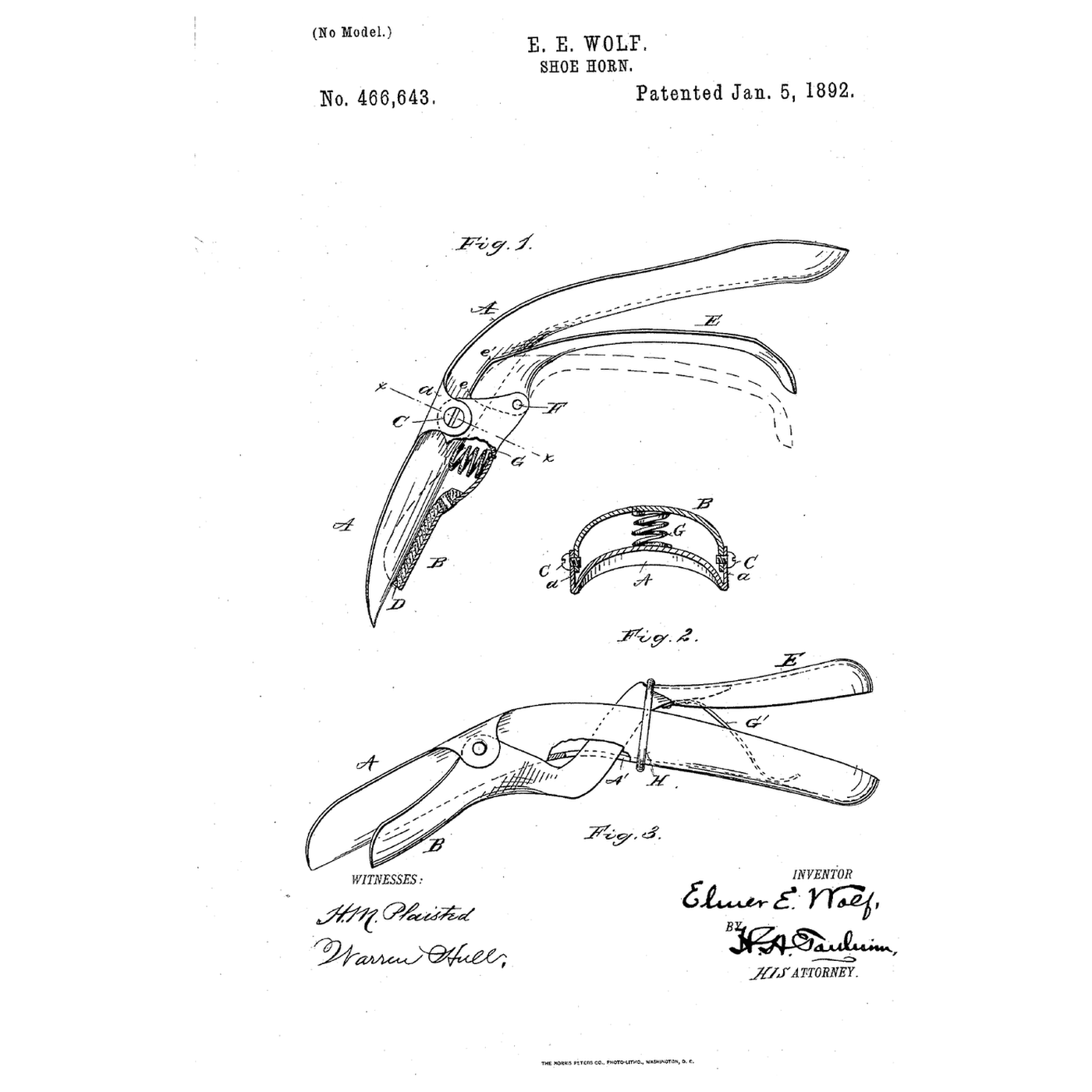
**Alfred G. Williams** of Newark, New Jersey, assignor to Havell Manufacturing Company, US 685,548, dated 29 October 1901, filed 26 June 1901. He claimed "the shoe-horn having integral tang c', of close-rolled cylindrical form, with integral wings b' extended from such tang and folded over upon the edges of the horn". He meant it for "ornamented handles" in "mounted toilet sets". He gives no sizes, no metal and no way of fixing the handle: the brass, all sizes, the hardwood handle, the epoxy and the order of work are ours.

Матеріали

3

Необхідні інструменти

14

Файли дизайну

1

За цим кресленням виготовляють

CC0 Суспільне надбання

Це креслення випущено під ліцензією CC0. Ви можете вільно копіювати, змінювати, поширювати та використовувати цю роботу для будь-яких цілей без запиту дозволу.

Підтримайте мейкера, купуючи продукти через його креслення, де він отримує Комісію мейкера встановлену вендорами, або створіть нову ітерацію цього креслення та включіть його як зв'язок у власне креслення для розподілу доходу.

Обговорення

(0)

Увійти щоб приєднатися до обговорення

Завантаження коментарів...