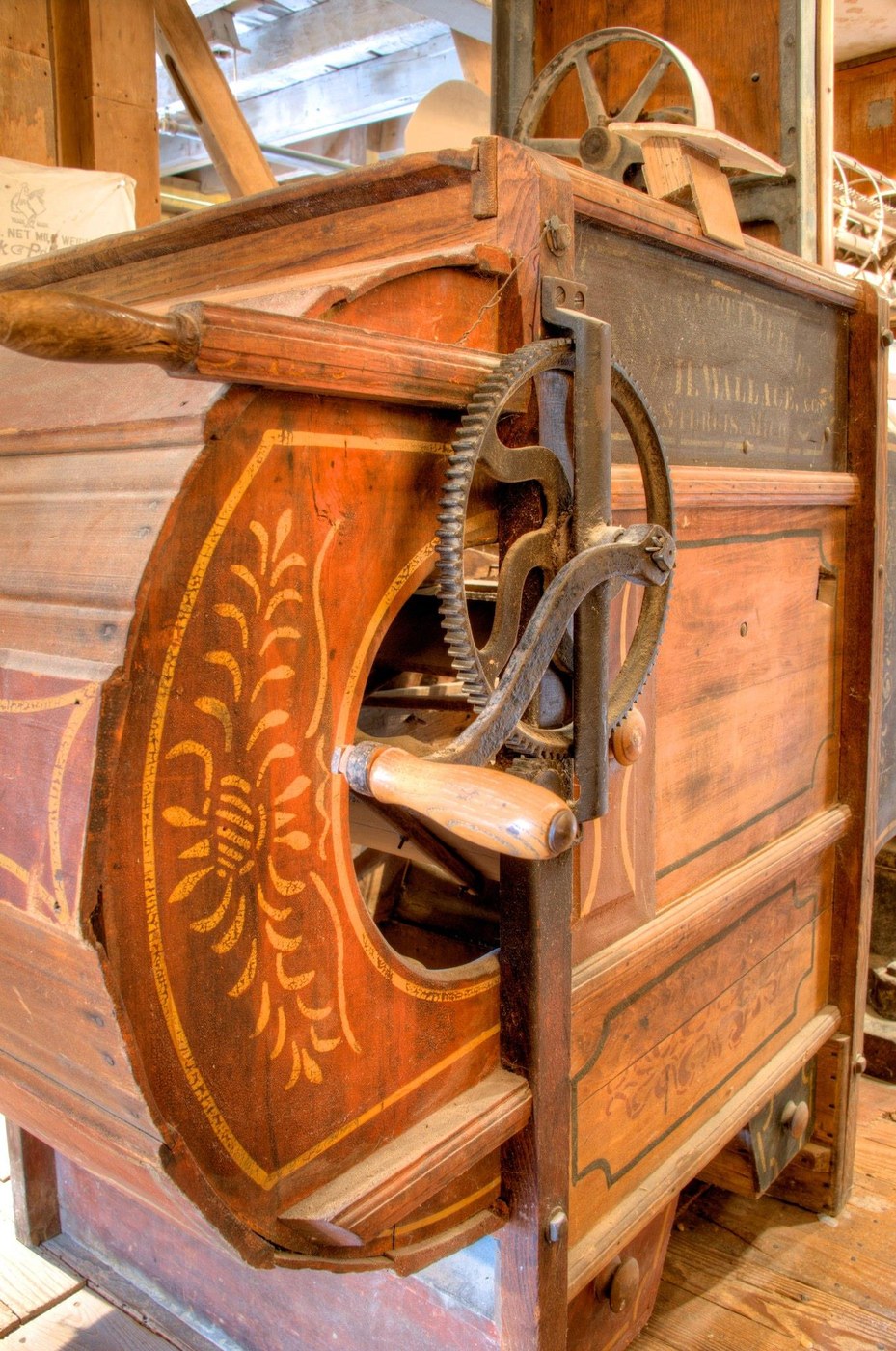


Winnowing Machine
Інструкції
Winnow by hand and find the problem
Winnow by hand and find the problem
Do it the old way, outdoors, and note what limits you.
- Mix grain with light chaff or dry husk.
- Toss it gently from a shallow tray in a breeze and let the chaff blow off.
- Try again with no breeze at all.
Матеріали для цього кроку:
 Зерна пшениці500 г
Understand terminal velocity
Understand terminal velocity
The separation is by falling speed, not by weight alone.
- Drop a grain and a piece of chaff from the same height and time them.
- The chaff falls far more slowly.
Матеріали для цього кроку:
 Секундомір1 штука
Build the fan and case
Build the fan and case
A crank-driven fan blowing across a falling stream, inside a box that directs the air.
- Fit flat blades to a shaft so it turns as a paddle fan.
- Enclose it so the air is directed sideways across an open channel.
- Leave an exit at the far side for chaff to blow out.
Матеріали для цього кроку:
 Балтійська березова фанера1 пакет
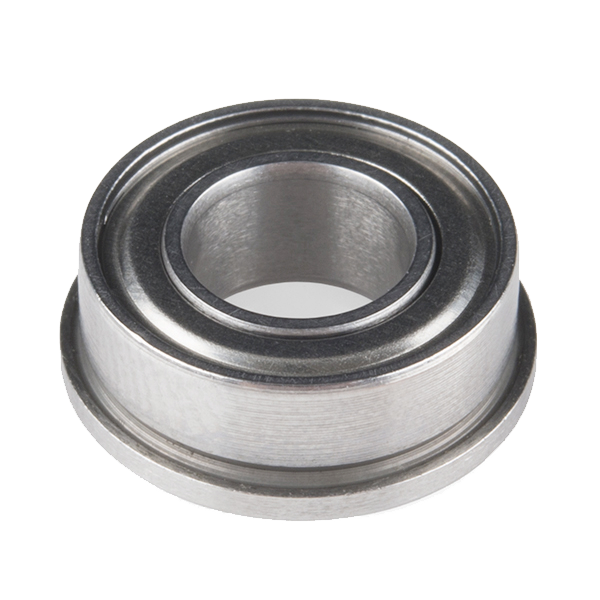 Ball Bearing - Flanged (6,35 mm Bore, 1,27 cm OD)2 штук
Meter the feed and tune the speed
Meter the feed and tune the speed
Two adjustments, and both must be set together.
- Feed the mixture from a hopper with an adjustable gate, so it falls as a thin curtain.
- Crank at a steady speed and watch where the chaff and grain land.
- Weigh the grain recovered and the grain lost out of the chaff exit.
Матеріали для цього кроку:
 Цифрові кухонні ваги1 штука
 Сито з дрібної дротяної сітки1 штука
History and context
History and context
The rotary winnowing fan is Chinese and old. Enclosed crank-driven winnowing machines are documented in China from around the second century BC, and appear in Han dynasty tomb models. They reached Europe far later, apparently carried back by travellers and Jesuit missionaries, and enclosed fanning mills spread through Britain and the Low Countries during the eighteenth century.
They were opposed on religious grounds, which is not a joke. In parts of Scotland, some argued that wind was the Lord's provision and that raising an artificial wind to winnow was presumption. Objections of this kind appear in the record and in Walter Scott's fiction. It is a useful reminder that resistance to a new machine is often about something other than the machine.
What it became: the fanning mill was absorbed into the threshing machine, which threshes and winnows in one operation, and then into the combine harvester, where a fan and a set of oscillating sieves — the cleaning shoe — do precisely this job on the move. Set that fan too high on a modern combine and you blow grain out of the back; too low and the sample is dirty. It is the same trade-off measured in step 4.
The physics travels widely. Separating a mixture by terminal velocity in a fluid stream is used for sorting scrap plastics, cleaning ore, and grading coffee beans. Any two materials with different drag-to-mass ratios can be parted this way.
Матеріали
6- 500 гЗаповнювач
- 1 штукаЗаповнювач
- 1 пакетЗаповнювач
- 2 штук$2.43
- 1 штукаЗаповнювач
- Заповнювач
Пов'язані креслення
Ці креслення діляться знаннями — техніки, матеріали або принципи
CC0 Суспільне надбання
Це креслення випущено під ліцензією CC0. Ви можете вільно копіювати, змінювати, поширювати та використовувати цю роботу для будь-яких цілей без запиту дозволу.
Підтримайте мейкера, купуючи продукти через його креслення, де він отримує Комісію мейкера встановлену вендорами, або створіть нову ітерацію цього креслення та включіть його як зв'язок у власне креслення для розподілу доходу.