ART
BEAUTY & WELLNESS
CRAFT
CULTURE & HISTORY
ENTERTAINMENT
ENVIRONMENT
FOOD & DRINKS
REVERSE ENGINEERING
SCIENCES
SPORTS
TECHNOLOGY
WEARABLES

Air-Pump Tube Dasher: A Tube Over a Loose Plunger Pumps Air at Every Stroke
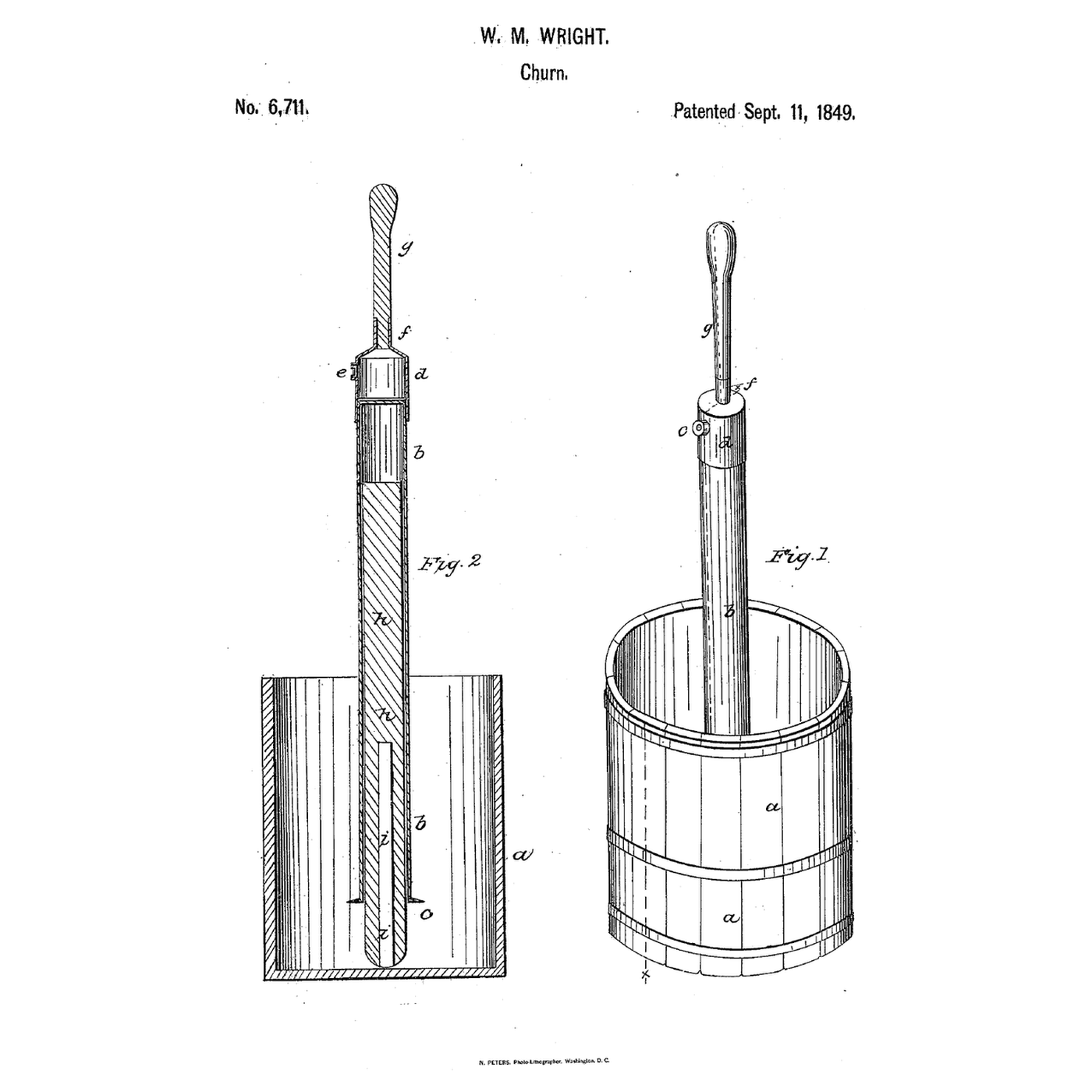
Wright wanted a hand dasher that "will operate as an air pump to force a stream of air into the cream at the same time that it agitates it."
William M. Wright of Pittsburgh, Pennsylvania, received US 6,711, dated 11 September 1849, for an atmospheric churn-dasher: a tube of tinned sheet iron with a flange on its lower end, a cap with a valve opening inward, and a handle; inside, a loose cylinder of wood weighted at its lower end rests on the bottom of the tub as a plunger. Worked like a common dasher in "almost any ordinary pail or dairy vessel," it discharges air among the cream on each descent and refills on each ascent.
This rung works out the air per stroke, then prints the cap, flange and plunger, assembles them on a pipe, and makes butter in a pail.
Beginner
About 1 hour, plus printing
Instructions
1
1
Air per stroke
Air per stroke
Loading Jupyter Notebook...
2
2
A dash closing over a fixed block before it
A dash closing over a fixed block before it
The embedded blueprint squeezes air from a hollow dash over a block fixed to the churn. Wright's plunger is loose, so it needs no fixing at all.
3
3
Read US 6,711
Read US 6,711
"From the fact of the piston resting loosely upon the bottom of the tub, and being capable of moving about and occupying a vertical or inclined position as may best suit the convenience of the operator, and also from the facility with which it and the dasher may be removed from the churn tub and cleaned, and from the simplicity of all the parts being a guarantee against their getting out of order, this apparatus is applicable to churning cream in either large or small quantities."
4
4
Print the parts
Print the parts
Print the cap (/uploads/blueprints/air-pump-tube-dasher-cap.stl) with its side valve port and handle socket, the foot flange (/uploads/blueprints/air-pump-tube-dasher-flange.stl), and the plunger (/uploads/blueprints/air-pump-tube-dasher-plunger.stl), whose foot has a pocket for a steel weight. Print in PLA at 0.2 mm layers, 30 % infill, 4 walls; wash before first use.
Materials for this step:
 PLA Filament1 piece
Tools needed:
 FDM 3D Printer
5
5
Valve and weight
Valve and weight
Glue a small leather flap inside the cap over the valve port, along its top edge only, so air enters and cannot leave. Glue an M10 carriage bolt into the plunger's pocket, so it sinks in cream as he weighted his with metal.
Materials for this step:
 Leather Strip1 piece
 Carriage Bolt1 piece
 Two-Part Epoxy1 piece
Tools needed:
 Screwdriver Set
6
6
Assemble
Assemble
Cut 300 mm of 50 mm pipe. Push the flange onto its foot and the cap onto its top, and glue a hardwood dowel handle in the cap's socket. Stand the plunger in a tall food-grade bucket and lower the tube over it.
Materials for this step:
 PVC Pipe1 piece
 Hardwood Dowels1 piece
 20-Liter Bucket1 pieceTwo-Part Epoxy1 piece
Tools needed:
 Hacksaw
 Sandpaper
7
7
The build in 3D
The build in 3D
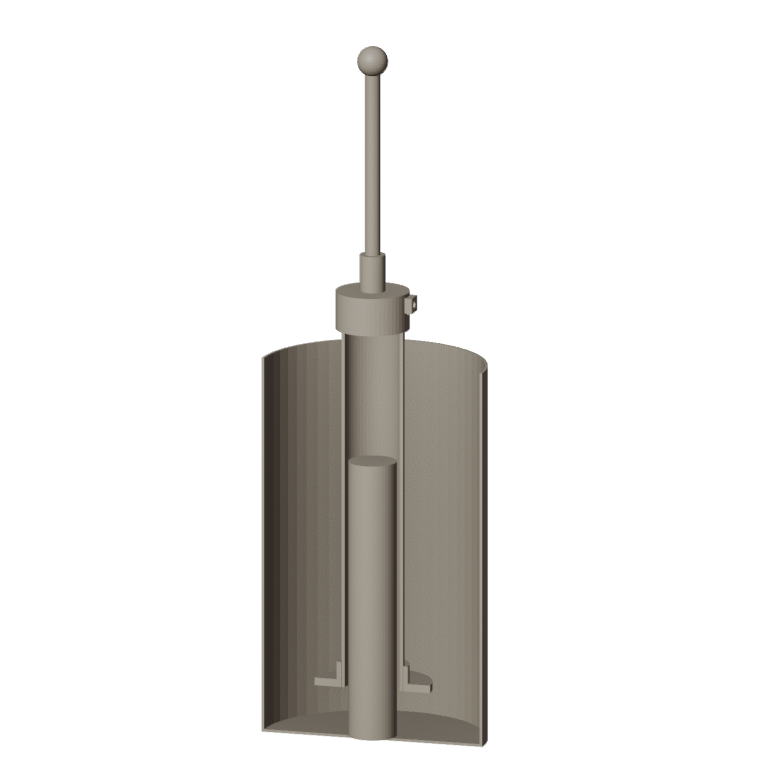
FreeCAD model of this build, not of the patent: the pail, tube and flange cut away to show the loose weighted plunger standing on the bottom inside the tube, the cap with its valve, and the handle.
8
8
Dash and make butter
Dash and make butter
Let the heavy cream stand until it reaches about 15 °C, checked with the thermometer. Pour in 2 litres. Work the tube up and down over the plunger; bubbles should burst from under the flange on each down-stroke. Time until the butter comes. Pour off the buttermilk, add cold water, churn a little and pour off again until it runs clear; work in a pinch of salt and weigh the butter.
Materials for this step:
 Heavy Cream2000 ml
 Coarse Sea Salt1 piece
 Water1 piece
Tools needed:
 Leave-In Probe Thermometer
 Stopwatch
 Digital Kitchen Scale
 Stainless Steel Mixing Bowl (Large)
9
9
No bubbles, a plunger that floats
No bubbles, a plunger that floats
Air-pump tube dasher troubleshooting.
Flow
Loading...
10
10
History and honest limits
History and honest limits
**William M. Wright** of Pittsburgh, Allegheny County, Pennsylvania, received US 6,711, dated 11 September 1849. The plunger was to be "specifically heavier than cream," or wood weighted with a plug of metal; the tub could be any pail, "particularly, if it be deep in comparison with its width." He claimed the combination of the loose plunger with the tubular dasher.
**Honest limits.** A pipe and printed parts stand in for his tinned sheet-iron tube; use a food-grade pipe. FDM prints hold food in their layer lines, so wash well and replace when worn. Your times and weights are the result.
Materials
10- 1 piecePlaceholder
- 1 piecePlaceholder
- 1 piecePlaceholder
- 2 piecesPlaceholder
- 1 piecePlaceholder
- 1 piecePlaceholder
- 1 piecePlaceholder
- 2000 mlPlaceholder
- 1 piecePlaceholder
- 1 piecePlaceholder
Tools Required
8- Placeholder
- Placeholder
- Placeholder
- Placeholder
- Placeholder
- Placeholder
- Placeholder
- Placeholder
Design Files
1Related Blueprints
These blueprints share knowledge with this one — techniques, materials, or principles that connect them in the learning graph.
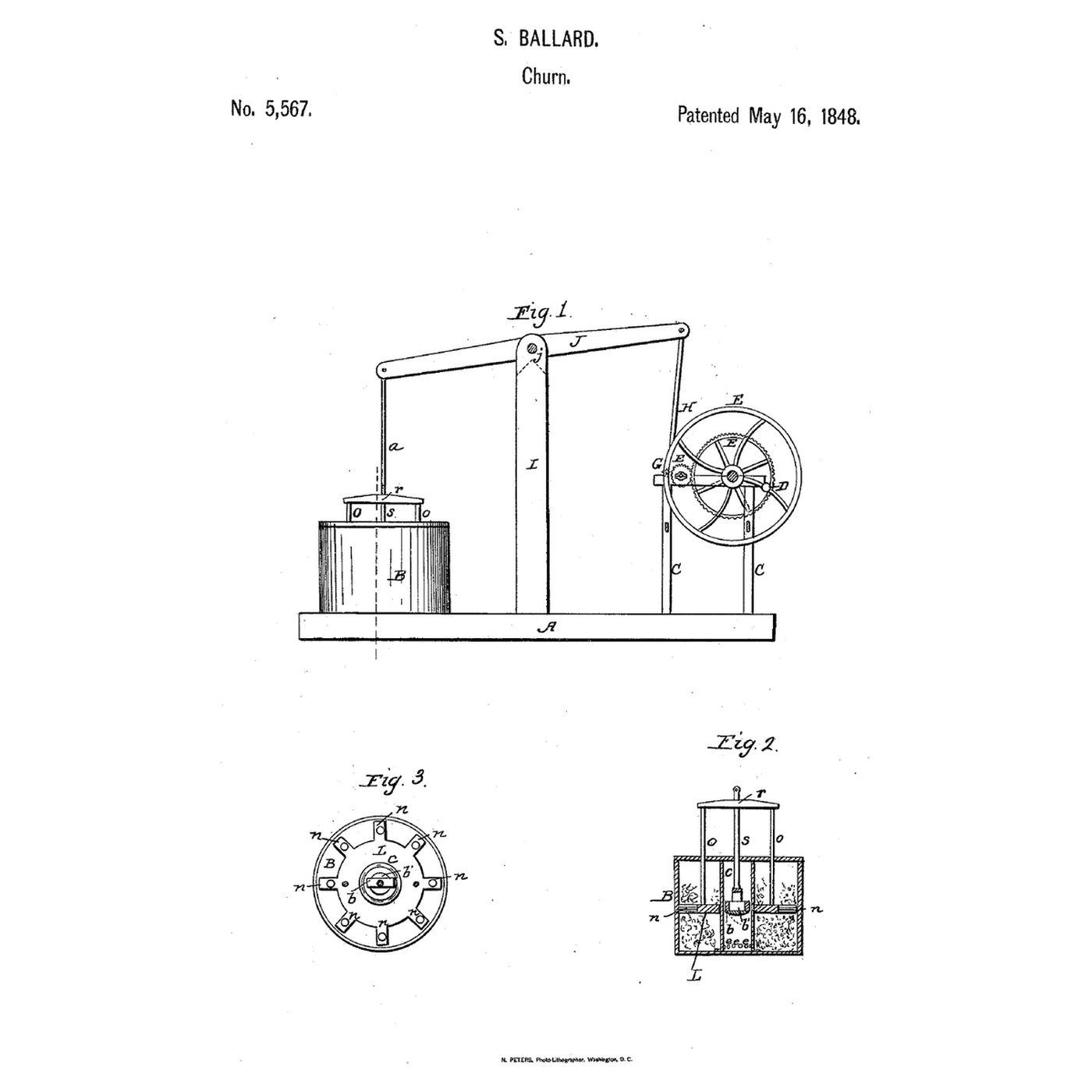
Air-Pump Annular Dasher Churn: A Pump in the Middle, a Ring Dasher Round It
by Martin
FOOD & DRINKS
0
0
0
0
0
0
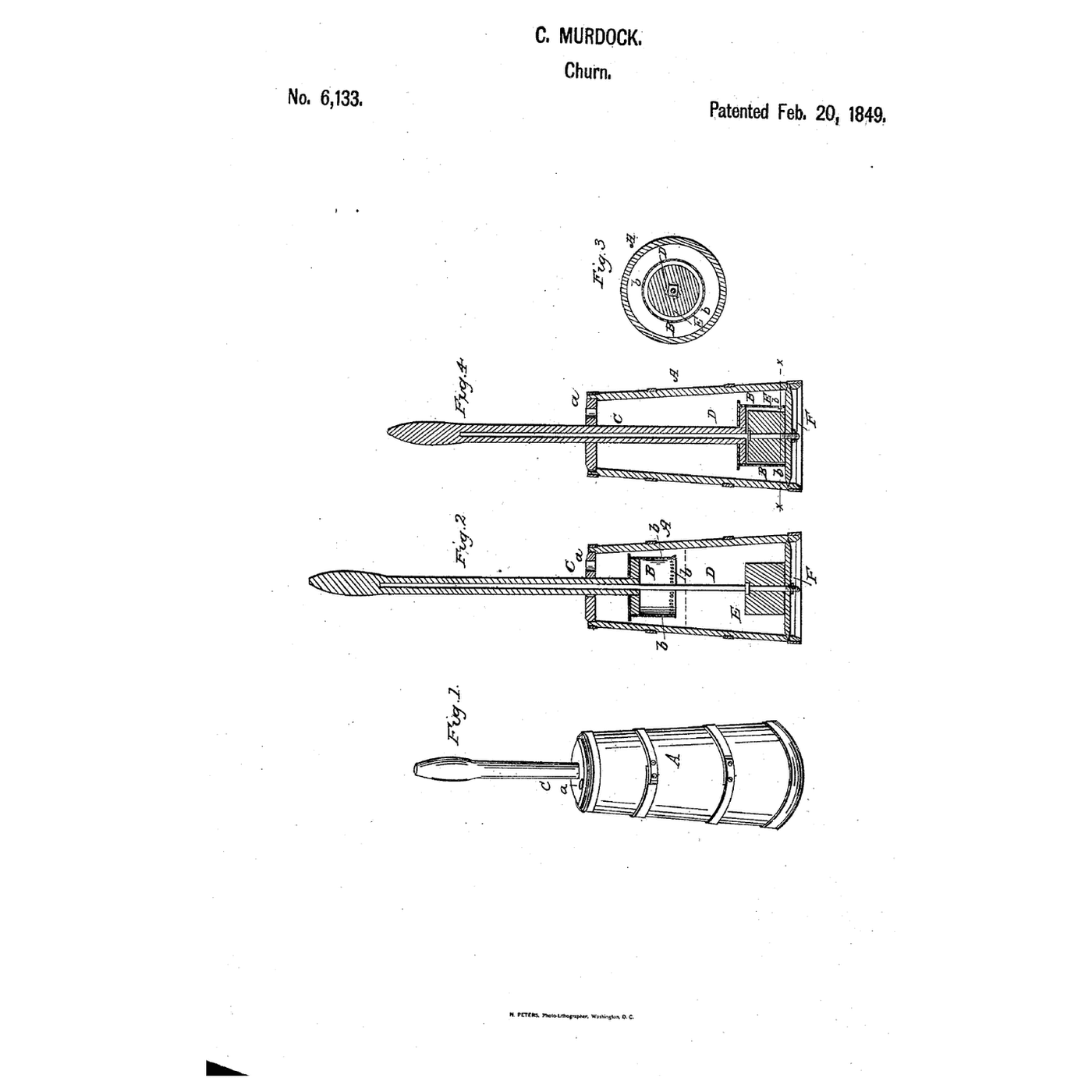
Trapped-Air Cylinder Dash Churn: A Hollow Dash That Squeezes Air Into the Cream
by Emma
FOOD & DRINKS
0
0
0
0
0
0
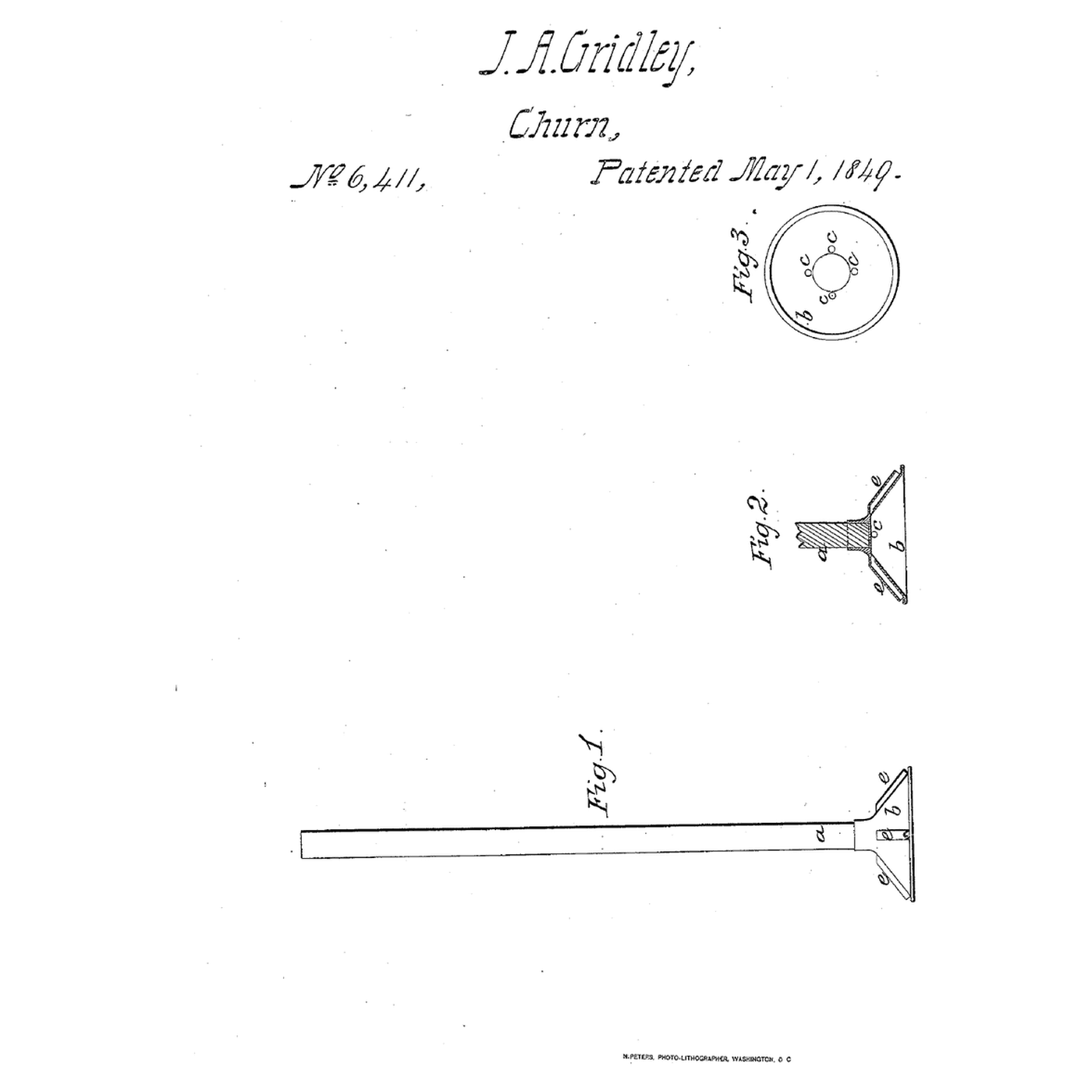
Valveless Cone Air Dasher: A Hollow Cone and Four Tubes, Nothing to Wear Out
by YourGrandma
FOOD & DRINKS
0
0
0
0
0
0
CC0 Public Domain
This blueprint is released under CC0. You are free to copy, modify, distribute, and use this work for any purpose, without asking permission.
Support the Maker by purchasing products through their Blueprint where they earn a Maker Commission set by Vendors, or create a new iteration of this Blueprint and include it as a connection in your own Blueprint to share revenue.