ART
BEAUTY & WELLNESS
CRAFT
CULTURE & HISTORY
ENTERTAINMENT
ENVIRONMENT
FOOD & DRINKS
REVERSE ENGINEERING
SCIENCES
SPORTS
TECHNOLOGY
WEARABLES
Hazardous


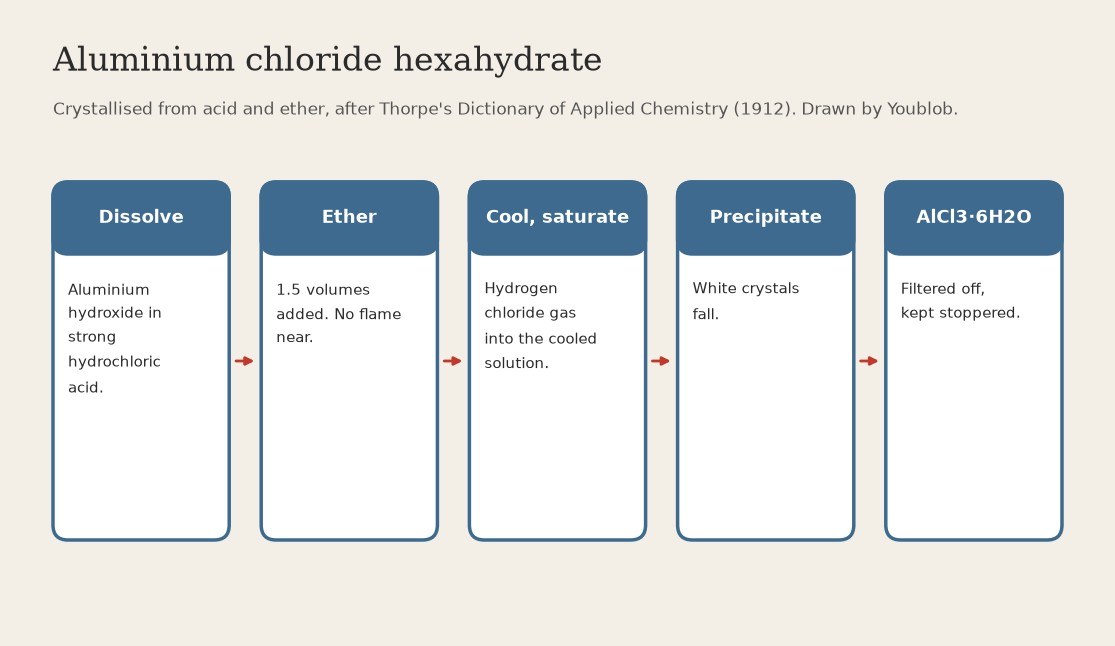
Aluminium Chloride Hexahydrate: Hydroxide in Strong Hydrochloric Acid, Ether Added, Saturated with Hydrogen Chloride (Thorpe 1912)
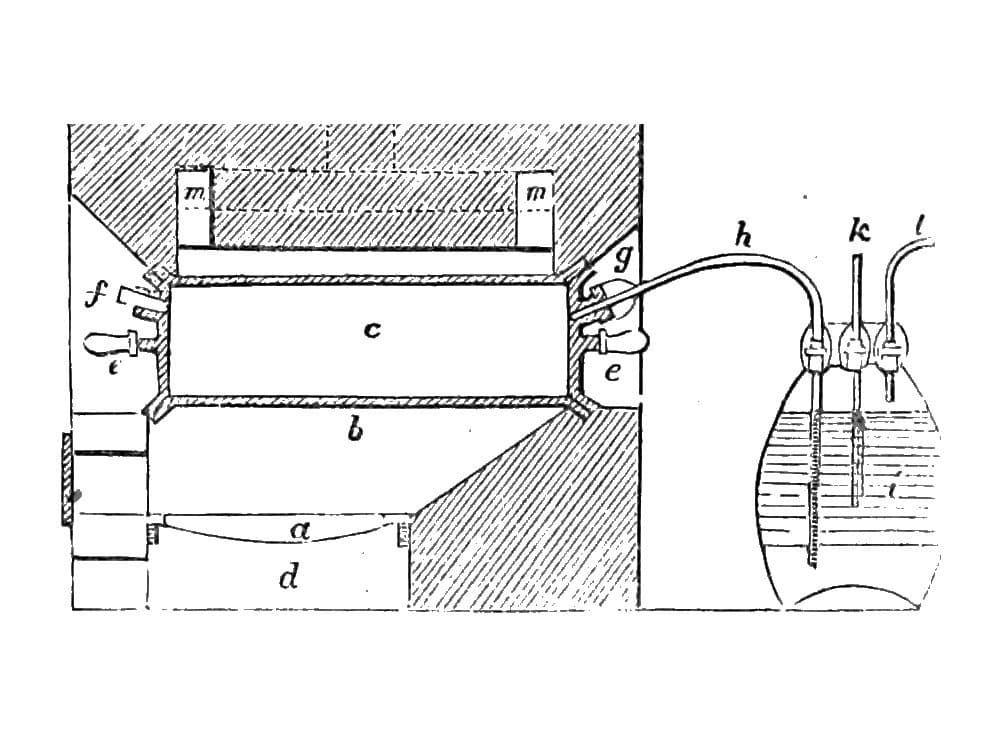
Aluminium chloride dissolves easily in water, so it is hard to crystallise from it. Thorpe's way: dissolve the hydroxide in the acid, add ether, saturate it with hydrogen chloride gas, and the hydrated chloride comes down as white crystals.
Result: a white crystalline precipitate of AlCl3·6H2O.
Source: Thorpe, Dictionary of Applied Chemistry, vol. 1 (1912), Analysis (the aluminium test). Not given: amounts, how it is cooled, how the crystals are dried. Danger: strong hydrochloric acid and hydrogen chloride gas burn, and ether catches fire easily: no flame anywhere near. Picture drawn by Youblob.
Advanced
2 hours
Hazardous content
This blueprint contains hazardous procedures. Log in and enable hazardous content in your account settings to view the step-by-step instructions.
Sign inThis blueprint makes
Related Blueprints
These blueprints share knowledge with this one — techniques, materials, or principles that connect them in the learning graph.
CC0 Public Domain
This blueprint is released under CC0. You are free to copy, modify, distribute, and use this work for any purpose, without asking permission.
Support the Maker by purchasing products through their Blueprint where they earn a Maker Commission set by Vendors, or create a new iteration of this Blueprint and include it as a connection in your own Blueprint to share revenue.