ART
BEAUTY & WELLNESS
CRAFT
CULTURE & HISTORY
ENTERTAINMENT
ENVIRONMENT
FOOD & DRINKS
REVERSE ENGINEERING
SCIENCES
SPORTS
TECHNOLOGY
WEARABLES
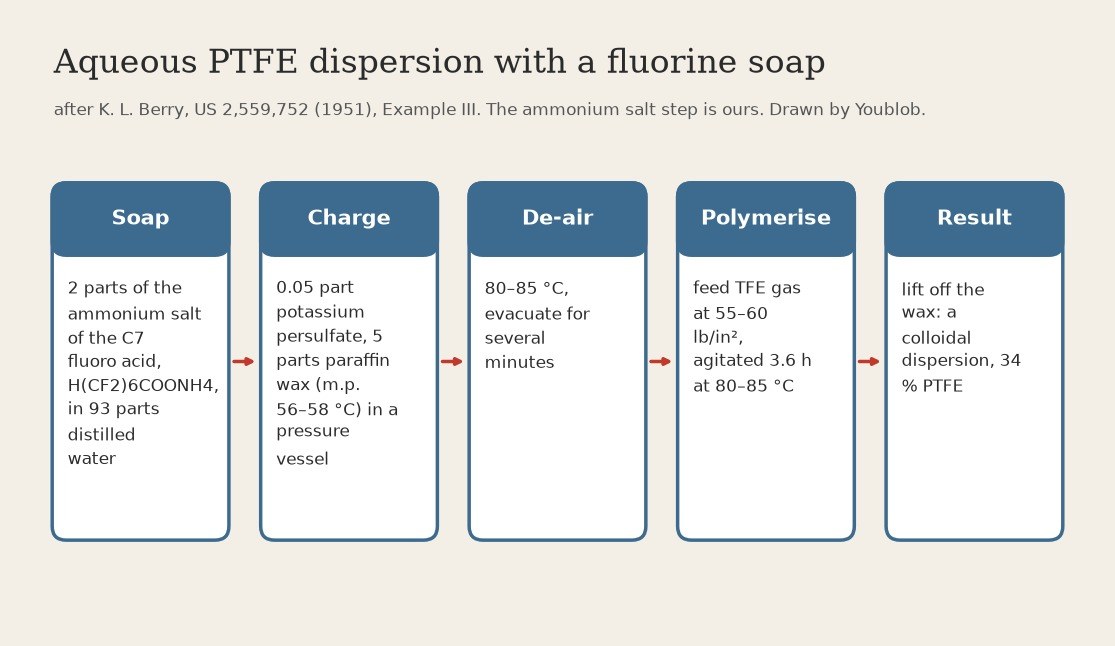

Aqueous PTFE Dispersion: Tetrafluoroethylene Polymerised in Soapy Water (Berry 1951)
Ordinary soaps stop tetrafluoroethylene from growing into long chains. A fluorine soap does not: with 2 % of ammonium dodecafluoroheptanoate in the water, the gas polymerises into tiny PTFE ribbons that stay suspended. The result is a milky dispersion, a third of it polymer, the raw material for PTFE fine powder.
Source: K. L. Berry (du Pont), US 2,559,752 (1951), Example III. Making the ammonium salt from our acid, and the apparatus, are ours. Picture drawn by Youblob.
Advanced
1 day
Instructions
1
1
Make the ammonium salt
Make the ammonium salt
Ours: neutralise about 1.9 parts of dodecafluoroheptanoic acid with ammonia solution until just neutral to litmus, giving 2 parts of ammonium dodecafluoroheptanoate. Make it up with distilled water to 93 parts of water in all. Parts are by weight.
Materials for this step:
 Dodecafluoroheptanoic Acid1.9 parts
 Ammonia Solution - 25-28%1 as required to neutralise
 Distilled Water93 parts
Tools needed:
 Litmus Paper
 Glass Vessel
 Balance Scale
2
2
Load the pressure vessel
Load the pressure vessel
Put the solution in a pressure vessel with 0.05 part of potassium persulfate and 5 parts of paraffin wax melting at 56–58 °C. The wax protects the colloid while it is stirred.
Tools needed:
 Persulfate Initiator
 Paraffin Wax
 Pressure ReactorBalance Scale
3
3
Heat and remove the air
Heat and remove the air
Bring it to 80–85 °C, then evacuate the vessel and hold it under reduced pressure for several minutes to drive out air and dissolved oxygen.
Tools needed:
Pressure Reactor Vacuum Pump
 Thermometer
4
4
Feed tetrafluoroethylene for 3.6 hours
Feed tetrafluoroethylene for 3.6 hours
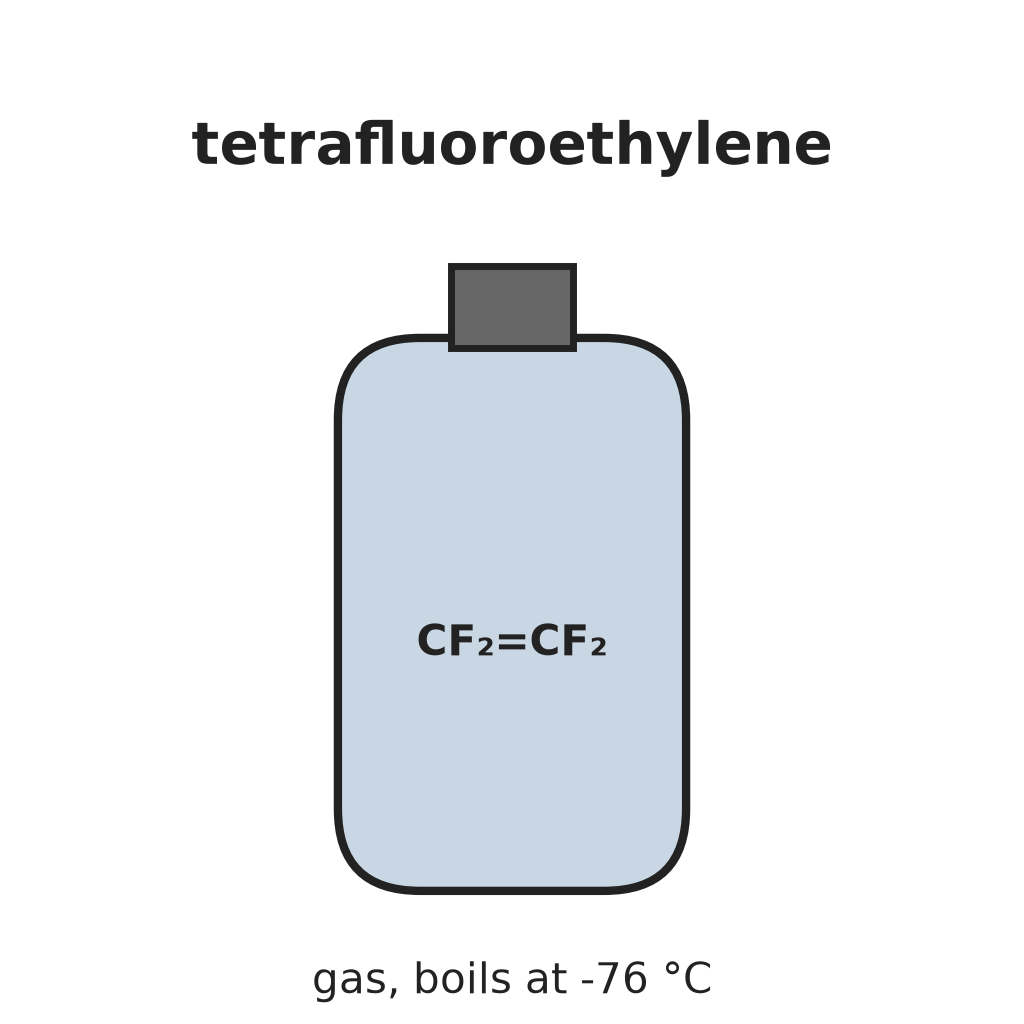
Let in tetrafluoroethylene to 60 lb/sq in gauge. Agitate at 80–85 °C for 3.6 hours; each time the pressure falls to 55 lb/sq in, bring it back to 60.
Materials for this step:
 Tetrafluoroethylene1 as required to hold 55–60 psi
Tools needed:
Pressure Reactor Pressure Gas Cylinder
 Pressure GaugeThermometer
5
5
Cool and lift off the wax
Cool and lift off the wax
Cool it. The paraffin sets on top and lifts off. Below it is a colloidal PTFE dispersion with 34 % solids.
Tools needed:
Pressure Reactor Glass Jars with Lids
Materials
4- 1.9 partsPlaceholder
- 1 as required to neutralisePlaceholder
- 93 partsPlaceholder
- 1 as required to hold 55–60 psiPlaceholder
Tools Required
11- Placeholder
- Placeholder
- Placeholder
- Placeholder
- Placeholder
- Placeholder
- 1 vendor sell this, none ship to you yetPlaceholder
- Placeholder
- Placeholder
- Placeholder
- Placeholder
This blueprint makes
Related Blueprints
These blueprints share knowledge with this one — techniques, materials, or principles that connect them in the learning graph.
Hazardous
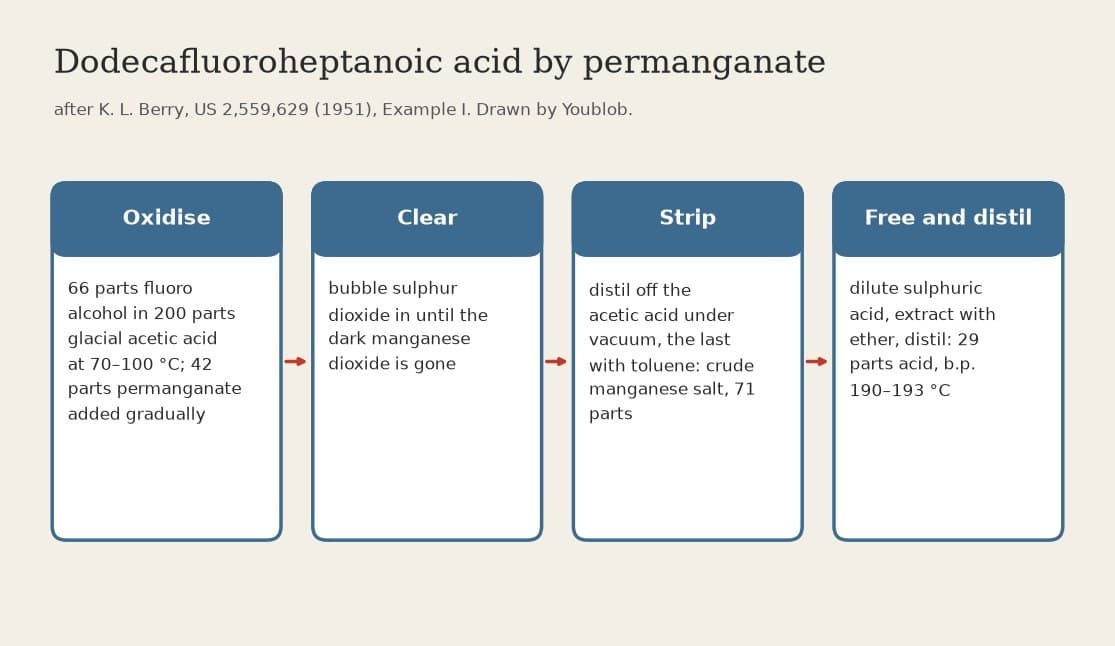
Dodecafluoroheptanoic Acid: the Fluoro Alcohol Oxidised with Permanganate (Berry 1951)
by Charlie
Industrial
1
0
0
0
0
0
Hazardous
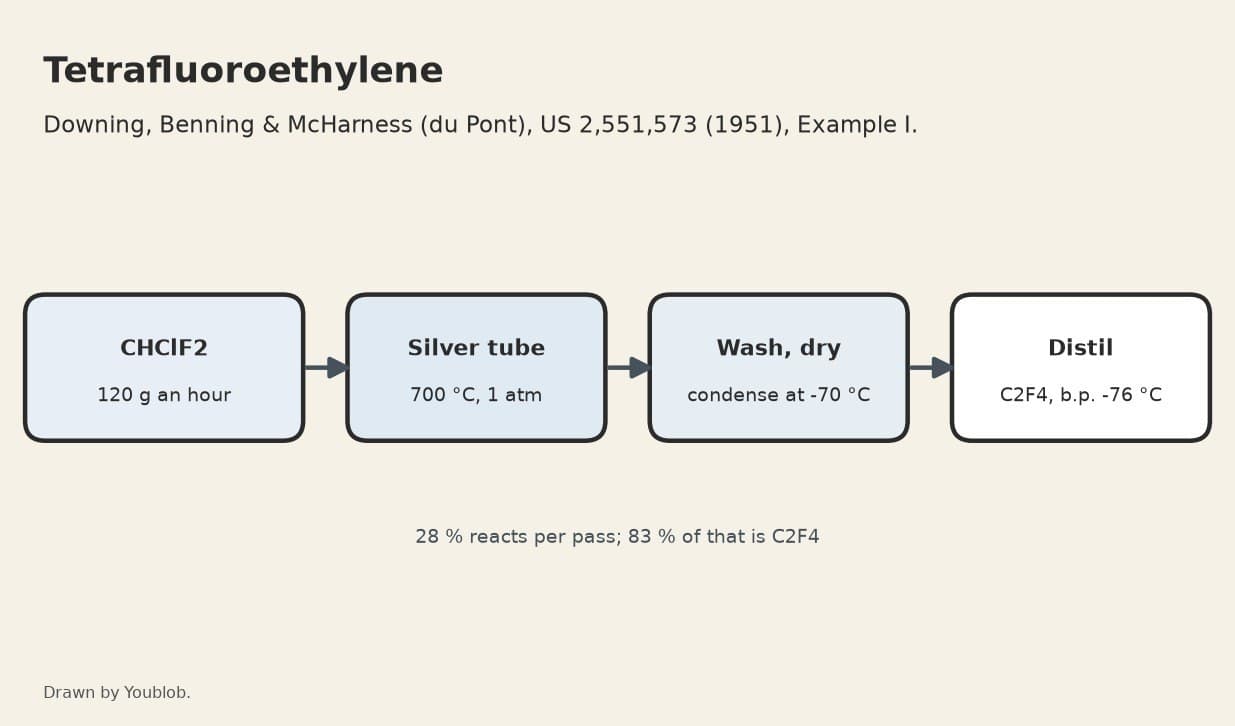
Tetrafluoroethylene: Chlorodifluoromethane Pyrolysed in a Silver Tube at 700 °C
by Charlie
Industrial
7
0
0
0
0
0
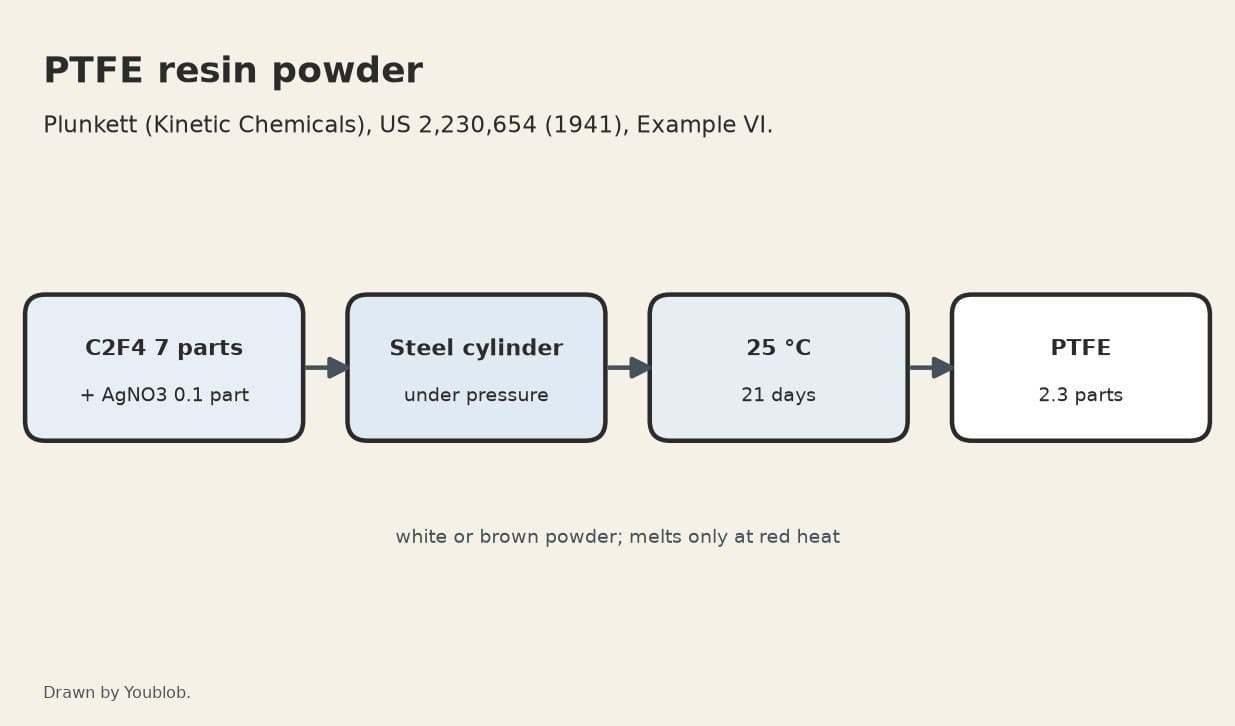
PTFE Resin Powder: Tetrafluoroethylene Polymerised under Pressure, Plunkett 1941
by Charlie
Industrial
1
0
0
0
0
0
CC0 Public Domain
This blueprint is released under CC0. You are free to copy, modify, distribute, and use this work for any purpose, without asking permission.
Support the Maker by purchasing products through their Blueprint where they earn a Maker Commission set by Vendors, or create a new iteration of this Blueprint and include it as a connection in your own Blueprint to share revenue.