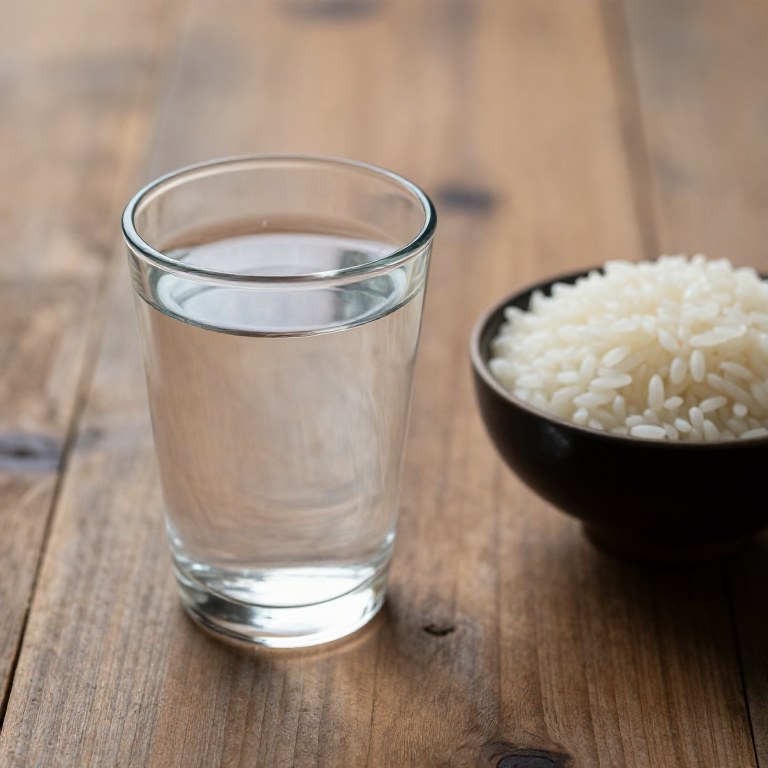

Arrack (Spirit of Rice): Rice Flour Gelatinised, Saccharified with Malt, Fermented and Distilled (Byrn, 1868)
Instructions
Read Byrn, and the law
Read Byrn, and the law
The still
The still
His measures in metric
His measures in metric
Grind rice and malt fine
Grind rice and malt fine
Materials for this step:
 White Rice1 as required
 Pale Malt1 as required
Tools needed:
 Grain Mill
Rice and water, 77-80 F
Rice and water, 77-80 F
Materials for this step:
 Water1 as required
Tools needed:
 Wooden Tub
 Wooden Spoon
 Cooking Thermometer
Steep the malt apart
Steep the malt apart
Materials for this step:
Water1 as requiredTools needed:
 Large Cooking PotCooking Thermometer
Thicken to 180 F
Thicken to 180 F
Materials for this step:
Water1 as requiredTools needed:
Large Cooking PotWooden SpoonCooking ThermometerMash in the malt
Mash in the malt
Tools needed:
Wooden TubWooden SpoonThin and cool
Thin and cool
Materials for this step:
Water1 as requiredTools needed:
 HydrometerCooking Thermometer
Ferment as for corn
Ferment as for corn
Materials for this step:
 Brewing Yeast1 as required
Tools needed:
 Wooden BarrelCooking Thermometer
Charge and lute the still
Charge and lute the still
Materials for this step:
 Calcium Carbonate - Whiting1 as required
 Rye Flour1 as requiredWater1 as required
Tools needed:
 Distillation Still
Raise the fire by degrees
Raise the fire by degrees
Tools needed:
Distillation Still Woven Wool Blanket
Set aside the first runnings
Set aside the first runnings
Tools needed:
 Measuring Jug
Run the low wines
Run the low wines
Tools needed:
Distillation Still CandleWooden BarrelHydrometer
Double the low wines
Double the low wines
Tools needed:
Distillation StillCut at the bead
Cut at the bead
Tools needed:
 Glass Vial (Small, for Specimens)Measuring Jug
Collect the feints, stop the fire
Collect the feints, stop the fire
Tools needed:
Wooden BarrelCandleBring to proof
Bring to proof
Materials for this step:
Water1 as requiredTools needed:
HydrometerMeasuring JugRedistil the feints
Redistil the feints
Materials for this step:
 Salt1.8 kg
Tools needed:
Distillation StillKeep it in glass
Keep it in glass
Materials for this step:
 Glass Bottles with Stoppers1 piece
Tools needed:
Measuring JugTroubleshooting
Troubleshooting
Flow
History and honest limits
History and honest limits
Materials
8- 1 as requiredPlaceholder
- 1 as requiredPlaceholder
- 6 as requiredPlaceholder
- 1 as requiredPlaceholder
- 1 as requiredPlaceholder
- 1 as requiredPlaceholder
- 1.8 kgPlaceholder
- 1 piecePlaceholder
Tools Required
12- Placeholder
- Placeholder
- Placeholder
- Placeholder
- Placeholder
- Placeholder
- Placeholder
- Placeholder
- Placeholder
- Placeholder
- Placeholder
- Placeholder
Connected Blueprint Materials


This blueprint makes
Related Blueprints
These blueprints share knowledge with this one — techniques, materials, or principles that connect them in the learning graph.
Malt Whisky: Malt and Barley Meal Mashed at 150 F, Fermented 8 to 12 Days and Distilled (Byrn, 1868)
by Alchometer
Alcoholic Drinks
Dutch Geneva (Genever): Malt and Rye Mashed at 162 F, Distilled Three Times with Juniper and Hops (Byrn, 1868)
by Alchometer
Alcoholic Drinks
Brewing Sake Rice Wine — Parallel Fermentation with Koji
by Alchometer
Brewing
CC0 Public Domain
This blueprint is released under CC0. You are free to copy, modify, distribute, and use this work for any purpose, without asking permission.
Support the Maker by purchasing products through their Blueprint where they earn a Maker Commission set by Vendors, or create a new iteration of this Blueprint and include it as a connection in your own Blueprint to share revenue.