ART
BEAUTY & WELLNESS
CRAFT
CULTURE & HISTORY
ENTERTAINMENT
ENVIRONMENT
FOOD & DRINKS
REVERSE ENGINEERING
SCIENCES
SPORTS
TECHNOLOGY
WEARABLES
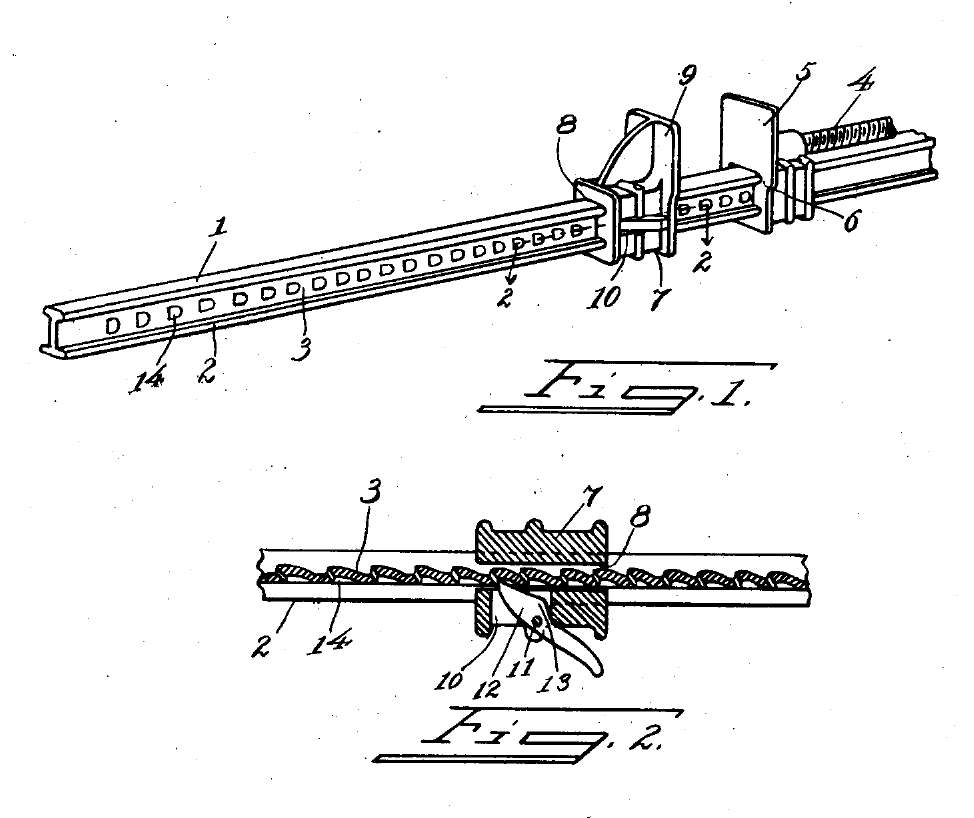


Bar Clamp with Die-Formed Notches: Hargrave, 1927
A cabinetmaker's bar clamp has a screw-adjusted jaw at one end of a bar and a sliding jaw held by a pawl in teeth along the bar. Teeth cut into the bar's edge weaken it, cannot be spaced closely, and wear until the pawl slips. John M. Hargrave of Cincinnati patented the fix in 1927, US 1,638,848: use an I-section bar and press a row of depressions into the side of its web with dies. Each depression has an abrupt, deep shoulder for the pawl and a sloping face away from it. Nothing is cut away, the corrugations stiffen the bar, the notches can be close together, and pressing them is cheaper than cutting.
Intermediate
Workshop process
Instructions
1
1
Form the notches
Form the notches
Press a row of spaced depressions into the web of the I-section bar with a die in a press. Each has an abrupt wall or shoulder at one end and a sloping face towards the other.
Materials for this step:
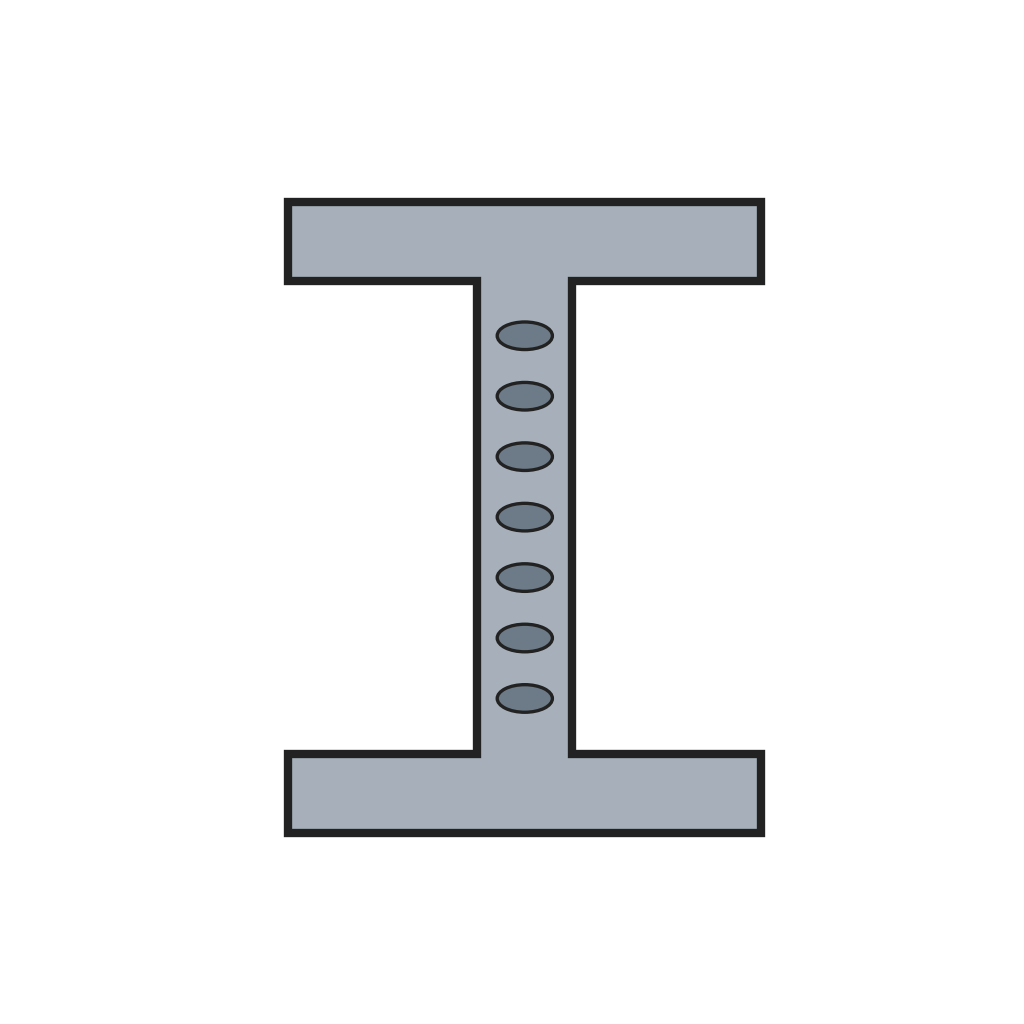 I-Section Clamp Bar1 piece
Tools needed:
 Stamping Press
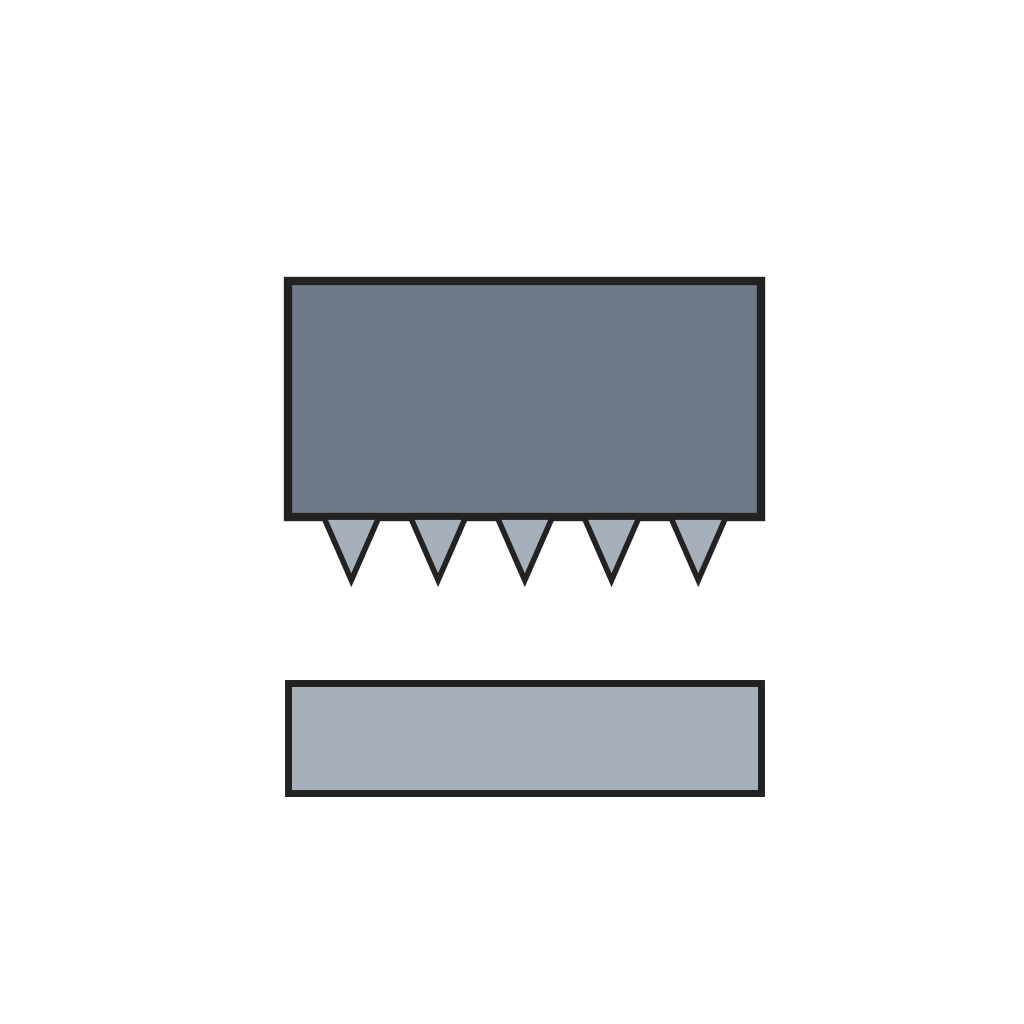 Notch-Forming Die
2
2
Screw jaw
Screw jaw
Fit the clamp member with an I-shaped recess snugly over one end of the bar; its position is set by the screw.
Materials for this step:
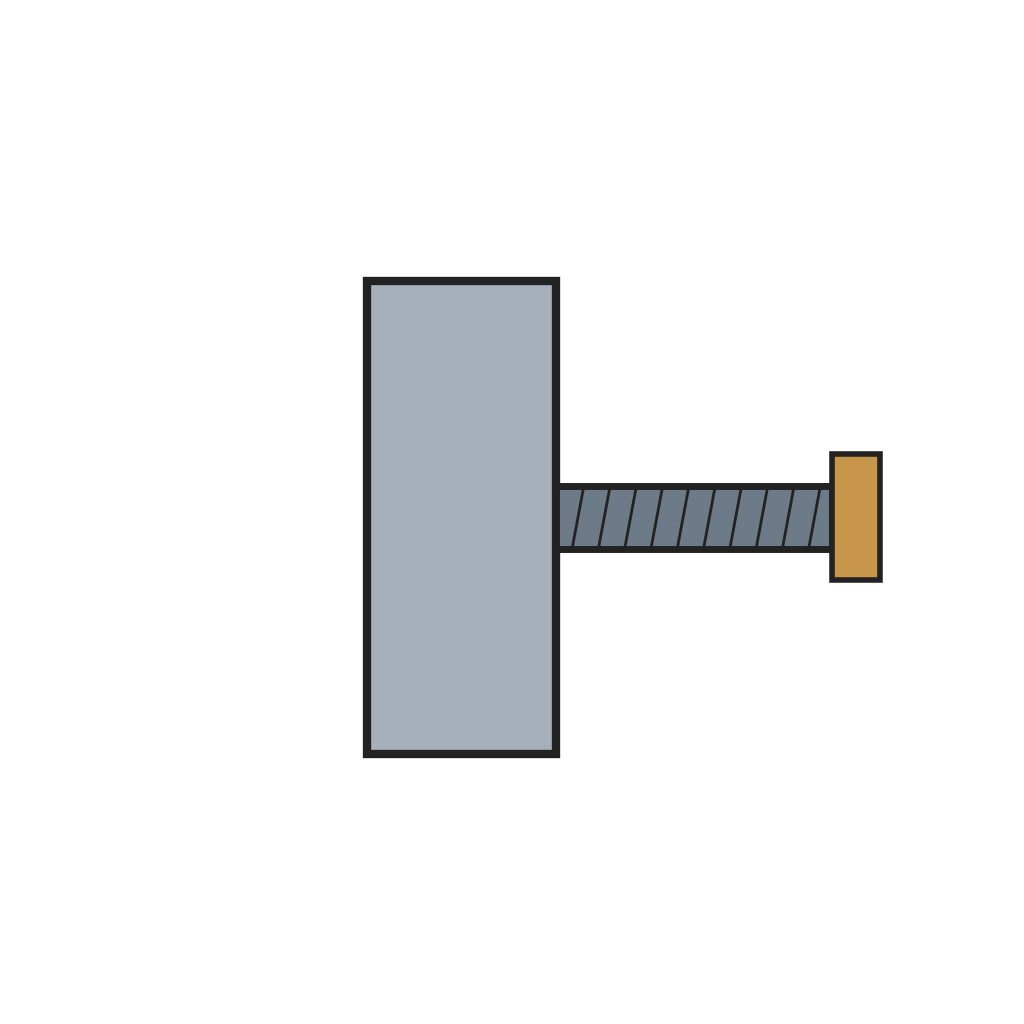 Screw-Adjusted Clamp Member1 piece
3
3
Pawl slider
Pawl slider
Slide on the body with its I-shaped recess and clamp face. Pivot the pawl on a pin across the aperture in its side, with a shoulder that rocks against the front face of the aperture to take the strain off the pin. The pawl's point abuts the shoulders of the depressions and drags over the sloping faces when the slider is moved.
Materials for this step:
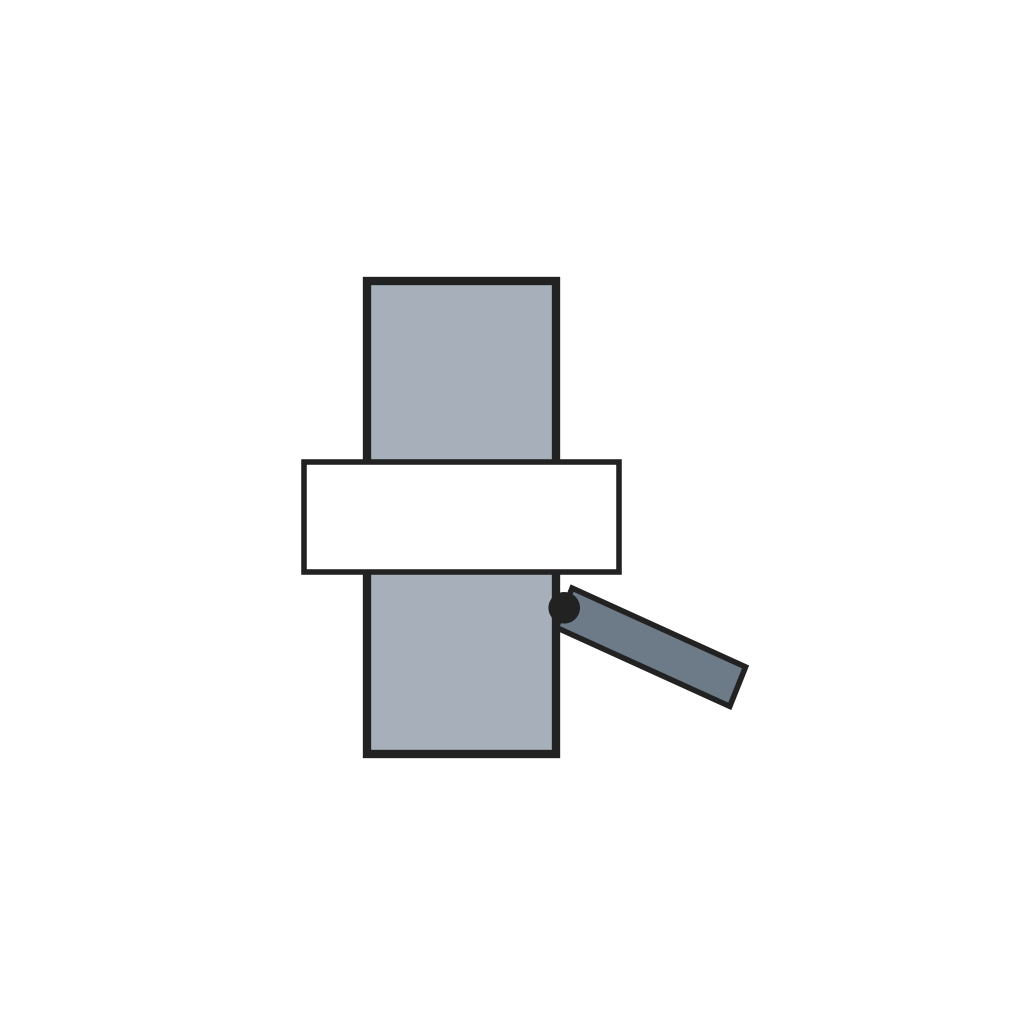 Pawl Slider1 piece
Materials
3- 1 piecePlaceholder
- 1 piecePlaceholder
- 1 piecePlaceholder
Tools Required
2- Placeholder
- Placeholder
This blueprint makes

Related Blueprints
These blueprints share knowledge with this one — techniques, materials, or principles that connect them in the learning graph.

CC0 Public Domain
This blueprint is released under CC0. You are free to copy, modify, distribute, and use this work for any purpose, without asking permission.
Support the Maker by purchasing products through their Blueprint where they earn a Maker Commission set by Vendors, or create a new iteration of this Blueprint and include it as a connection in your own Blueprint to share revenue.