ART
BEAUTY & WELLNESS
CRAFT
CULTURE & HISTORY
ENTERTAINMENT
ENVIRONMENT
FOOD & DRINKS
REVERSE ENGINEERING
SCIENCES
SPORTS
TECHNOLOGY
WEARABLES
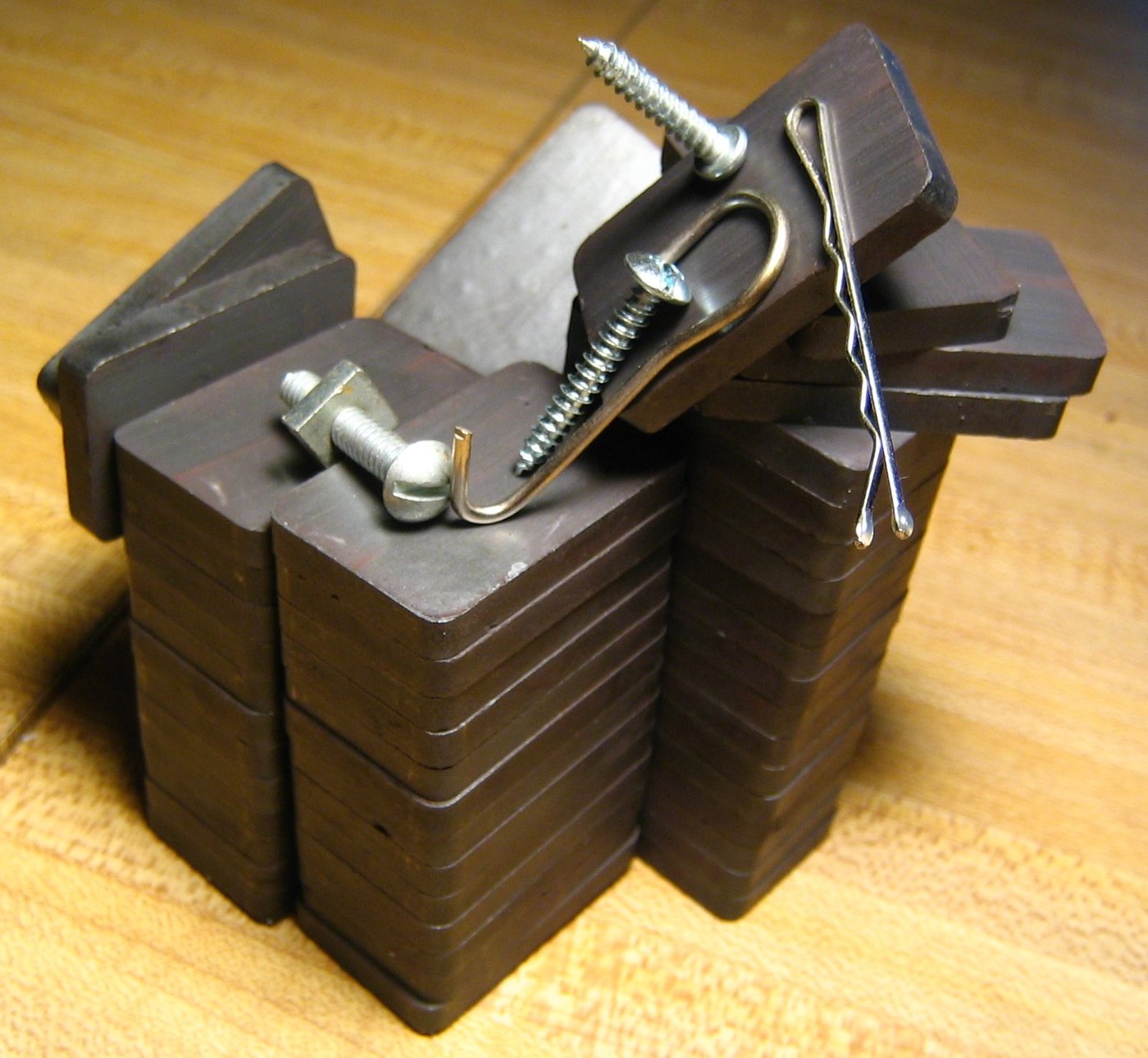


Barium Ferrite Disc Magnet: Fired in Carbon Dioxide, Pressed at 12 t/cm² (Went, Philips 1956, Ex. 33)
A barium ferrite made with more iron oxide, 0.4 mol barium carbonate to 3.6 mol, fired an hour at 1300 °C in carbon dioxide. Little oxygen gives the hexagonal crystal BaFe18O27, with some iron in the lower state. It is milled again, bound with nitrocellulose or polyvinyl alcohol, and pressed hard at 12 tonnes per cm². Went's rod held 1,260 gauss with a coercive force of 700 oersted.
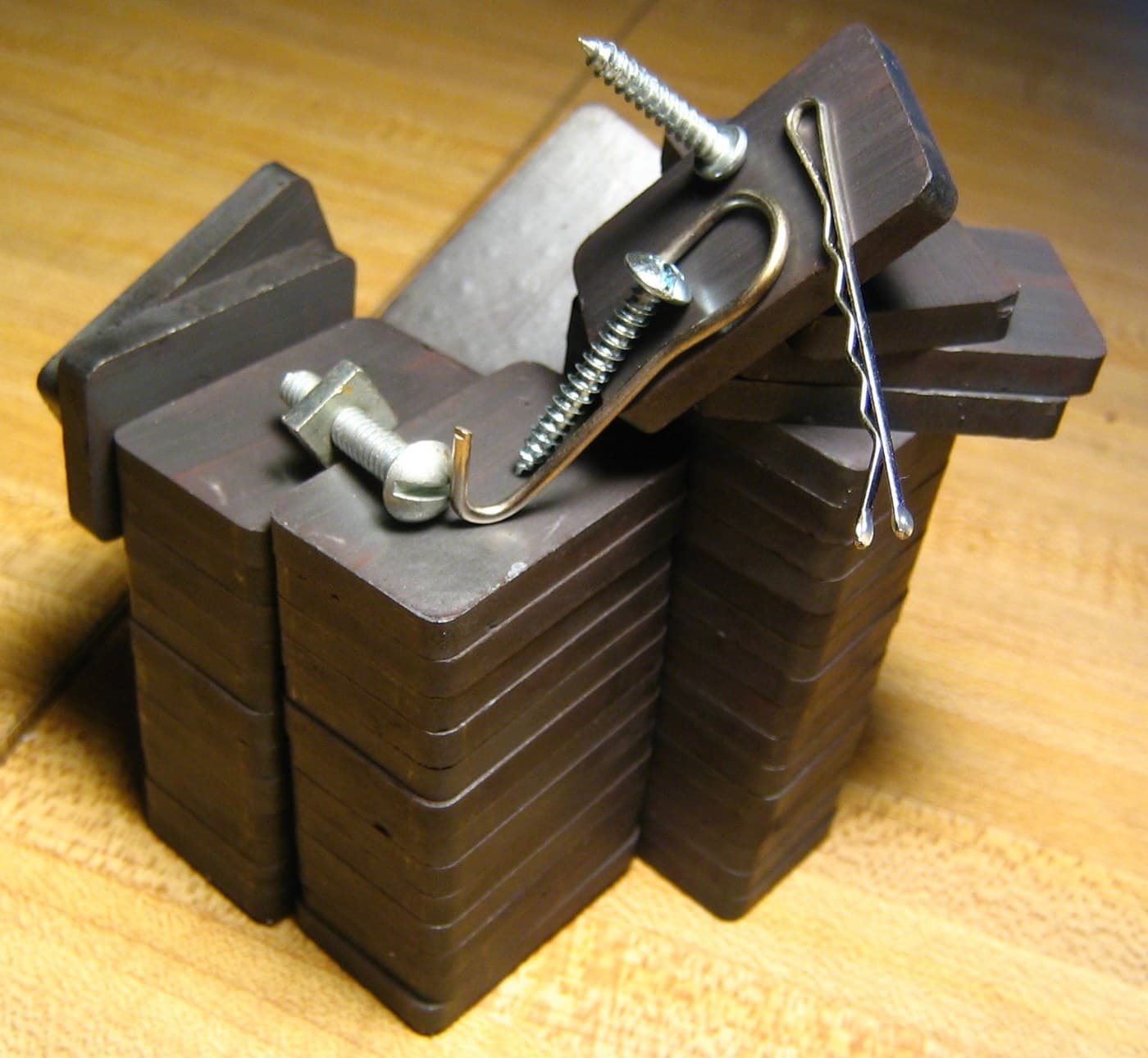
Source: J. J. Went, G. W. van Oosterhout and E. W. Gorter (Philips), US 2,762,777 (1956), Example 33. They sintered rods; discs and the magnetising are ours. Picture: ferrite magnets, Omegatron, Wikimedia Commons, CC BY-SA 3.0.
Advanced
2 days
Instructions
1
1
Weigh barium carbonate and iron oxide
Weigh barium carbonate and iron oxide
Weigh 79.4 g barium carbonate (0.4 mol) and 580.9 g ferric oxide (3.6 mol). Barium carbonate is poisonous if swallowed: gloves and a dust respirator.
Materials for this step:
 Barium Carbonate (Witherite)79.4 g
 Ferric Oxide580.9 g
Tools needed:
 Balance Scale
 Rubber Gloves
 P100 Respirator
2
2
Mill 15.5 hours, press a pastille, fire in CO2
Mill 15.5 hours, press a pastille, fire in CO2
Grind with alcohol in a ball mill for 15.5 hours, dry, and press into a pastille. Heat it at 1300 °C in carbon dioxide for 1 hour (ours: a tube furnace fed from a CO2 cylinder).
Tools needed:
 Iron Ball Mill
 Ethanol - Lab Grade, 95%
 Drying Oven
 Hydraulic Press
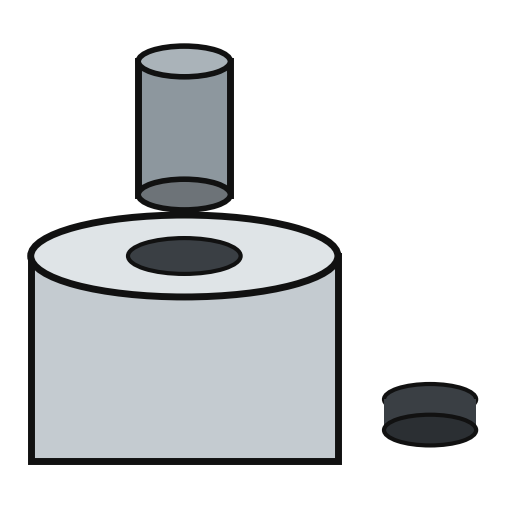 Disc Pressing Die
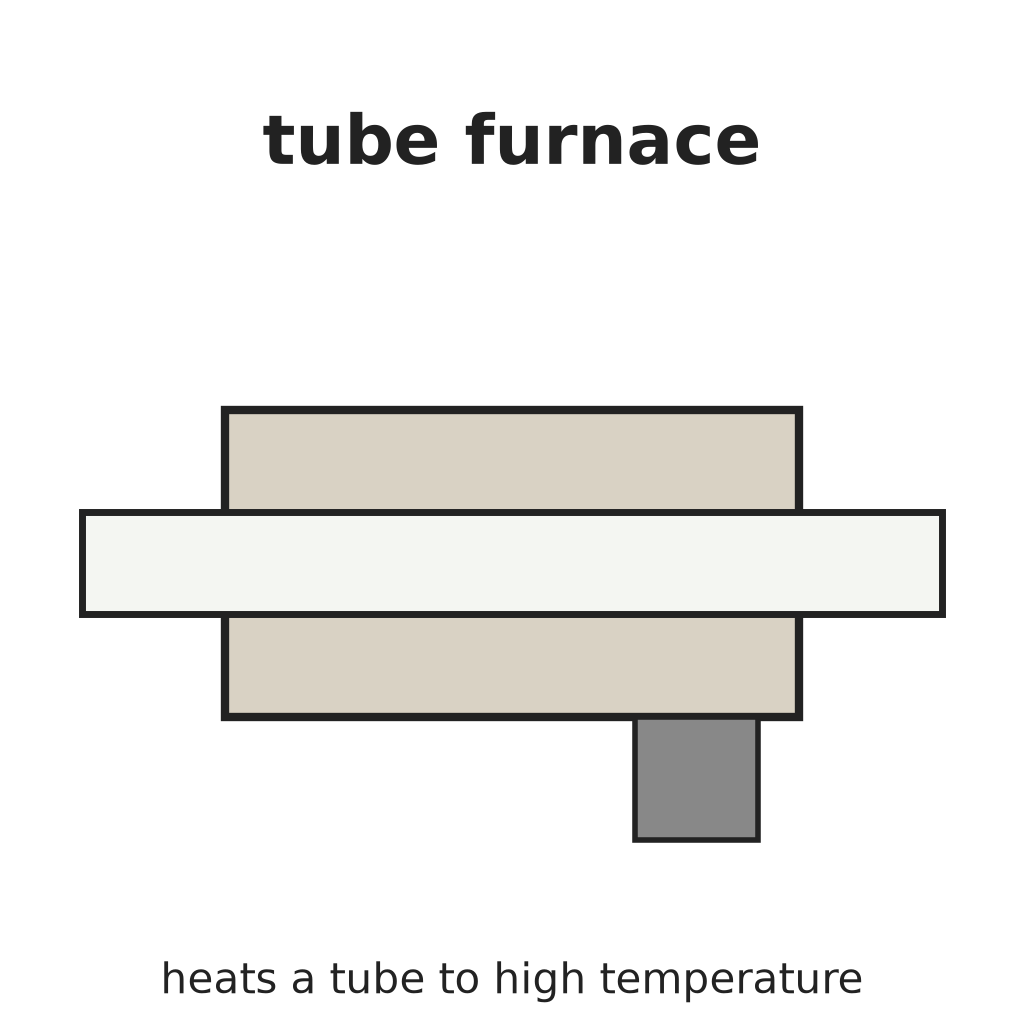 Tube Furnace
 Carbon Dioxide Gas
 Pressure Gas Cylinder
 Heat-Resistant Gloves
3
3
Pulverise, mill 14 hours, bind
Pulverise, mill 14 hours, bind
Crush the cooled pastille and grind it with alcohol for 14 hours. Press the powder into a pastille again with a ceramic binder (ours: polyvinyl alcohol, one of the two named), then crush it to grains.
Materials for this step:
 Polyvinyl Alcohol Powder1 as required
Tools needed:
Iron Ball MillEthanol - Lab Grade, 95%Hydraulic PressDisc Pressing Die4
4
Press at 12 tonnes per cm²
Press at 12 tonnes per cm²
Press the grains at 12 tonnes per cm² (ours: discs instead of rods). The patent describes no further firing.
Tools needed:
Hydraulic PressDisc Pressing Die5
5
Magnetise the discs
Magnetise the discs
The patent gives no magnetising method. Ours: lay a disc with its faces against the poles of a strong electromagnet, switch the current on, then off. Find which face is north with a compass.
Tools needed:
 Electromagnet
 Compass
Materials
3- Placeholder
- 580.9 gPlaceholder
- 1 as requiredPlaceholder
Tools Required
14- Placeholder
- Placeholder
- Placeholder
- Placeholder
- Placeholder
- Placeholder
- Placeholder
- Placeholder
- Placeholder
- Placeholder
- Placeholder
- Placeholder
- Placeholder
- Placeholder
This blueprint makes
Related Blueprints
These blueprints share knowledge with this one — techniques, materials, or principles that connect them in the learning graph.
CC0 Public Domain
This blueprint is released under CC0. You are free to copy, modify, distribute, and use this work for any purpose, without asking permission.
Support the Maker by purchasing products through their Blueprint where they earn a Maker Commission set by Vendors, or create a new iteration of this Blueprint and include it as a connection in your own Blueprint to share revenue.