ART
BEAUTY & WELLNESS
CRAFT
CULTURE & HISTORY
ENTERTAINMENT
ENVIRONMENT
FOOD & DRINKS
REVERSE ENGINEERING
SCIENCES
SPORTS
TECHNOLOGY
WEARABLES
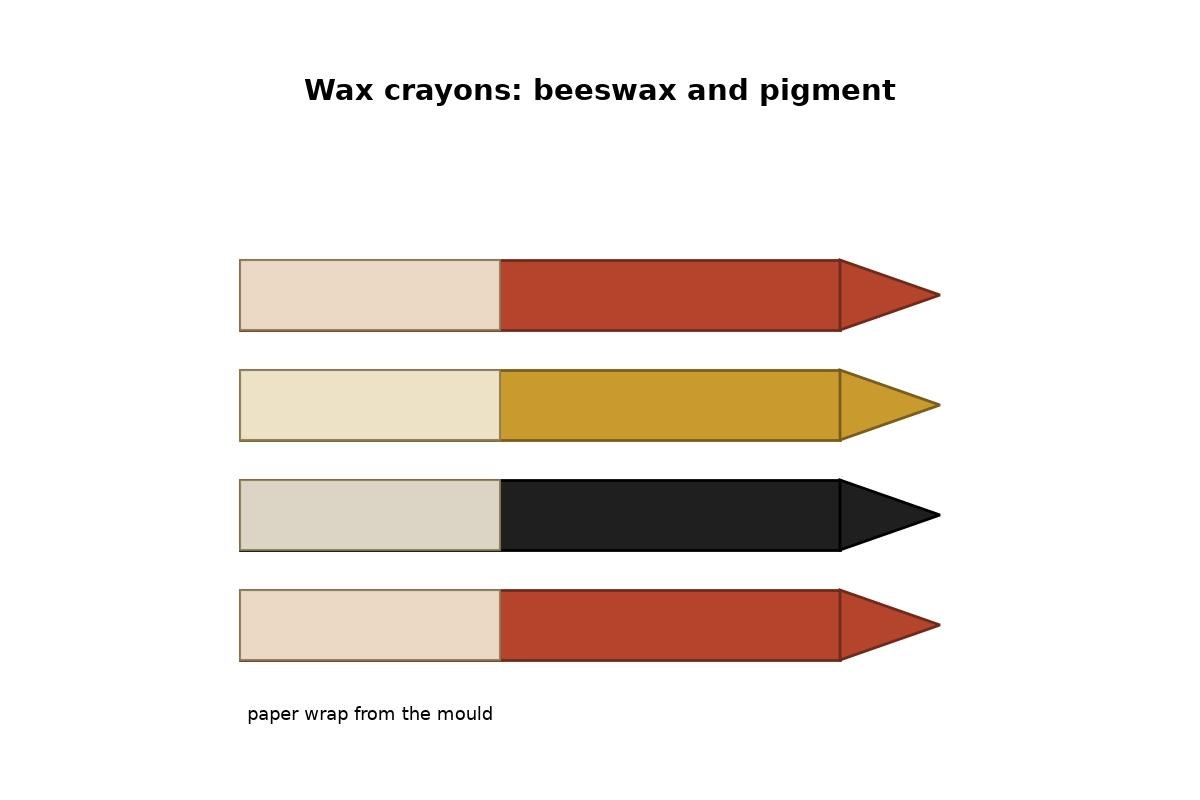


Wax Crayons from Beeswax and Earth Pigments
A crayon is a stick of pigmented wax for writing and drawing; painters long bound pigment in hot beeswax. Melt beeswax, stir in finely ground red ochre or lampblack, and pour it into rolled paper tubes stood in sand. When cold, the paper stays on as a wrapper.
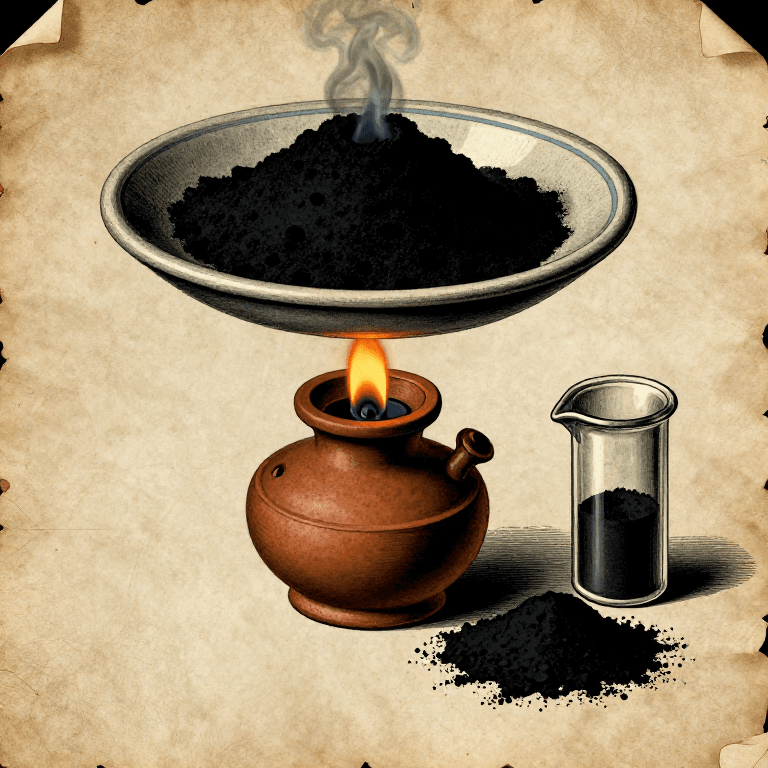
The picture: our diagram of wrapped crayons.
Beginner
Half a day
Instructions
1
1
Roll the moulds
Roll the moulds
Roll strips of paper round a dowel into tubes, paste the seam, slide them off and stand them upright in a pan of sand, open end up.
Materials for this step:
 Paper12 sheets
 Wheat Paste20 g
Tools needed:
 Hardwood Dowels
 Shallow Metal Pan
 Sand
Sand Utility Knife
2
2
Grind the pigment
Grind the pigment
Grind the pigment very fine in the mortar so it does not settle in streaks.
Materials for this step:
 Red Ochre Pigment20 g
 Lampblack10 g
Tools needed:
 Mortar and Pestle
 Balance Scale
3
3
Melt and colour
Melt and colour
Melt the beeswax in the double boiler and stir in the pigment, one colour per batch, until smooth.
Materials for this step:
 Beeswax100 g
Tools needed:
 Double BoilerBalance Scale
4
4
Pour
Pour
Stir as you pour into the paper tubes so the pigment stays mixed. Let them cool fully, then pare one end to a point.
Tools needed:
Double BoilerUtility Knife5
5
Wax and pigment
Wax and pigment
Loading Jupyter Notebook...
Materials
5- 12 sheetsPlaceholder
- 20 gPlaceholder
- Placeholder
- 10 gPlaceholder
- 100 gPlaceholder
Tools Required
7- Placeholder
- Placeholder
- Placeholder
- Placeholder
- Placeholder
- Placeholder
- Placeholder
This blueprint makes

Related Blueprints
These blueprints share knowledge with this one — techniques, materials, or principles that connect them in the learning graph.



CC0 Public Domain
This blueprint is released under CC0. You are free to copy, modify, distribute, and use this work for any purpose, without asking permission.
Support the Maker by purchasing products through their Blueprint where they earn a Maker Commission set by Vendors, or create a new iteration of this Blueprint and include it as a connection in your own Blueprint to share revenue.