Collaboration
ART
BEAUTY & WELLNESS
CRAFT
CULTURE & HISTORY
ENTERTAINMENT
ENVIRONMENT
FOOD & DRINKS
REVERSE ENGINEERING
SCIENCES
SPORTS
TECHNOLOGY
WEARABLES


Woven-Top Stool: Mortised, Braced Frame With a Diagonal Reed Seat (Boy Mechanic, 1915)
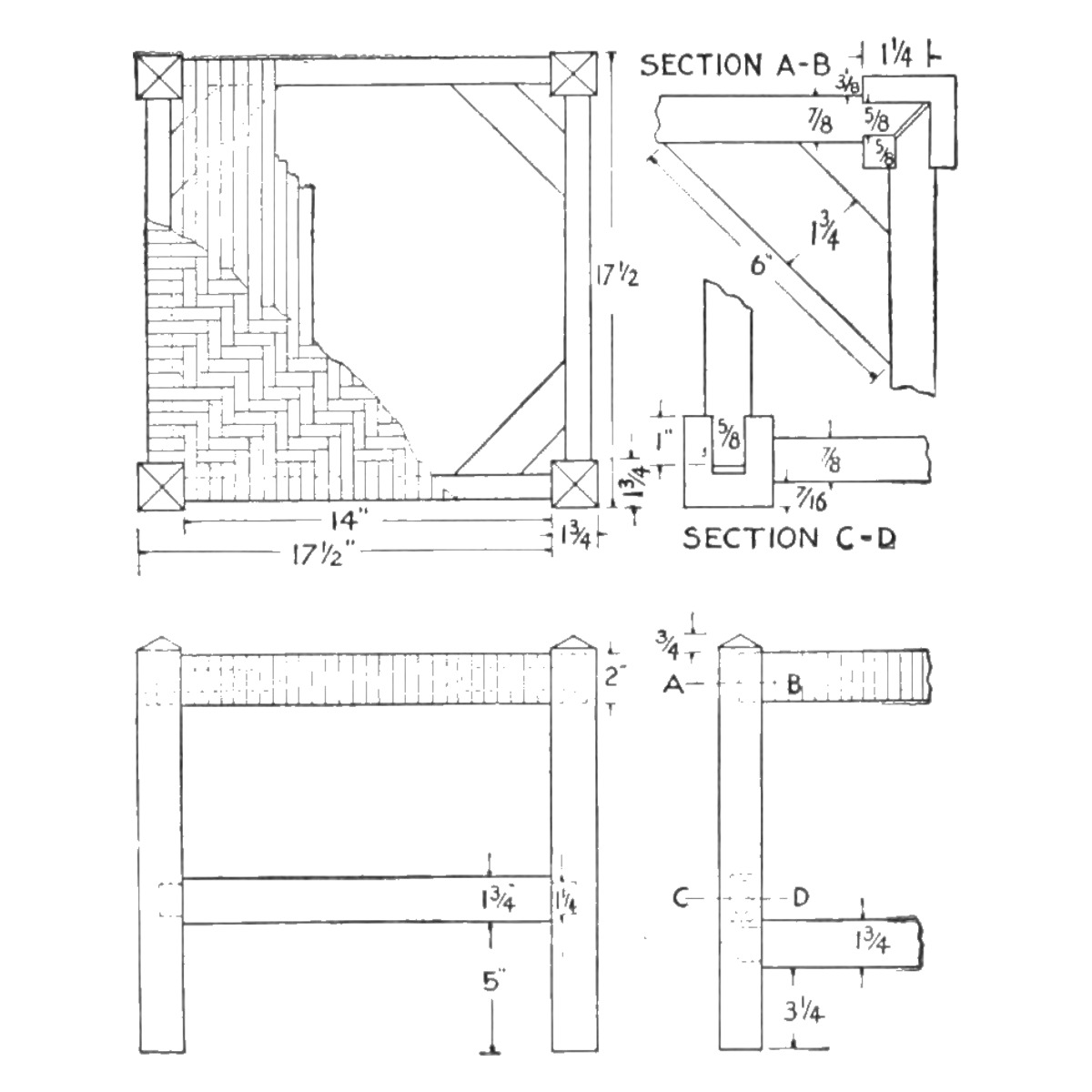
Russel Dodsworth's stool from The Boy Mechanic, Book 2 (1915): a 17-1/2 in square mortise-and-tenon frame with corner braces, its top woven from wet reed in two layers, the second laid over-three-under-three so a diagonal pattern runs across the seat.
Intermediate
About 2 days
Instructions
1
1
His cutting list, and the weave
His cutting list, and the weave
Loading Jupyter Notebook...
2
2
Read The Boy Mechanic, Book 2
Read The Boy Mechanic, Book 2
The material: 4 legs, 1-3/4 by 1-3/4 by 16 in; 4 bottom rails, 7/8 by 1-3/4 by 16 in; 4 top rails, 7/8 by 2 by 16-1/2 in; 4 diagonal braces, 7/8 by 1-3/4 by 6 in.
3
3
Cut and mortise the frame
Cut and mortise the frame
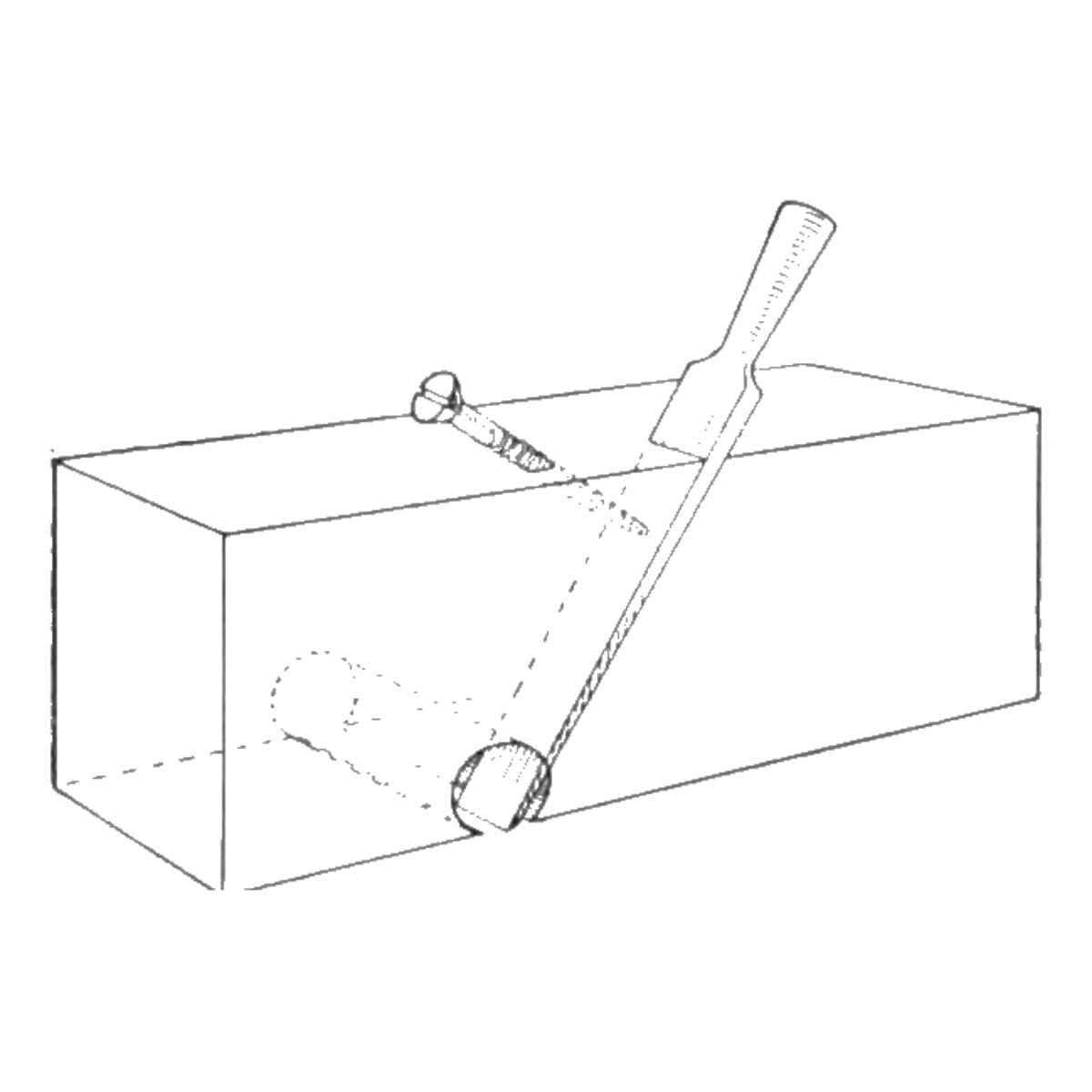
Cut the parts to his list. Mortise the legs so the top rails come level; tenon the top rails on the sides only and bevel them at the ends. For the bottom rails, cut the mortises one above the other (5 in above the floor on his drawing) and tenon the rails on all sides. Cut the braces at 45 deg on each end.
Materials for this step:
 Hardwood Board4 pieces
Tools needed:
 Hand Saw
 Chisels
 Wooden Mallet
 Hand Plane
 Pencil
 Tape Measure
4
4
Glue up
Glue up
Glue the frame together and glue the diagonal braces in place inside the top corners.
Materials for this step:
 Wood Glue1 piece
Tools needed:
 Bar ClampWooden Mallet
5
5
Wrap the first layer
Wrap the first layer
Use a wet reed weaver and wrap one layer over the whole top, the strips close together and tightly wound.
Materials for this step:
 Rattan1 piece
Tools needed:
 20-Liter Bucket
 Leather Knife
6
6
Weave the second layer
Weave the second layer
Start the second layer at right angles to the first. Strip 1: under one, then over three, under three, and so on by threes. Strip 2: under two, then over three, under three. Strip 3: under three, then over and under three. Strip 4: over one, then under three, over three. Strip 5: over two, then under and over three. Strip 6: over three, then by threes. Repeat the series of six across the top.
Materials for this step:
Rattan1 pieceTools needed:
20-Liter BucketLeather Knife7
7
Finish
Finish
Good white shellac makes the best finish for the seat; finish the frame to suit.
Materials for this step:
 Shellac Varnish1 piece
Tools needed:
 Wide Paint Brush
8
8
Troubleshooting
Troubleshooting
Stool troubleshooting.
Flow
Loading...
9
9
History and honest limits
History and honest limits
From "Woven-Top Stool" by Russel Dodsworth, Erie, Pa., in **The Boy Mechanic, Book 2**, Popular Mechanics, 1915 (Project Gutenberg 44585; checked on the archive.org scan boymechanicbook200chic2, p. 256). His caption names the weaver as reed; he gives no reed size or tenon lengths. Rattan reed as the weaver, the tools and metric figures are ours.
Materials
4- 4 piecesPlaceholder
- 1 piecePlaceholder
- 1 piecePlaceholder
- 1 piecePlaceholder
Tools Required
10- Placeholder
- Placeholder
- Placeholder
- Placeholder
- 1 vendor sell this, none ship to you yetPlaceholder
- 1 vendor sell this, none ship to you yetPlaceholder
- Placeholder
- Placeholder
- Placeholder
- Placeholder
This blueprint makes
Related Blueprints
These blueprints share knowledge with this one — techniques, materials, or principles that connect them in the learning graph.
CC0 Public Domain
This blueprint is released under CC0. You are free to copy, modify, distribute, and use this work for any purpose, without asking permission.
Support the Maker by purchasing products through their Blueprint where they earn a Maker Commission set by Vendors, or create a new iteration of this Blueprint and include it as a connection in your own Blueprint to share revenue.