ART
BEAUTY & WELLNESS
CRAFT
CULTURE & HISTORY
ENTERTAINMENT
ENVIRONMENT
FOOD & DRINKS
REVERSE ENGINEERING
SCIENCES
SPORTS
TECHNOLOGY
WEARABLES
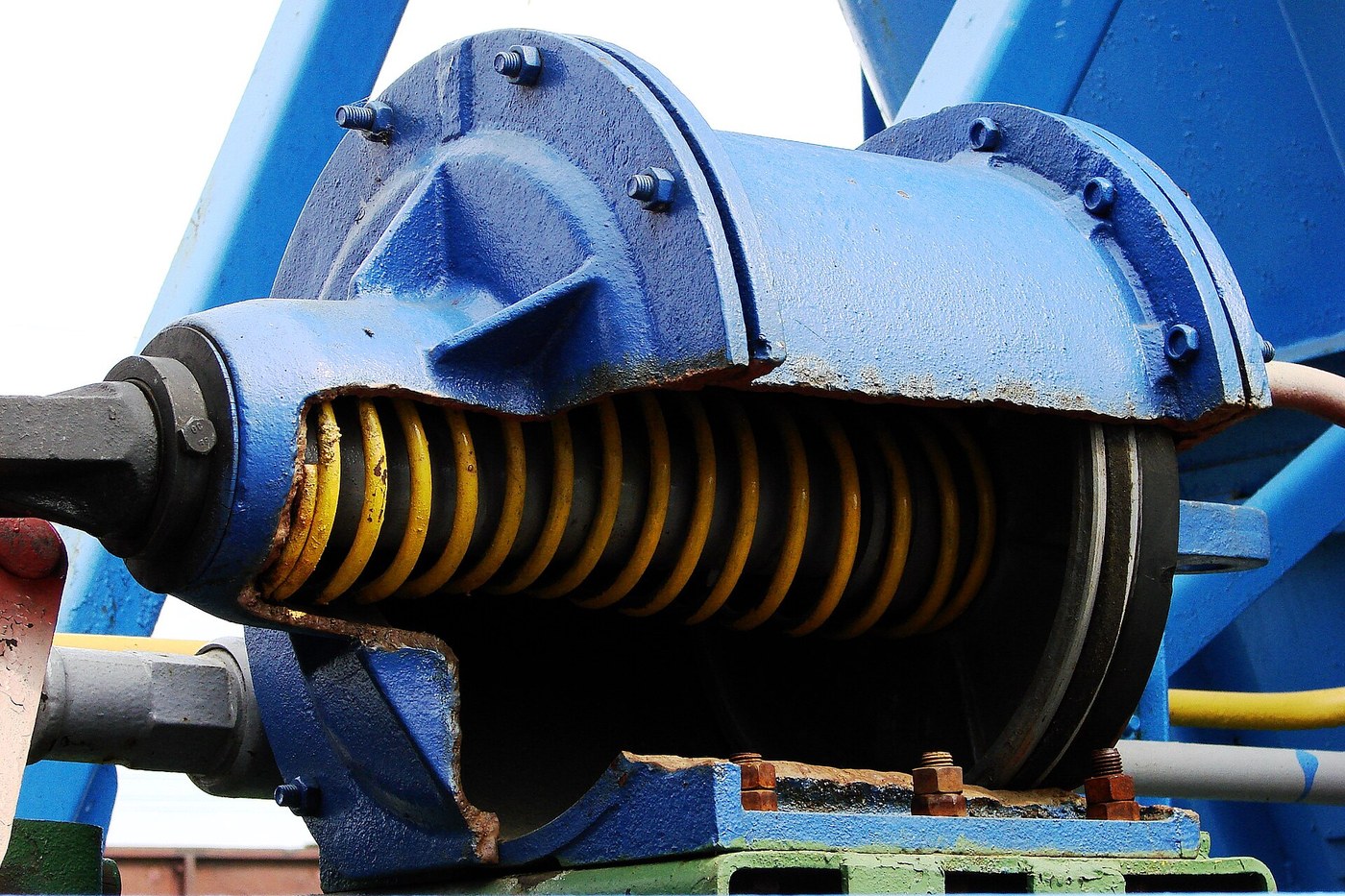


Brake Cylinder: Piston with Packing Leather, Expander Ring and Release Spring (Westinghouse Air Brake Co., 1901)
The air cylinder that puts on a railway car's brakes. Air let into the pressure end drives the piston out, and its push rod works the brake levers. When the air is let out, a release spring pushes the piston back. A cup of leather, held against the wall by a spring ring, stops the air from leaking past the piston.
Result: a brake cylinder. In the book's driver-brake example, an 8-inch cylinder fully applied puts 2,500 pounds on its piston.
Source: Westinghouse Air Brake Company, Air Brake Instruction Book (1901), pp. 55-57 and 97. Unknown: every size except the 8-inch bore, and the metal of every part except the leather; the book does not give them. Picture: Wikimedia Commons.
Advanced
1 week
Instructions
1
1
Bore the cylinder
Bore the cylinder
Make the cylinder with a pressure end and an open end closed by the non-pressure head. Cut a small groove along the wall, the leakage groove: a slight flow of air into the cylinder then escapes through it to the open end instead of pushing the piston out. Unknown: the metal and the sizes (the book's example is an 8-inch cylinder). Ours: bored on a lathe.
Materials for this step:
 Unknown Metal1 as required
Tools needed:
 Metal Lathe
 Boring Bar
 Lathe Tool Set (HSS)
 Vernier Caliper
 Unknown Dimensions
2
2
Make piston, follower and heads
Make piston, follower and heads
Turn the piston with its sleeve, into which the push rod from the brake levers fits, a follower plate, and the non-pressure head. Drill the piston for the studs that hold the follower. Unknown: metal and sizes. Ours: lathe and drill press.
Materials for this step:
Unknown Metal1 as requiredTools needed:
Metal LatheLathe Tool Set (HSS) Drill PressVernier CaliperUnknown Dimensions
3
3
Fit the packing leather
Fit the packing leather
Clamp the packing leather to the piston under the follower plate with studs and nuts; its flange presses against the cylinder wall to keep the air from escaping past the piston. Put the round spring packing expander inside the flange to hold it against the wall. Keep the follower nuts tight. Ours: the leather cut to shape with a knife.
Materials for this step:
 Leather1 as requiredUnknown Metal1 studs and expander ring
 Hex Nut1 set
Tools needed:
 Utility Knife
 Adjustable WrenchUnknown Dimensions
4
4
Assemble with the release spring
Assemble with the release spring
Slide the piston into the cylinder, put the release spring behind it and close the cylinder with the non-pressure head, so the spring forces the piston back to release whenever the air pressure is let out of the pressure end. The book's maintenance rule: a light grease in the cylinder, especially at the top and inside the packing leather where the expander rests.
Materials for this step:
 Compression Spring Set1 release spring
Tools needed:
Adjustable WrenchUnknown DimensionsMaterials
4- 1 studs and expander ringPlaceholder
- 1 as requiredPlaceholder
- 1 setPlaceholder
- 1 release springPlaceholder
Tools Required
8- Placeholder
- Placeholder
- Placeholder
- Placeholder
- Placeholder
- Placeholder
- Placeholder
- Placeholder
This blueprint makes

CC0 Public Domain
This blueprint is released under CC0. You are free to copy, modify, distribute, and use this work for any purpose, without asking permission.
Support the Maker by purchasing products through their Blueprint where they earn a Maker Commission set by Vendors, or create a new iteration of this Blueprint and include it as a connection in your own Blueprint to share revenue.