Collaboration
ART
BEAUTY & WELLNESS
CRAFT
CULTURE & HISTORY
ENTERTAINMENT
ENVIRONMENT
FOOD & DRINKS
REVERSE ENGINEERING
SCIENCES
SPORTS
TECHNOLOGY
WEARABLES
Brandy: Wine Distilled with a Little of Its Lees, the French Way (Byrn, 1868)
Alchometer

Created by

Alchometer

18. November 2026GB
0
0
0
0
0

Brandy: Wine Distilled with a Little of Its Lees, the French Way (Byrn, 1868)

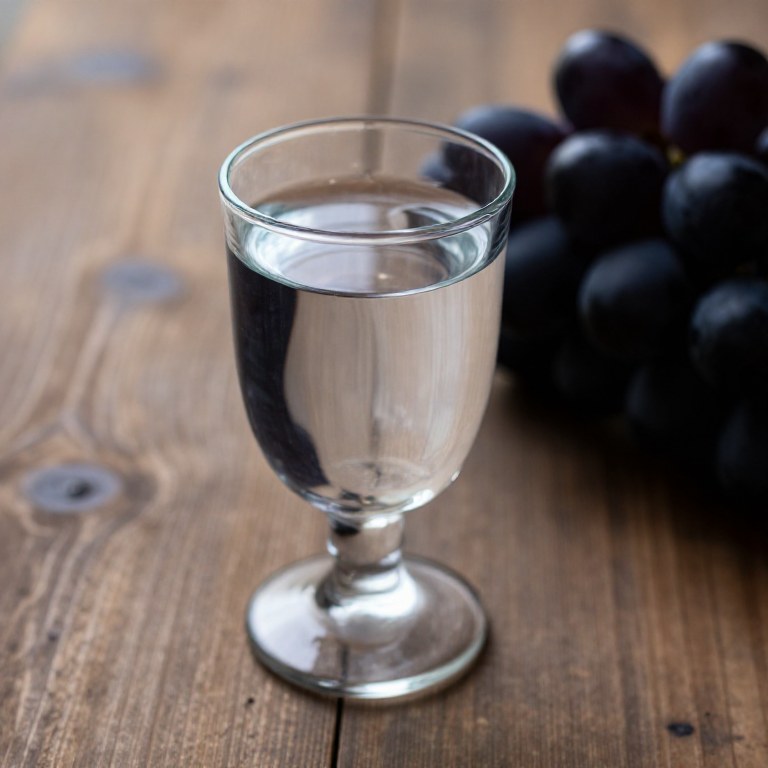
Brandy as M. La Fayette Byrn describes the French process in The Complete Practical Distiller (1868): wine distilled in a pot still with a little of its own lees thrown in for flavour, run to low wines, doubled, cut when the bead falls and brought to proof, the feints saved for redistilling. Distilling spirits without a licence is illegal in many countries: check your law first.
Advanced
About a week

Instructions

1

Read Byrn, and the law

"This process differs in nothing from the ordinary process practiced in England and this country ... The French only observe, more particularly, to throw a little of the natural lees into the still along with the wine." (p. 93.) Ours: distilling spirits without a licence is illegal in many countries, Norway and the United States among them. Check your law first.
2

The still

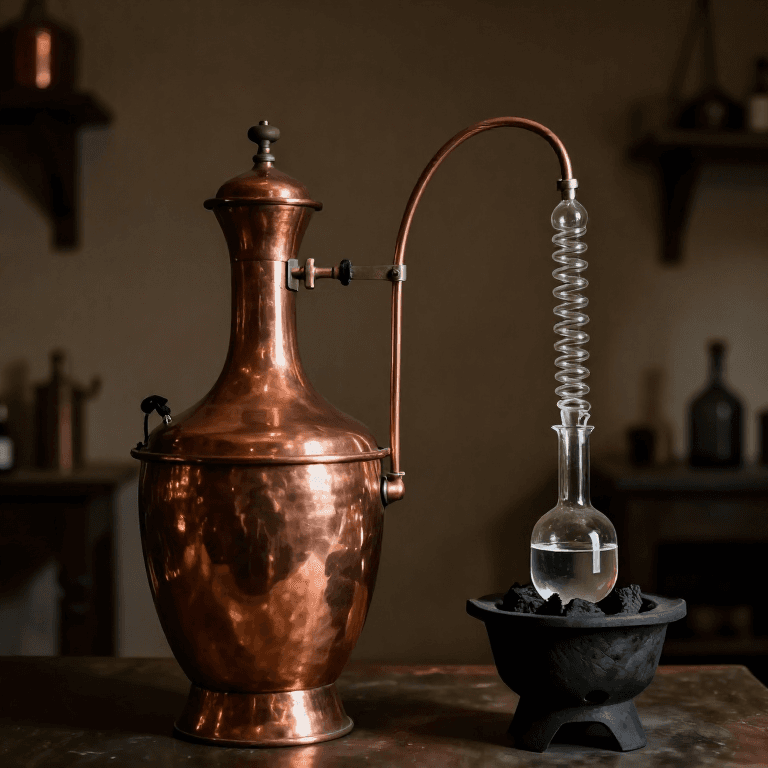
A pot still with a worm in a tub of cold water.
3

Choose the wine

Use plain, weak wine: "the weakest and lowest flavoured wines only are drawn for their spirit", and wines turned sour are "condemned to the still" too (p. 94).

Materials for this step:

WineWine1 as required

Tools needed:

Wooden BarrelWooden Barrel
4

Keep some of the lees

Keep back a little of the wine's natural lees: the French throw it into the still with the wine, for flavour.

Materials for this step:

Wine LeesWine Lees1 as required

Tools needed:

Measuring JugMeasuring Jug
5

Charge and lute the still

Charge the still with the wine and the little lees. Lute the joints of body and head with a paste of half whiting and half rye meal. Keep a piece of paste in reserve.

Materials for this step:

Calcium Carbonate - WhitingCalcium Carbonate - Whiting1 as required
Rye FlourRye Flour1 as required
WaterWater1 as required

Tools needed:

Distillation StillDistillation Still
6

Raise the fire by degrees

Start a moderate fire and increase it by degrees, feeling the body of the still with your hand. When the still-head grows hot, damp the fire. Keep candles and flames away from the spirit; have a wet woollen blanket ready.

Tools needed:

Distillation StillDistillation Still
Woven Wool BlanketWoven Wool Blanket
7

Set aside the first runnings

Ours, not Byrn's: collect the first small portion that runs from the worm separately and do not drink it; the first runnings can carry methanol.

Tools needed:

Measuring JugMeasuring Jug
8

Run the low wines

Distil as long as a little of what runs, thrown on the hot still-head, will take fire from a lighted paper or candle. This is the low wines, the first extraction.

Tools needed:

Distillation StillDistillation Still
CandleCandle
Wooden BarrelWooden Barrel
9

Double the low wines

Keep the low wines of about three distillations; they fill the still for the doubling, the second extraction. Distil them again the same way.

Tools needed:

Distillation StillDistillation Still
10

Cut at the bead

Keep trying the spirit in a glass phial. When the bead falls at once and does not stay on the surface, change the receiver: what follows is feints.

Tools needed:

Glass Vial (Small, for Specimens)Glass Vial (Small, for Specimens)
Measuring JugMeasuring Jug
11

Collect the feints, stop the fire

Go on collecting the feints as long as they burn on the still-head. When they no longer burn, put out the fire and pour the feints into a cask of their own.

Tools needed:

Wooden BarrelWooden Barrel
CandleCandle
12

Bring to proof

Lower the spirit with water to proof by the hydrometer.

Materials for this step:

WaterWater1 as required

Tools needed:

HydrometerHydrometer
Measuring JugMeasuring Jug
13

Redistil the feints

When you have enough feints, charge the still with them almost to the top, add 4 lb (1.8 kg) of salt, and draw off as long as the spirit is strong enough.

Materials for this step:

SaltSalt1.8 kg

Tools needed:

Distillation StillDistillation Still
14

Keep it in glass

"When brandy is kept in vessels the pores of which will not admit of any transmission of the liquor, (as glass, for instance,) the brandy will improve." (p. 95.)

Materials for this step:

Glass Bottles with StoppersGlass Bottles with Stoppers1 piece

Tools needed:

Measuring JugMeasuring Jug
15

Troubleshooting

Brandy problems and fixes.

Flow

Loading...
16

History and honest limits

**M. La Fayette Byrn**, *The Complete Practical Distiller* (Philadelphia, 1868), p. 93-95. He names Cognac's wines as the best for distilling and says the colour of French brandy "being found to have been derived from the oak of the cask". He gives no quantities or strengths for brandy; the still steps are his general pot-still rules (pp. 12-15, 142, 163). Ours: the law note and setting aside the first runnings.

Materials

7

Tools Required

7

This blueprint makes

CC0 Public Domain

This blueprint is released under CC0. You are free to copy, modify, distribute, and use this work for any purpose, without asking permission.

Support the Maker by purchasing products through their Blueprint where they earn a Maker Commission set by Vendors, or create a new iteration of this Blueprint and include it as a connection in your own Blueprint to share revenue.

Discussion

(0)

Log in to join the discussion

Loading comments...