
Building an Air-Quality Monitor
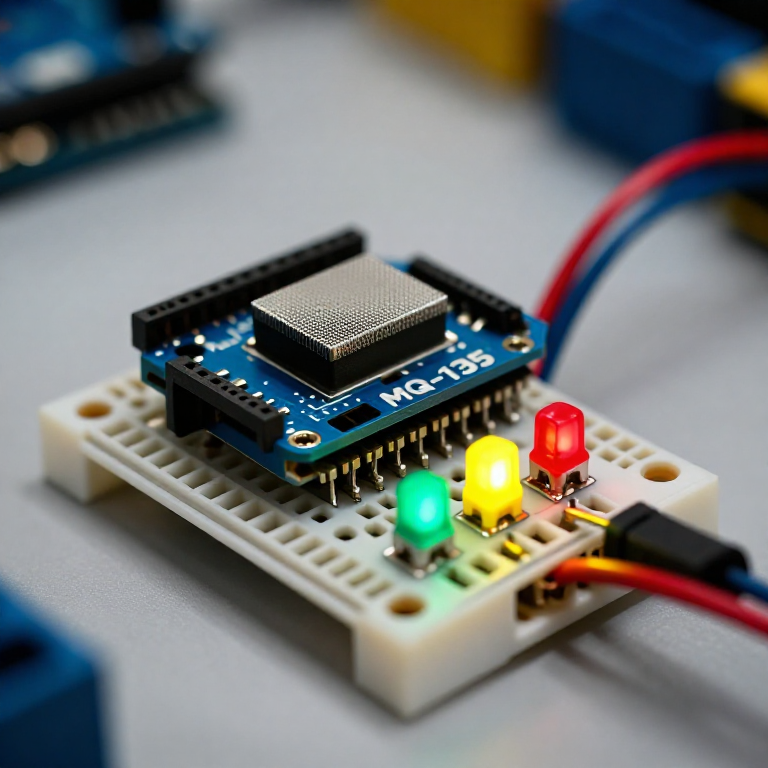
Build a traffic-light air-quality monitor. An MQ-135 sensor responds to smoke, fumes, alcohol, CO2 and other gases; the Arduino compares the reading to clean air and lights a green, yellow or red LED for good, moderate or poor air. A hands-on way to watch indoor air change — with the honest limit that it shows RELATIVE quality, not a calibrated ppm figure.
Instructions
Wire the sensor and three LEDs
Wire the sensor and three LEDs
On the breadboard: MQ-135 VCC to Arduino 5V, GND to GND, and its analog output (AOUT) to A0. Wire three LEDs — ideally green, yellow and red — to pins 5, 6 and 7, each through a 330 Ω resistor to GND (long leg to the pin).
Materials for this step:
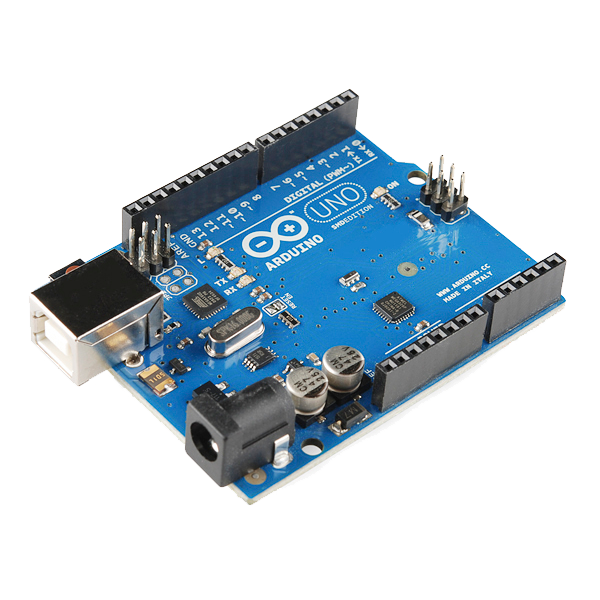 Arduino Uno R31 piece
 MQ-135 Air Quality Sensor Module1 piece
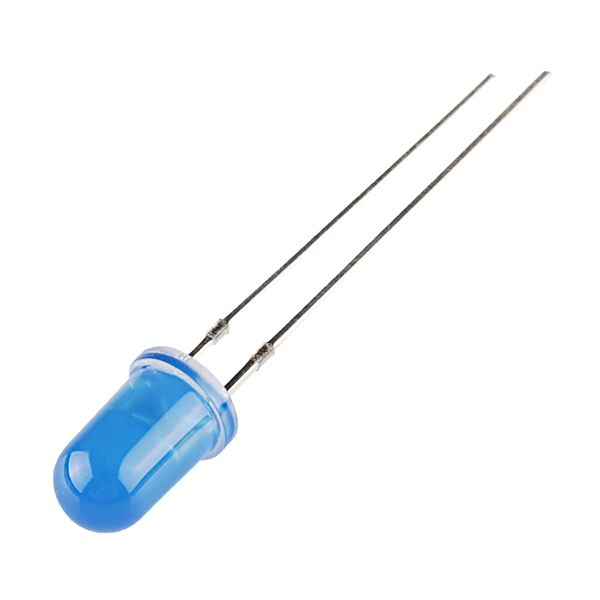 LED - Basic 5mm (25 pack)1 pack
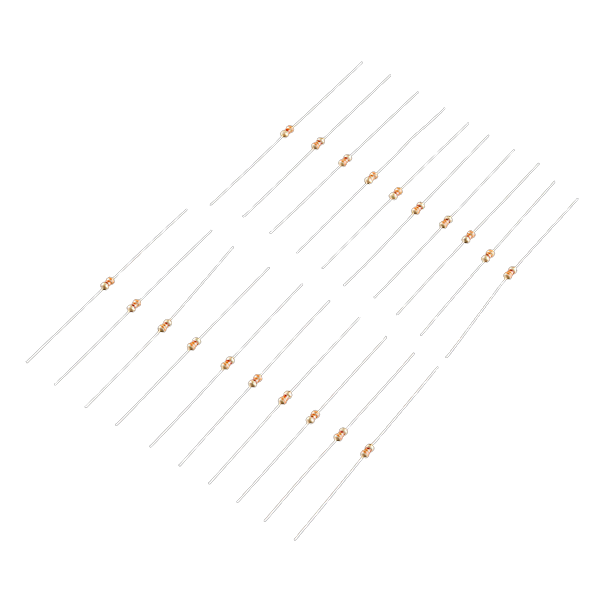 Resistor 330 Ohm 1/6 Watt PTH - 20 pack1 pack
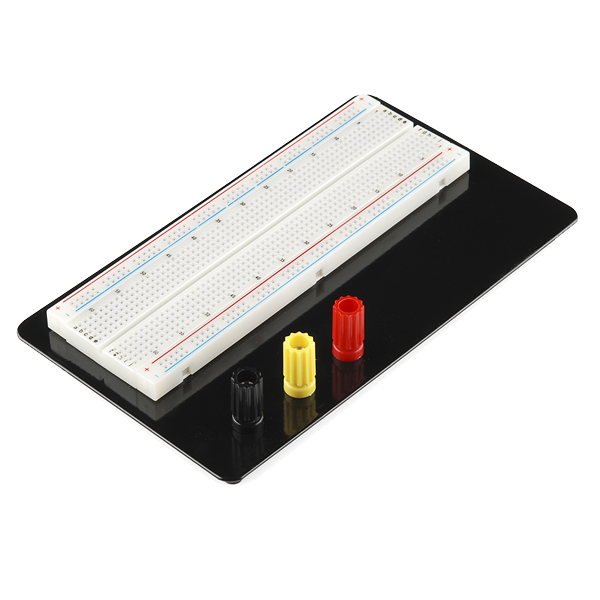 Breadboard1 piece
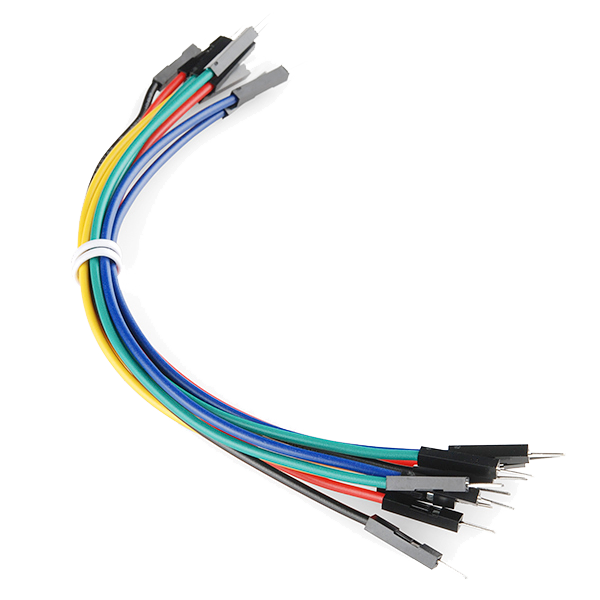 Jumper Wires (Male-to-Male)1 pack
Connect and open the IDE
Connect and open the IDE
Plug the Arduino into your computer with the USB cable, open the Arduino IDE, and select Arduino Uno and its serial port.
Materials for this step:
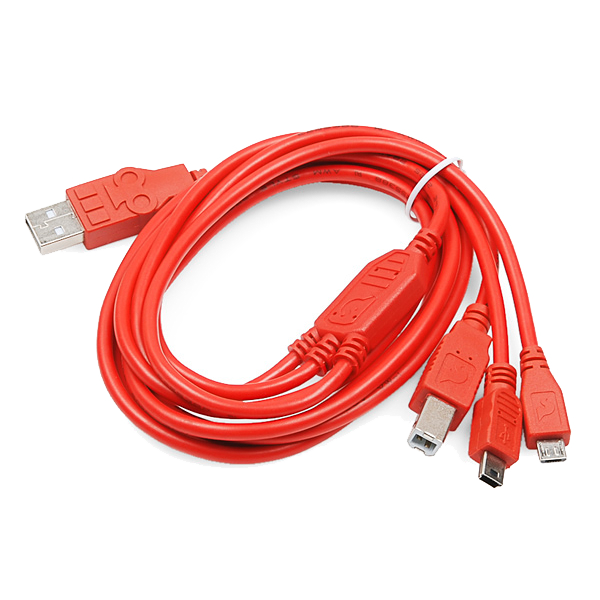 USB-B Cable1 piece
Tools needed:
 Computer with Arduino IDE
Upload the traffic-light sketch
Upload the traffic-light sketch
Paste this sketch and upload. It warms the sensor, records a clean-air baseline, then lights green for good air, yellow for moderate and red for poor. Open the Serial Monitor to see the raw reading.
Warm up, baseline and test
Warm up, baseline and test
Run it in fresh air and let the 2-minute warm-up set the baseline (a new MQ-135 also needs a 24–48 h burn-in to settle). Then test it: breathe on it, spray a little deodorant nearby, or hold a blown-out match's smoke close — it should climb to yellow then red, and return to green in clean air. Tune MODERATE and POOR to change the thresholds.
Know the limits
Know the limits
The MQ-135 reacts to many gases at once and gives a RELATIVE reading, not a calibrated CO2 or ppm value — despite what some tutorials claim, real ppm needs proper calibration against known concentrations. It also drifts and needs re-baselining. Treat this as an air-change indicator and a great sensing project, not a laboratory instrument.
Materials
7- Arduino Uno R3 SMD10% commission1 piece$26.69
- Placeholder
- LED - Basic 5mm10% commission1 pack$0.76
- Resistor 330 Ohm 1/6 Watt PTH - 20 pack10% commission1 pack$1.18
- Breadboard - Classic10% commission1 piece$9.38
- Jumper Wires Premium M/M 20 AWG - 15.5 cm (Pack of 10)10% commission1 pack$4.94
- SparkFun Cerberus USB Cable - 1.8 meter10% commission1 piece$5.61
Tools Required
2- Placeholder
- Breadboard - Classic10% commission$9.38
Related Blueprints
These blueprints share knowledge with this one — techniques, materials, or principles that connect them in the learning graph.
CC0 Public Domain
This blueprint is released under CC0. You are free to copy, modify, distribute, and use this work for any purpose, without asking permission.
Support the Maker by purchasing products through their Blueprint where they earn a Maker Commission set by Vendors, or create a new iteration of this Blueprint and include it as a connection in your own Blueprint to share revenue.