Collaboration
ART
BEAUTY & WELLNESS
CRAFT
CULTURE & HISTORY
ENTERTAINMENT
ENVIRONMENT
FOOD & DRINKS
REVERSE ENGINEERING
SCIENCES
SPORTS
TECHNOLOGY
WEARABLES
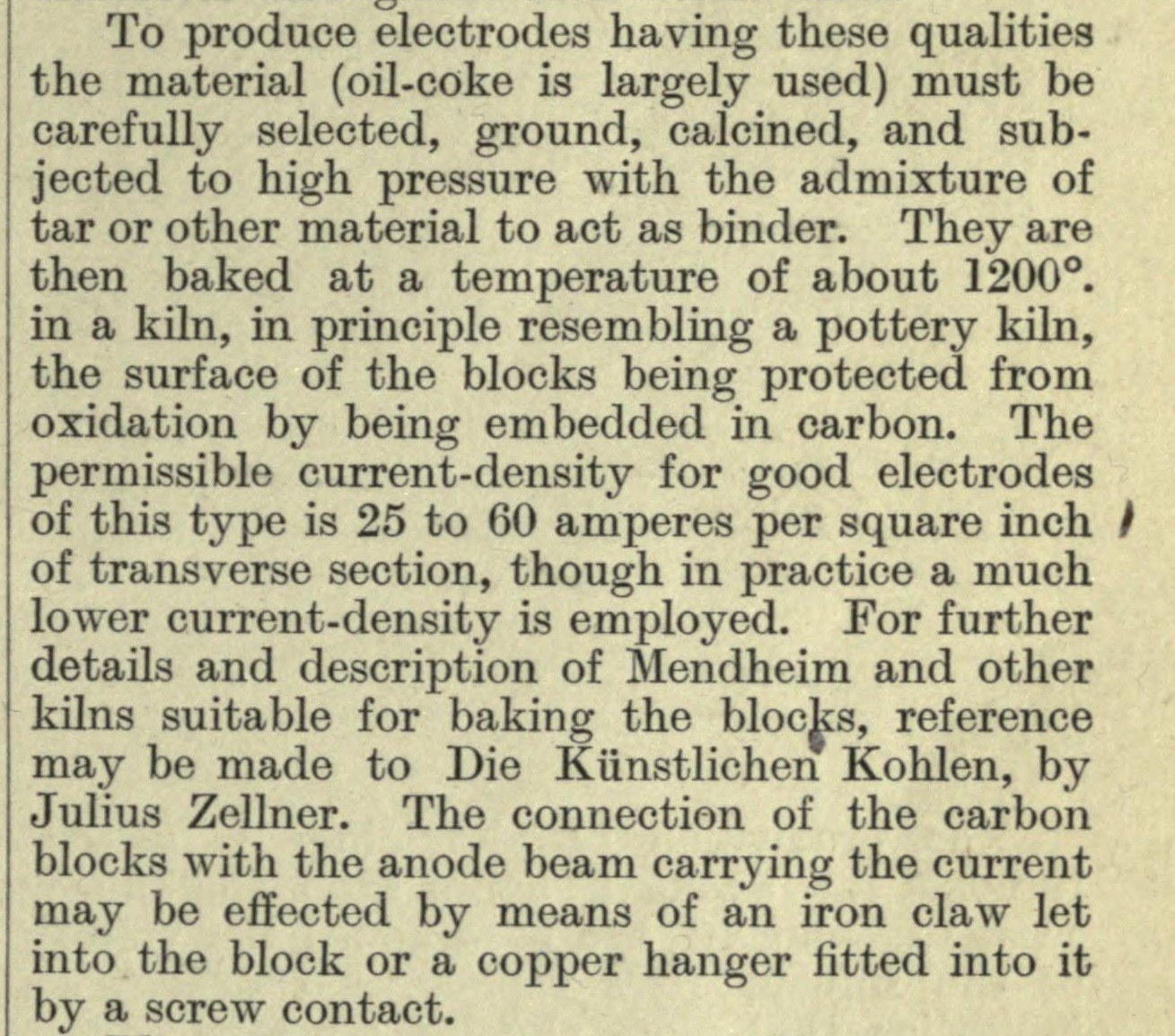


Carbon Electrode: Oil-Coke Pressed with Tar and Baked at 1200° (Thorpe, 1912)
Amorphous carbon electrodes as made for aluminium reduction: oil-coke is selected, ground and calcined, pressed hard with tar as a binder, and baked at about 1200° in a kiln like a pottery kiln, packed in carbon so the surface does not burn.
A good electrode conducts electricity well but heat poorly, is hard, resists surface oxidation, has low porosity and is even throughout. Thorpe gives 25 to 60 amperes per square inch as the permissible current density, though much less is used in practice.
Not given: the tar proportion, the pressure and the sizes.
Source: T. E. Thorpe, Dictionary of Applied Chemistry vol. I (1912), p. 107. Picture: the book's text.
Advanced
Unknown
Instructions
1
1
Grind and calcine the coke
Grind and calcine the coke
Select the oil-coke carefully for low ash, volatile matter and sulphur. Grind it and calcine it. Ours: the ball mill and the kiln for calcining.
Materials for this step:
 Petroleum Coke1 carefully selected
Tools needed:
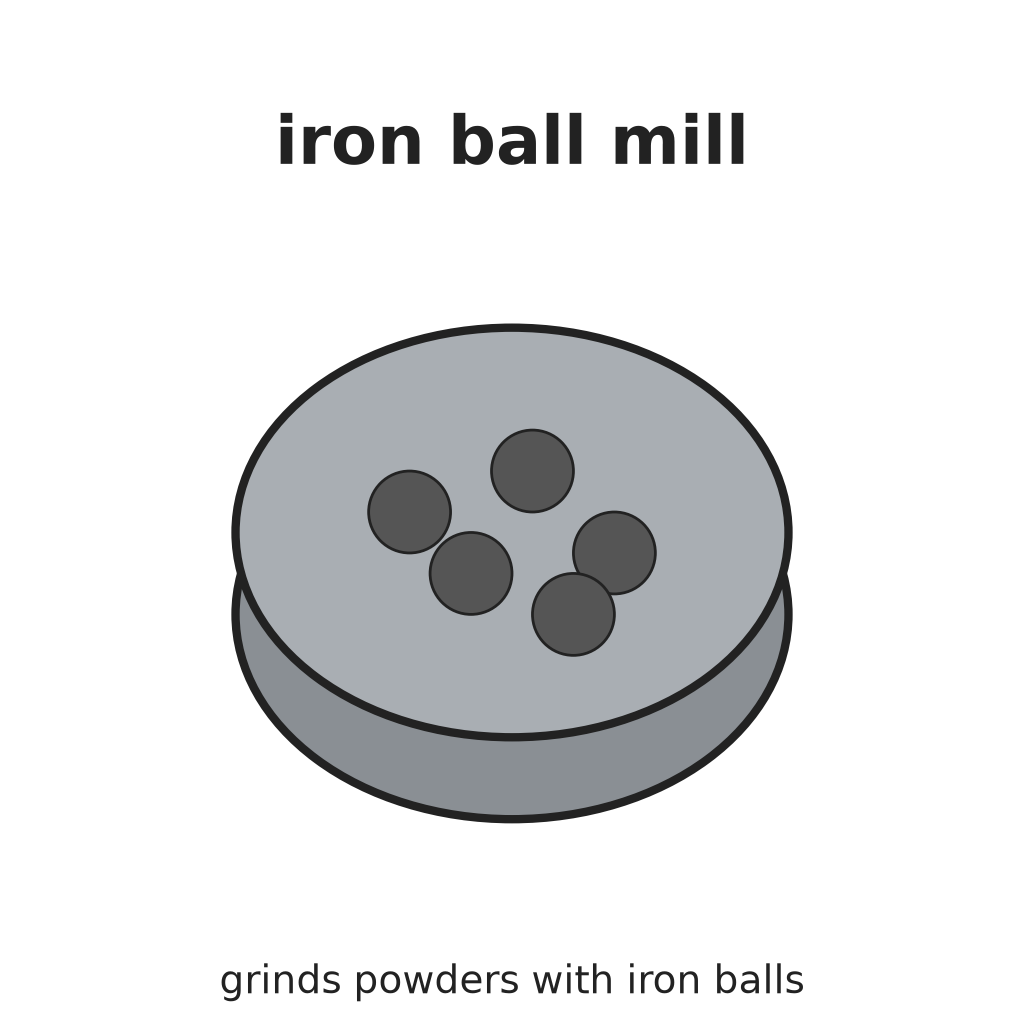 Iron Ball Mill
 High-fire Kiln
2
2
Press with tar
Press with tar
Mix the ground coke with tar as a binder and press it into blocks under high pressure. Ours: a hydraulic press.
Materials for this step:
 Coal Tar1 binder
 Unknown Dimensions1 piece
Tools needed:
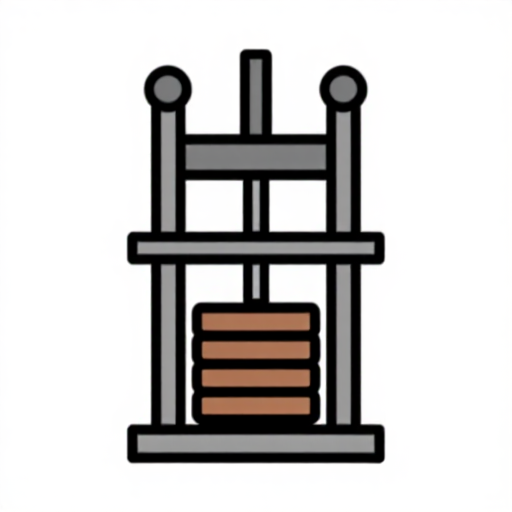 Hydraulic Press
3
3
Bake in carbon
Bake in carbon
Embed the blocks in carbon, which protects their surface from oxidation, and bake them at about 1200° in a kiln built on the lines of a pottery kiln. Ours: petroleum coke as the packing.
Tools needed:
High-fire KilnPetroleum CokeMaterials
3- 1 carefully selectedPlaceholder
- 1 binderPlaceholder
- 1 piecePlaceholder
Tools Required
4- Placeholder
- Placeholder
- Placeholder
- Placeholder
This blueprint makes
CC0 Public Domain
This blueprint is released under CC0. You are free to copy, modify, distribute, and use this work for any purpose, without asking permission.
Support the Maker by purchasing products through their Blueprint where they earn a Maker Commission set by Vendors, or create a new iteration of this Blueprint and include it as a connection in your own Blueprint to share revenue.