Collaboration
ART
BEAUTY & WELLNESS
CRAFT
CULTURE & HISTORY
ENTERTAINMENT
ENVIRONMENT
FOOD & DRINKS
REVERSE ENGINEERING
SCIENCES
SPORTS
TECHNOLOGY
WEARABLES
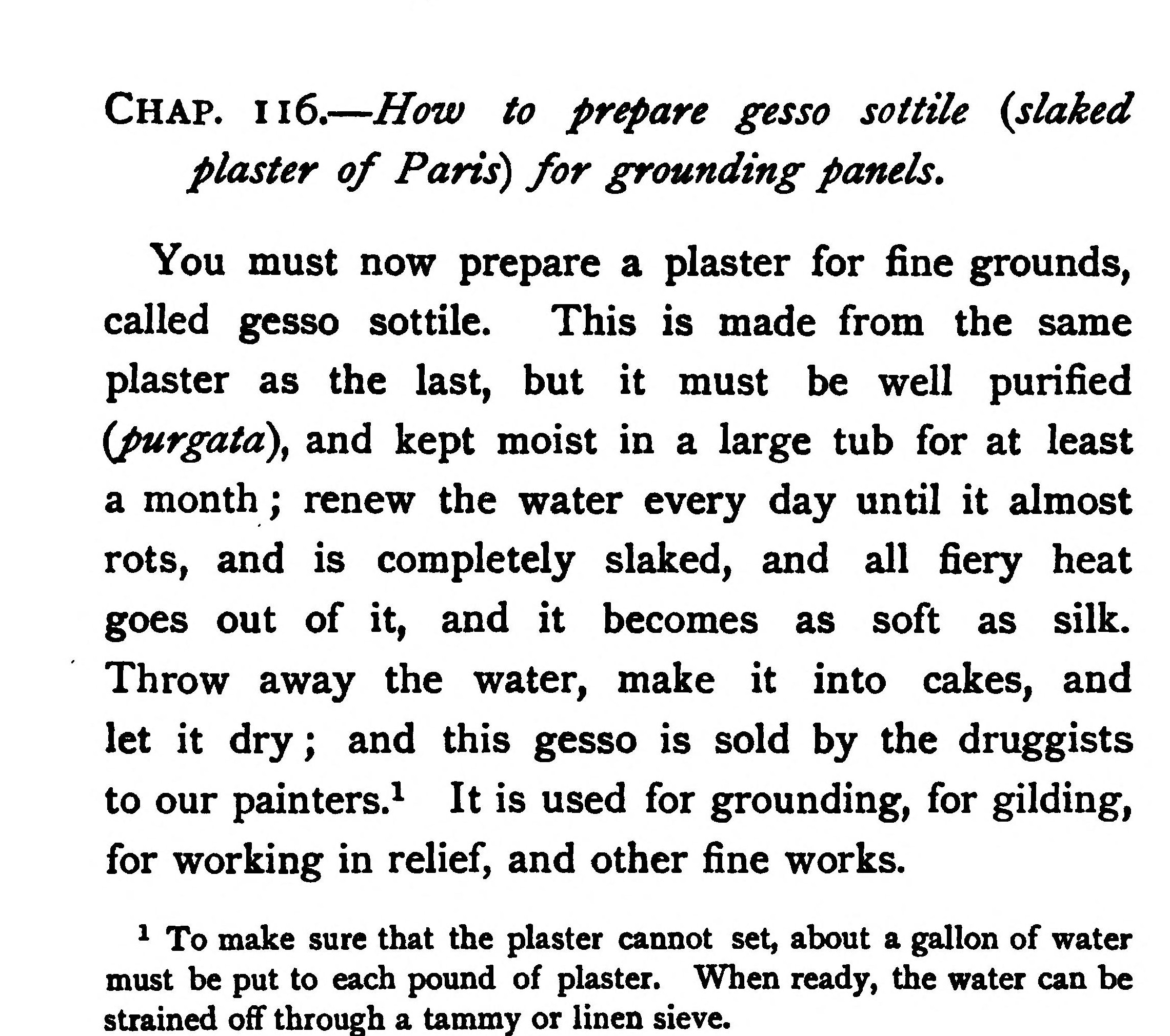


Gesso Sottile: Plaster of Paris Slaked a Month, Ground, Wrung and Tempered Warm with Parchment Size (Cennini, c. 1400)
The fine gilding and painting ground of Cennino Cennini: plaster of Paris kept under water for a month, the water changed daily until it is dead and soft as silk, dried in cakes, then ground, wrung out in linen and tempered warm with size boiled from sheep-parchment shavings, never letting it boil or froth.
Intermediate
A month of slaking, then an hour to temper
Instructions
1
1
Slaking water
Slaking water
Loading Jupyter Notebook...
2
2
Read Cennini
Read Cennini
"Kept moist in a large tub for at least a month; renew the water every day until it almost rots."
3
3
Slake the plaster
Slake the plaster
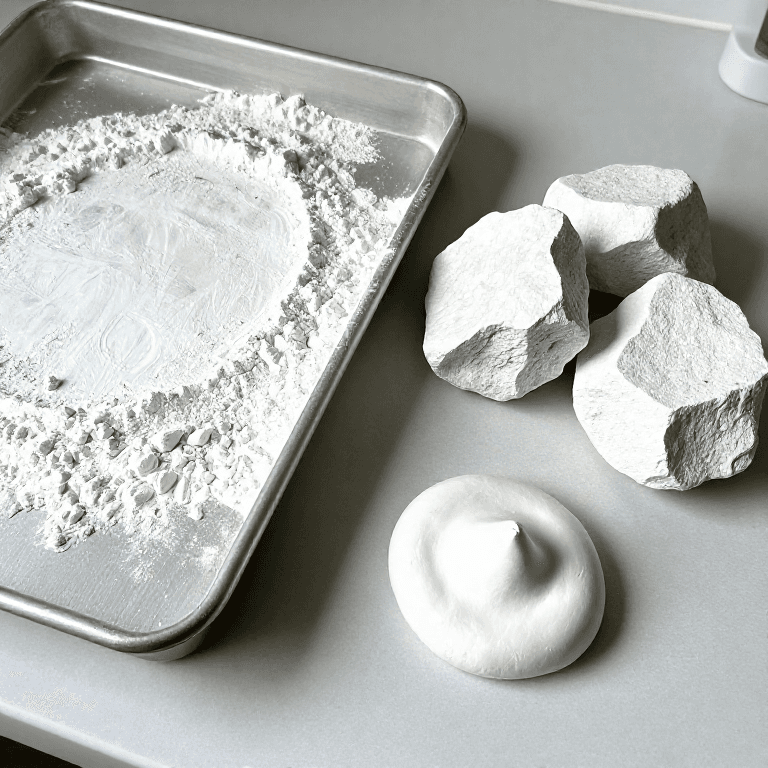
Put well-purified plaster of Paris in a large tub of water (the translator's note: about a gallon to each pound, so it cannot set). Keep it wet at least a month, changing the water every day, until it is completely slaked, all heat gone, and soft as silk.
Materials for this step:
 Plaster of Paris1 piece
 Water1 piece
Tools needed:
 Wooden Tub
4
4
Make cakes
Make cakes
Pour off the water (strain through linen), shape the paste into cakes and let them dry.
Tools needed:
 Linen Fabric
5
5
Boil the size
Boil the size
Boil shavings of sheep parchment in water until the water is down to one third. It is ready when a little rubbed between the palms makes one hand stick to the other. Strain it two or three times.
Materials for this step:
 Parchment1 pieceWater1 piece
Tools needed:
 Saucepan
 Cloth (Straining)
6
6
Grind and wring
Grind and wring
Drop the cakes one by one into clean water and let them drink all they will. Grind a little at a time on the slab, adding no more water. Gather it on strong white linen until you have a loaf's worth, fold the cloth and wring out all the water you can.
Materials for this step:
Water1 pieceTools needed:
 Glazed Ceramic Pot
 Flat Stone Slab
 MullerLinen Fabric
7
7
Temper warm
Temper warm
In a new, grease-free (better glazed) pipkin, scrape the gesso fine with a knife like cheese. Add the size, less than for gesso grosso, and work it with the hand like fritter batter so it does not froth. Stand the pipkin in a cauldron of very hot water to keep it warm: it must never boil.
Tools needed:
Glazed Ceramic Pot Knife
 Cauldron
8
8
Troubleshooting
Troubleshooting
Gesso troubleshooting.
Flow
Loading...
9
9
History and honest limits
History and honest limits
From Cennino Cennini, **Il Libro dell'Arte** (c. 1400), chaps. 113, 116-117, in Herringham's translation (1899), pp. 93-98 (checked on the archive.org scan bookartcenninoc01herrgoog). The water ratio is Herringham's footnote, not Cennini's. The smooth stone slab in place of porphyry and the metric figures are ours.
Materials
3- 1 piecePlaceholder
- 3 piecesPlaceholder
- 1 piecePlaceholder
This blueprint makes

Related Blueprints
These blueprints share knowledge with this one — techniques, materials, or principles that connect them in the learning graph.
CC0 Public Domain
This blueprint is released under CC0. You are free to copy, modify, distribute, and use this work for any purpose, without asking permission.
Support the Maker by purchasing products through their Blueprint where they earn a Maker Commission set by Vendors, or create a new iteration of this Blueprint and include it as a connection in your own Blueprint to share revenue.