ART
BEAUTY & WELLNESS
CRAFT
CULTURE & HISTORY
ENTERTAINMENT
ENVIRONMENT
FOOD & DRINKS
REVERSE ENGINEERING
SCIENCES
SPORTS
TECHNOLOGY
WEARABLES
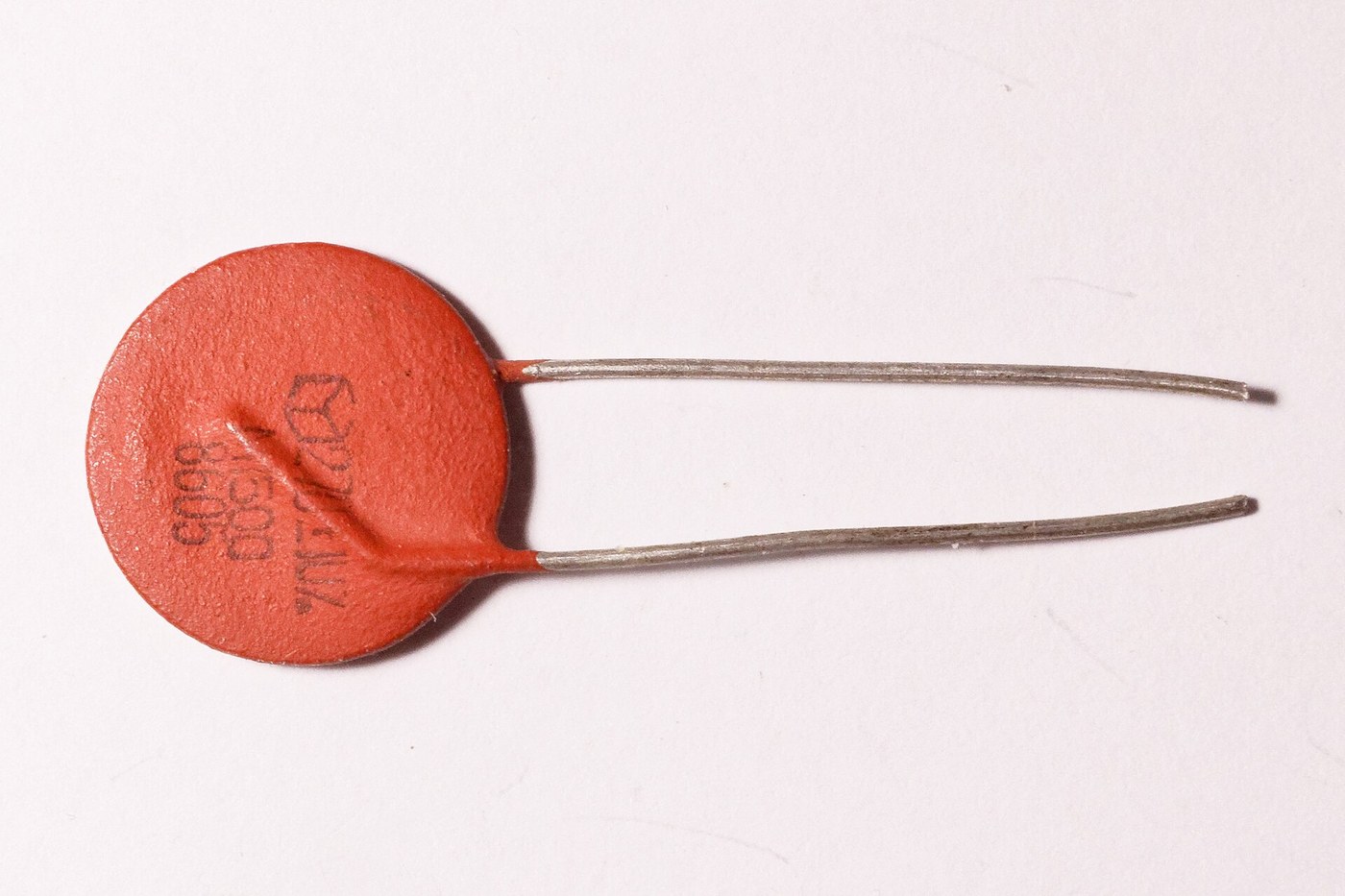


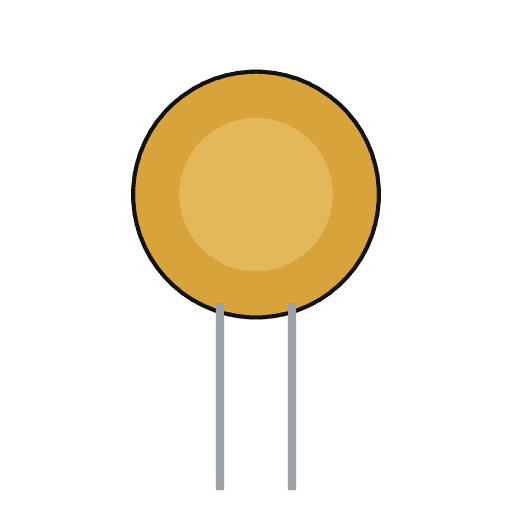
Ceramic Disc Capacitors: Barium Titanate with Nickel Stannate, Pressed, Fired and Silvered (Coffeen, US 2,789,061)
Barium titanate with 3 mole % nickel stannate is calcined, pressed into small discs and fired hard. Silver is fired onto both faces and a lead soldered to each, giving ceramic disc capacitors of high capacity for their size.
Result: discs 3/8 inch across and about 1/10 inch thick with a dielectric constant averaging 2380 and a dissipation factor of 0.58 %. Between 25 and 85 °C the dielectric constant rose at most 17 % and fell at most 7 %.
Source: W. W. Coffeen (Metal & Thermit Corp.), US 2,789,061 (1957). Unknown: how the barium titanate, the nickel stannate and the tinned lead wire are made; the patent uses them ready-made. Picture: Wikimedia Commons.
Advanced
10 days
Instructions
1
1
Weigh and slurry
Weigh and slurry
Weigh 19.32 g of barium titanate and 0.68 g of hydrated nickel stannate (about NiSnO3·2H2O), which is 97 mole % BaTiO3 and 3 mole % NiSnO3. Slurry them with 50 cc of distilled water. The patent prefers 2 to 4 mole % nickel stannate; 1 to 15 % works.
Materials for this step:
 Barium Titanate19.32 g
 Nickel Stannate0.68 g
Tools needed:
 Distilled Water
 Precision Digital Scale
 Evaporating Dish
2
2
Dry, sieve and calcine
Dry, sieve and calcine
Dry the slurry, crush it to pass a 50 mesh screen, moisten it with 5 % of a 2 1/2 % starch solution and press it into one slug. Calcine the slug for one hour at 1600 °F (871 °C). Ours: potato starch, a drying oven, mortar and pestle.
Tools needed:
 Potato Starch
 Drying Oven
 Mortar and Pestle
 Sieve
 Hydraulic Press
 High-fire Kiln
3
3
Press the discs
Press the discs
Grind the calcine to pass a 325 mesh screen, moisten it again with starch solution, and press small discs 3/8 inch in diameter and about 1/10 inch thick at 20,000 pounds per square inch.
Tools needed:
Mortar and Pestle Fine Mesh SievePotato StarchHydraulic Press
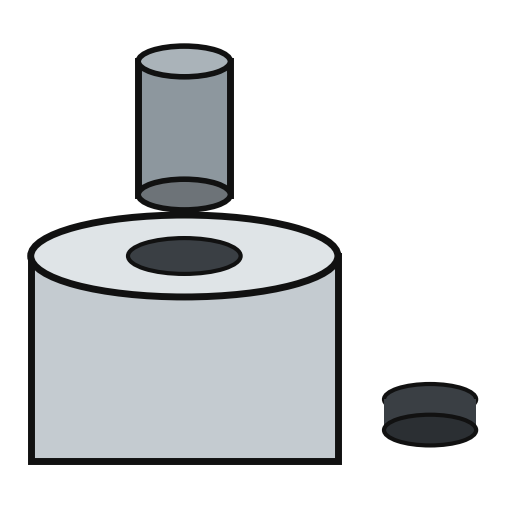 Disc Pressing Die
4
4
Fire on platinum
Fire on platinum
Fire the discs on platinum foil at 2400 °F (1316 °C) for one hour. They come out with zero absorption.
Tools needed:
High-fire Kiln Platinum
5
5
Silver and lead
Silver and lead
Paint silver paint on both faces and fire the discs at 1350 °F (732 °C) for one hour. Solder tinned copper lead wires directly to the silver electrodes. Age at least a week before measuring. Ours: a fine brush and a soldering iron.
Materials for this step:
 Fired Silver Paint1 both faces
 Tinned Copper Wire2 leads per disc
 Solder Wire1 a little
Tools needed:
 Fine-pointed BrushesHigh-fire Kiln
 Soldering Iron
Materials
5- 19.32 gPlaceholder
- 0.68 gPlaceholder
- 1 both facesPlaceholder
- 2 leads per discPlaceholder
- 1 a littlePlaceholder
Tools Required
14- Placeholder
- Placeholder
- Placeholder
- Placeholder
- Placeholder
- Placeholder
- Placeholder
- Placeholder
- Placeholder
- Placeholder
- Placeholder
- Placeholder
- Placeholder
- 2 vendors sell this, none ship to you yetPlaceholder
This blueprint makes
CC0 Public Domain
This blueprint is released under CC0. You are free to copy, modify, distribute, and use this work for any purpose, without asking permission.
Support the Maker by purchasing products through their Blueprint where they earn a Maker Commission set by Vendors, or create a new iteration of this Blueprint and include it as a connection in your own Blueprint to share revenue.