ART
BEAUTY & WELLNESS
CRAFT
CULTURE & HISTORY
ENTERTAINMENT
ENVIRONMENT
FOOD & DRINKS
REVERSE ENGINEERING
SCIENCES
SPORTS
TECHNOLOGY
WEARABLES
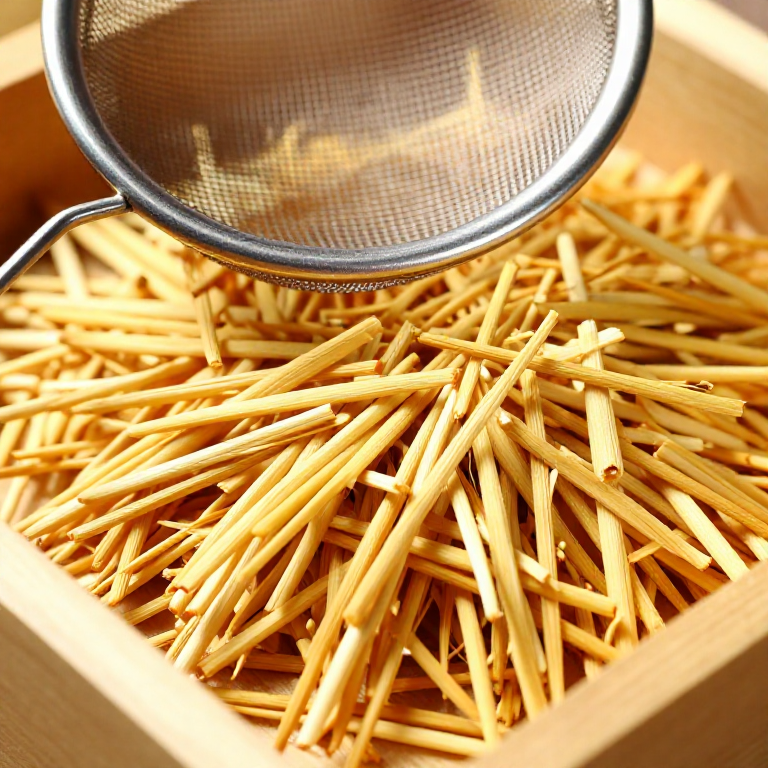


Chopped Straw for Plaster and Cob
Straw gives clay plasters, cob and mud bricks tensile strength: its fibres hold the clay together as it shrinks and stop cracks. Natural builders cut it short for plaster, about 6 to 25 mm, and longer for structural cob, about 25 to 75 mm. Dry, clean wheat or rye straw is best.
Beginner
1 hour per sack
Instructions
1
1
Choose the length
Choose the length
Plaster: 6–25 mm. Cob: 25–75 mm. Decide before you start.
Tools needed:
 Tape Measure
2
2
Chop on a block
Chop on a block
Lay a handful of straw across a log end and chop it into lengths with the machete or billhook, feeding the bundle forward a length at a time.
Materials for this step:
 Straw5 kg
Tools needed:
 Machete
 Billhook
 Leather Work Gloves
 Safety Glasses
3
3
Sieve for plaster
Sieve for plaster
For plaster, shake the chopped straw over a coarse wire sieve: what passes is plaster straw, what stays goes to cob or back to the block.
Tools needed:
 Coarse Wire Mesh Sieve
 Large Plastic Tub 100L
 Dust Mask
4
4
Bag it dry
Bag it dry
Store in sacks somewhere dry; damp straw goes mouldy.
Tools needed:
 Burlap Storage Sack
Tools Required
9- 1 vendor sell this, none ship to you yetPlaceholder
- Placeholder
- Placeholder
- Placeholder
- Placeholder
- Placeholder
- Placeholder
- Placeholder
- Placeholder
CC0 Public Domain
This blueprint is released under CC0. You are free to copy, modify, distribute, and use this work for any purpose, without asking permission.
Support the Maker by purchasing products through their Blueprint where they earn a Maker Commission set by Vendors, or create a new iteration of this Blueprint and include it as a connection in your own Blueprint to share revenue.