ART
BEAUTY & WELLNESS
CRAFT
CULTURE & HISTORY
ENTERTAINMENT
ENVIRONMENT
FOOD & DRINKS
REVERSE ENGINEERING
SCIENCES
SPORTS
TECHNOLOGY
WEARABLES
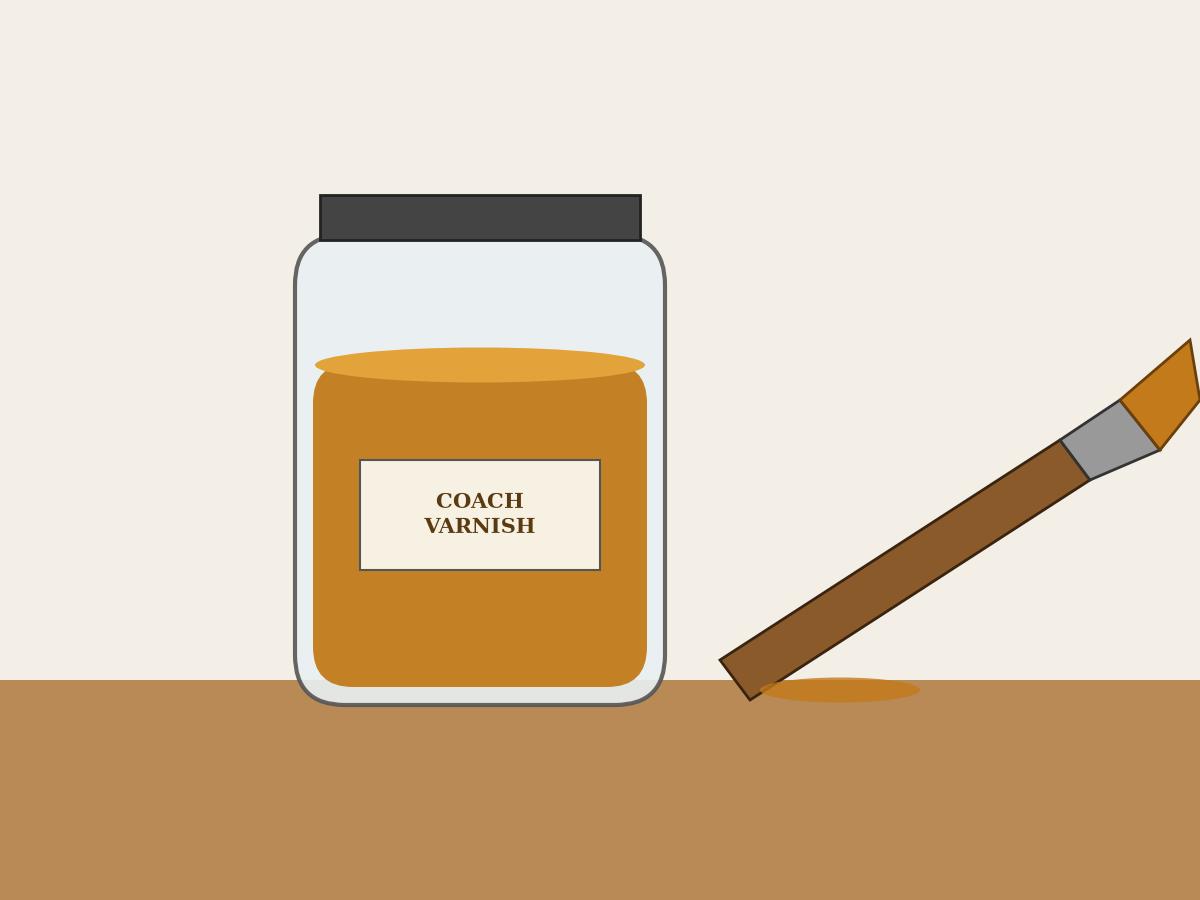


Coach Varnish: Copal Melted, Boiled with Linseed Oil and Thinned with Turpentine (Neil's, in Brannt, 1893)
A clear, pliant oil varnish for carriages, rods and woodwork: copal resin melted, boiled with five times its weight of linseed oil until viscid, then thinned with turpentine and filtered. It is Neil's carriage varnish, as William Brannt printed it in 1893.
Advanced
About half a day
Instructions
1
1
Cooking an oil varnish
Cooking an oil varnish
Resin cooked into linseed oil to make varnish (Emily Jones).
2
2
Neil's carriage varnish, 1893
Neil's carriage varnish, 1893
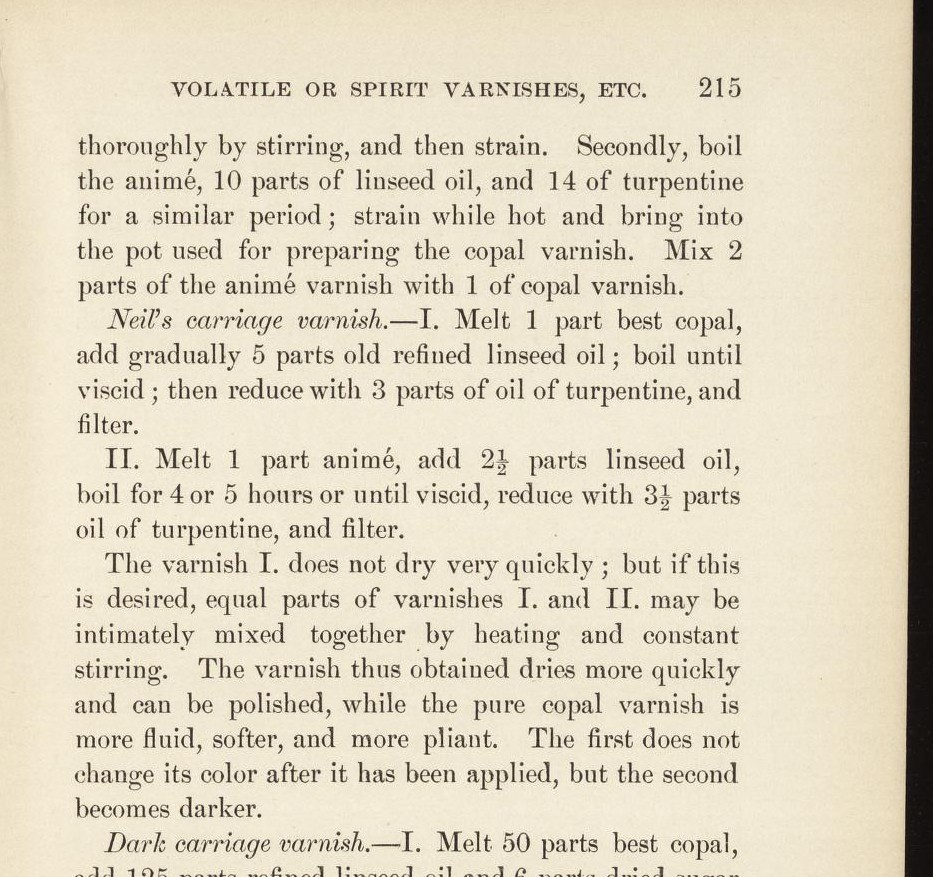
Brannt (p. 215): "Melt 1 part best copal, add gradually 5 parts old refined linseed oil; boil until viscid; then reduce with 3 parts of oil of turpentine, and filter." It "does not dry very quickly"; mixed with his anime varnish (II) it dries faster, "while the pure copal varnish is more fluid, softer, and more pliant".
3
3
Weigh out and set up outdoors
Weigh out and set up outdoors
Weigh 100 g copal, 500 g linseed oil and 300 g turpentine (Brannt's 1 : 5 : 3, taken by weight, ours). Set the stove up outdoors on bare ground with nothing that can burn nearby, the pot lid and fire blanket at hand (ours).
Tools needed:
 Balance Scale
 Charcoal Stove
 Fire Blanket
 Leather Gloves
4
4
Melt the copal
Melt the copal
Melt the copal alone in the pot over the fire, stirring, until it is all liquid.
Materials for this step:
 Copal Resin100 g
Tools needed:
 Stock PotCharcoal Stove
 Wooden SpoonLeather Gloves
5
5
Add the oil and boil until viscid
Add the oil and boil until viscid
Add the old refined linseed oil gradually, stirring, and keep it boiling until it is viscid. Ours: test a drop on a cold glass slide; when it draws out into a thread between finger and glass, it is done.
Materials for this step:
 Linseed Oil500 g
Tools needed:
Stock PotWooden Spoon Glass Slide
6
6
Thin with turpentine, off the fire
Thin with turpentine, off the fire
Take the pot well away from the fire and let it cool until it stops smoking (ours). Then stir in the oil of turpentine a little at a time.
Materials for this step:
 Turpentine300 g
Tools needed:
Wooden SpoonLeather Gloves7
7
Filter and store
Filter and store
Filter the warm varnish through a piece of flannel into clean jars (ours) and close them.
Tools needed:
 Wool Flannel
 Glass Jars with Lids
8
8
Troubleshooting
Troubleshooting
Varnish problems and fixes.
Flow
Loading...
9
9
History and honest limits
History and honest limits
William T. Brannt, Varnishes, Lacquers, Printing Inks and Sealing-Waxes (Henry Carey Baird & Co., Philadelphia, 1893), pp. 214-215, Neil's carriage varnish I. Brannt gives no temperatures; the batch size, the drop test and the safety steps are ours. Hot oil and turpentine catch fire easily: work outdoors and never leave the pot. For a faster-drying varnish he mixes it with an anime varnish (his II). Not made by us yet.
Materials
3- 100 gPlaceholder
- 500 gPlaceholder
- 300 gPlaceholder
Tools Required
9- Placeholder
- Placeholder
- Placeholder
- Placeholder
- Placeholder
- Placeholder
- Placeholder
- Placeholder
- Placeholder
This blueprint makes
CC0 Public Domain
This blueprint is released under CC0. You are free to copy, modify, distribute, and use this work for any purpose, without asking permission.
Support the Maker by purchasing products through their Blueprint where they earn a Maker Commission set by Vendors, or create a new iteration of this Blueprint and include it as a connection in your own Blueprint to share revenue.