ART
BEAUTY & WELLNESS
CRAFT
CULTURE & HISTORY
ENTERTAINMENT
ENVIRONMENT
FOOD & DRINKS
REVERSE ENGINEERING
SCIENCES
SPORTS
TECHNOLOGY
WEARABLES
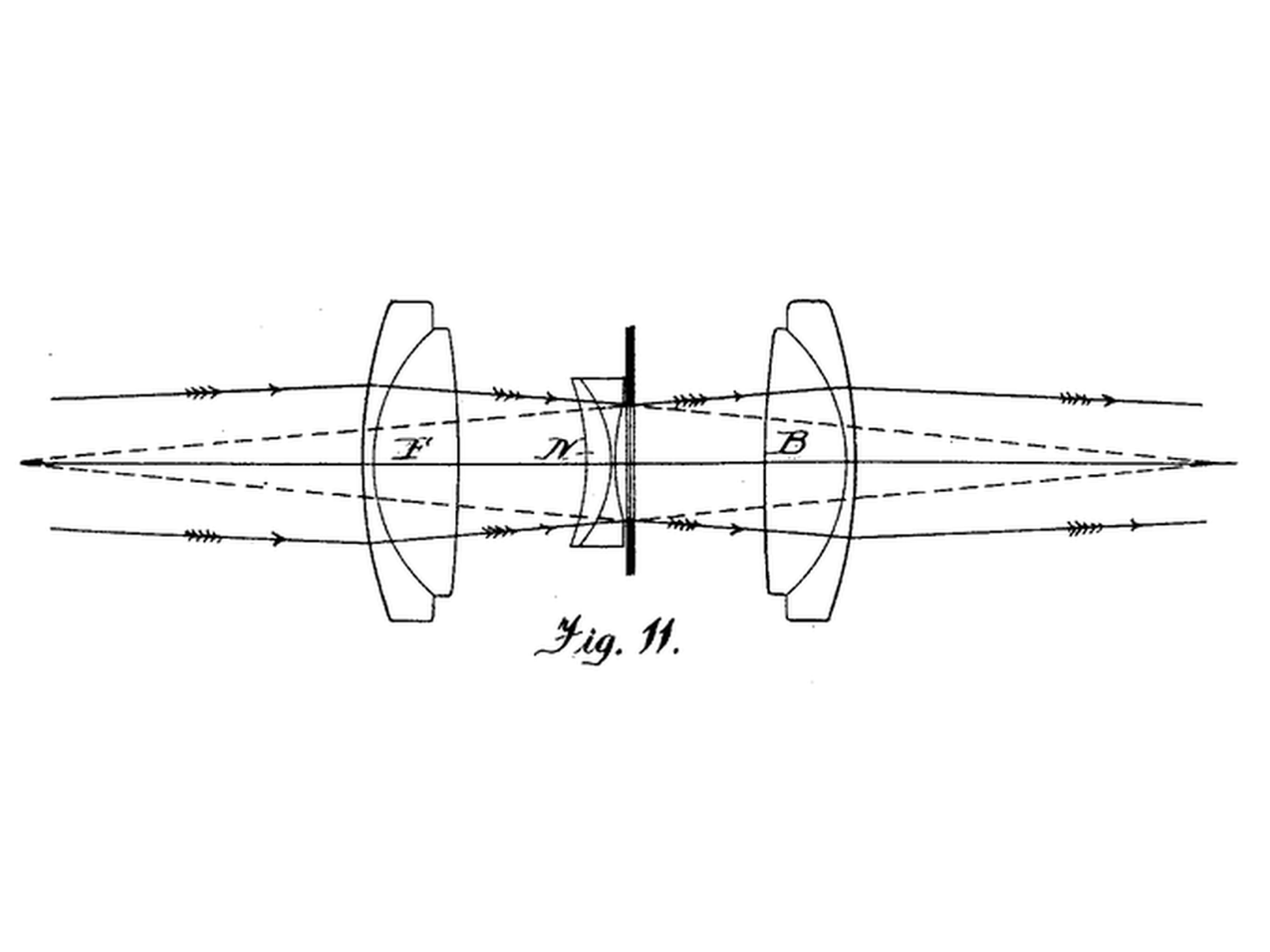

Cooke Triplet Lens
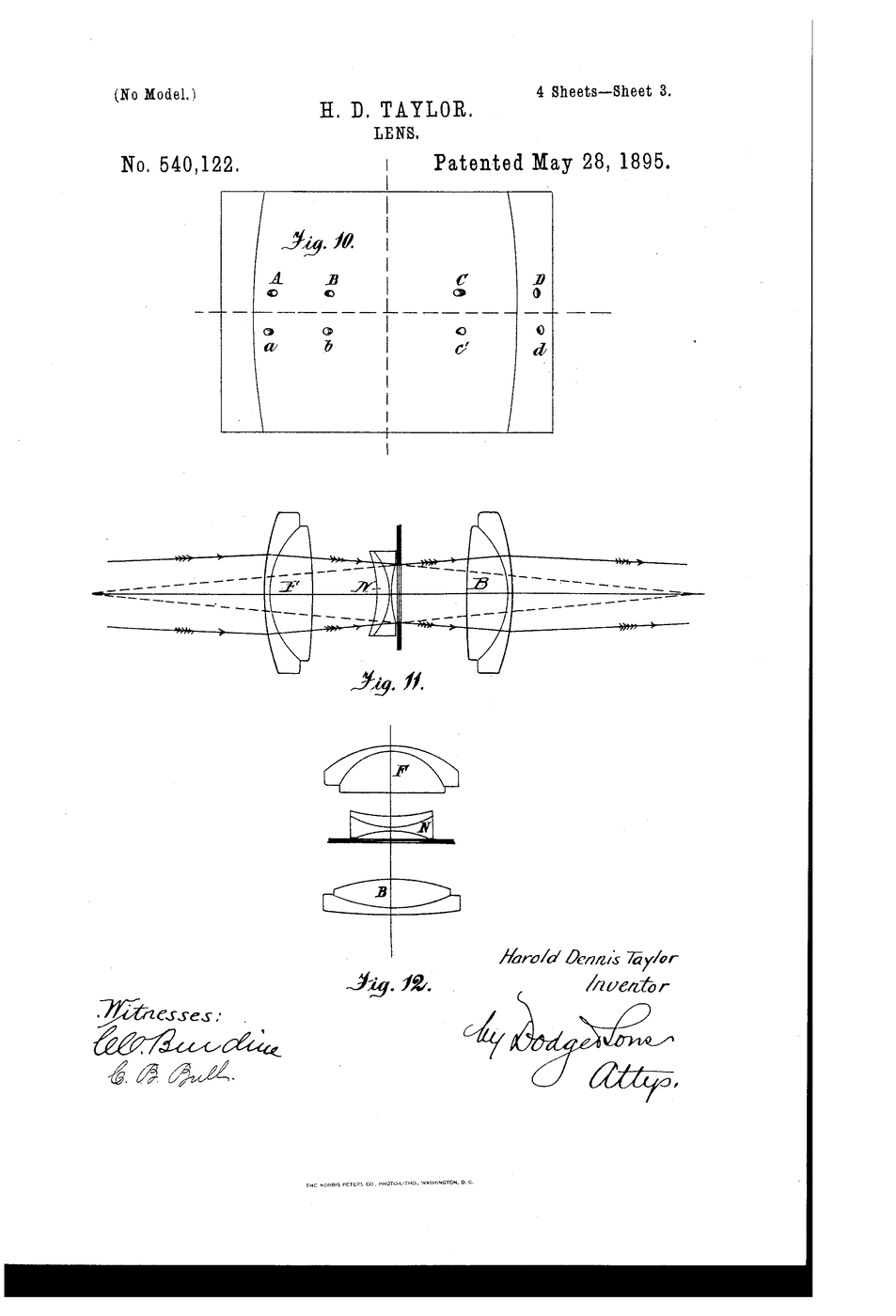
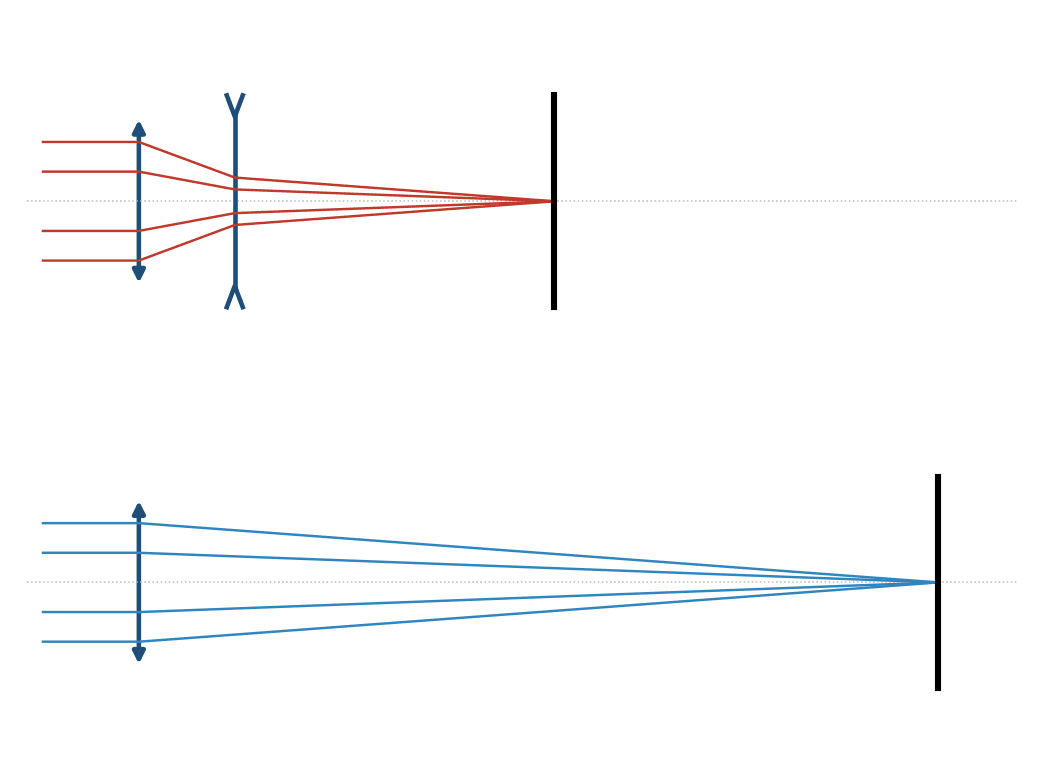
Nineteenth-century lens makers flattened the image with a stop placed in front of or behind the lens, at the cost of astigmatism at the edges. Harold Dennis Taylor, optical manager at T. Cooke & Sons of York, dropped that trick entirely. He showed that a negative lens images a flat object onto a surface curved exactly as much as a positive lens of equal power, but the other way - so one can cancel the other.
**US 540,122**, "Lens", Taylor, filed 5. February 1894, granted 28. May 1895, puts "a negative lens … between two positive lenses, the focal power of the negative lens being approximately equal to the combined focal powers of the two positive lenses". Three separated elements: the Cooke triplet, still the simplest well-corrected camera lens.
**You build one from stock lenses**, and compare how flat its image is with a single lens.
Intermediate
2 hours
Instructions
1
1
Choose three lenses
Choose three lenses
Two convex lenses of about 100 mm focal length (check each on a distant window) and one concave of about -50 mm. Powers: +10 and +10 dioptres against -20.
Materials for this step:
 Convex Lens Set (Assorted Focal Lengths)1 set
 Concave Lens1 piece
Tools needed:
 Steel Ruler
2
2
Mount the triplet
Mount the triplet
On the bench: convex, 20 mm gap, concave, 20 mm gap, convex. Centre all three on the same height.
Tools needed:
 Optical Bench & Rail
 Lens Holder Set
3
3
Light a grid
Light a grid
Tape graph paper to a window or light it from behind with a torch, 1.5 m from the lens. Put a tracing-paper screen behind the triplet and focus the centre of the grid sharply.
Materials for this step:
 Graph Paper1 sheet
 Pattern Tracing Paper Roll1 sheet
 Masking Tape1 roll
Tools needed:
 LED Inspection Flashlight
 Tape Measure
4
4
Measure the edge refocus
Measure the edge refocus
Without touching the lenses, move the screen until the grid 15 mm from the image centre is sharpest. Note how far it moved. Replace the triplet with one convex lens, refocus the centre, and measure the refocus again at the same 15 mm image height.
Tools needed:
Steel Ruler5
5
Petzval sum and design
Petzval sum and design
Loading Jupyter Notebook...
6
6
History & Context
History & Context
**What the patent specifies:** a negative lens between two positive lenses, its power about equal to theirs combined, each element free of diaphragm corrections, flattening the field and removing marginal astigmatism. **Modern build (derived):** three stock singlets on a bench.
Taylor's employer declined to make it; Taylor, Taylor & Hobson did, as the Cooke lens. Tessar and many later designs grew from it. Its limits: with only three elements the aperture and angle of view are modest before aberrations return.
Materials
5- 1 setPlaceholder
- 1 piecePlaceholder
- 1 sheetPlaceholder
- 1 sheetPlaceholder
- 1 rollPlaceholder
Tools Required
5- Placeholder
- Placeholder
- Placeholder
- Placeholder
- 1 vendor sell this, none ship to you yetPlaceholder
Related Blueprints
These blueprints share knowledge with this one — techniques, materials, or principles that connect them in the learning graph.

CC0 Public Domain
This blueprint is released under CC0. You are free to copy, modify, distribute, and use this work for any purpose, without asking permission.
Support the Maker by purchasing products through their Blueprint where they earn a Maker Commission set by Vendors, or create a new iteration of this Blueprint and include it as a connection in your own Blueprint to share revenue.