ART
BEAUTY & WELLNESS
CRAFT
CULTURE & HISTORY
ENTERTAINMENT
ENVIRONMENT
FOOD & DRINKS
REVERSE ENGINEERING
SCIENCES
SPORTS
TECHNOLOGY
WEARABLES
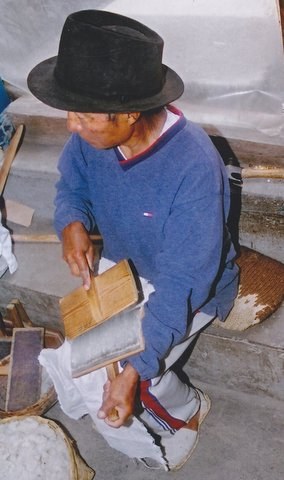


Cotton Roving by Hand: Carded, Drawn and Lightly Twisted
Roving is cotton made ready to spin: the fibres combed parallel, drawn into a long strand and given just enough twist to hold together. Mills did it with carding engines, drawing frames and roving frames; Andrew Ure (1839) explains them by the hand cards they copied. This is the hand version, from ginned lint.
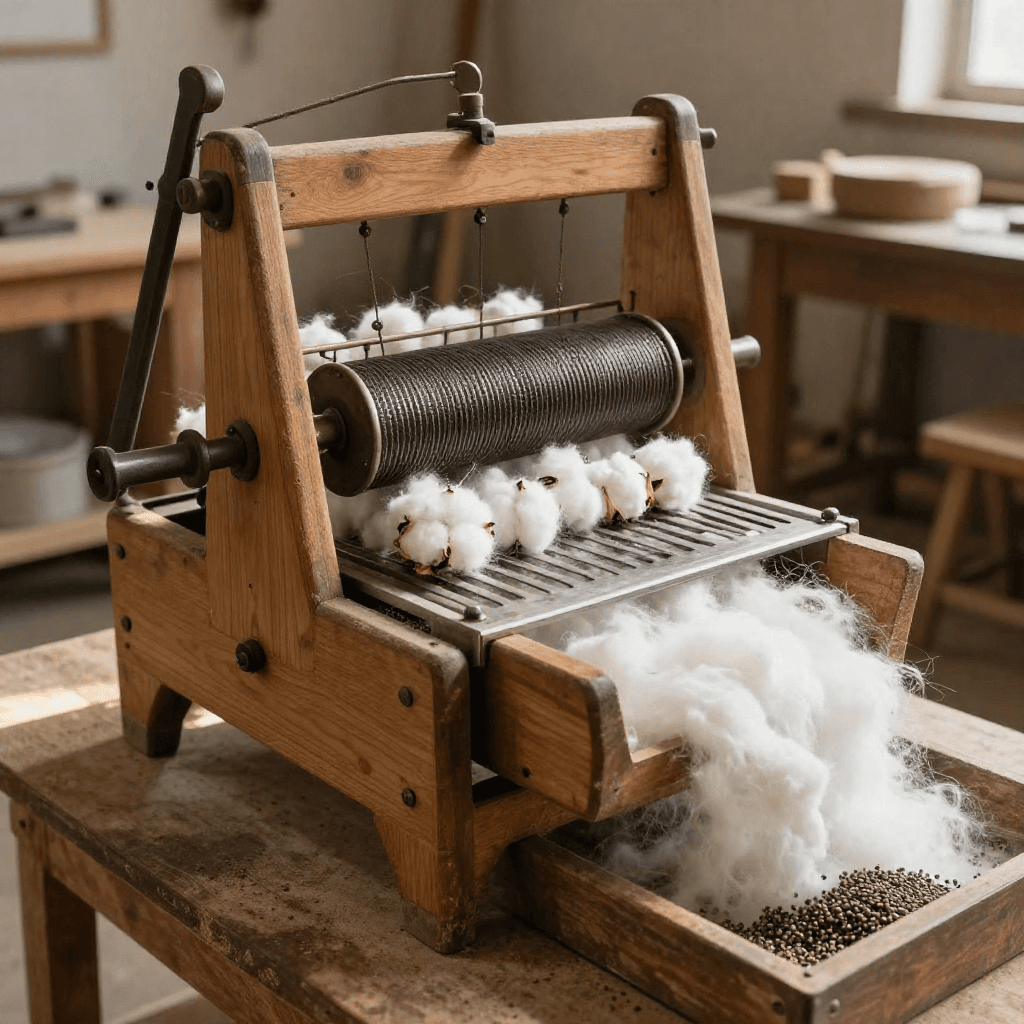
The picture: carding with a pair of hand cards in Ecuador.
Beginner
An afternoon
Instructions
1
1
Load and card
Load and card
Spread a thin layer of lint on one hand card. Brush the other card across it, teeth against teeth, again and again until the fibres lie parallel.
Materials for this step:
 Cotton Lint100 g
Tools needed:
 Hand Carders
2
2
Strip the card
Strip the card
Turn one card round so its teeth face the other way and draw it across: it lifts the whole layer off in one web (Ure's stripping position).
Tools needed:
Hand Carders3
3
Roll off a sliver
Roll off a sliver
Roll the stripped web off the card into a loose, untwisted rope: a sliver. Card the rest of the lint the same way.
Tools needed:
Hand Carders4
4
Double, draw and add a little twist
Double, draw and add a little twist
Lay two or three slivers together and draw them out to the length of one; repeat a few times to even out thick and thin places, as the mills' drawing frames did. Draw the strand to about pencil thickness. It now pulls apart easily, so give it a little twist with a slowly turning spindle and wind it on loosely. That twist is what makes it roving.
Tools needed:
 Drop Spindle
Materials
1- 100 gPlaceholder
Tools Required
2- Placeholder
- Placeholder
This blueprint makes

Related Blueprints
These blueprints share knowledge with this one — techniques, materials, or principles that connect them in the learning graph.
CC0 Public Domain
This blueprint is released under CC0. You are free to copy, modify, distribute, and use this work for any purpose, without asking permission.
Support the Maker by purchasing products through their Blueprint where they earn a Maker Commission set by Vendors, or create a new iteration of this Blueprint and include it as a connection in your own Blueprint to share revenue.