ART
BEAUTY & WELLNESS
CRAFT
CULTURE & HISTORY
ENTERTAINMENT
ENVIRONMENT
FOOD & DRINKS
REVERSE ENGINEERING
SCIENCES
SPORTS
TECHNOLOGY
WEARABLES
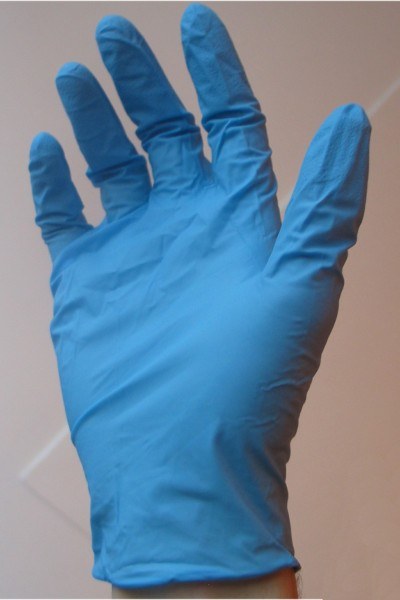


Nitrile Gloves by Dip Moulding
Thin rubber gloves are made on hand-shaped formers. A dried former is dipped in a coagulant, calcium nitrate with a powder and wetting agent; then into compounded nitrile latex, which sets as a film where the coagulant is, the time in the latex deciding the thickness. The film is leached in warm water, the cuff is rolled into a bead, and the glove is cured in an oven (about 125 °C for 20 minutes in one patent example) before it is stripped off the former. Powder-free gloves are then chlorinated or given a polymer coating so they slip on easily.
Advanced
Factory process
Instructions
1
1
Coagulant dip
Coagulant dip
Dry the formers in an oven, dip them in the calcium nitrate coagulant and let it dry.
Materials for this step:
 Calcium Nitrate1 kg
Tools needed:
 Glove Former
 Glove Dipping Line
2
2
Latex dip
Latex dip
Dip the formers in compounded nitrile latex; the longer the dip, the thicker the glove.
Materials for this step:
 Compounded Nitrile Latex10 kg
Tools needed:
Glove Dipping Line3
3
Leach and bead
Leach and bead
Leach the film in warm water, then roll the cuff into a bead.
Tools needed:
Glove Dipping Line4
4
Cure and strip
Cure and strip
Cure the gloves in an oven, cool them and strip them from the formers.
Tools needed:
 Curing Oven
5
5
Finish
Finish
For powder-free gloves, chlorinate them or apply a polymer coating so they don easily.
Materials
2- 1 kgPlaceholder
- Placeholder
Tools Required
3- Placeholder
- Placeholder
- Placeholder
This blueprint makes

Related Blueprints
These blueprints share knowledge with this one — techniques, materials, or principles that connect them in the learning graph.

CC0 Public Domain
This blueprint is released under CC0. You are free to copy, modify, distribute, and use this work for any purpose, without asking permission.
Support the Maker by purchasing products through their Blueprint where they earn a Maker Commission set by Vendors, or create a new iteration of this Blueprint and include it as a connection in your own Blueprint to share revenue.