ART
BEAUTY & WELLNESS
CRAFT
CULTURE & HISTORY
ENTERTAINMENT
ENVIRONMENT
FOOD & DRINKS
REVERSE ENGINEERING
SCIENCES
SPORTS
TECHNOLOGY
WEARABLES
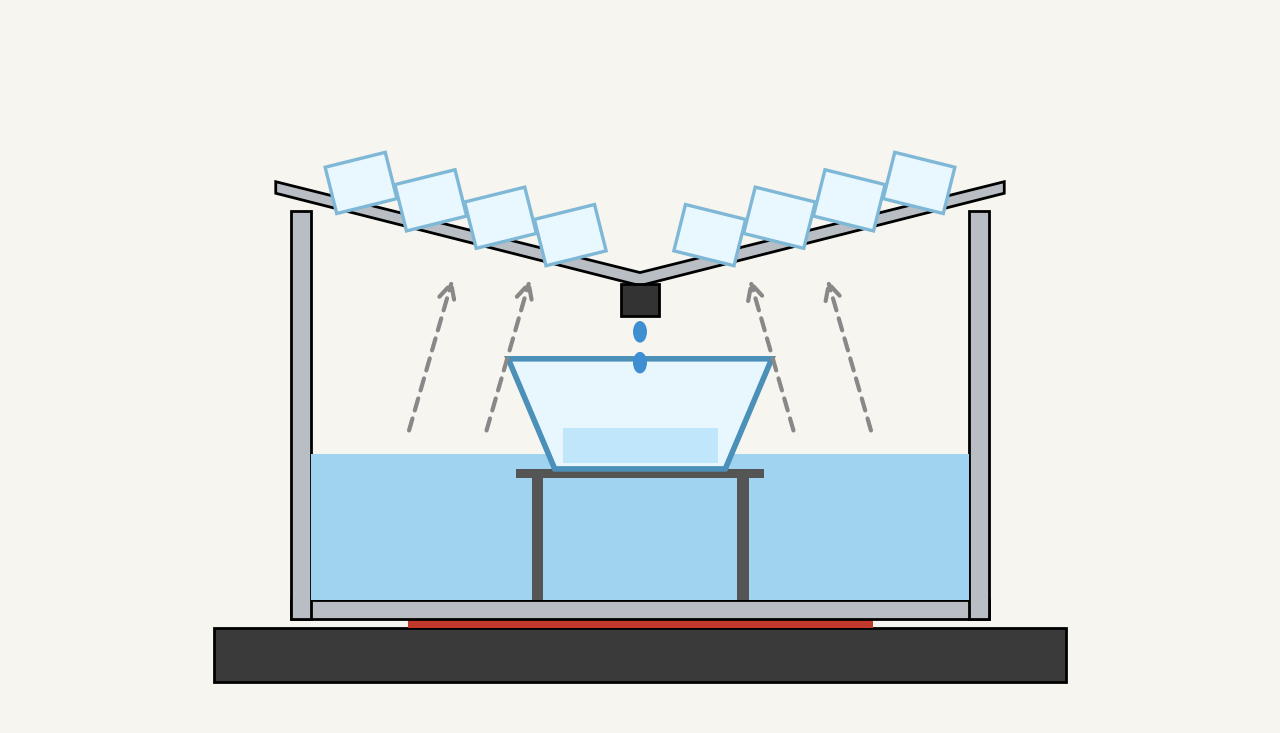


Distilled Water on the Stovetop
Boil tap water in a covered pot and catch the steam that condenses on the cold, upturned lid. The steam leaves the dissolved salts and minerals behind, so the drops that fall into a bowl in the middle are distilled water: for steam irons, lead-acid batteries, chemistry, humidifiers and topping up anything that must not scale.
It is slow and uses a lot of energy for little water. The notebook shows why, and how to measure your own stove.
Beginner
About 2 hours
Instructions
1
1
Why it takes so much energy
Why it takes so much energy
Loading Jupyter Notebook...
2
2
Set up the pot
Set up the pot
Stand a trivet in the stockpot and a glass bowl on it. Pour tap water around the bowl to about 5 cm below the bowl's rim, about 4 litres; none may splash into the bowl.
Materials for this step:
 Water4 liters
Tools needed:
 Stockpot
 Trivet
 Glass Bowl
3
3
Turn the lid over
Turn the lid over
Put the lid on upside down, handle down, so it slopes to its centre over the bowl. Steam will condense on its underside and run to the handle and drip into the bowl.
Tools needed:
Stockpot4
4
Simmer
Simmer
Heat until the water simmers, then turn down so it keeps a gentle simmer. A hard boil throws spray into the bowl. Start the stopwatch at the first drip.
Tools needed:
 Hot Plate
 Stopwatch
5
5
Ice on the lid
Ice on the lid
Fill the upturned lid with ice. The colder lid condenses more steam. When the ice has melted, ladle the meltwater off with oven gloves on and add fresh ice.
Materials for this step:
 Ice Cubes1 kg
Tools needed:
 Ladle
Ladle Heat-Resistant Gloves
6
6
Stop before it runs dry
Stop before it runs dry
Stop while at least 3 cm of water is left in the pot: what stays behind holds all the salts. Turn off the heat, let it cool 10 minutes, and lift the lid away from you; steam scalds.
Tools needed:
Heat-Resistant Gloves7
7
Weigh and test
Weigh and test
Weigh the distillate and note the time. Read a sample of the tap water and of the distillate with a TDS meter: the distillate should read far lower. Enter your numbers in the notebook.
Tools needed:
 Digital Kitchen ScaleStopwatch
 TDS Meter
8
8
Store it
Store it
Pour it into a clean glass jar with a lid and label it. Throw away the water left in the pot.
Tools needed:
 Glass Jars with Lids
9
9
Troubleshooting
Troubleshooting
Stovetop distillation troubleshooting.
Flow
Loading...
10
10
What it removes, and what it does not
What it removes, and what it does not
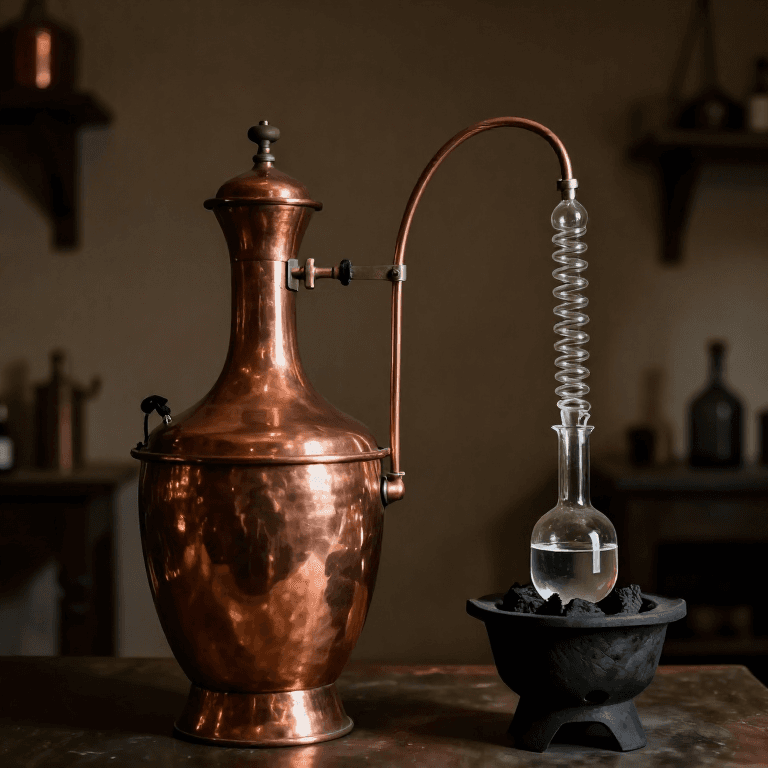
Distillation leaves dissolved salts, minerals and most dirt behind in the pot. Substances that boil at or below water's boiling point can travel with the steam, so it is not a guaranteed way to remove solvents or fuels from contaminated water. Laboratory stills use the same principle with a water-cooled condenser, which is faster and uses less ice.
Related Blueprints
These blueprints share knowledge with this one — techniques, materials, or principles that connect them in the learning graph.


CC0 Public Domain
This blueprint is released under CC0. You are free to copy, modify, distribute, and use this work for any purpose, without asking permission.
Support the Maker by purchasing products through their Blueprint where they earn a Maker Commission set by Vendors, or create a new iteration of this Blueprint and include it as a connection in your own Blueprint to share revenue.