ART
BEAUTY & WELLNESS
CRAFT
CULTURE & HISTORY
ENTERTAINMENT
ENVIRONMENT
FOOD & DRINKS
REVERSE ENGINEERING
SCIENCES
SPORTS
TECHNOLOGY
WEARABLES
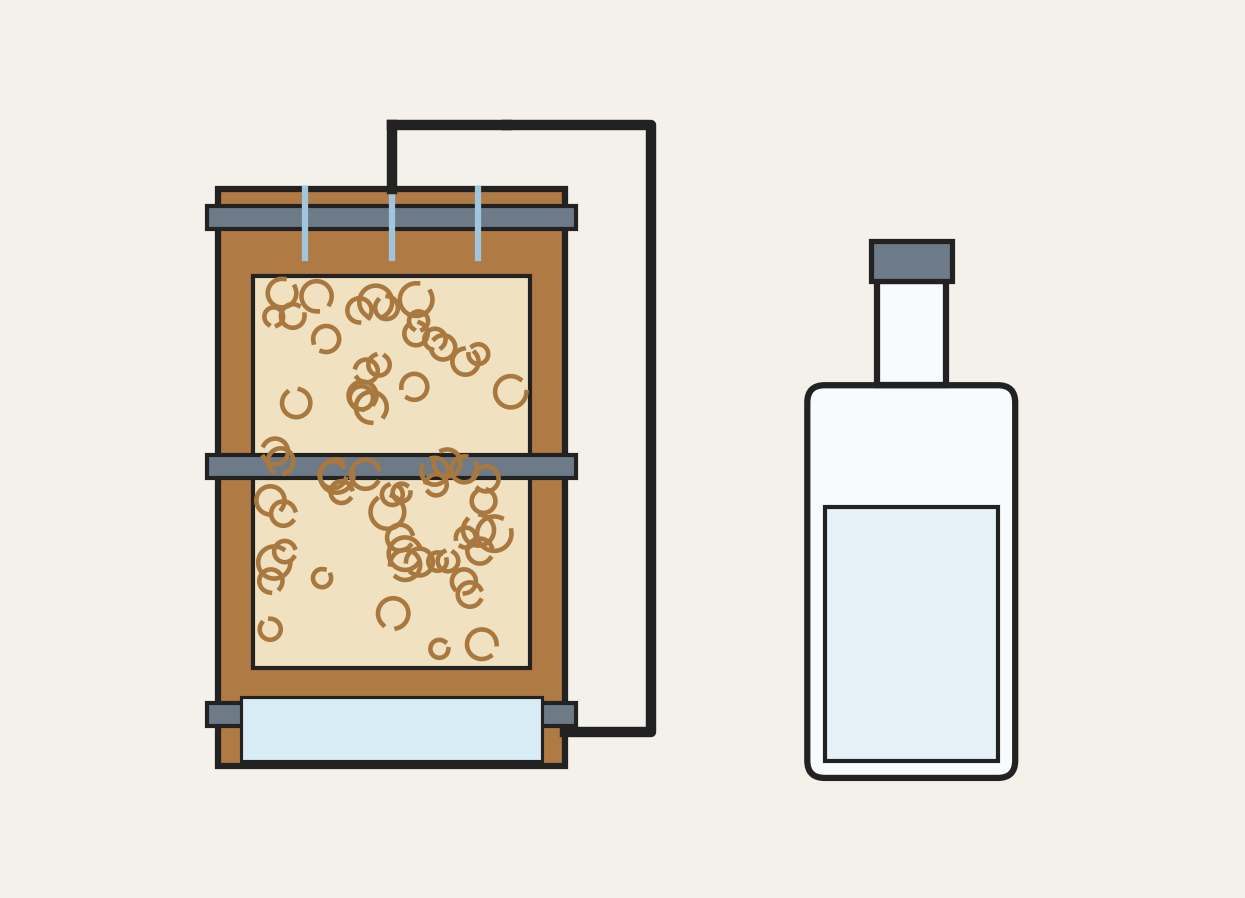


Distilled White Vinegar in a Packed Generator
"Distilled" white vinegar is not distilled vinegar: it is vinegar fermented from distilled alcohol. Sugar is first fermented to alcohol and distilled; acetic acid bacteria then turn the alcohol into acetic acid. In 1823 Karl Sebastian Schüzenbach in Baden built the packed generator, which circulates the alcohol over beechwood shavings and cut the fermentation from months to one or two weeks; it made vinegar from pure alcohol practical. The finished vinegar is diluted to a colourless 5–8% acetic acid in water, pH about 2.6, used in cooking, pickling and cleaning.
Intermediate
1–2 weeks
Instructions
1
1
Charge the generator
Charge the generator
Pack the generator with beechwood shavings and start it with mother of vinegar, the culture of acetic acid bacteria.
Materials for this step:
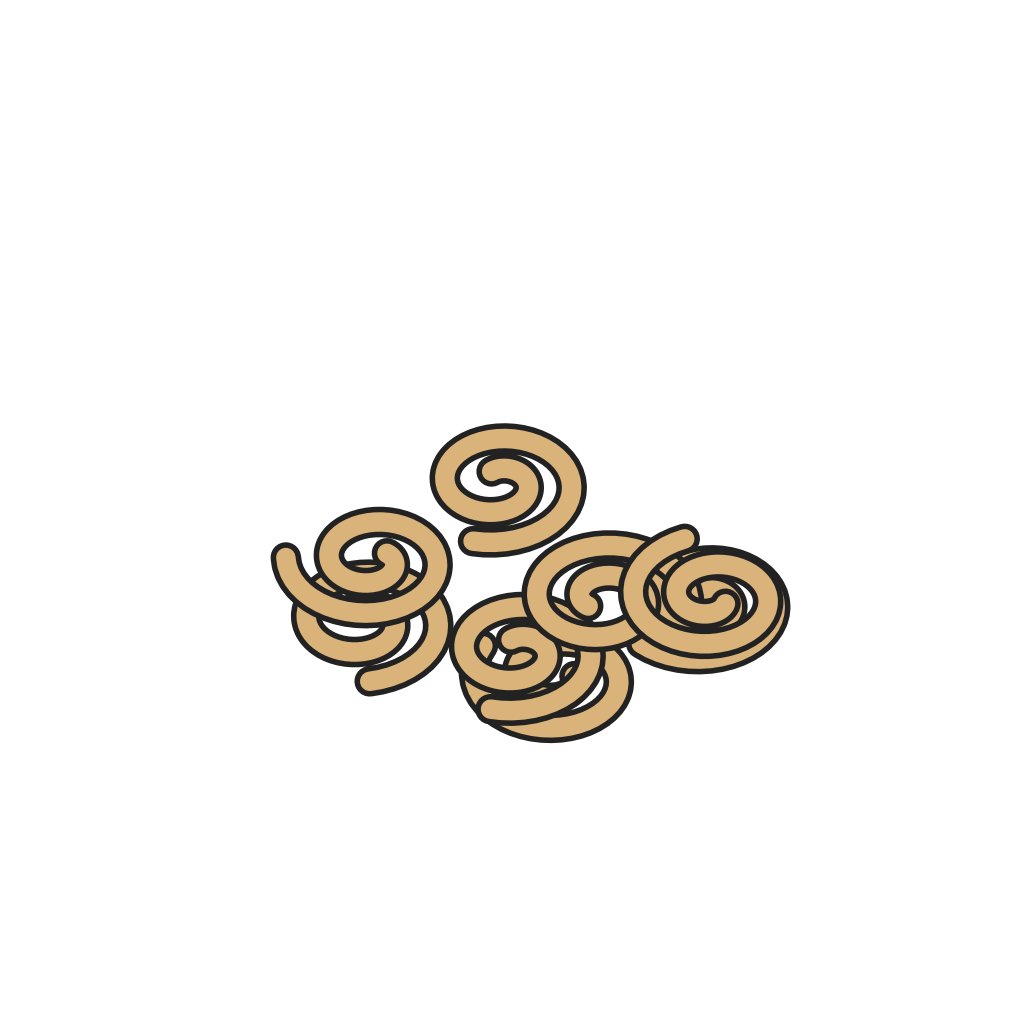 Beechwood Shavings1 as required
 Vinegar Mother1 as required
Tools needed:
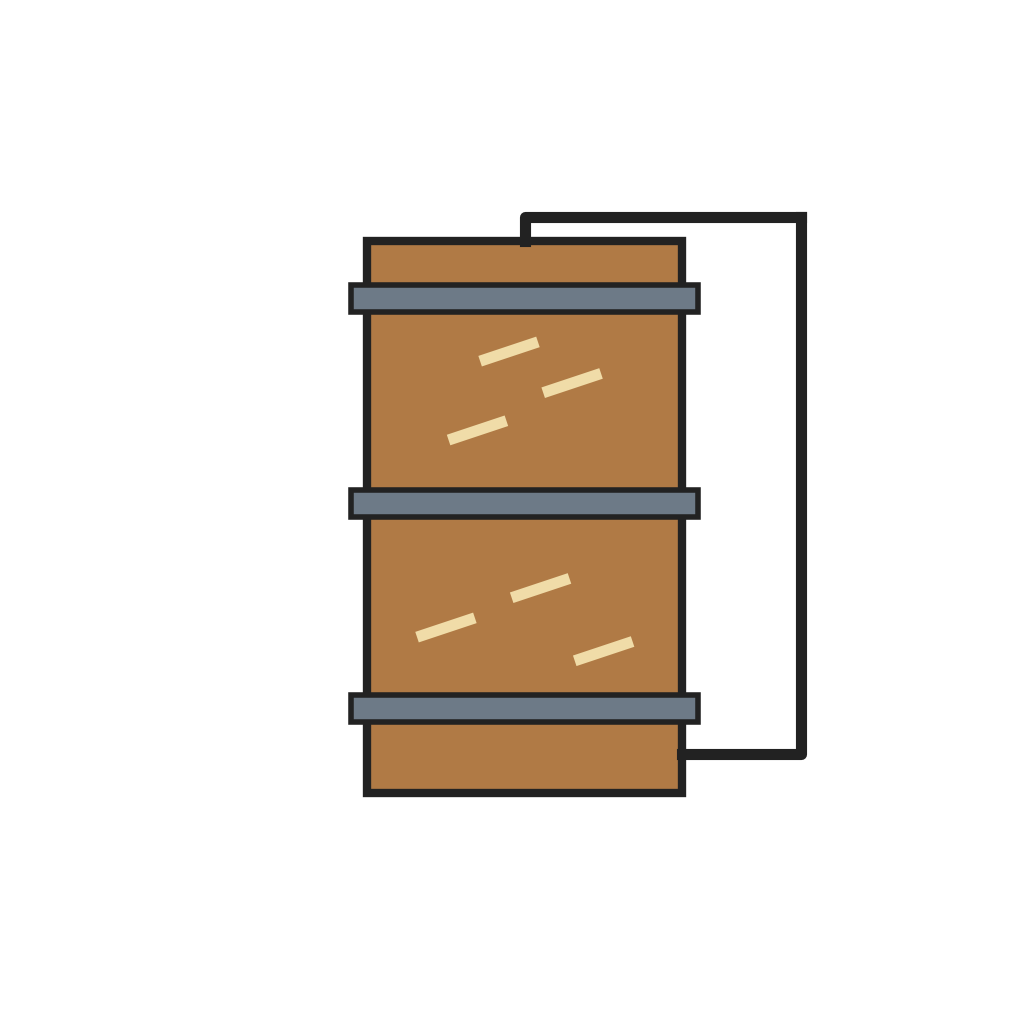 Vinegar Packed Generator
2
2
Circulate the alcohol
Circulate the alcohol
Circulate distilled alcohol over the shavings with air reaching it. The bacteria turn the alcohol into acetic acid in about one to two weeks, instead of the months a still vat takes.
Materials for this step:
 Distilled Spirit1 as required
Tools needed:
Vinegar Packed Generator3
3
Dilute
Dilute
Dilute the vinegar with water to a colourless solution of 5–8% acetic acid, pH about 2.6.
Materials for this step:
 Water1 as required
Materials
4- 1 as requiredPlaceholder
- 1 as requiredPlaceholder
- 1 as requiredPlaceholder
- 1 as requiredPlaceholder
Tools Required
1- Placeholder
This blueprint makes
Related Blueprints
These blueprints share knowledge with this one — techniques, materials, or principles that connect them in the learning graph.


CC0 Public Domain
This blueprint is released under CC0. You are free to copy, modify, distribute, and use this work for any purpose, without asking permission.
Support the Maker by purchasing products through their Blueprint where they earn a Maker Commission set by Vendors, or create a new iteration of this Blueprint and include it as a connection in your own Blueprint to share revenue.