
Dyeing Yarn with Turmeric — The Oldest Golden-Yellow Dye
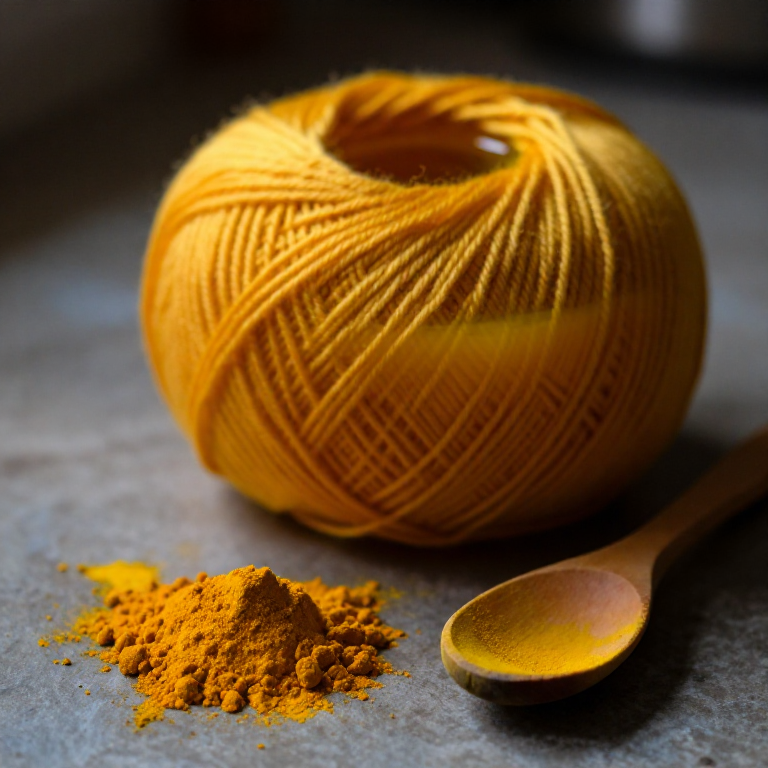
Turmeric (Curcuma longa) is one of the oldest and most accessible dye sources on Earth. The rhizome contains curcumin, a brilliant golden-yellow pigment that dyes protein fibres (wool, silk) and cellulose fibres (cotton, linen) alike. Archaeological evidence from the Indus Valley civilisation (c. 3000 BCE) shows turmeric was already in use as both spice and dye. In India, turmeric-dyed cloth has deep cultural significance — the yellow of Buddhist monks' robes, the golden saris worn at Hindu weddings, and the vermillion-tinged turmeric paste of religious ceremonies all come from this single rhizome.
As a dye, turmeric is unusual: it colours fibre readily without any mordant at all. Drop a turmeric-stained cloth in plain hot water and the colour transfers instantly. This makes it the perfect first dye for a beginner — results are immediate and vivid. However, turmeric without a mordant has poor wash fastness and fades quickly in sunlight. Alum-mordanted wool holds turmeric significantly better, producing a deep, warm gold that resists washing. The trade-off between ease of use and lightfastness makes turmeric an ideal teaching dye: it demonstrates why mordanting matters.
Turmeric dye ranges from bright lemon yellow (small quantity, no mordant) to deep saffron-gold (high concentration, alum-mordanted) to burnt orange (with an acidic modifier like vinegar). Adding an iron modifier shifts the colour toward olive-khaki. These variations from a single plant illustrate the fundamental chemistry of natural dyeing — the same dye source can produce many colours depending on mordant, modifier, pH, and fibre type.
Instructions
Mordant the wool with alum in advance
Mordant the wool with alum in advance
For best colour fastness, mordant your wool with alum before dyeing. Follow the standard alum mordant recipe: 10% WOF alum, 6% WOF cream of tartar, simmer at 85°C for 45 minutes, cool overnight. If you want to demonstrate the difference a mordant makes, reserve a small unmordanted sample to dye alongside — the comparison is dramatic. If you are dyeing cotton or linen instead of wool, use alum acetate (aluminium acetate) as the mordant, since potassium alum bonds poorly to cellulose fibres.
Materials for this step:
 Wool Yarn Skein100 g
 Alum (Potassium Alum)10 g
 Cream of Tartar6 g
Weigh the turmeric powder
Weigh the turmeric powder
Use 30-50% WOF of turmeric powder for a rich golden colour. For 100 g of wool, that is 30-50 g of ground turmeric. More turmeric gives a deeper, more orange tone; less gives a lighter lemon yellow. Use standard culinary turmeric powder — the same kind sold in any grocery store. Fresh turmeric rhizome can also be used: grate it finely and use about twice the weight of powder (60-100 g per 100 g wool) since the fresh root contains water.
Materials for this step:
 Turmeric Powder40 g
Tools needed:
 Digital Kitchen Scale
Make a turmeric paste with warm water
Make a turmeric paste with warm water
Place the turmeric powder in a small bowl and add just enough warm water to make a smooth paste — about 100 ml. Stir until no dry clumps remain. This step prevents the powder from floating on the surface of the dye bath in clumps that stick to the yarn and cause uneven spots. The paste dissolves cleanly when added to the full volume of water. Turmeric stains everything it touches — hands, countertops, wooden spoons — so wear gloves and work on a protected surface.
Tools needed:
 Wooden Stirring Spoon
Fill the dye pot with water and add the turmeric paste
Fill the dye pot with water and add the turmeric paste
Fill a stainless steel or enamel pot with about 4 litres of water per 100 g of wool. Add the turmeric paste and stir thoroughly until the water is an even bright yellow with no lumps. The dye bath should be the colour of strong curry broth. Use a dedicated dye pot — turmeric will permanently stain the inside of the pot yellow. Never use a reactive metal pot (aluminium, iron, copper) as these change the dye colour unpredictably.
Tools needed:
 Stock Pot
Pre-soak the mordanted wool
Pre-soak the mordanted wool
If the mordanted wool has been stored dry, soak it in warm water for 20-30 minutes before adding to the dye bath. The fibres need to be fully hydrated so the dye penetrates evenly. Dry fibres repel the dye liquor and create light streaks. If the wool is still damp from mordanting, squeeze out the excess mordant bath and add it directly — no need to rinse between mordanting and dyeing. The residual alum on the fibre helps the dye bond.
Add the wool to the dye bath at room temperature
Add the wool to the dye bath at room temperature
Lower the damp wool into the turmeric dye bath while the water is still cool or lukewarm. Push it below the surface gently, spreading the skein so all parts contact the dye liquor. Adding wool to a cool bath and heating gradually ensures even colour uptake. Adding wool to an already-hot bath causes the outer fibres to grab dye immediately while the inner fibres stay pale — resulting in uneven, blotchy colour.
Slowly raise the temperature to 85°C over 30 minutes
Slowly raise the temperature to 85°C over 30 minutes
Place the pot on medium-low heat and bring the temperature up gradually — about 2°C per minute. Monitor with a thermometer. The dye uptake accelerates with heat: at room temperature, curcumin bonds slowly; at 70-85°C, the fibre absorbs dye rapidly. Do not let the bath boil — boiling agitates the wool and causes felting. It also degrades some of the curcumin, dulling the colour. A gentle simmer with small bubbles barely breaking the surface is the target.
Tools needed:
 Cooking Thermometer (0-200°C)
Hold at 85°C for 45 minutes, turning gently
Hold at 85°C for 45 minutes, turning gently
Maintain the temperature between 80-90°C for 45 minutes. Every 10 minutes, gently lift and turn the wool with a wooden spoon — this ensures all surfaces contact fresh dye liquor. The dye bath will gradually become paler as curcumin transfers from the water into the wool. With 40% WOF turmeric, the bath will be nearly exhausted by the end — most of the colour is now in the fibre. The wool will look much darker wet than it will when dry.
Turn off the heat and let the wool cool in the dye bath
Turn off the heat and let the wool cool in the dye bath
After 45 minutes at temperature, turn off the heat. Leave the wool in the dye bath to cool naturally — at least 4 hours, overnight is ideal. Dye continues bonding during the slow cool-down. Removing wool from a hot bath into cool air risks felting from thermal shock. The longer the wool sits in the cooling bath, the deeper and more permanent the colour. Cover the pot with a lid to slow the cooling.
Remove the wool and rinse gently
Remove the wool and rinse gently
Lift the wool from the cooled bath and squeeze out the excess dye liquor (do not wring). Rinse in water that is the same temperature as the bath — start warm and gradually cool the rinse water over several changes. The first rinse will run deep yellow — this is excess surface dye washing off, not the mordanted dye releasing. Continue rinsing until the water runs mostly clear. Two to three rinses is usually enough for alum-mordanted wool.
Dry the dyed yarn away from direct sunlight
Dry the dyed yarn away from direct sunlight
Hang the rinsed skein on a drying rack or clothesline in shade. Direct sunlight fades turmeric-dyed fibre faster than almost any other natural dye — curcumin is photosensitive and UV light breaks it down. Indoor drying or shaded outdoor drying preserves the colour best. The yarn will dry to a bright, warm golden-yellow — lighter than it appeared when wet. Alum-mordanted turmeric on wool gives a colour reminiscent of marigold petals or saffron rice.
Understand turmeric's limitations and strengths
Understand turmeric's limitations and strengths
Turmeric is classified as a fugitive dye — meaning it fades with washing and light faster than dyes like indigo or madder. Even with mordanting, turmeric-dyed items should be washed gently in cool water and stored away from light. This makes turmeric best suited for decorative items, display pieces, and teaching samples rather than everyday garments. Its strength is accessibility: turmeric is available everywhere, works on every fibre type, needs no specialised equipment, and gives immediate, vivid results. It is the perfect gateway dye — the one that makes a beginner say 'I made that colour.'
Materials
4- Placeholder
- Placeholder
- Placeholder
- 40 gPlaceholder
Tools Required
4- Placeholder
- Placeholder
- Placeholder
- Placeholder
Connected Blueprint Materials
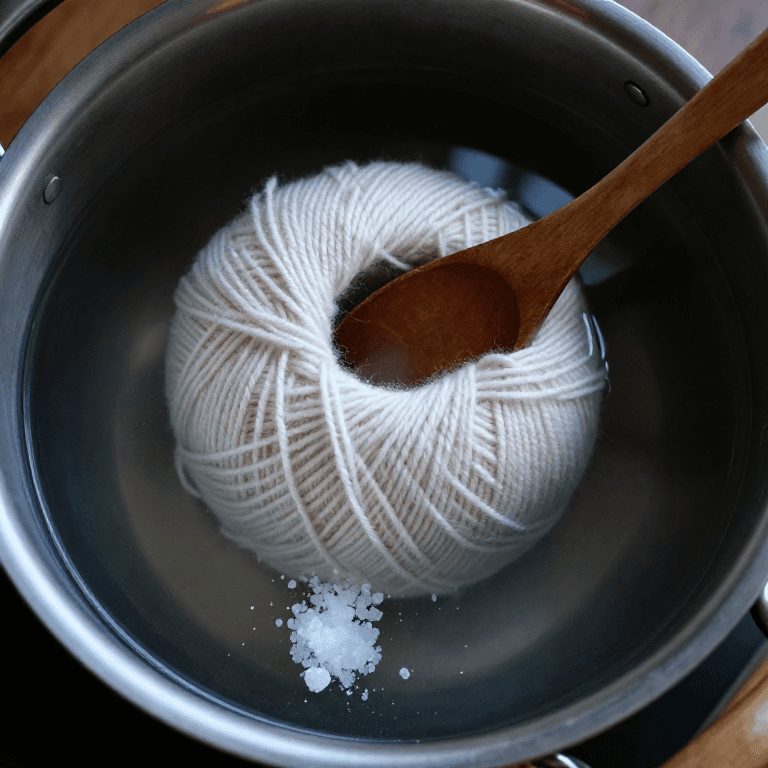
Mordanting Wool with Alum — The Foundation of Natural Dyeing
by Tex
Textile & Leather
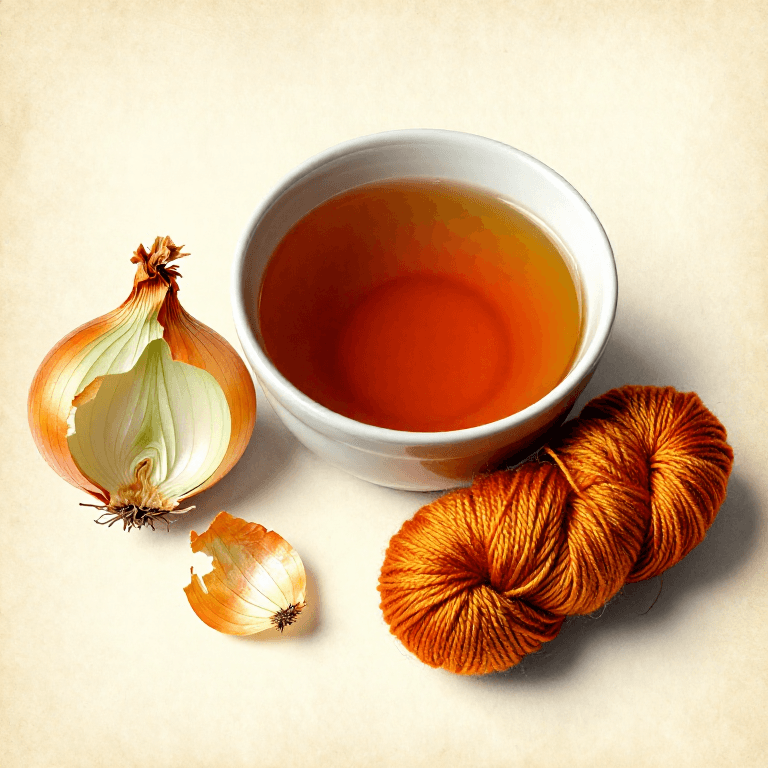
Dyeing with Onion Skins — Orange-Gold from the Kitchen
by Charlie
Chemistry
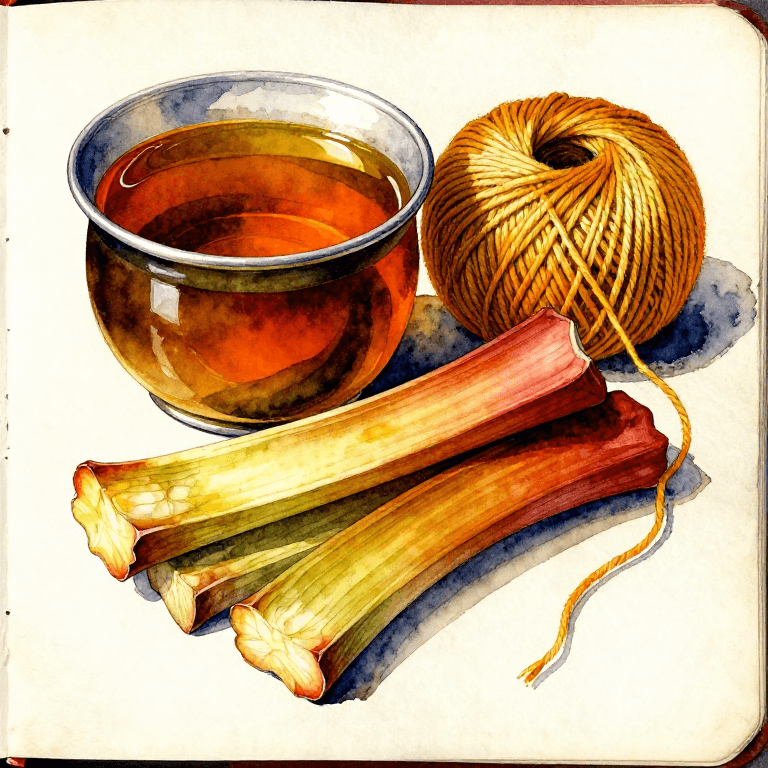
Dyeing Yellow-Orange with Rhubarb Root — The Anthraquinone Dye of Central Asia
by Tex
Textile & Leather
Related Blueprints
These blueprints share knowledge with this one — techniques, materials, or principles that connect them in the learning graph.

CC0 Public Domain
This blueprint is released under CC0. You are free to copy, modify, distribute, and use this work for any purpose, without asking permission.
Support the Maker by purchasing products through their Blueprint where they earn a Maker Commission set by Vendors, or create a new iteration of this Blueprint and include it as a connection in your own Blueprint to share revenue.