Collaboration
ART
BEAUTY & WELLNESS
CRAFT
CULTURE & HISTORY
ENTERTAINMENT
ENVIRONMENT
FOOD & DRINKS
REVERSE ENGINEERING
SCIENCES
SPORTS
TECHNOLOGY
WEARABLES
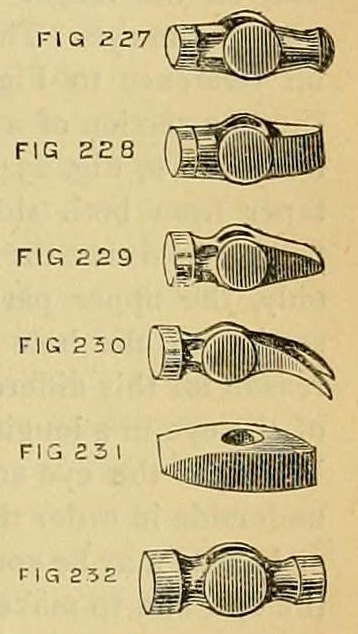


Steel-Faced Hand Hammers and Sledges: Ball, Fuller, Wedge and Claw Panes, Eye on Two Oval Drifts (Edwinson, 1886)
How smiths made hand hammers and sledges, from George Edwinson's smithing series (Amateur Work, 1886): solid steel, or an iron head with a steel face welded into a slit fork; the eye punched and shaped on two oval taper drifts so the wedged handle cannot work loose. Panes: ball, fuller, wedge and claw.
Advanced
A day at the forge
Instructions
1
1
His weights
His weights
Loading Jupyter Notebook...
2
2
Read Edwinson
Read Edwinson
"To make a steel hammer it is only necessary to get a bar of steel the required size, heat, upset, and forge to the selected size and shape."
3
3
Solid steel route
Solid steel route
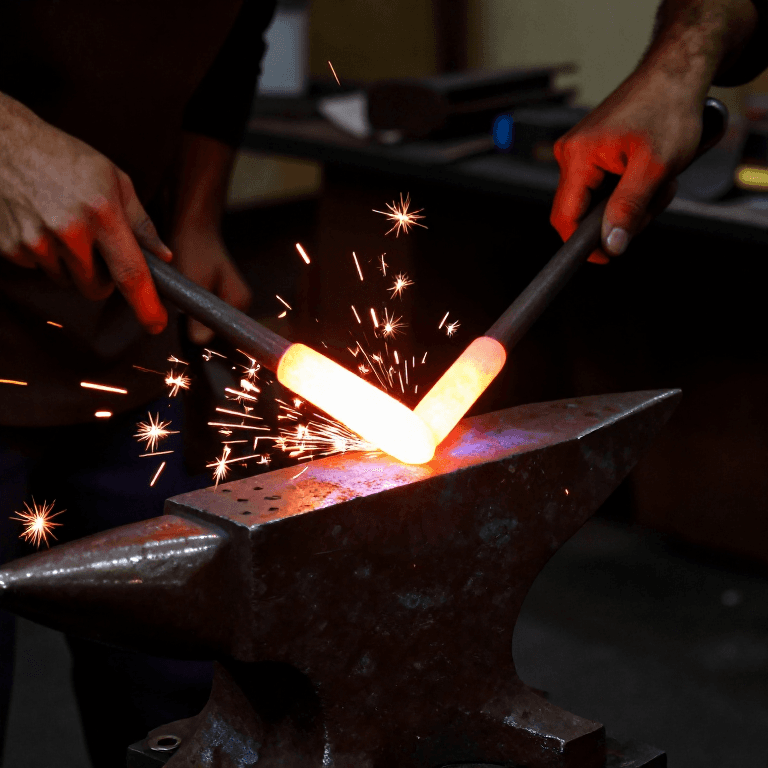
Heat a steel bar of the size needed, upset it and forge it to shape. Punch the hole for the handle and work it on a taper drift. Tool the hammer off smoothly at a red heat, then heat it and harden it in water.
Materials for this step:
 Crucible Steel1 piece
Tools needed:
 Blacksmith Forge
 Anvil
 Sledgehammer
 Blacksmith Tongs
 Drift
 Quench Bucket
4
4
Steel-faced route: weld the face
Steel-faced route: weld the face
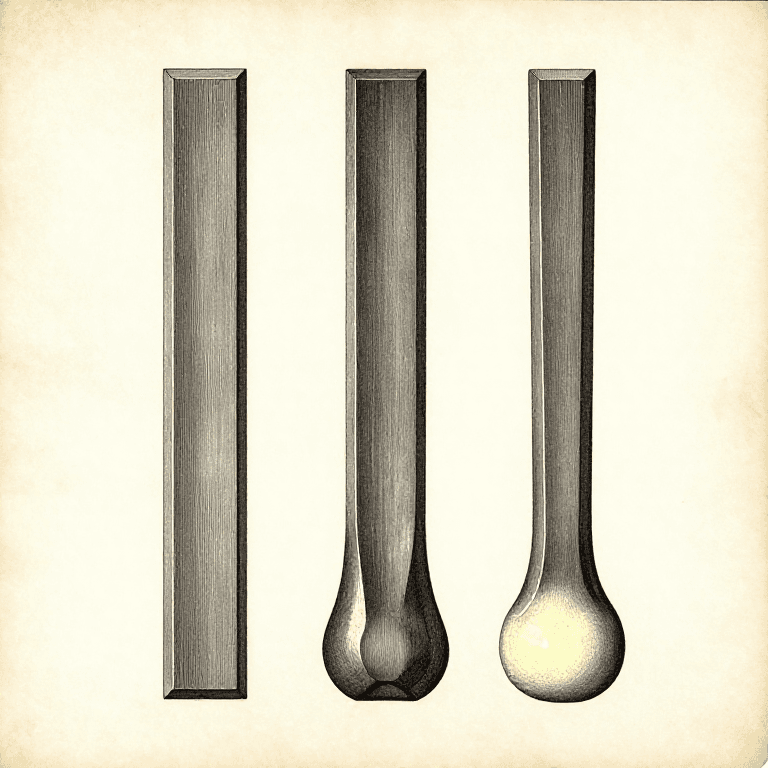
Upset a stout iron bar if it is too thin. Slit one end hot with a hot chisel (his sett) into a fork. Forge a steel bar to a wedge that fits it. Bring the iron to a welding heat and the steel to its own (a separate fire if needed), roll the steel in calcined borax and weld. Reheat with the steel protected by welding mixture or sand, and finish the weld.
Materials for this step:
 Wrought Iron Bar1 piece
 Blister Steel Bars1 piece
 Borax Powder1 piece
 Sand1 piece
Tools needed:
Blacksmith Forge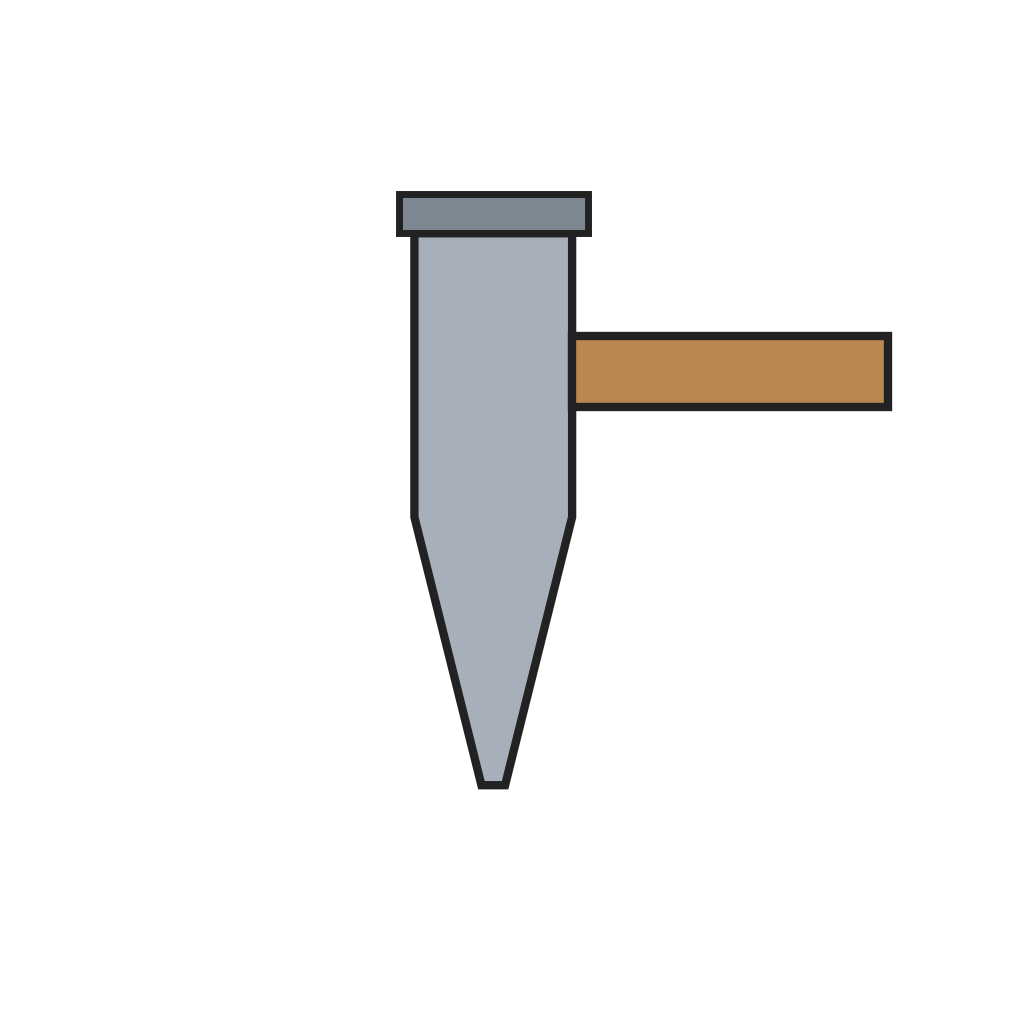 Hot ChiselAnvilSledgehammerBlacksmith Tongs
5
5
Shape the head
Shape the head
Cut off the steel, forge steel and iron up into the face. Fashion the head and pane, punch the handle hole and form it on a taper drift, cut the hammer off the bar and finish it held in crooked bit tongs. If both ends are to be steel, weld in both before cutting off. Panes: ball for riveting, fuller for spreading iron, wedge, or claw for drawing nails.
Tools needed:
Blacksmith ForgeDriftHot ChiselAnvil HammerBlacksmith Tongs
6
6
Shape the eye on two drifts
Shape the eye on two drifts
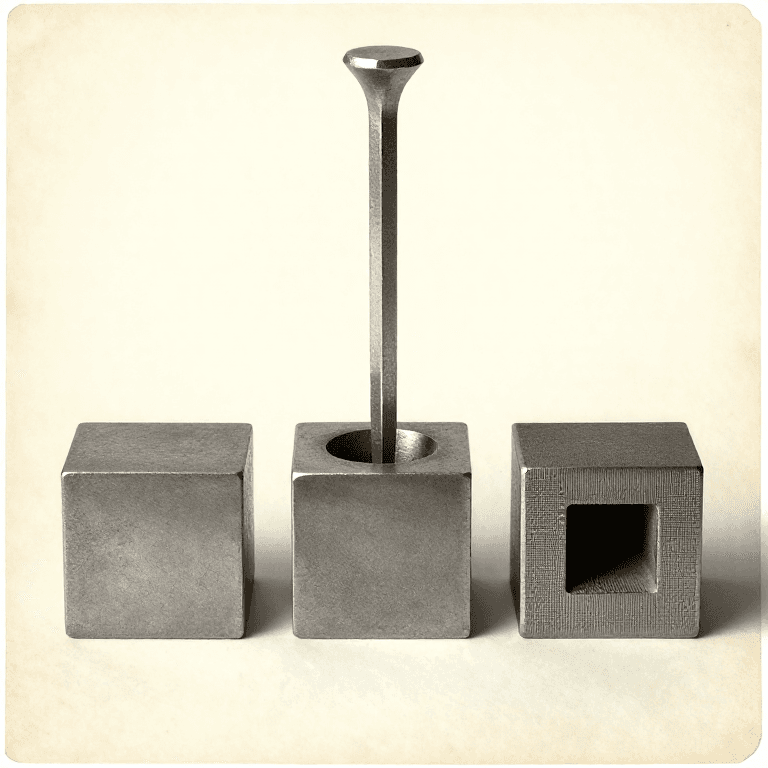
Use two oval taper drifts: one tapered all round to form the lower side of the eye, the other tapered only on its long sides for the upper part. The eye tapers from both sides across the head, but only from the lower side lengthwise. Round the edges on the underside.
Tools needed:
Blacksmith ForgeDriftAnvilHammer7
7
Sizes and sledges
Sizes and sledges
Hand hammers usually weigh 1-2 lb (0.45-0.9 kg). Larger fuller or wedge pane hammers of 3-30 lb are sledges; one-handed sledges weigh 3-5 lb; heavier ones get stout ash handles 3-4 ft (0.9-1.2 m) long for two hands.
Tools needed:
Anvil8
8
Hang the head
Hang the head
Drive the handle into the eye from below so its end is compressed and fits tight. Cut off the extra wood, split the end with a chisel and drive in a wedge of well-seasoned wood. If the eye tapers two ways, cross-slit and drive two wedges.
Materials for this step:
 Ash Billet1 piece
 Wooden Wedges1 piece
Tools needed:
 Drawknife
 ChiselsHammer
9
9
Troubleshooting
Troubleshooting
Hammer troubleshooting.
Flow
Loading...
10
10
History and honest limits
History and honest limits
From George Edwinson, "Smithing and Forging" (part X), **Amateur Work, Illustrated**, vol. VI (Ward, Lock & Co., 1886-87), pp. 211-214 (checked on the archive.org scan amateurworkillus06lond), pp. 212-214 and figs. 227-235. He gives no temper for the face; the metric figures and tools are ours.
Materials
7- 1 piecePlaceholder
- 1 piecePlaceholder
- 1 piecePlaceholder
- 1 piecePlaceholder
- 1 piecePlaceholder
- 1 piecePlaceholder
- 1 piecePlaceholder
This blueprint makes


Related Blueprints
These blueprints share knowledge with this one — techniques, materials, or principles that connect them in the learning graph.
CC0 Public Domain
This blueprint is released under CC0. You are free to copy, modify, distribute, and use this work for any purpose, without asking permission.
Support the Maker by purchasing products through their Blueprint where they earn a Maker Commission set by Vendors, or create a new iteration of this Blueprint and include it as a connection in your own Blueprint to share revenue.