ART
BEAUTY & WELLNESS
CRAFT
CULTURE & HISTORY
ENTERTAINMENT
ENVIRONMENT
FOOD & DRINKS
REVERSE ENGINEERING
SCIENCES
SPORTS
TECHNOLOGY
WEARABLES
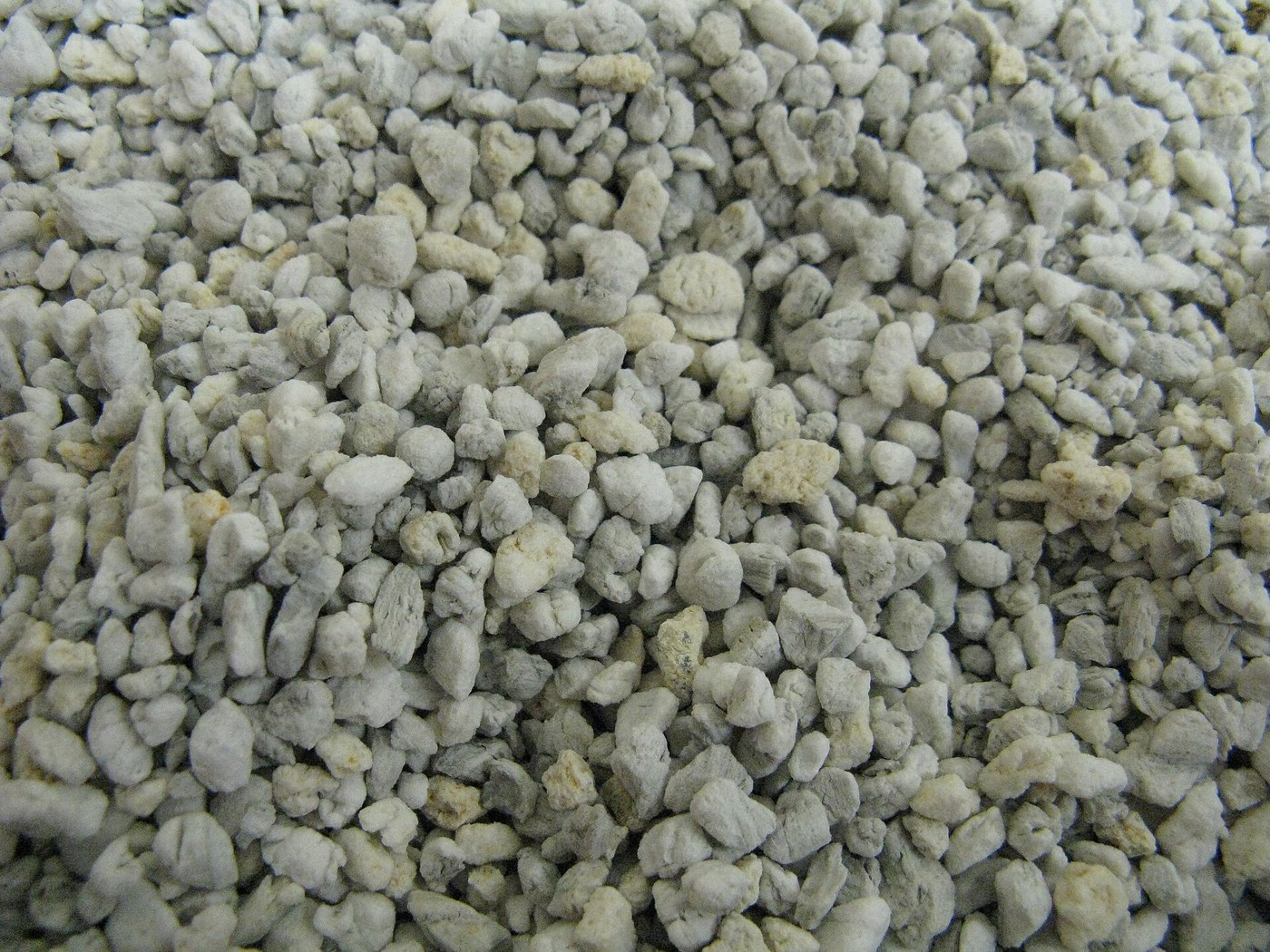


Expanded Perlite: Volcanic Glass Puffed in a Minute of Fierce Heat
Perlite is a volcanic glass with water locked inside. Heated fast into its softening range, the water turns to steam and puffs each grain up to 7–16 times its volume, brilliant white and light (Wikipedia). The U.S. Bureau of Mines (1946) found that grains up to ¼ inch need only 1 to 3 minutes at the right heat, somewhere between 1,600 and 2,600 °F depending on the ore.
The picture: expanded perlite (photo by KENPEI, Wikimedia Commons, CC BY-SA 3.0).
Intermediate
A few hours
Instructions
1
1
Crush and size
Crush and size
Break the perlite ore into grains no bigger than ¼ inch and sieve out the large pieces.
Materials for this step:
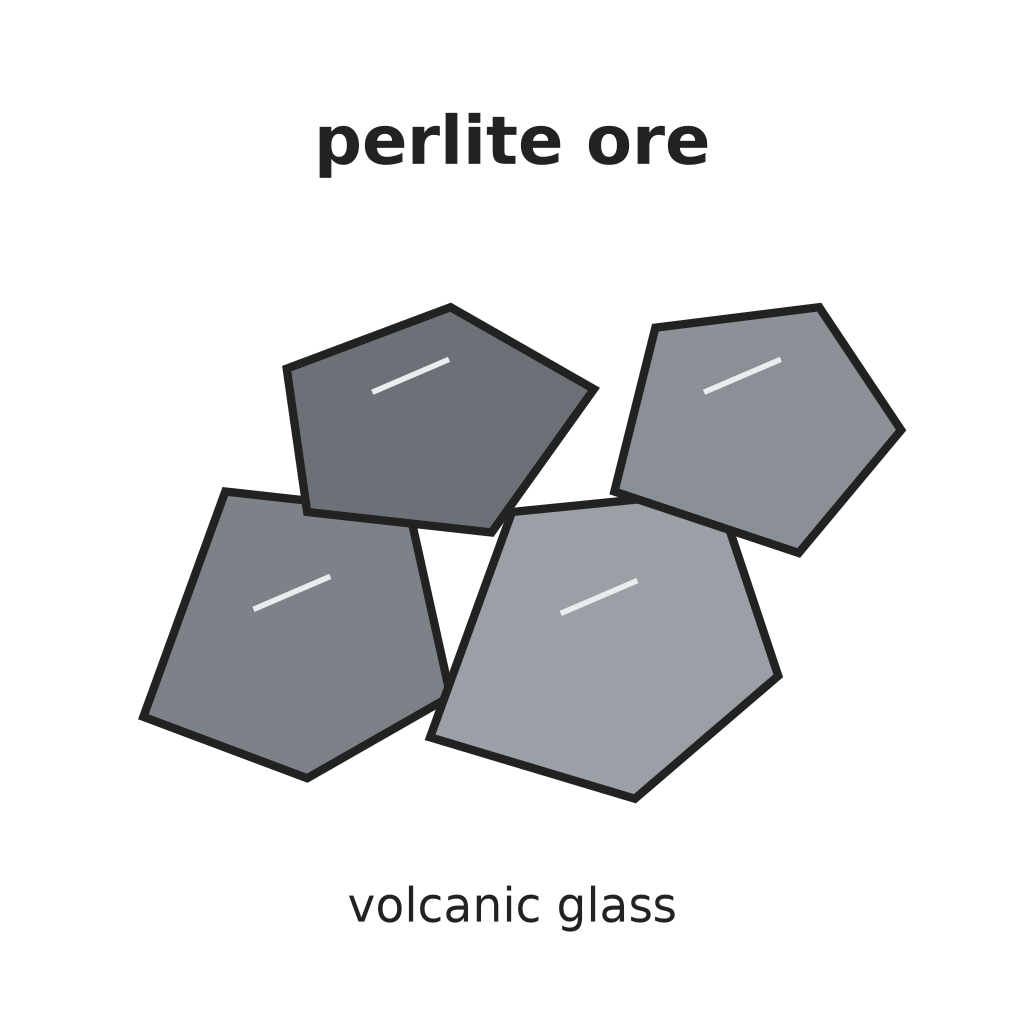 Perlite Ore1 kg
Tools needed:
 Hand Hammer
 Coarse Sieve
2
2
Heat it fast
Heat it fast
Heat the kiln first. Drop a thin layer of grains in on a hot dish for 1 to 3 minutes, then take them out. Slow heating does not work.
Tools needed:
 Kiln
 Shallow Dish
 Long-Handled Tongs
 Welding Gloves
3
3
Find your ore's heat
Find your ore's heat
Each ore has its own heat, between 1,600 and 2,600 °F. Too cool and it hardly puffs; hotter puffs it more. Too hot and it melts, lets the gas out, and shrinks back to dense slag. Test small lots first.
Tools needed:
KilnShallow DishLong-Handled Tongs4
4
Float off the duds
Float off the duds
Tip the cooled grains into water. The expanded ones float; grains that did not expand sink. Skim the floaters off and dry them.
Tools needed:
 Bucket
 Water
Materials
1- 1 kgPlaceholder
This blueprint makes

CC0 Public Domain
This blueprint is released under CC0. You are free to copy, modify, distribute, and use this work for any purpose, without asking permission.
Support the Maker by purchasing products through their Blueprint where they earn a Maker Commission set by Vendors, or create a new iteration of this Blueprint and include it as a connection in your own Blueprint to share revenue.