ART
BEAUTY & WELLNESS
CRAFT
CULTURE & HISTORY
ENTERTAINMENT
ENVIRONMENT
FOOD & DRINKS
REVERSE ENGINEERING
SCIENCES
SPORTS
TECHNOLOGY
WEARABLES
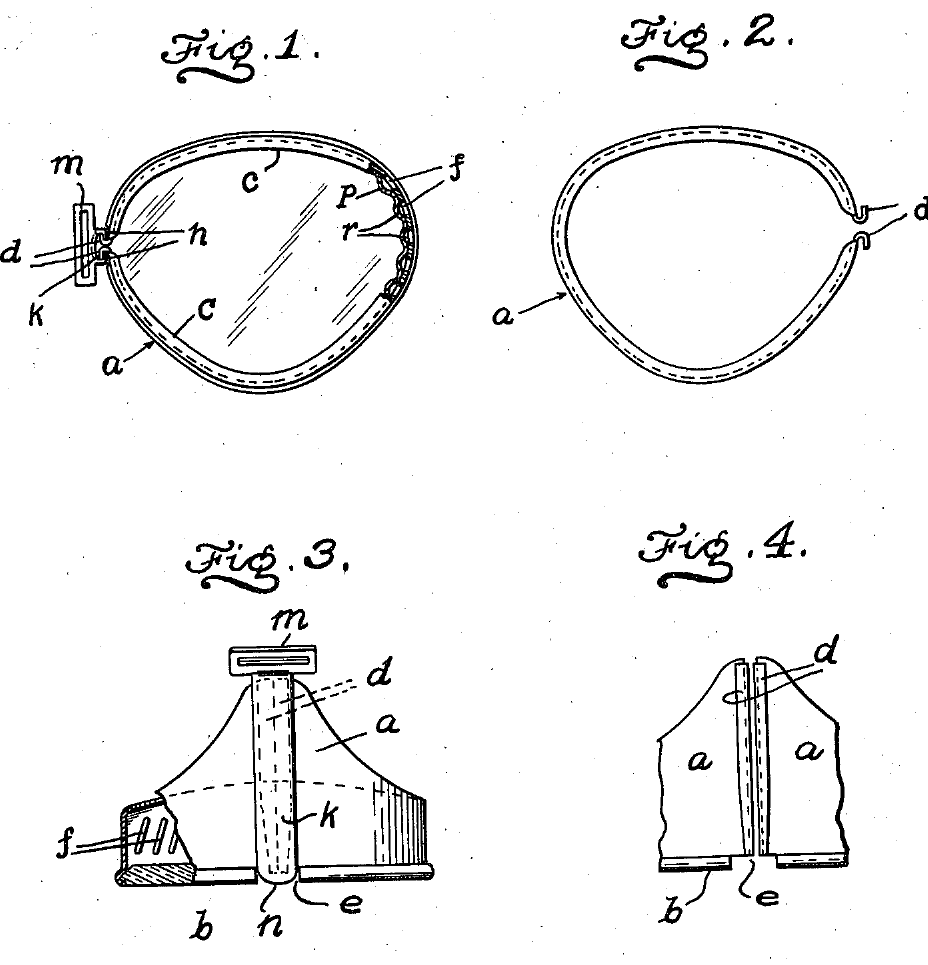


Eyecup Goggles: Shindel, 1919
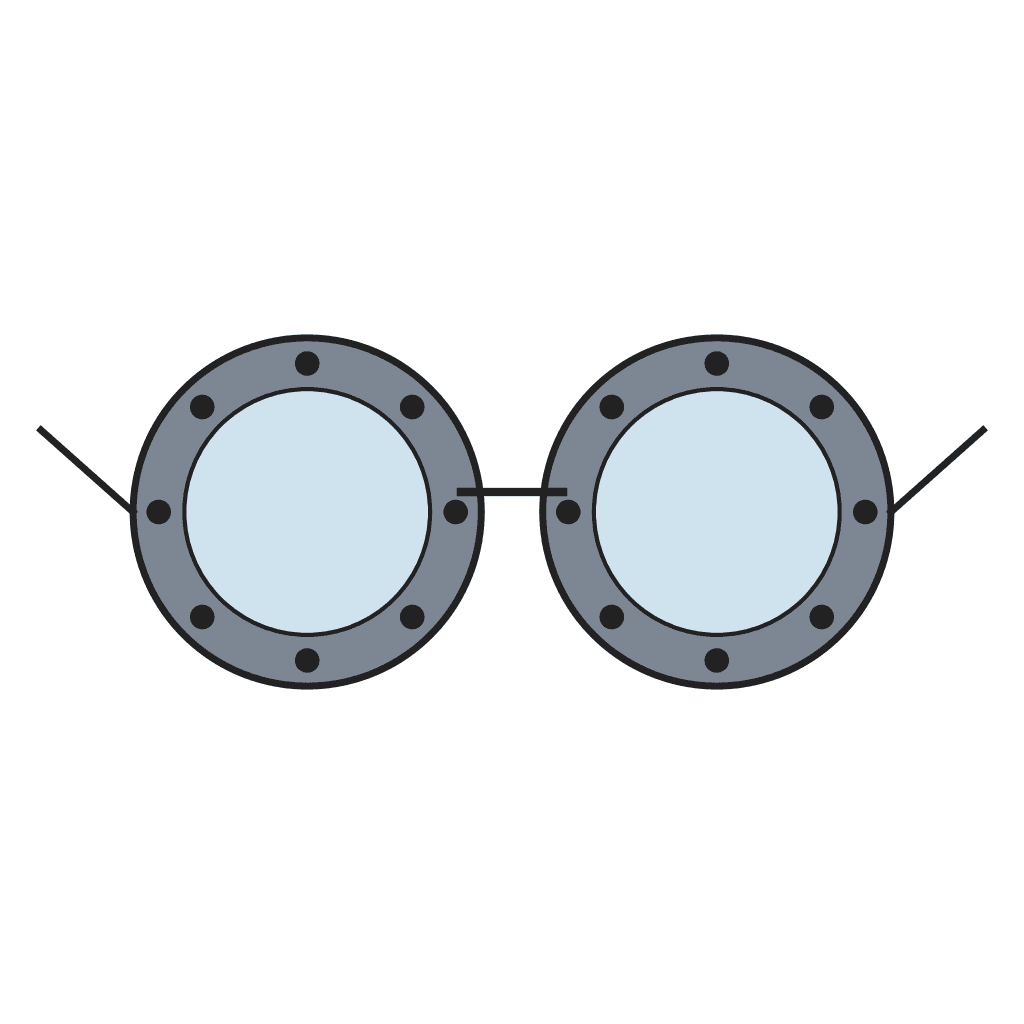
Harry F. Shindel of Reading, Pennsylvania, assigned to T. A. Willson & Co., patented this goggle eye cup in 1919, US 1,296,707. Each cup is folded from one punched blank of sheet material: a beaded outer edge rests on the face round the eye and a recessed inner edge holds the lens. The ends of the folded blank turn outwards and are held together by a sliding channel-section sheath, which also carries the head-strap connection. Ventilating holes in the cup wall let air in, while a folded, crosswise-corrugated guard strip inside keeps out dirt and side light.
Intermediate
Workshop process
Instructions
1
1
Punch the blank
Punch the blank
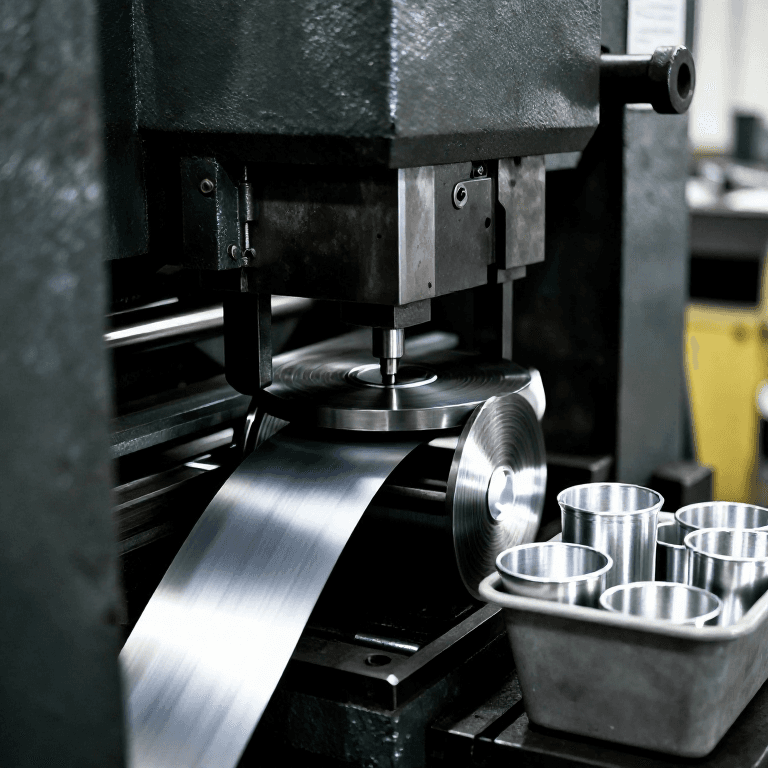
Punch the eye-cup blank from sheet material with a beaded outer edge, a shorter inner edge that forms the lens recess, and the ventilating holes.
Materials for this step:
 Sheet Metal1 as required
Tools needed:
 Stamping Press
2
2
Fold and fit lens and guard
Fold and fit lens and guard
Fold the blank into a cup with its ends turned outwards. Set the lens in the recess and the corrugated guard strip inside the wall over the holes.
Materials for this step:
 Goggle Lens1 piece
 Corrugated Ventilation Guard Strip1 piece
Tools needed:
 Combination Pliers
3
3
Clamp
Clamp
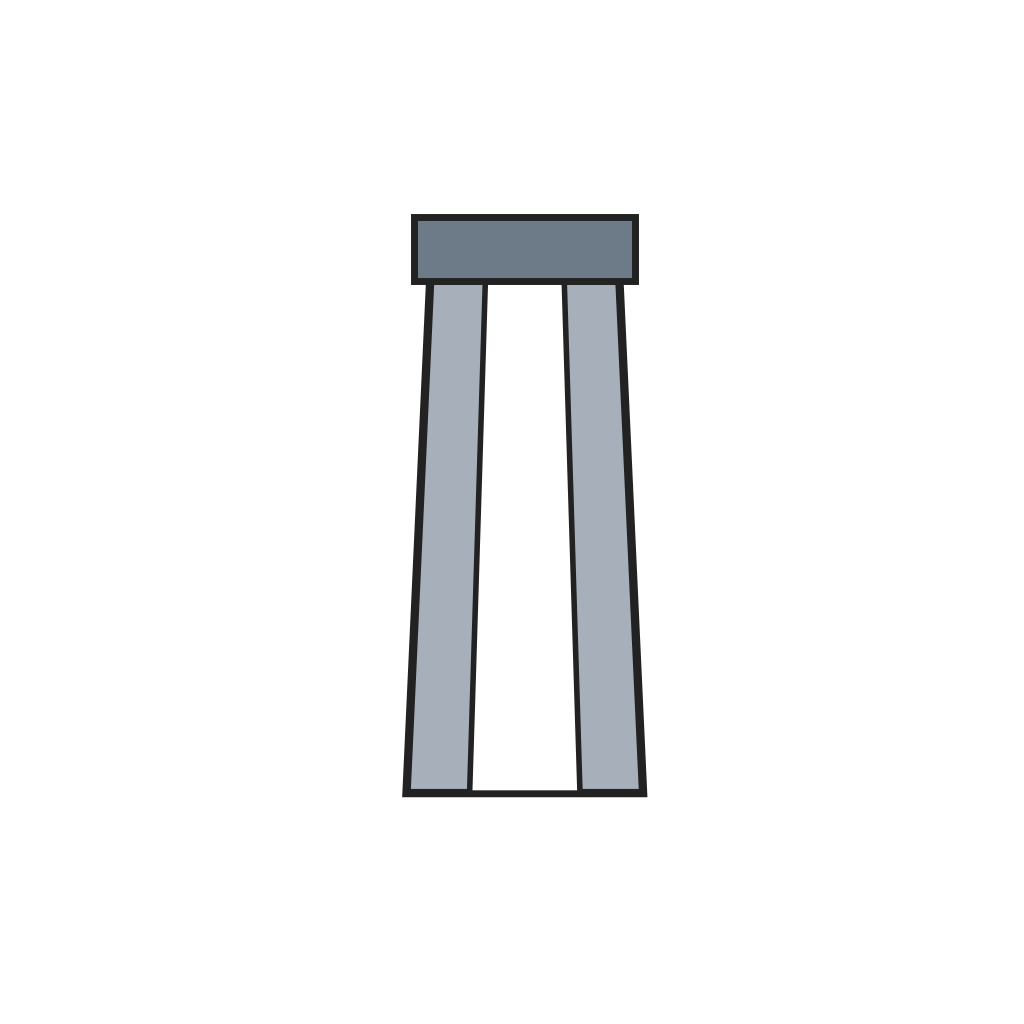
Slide the clamping sheath onto the turned-out ends from its outer end until its stop meets them; its tapered flanges wedge the ends together and lock lens and guard in place.
Materials for this step:
 Eye Cup Clamping Sheath1 piece
4
4
Pair and strap
Pair and strap
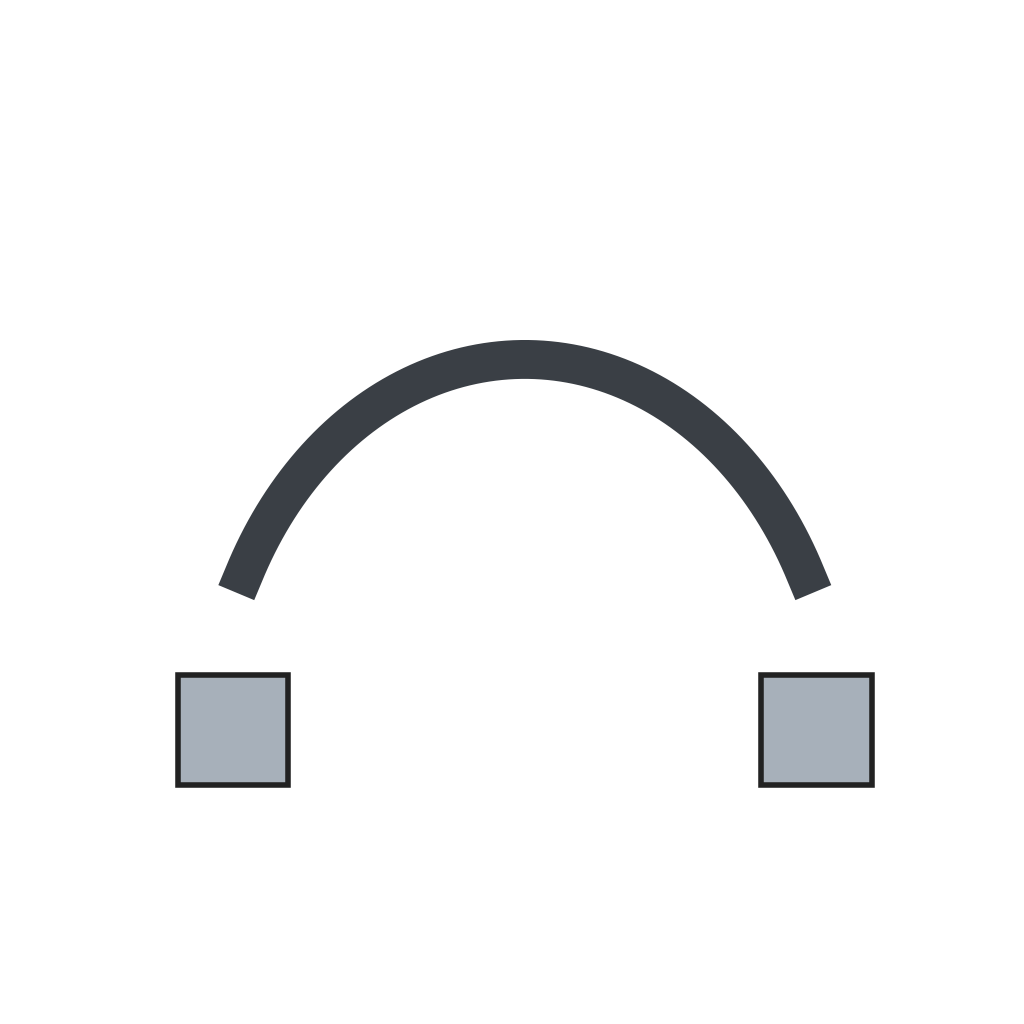
Two such cups, with the head strap fastened to the head-band connections on their sheaths, make the goggles.
Materials for this step:
 Goggle Head Strap1 piece
Materials
5- 1 as requiredPlaceholder
- 1 piecePlaceholder
- Placeholder
- 1 piecePlaceholder
- 1 piecePlaceholder
Tools Required
2- Placeholder
- Placeholder
This blueprint makes
Related Blueprints
These blueprints share knowledge with this one — techniques, materials, or principles that connect them in the learning graph.
CC0 Public Domain
This blueprint is released under CC0. You are free to copy, modify, distribute, and use this work for any purpose, without asking permission.
Support the Maker by purchasing products through their Blueprint where they earn a Maker Commission set by Vendors, or create a new iteration of this Blueprint and include it as a connection in your own Blueprint to share revenue.