ART
BEAUTY & WELLNESS
CRAFT
CULTURE & HISTORY
ENTERTAINMENT
ENVIRONMENT
FOOD & DRINKS
REVERSE ENGINEERING
SCIENCES
SPORTS
TECHNOLOGY
WEARABLES
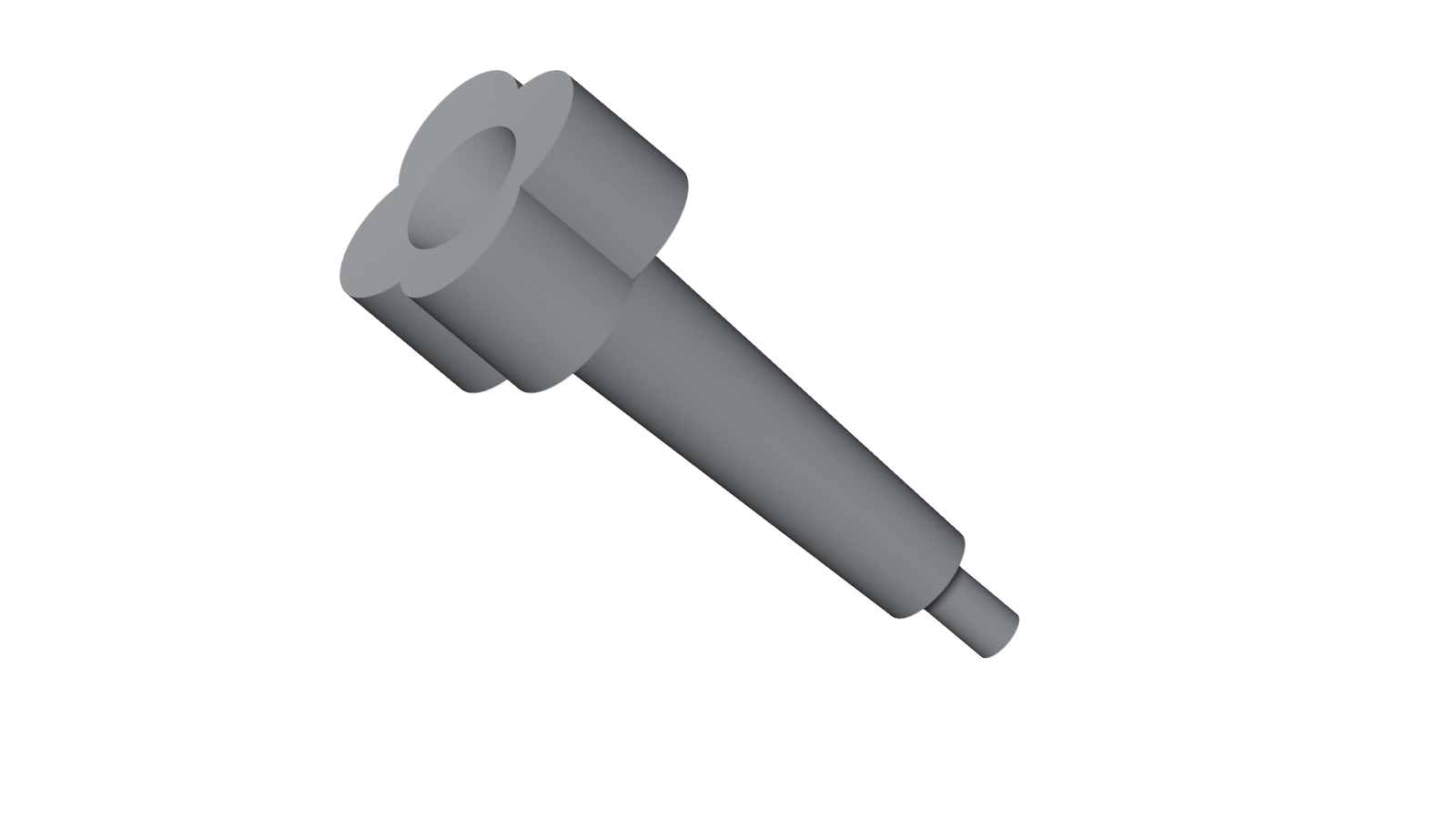


Fellows Four-Lobed Cutter (US 579,708, Fig. 21): Curved Teeth That Cut Flat Faces
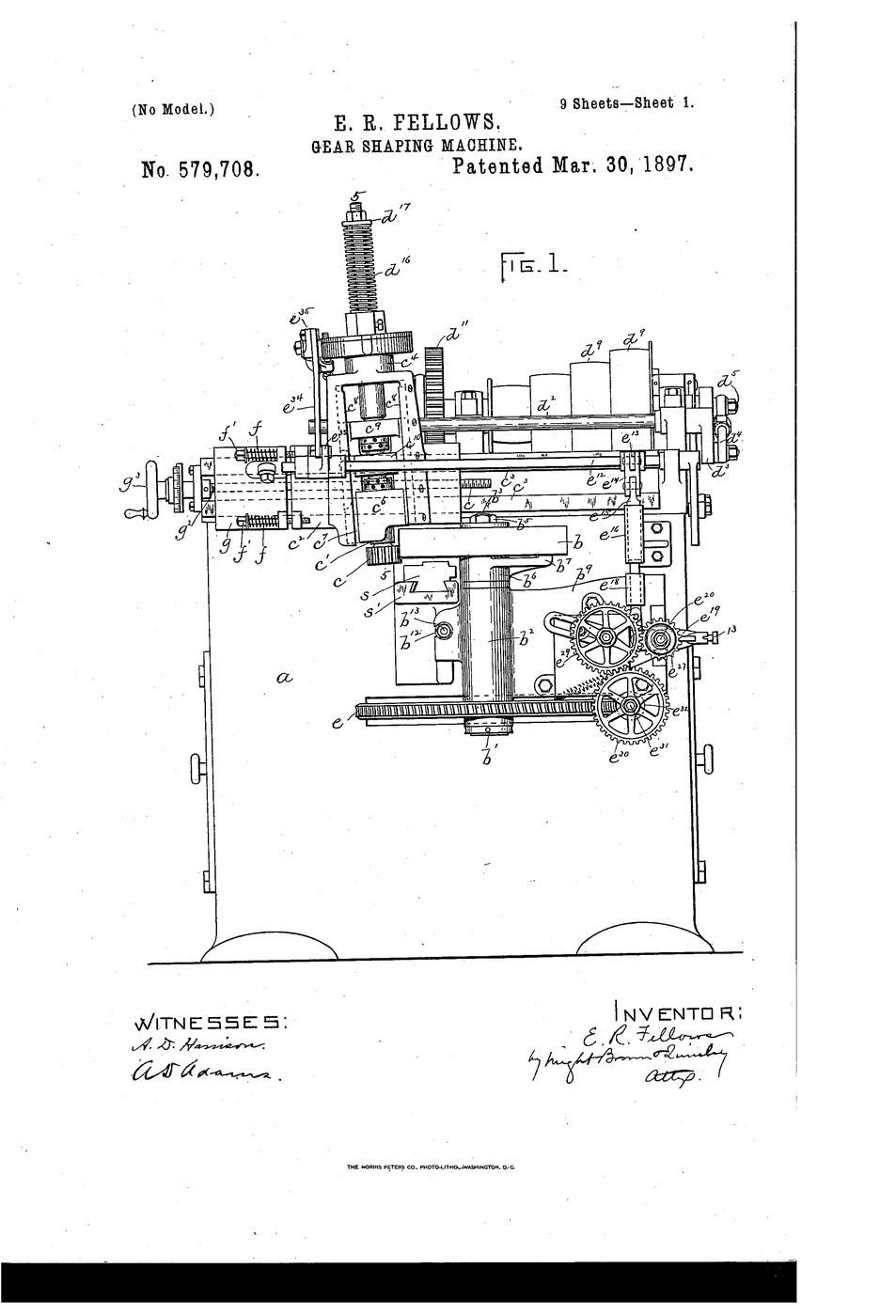
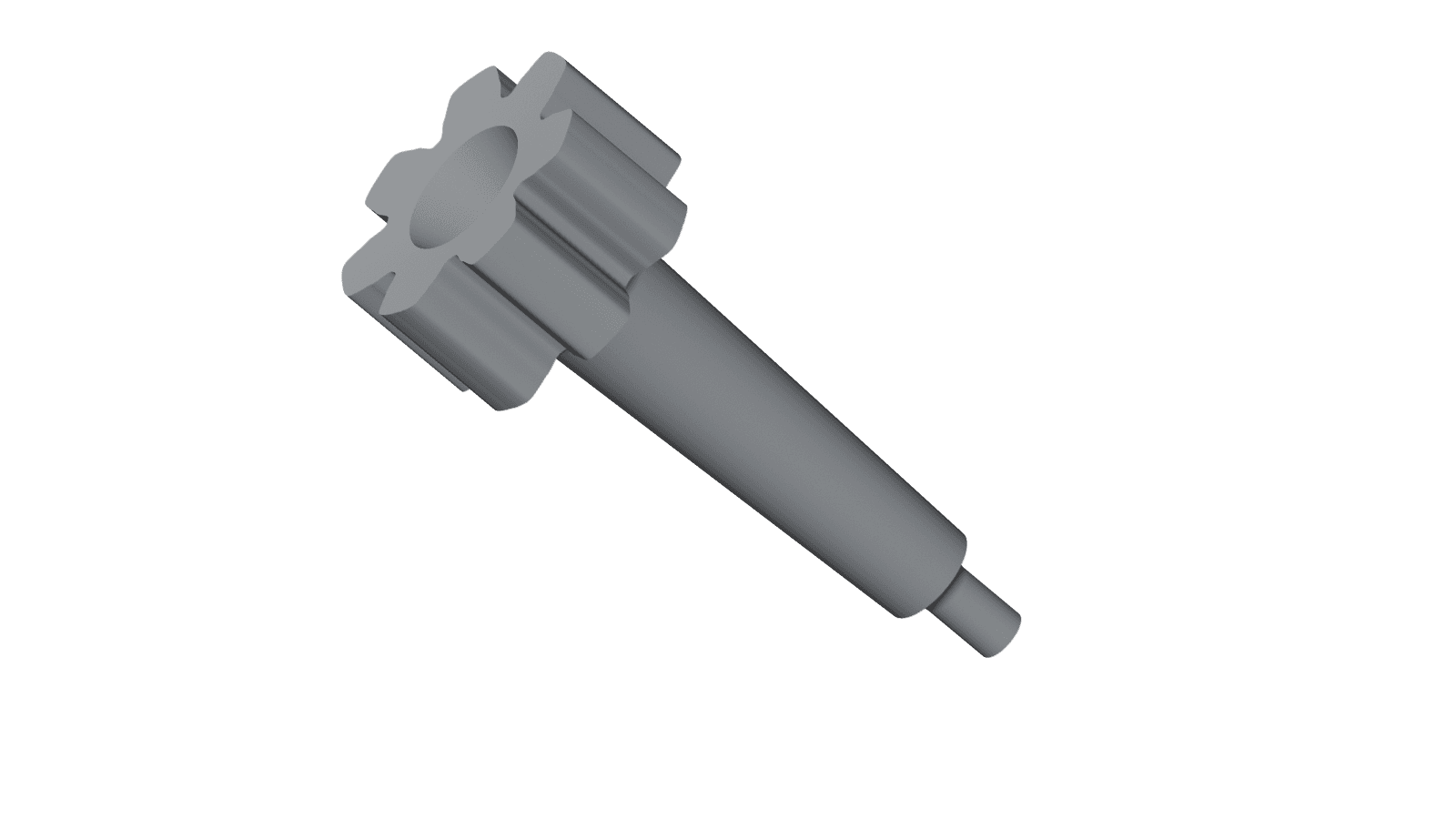
A 3D model of the cutter c' that Edwin R. Fellows drew in Fig. 21 of US 579,708 (1897). It has four rounded lobes, and turned against a round blank it cuts a square: "curved teeth or projections shaped to form four plane surfaces c2 on a blank presented to it."
On the drawing each lobe is a true circular arc, so the profile is built from four exact circles in Fellows's proportions. Simulating the cutting shows the claim holds: four faces, each very slightly hollow. The size is a stated choice. Fig. 21 shows the cutter only from its cutting end, so the body behind the lobes is copied from the Fig. 11 gear cutter.
Intermediate
Several hours of printing; the slicer reports the exact time
Instructions
1
1
The cutter in Fig. 21
The cutter in Fig. 21
Fellows: "In Fig. 21 I show a cutter c' having curved teeth or projections shaped to form four plane surfaces c2 on a blank presented to it." The drawing shows c' as four rounded lobes meeting in cusps, turning against a square blank with its four faces marked c2. The arrows show the two turning in opposite directions, like a meshing pair: four lobes for four faces, one turn for one turn. The same rolling that generates gear teeth here generates a square.
2
2
What the drawing measures, and what the simulation found
What the drawing measures, and what the simulation found
Measured on the 300 dpi scan: the four lobes are 90 degrees apart within about 1 degree, and each is a true circular arc. The arc radius is 116.7 px, its centre 110.9 px from the axis, and the arc fits within 0.11 px. The drawn square has a side of 292.4 px. Rolling this cutter 1:1 against a round blank in a simulation tests the claim. It does cut four faces, but each dips inward slightly, by about 2% of its width, so they are nearly plane rather than exactly plane. At the drawn centre distance (381 px) the lobes cannot reach the drawn square's faces, and the result is 13% too large in area. At a centre distance 2.8% shorter (370.25 px), the cutter cuts Fellows's square to within 2.5% of its area. The drawing is close, but not exact.
3
3
The model in 3D
The model in 3D
Spin the cutter in the viewer and look at its cutting face. The four lobes are four circles in Fellows's proportions. It was built in FreeCAD and saved as one joined .blend mesh, editable in free Blender.
Tools needed:
 Desktop Computer
4
4
Print it
Print it
Stand it on its cutting face with the shank up. The dished face is a near-flat overhang and the hollow has a 24 mm flat roof, so turn on supports from the build plate. PLA is fine for a display model. The real cutter is hardened steel.
Materials for this step:
 PLA Filament - Black (1.75mm, 1kg)1 kit
Tools needed:
 3D Printer
Materials
1- Placeholder
Tools Required
2- Placeholder
- Placeholder
Connected Blueprint Materials

Related Blueprints
These blueprints share knowledge with this one — techniques, materials, or principles that connect them in the learning graph.
CC0 Public Domain
This blueprint is released under CC0. You are free to copy, modify, distribute, and use this work for any purpose, without asking permission.
Support the Maker by purchasing products through their Blueprint where they earn a Maker Commission set by Vendors, or create a new iteration of this Blueprint and include it as a connection in your own Blueprint to share revenue.