ART
BEAUTY & WELLNESS
CRAFT
CULTURE & HISTORY
ENTERTAINMENT
ENVIRONMENT
FOOD & DRINKS
REVERSE ENGINEERING
SCIENCES
SPORTS
TECHNOLOGY
WEARABLES
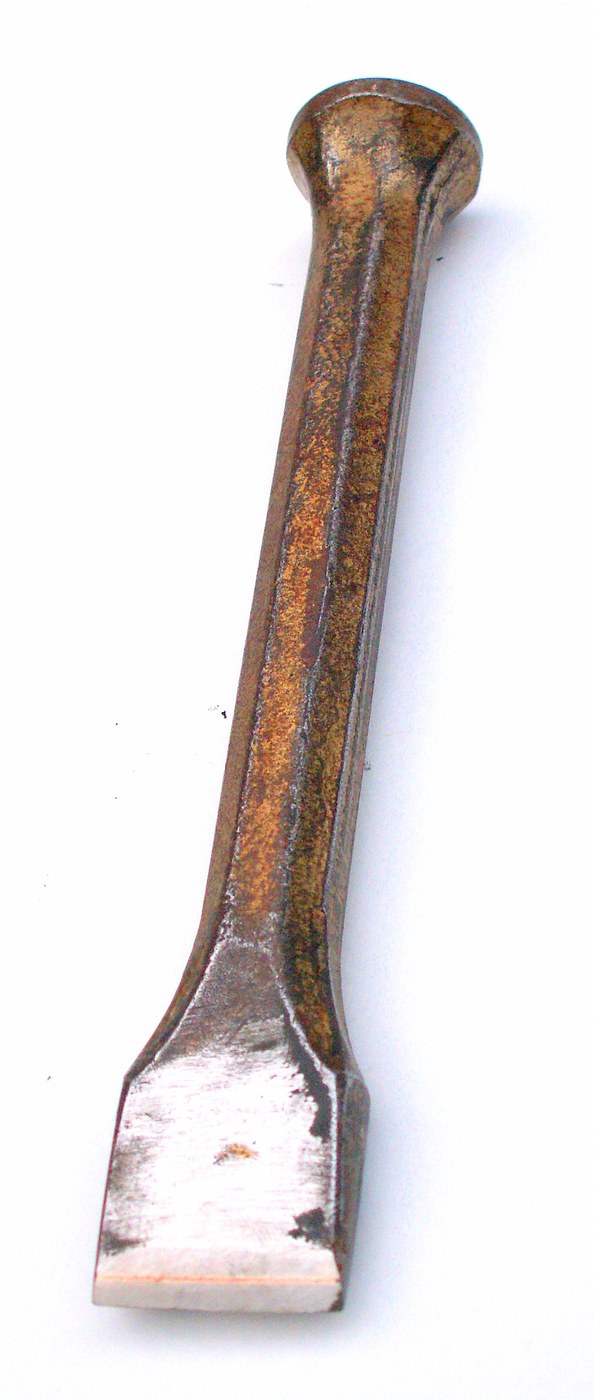


Forged Cold Chisel
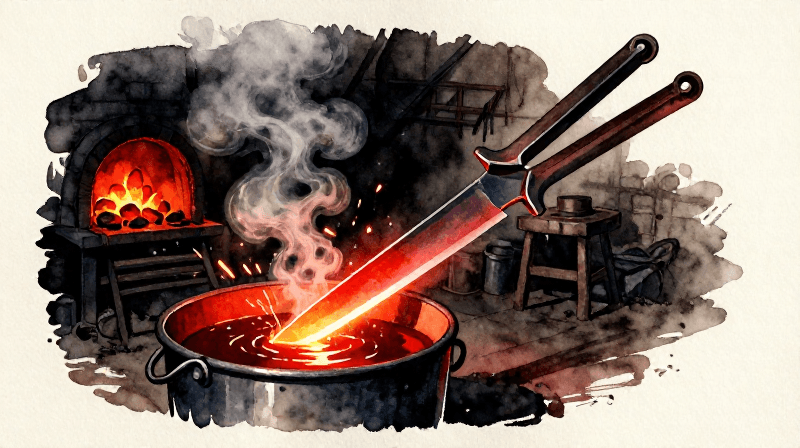
A cold chisel cuts cold metal, so its edge must be hard and its body tough. It is forged from octagonal tool steel: the head end is tapered, the blade drawn out at a yellow heat and finished with a flatter just above the hardening heat. Only the edge is hardened, by dipping it in water while the body stays hot, and the heat left in the body then tempers the edge; it is cooled when the edge shows blue tinged with red, about 570 °F (300 °C). The edge is ground to 60°.
Intermediate
1–2 hours
Instructions
1
1
Taper the head
Taper the head
Heat the head end to a yellow heat and taper it.
Materials for this step:
 Octagonal Tool Steel Bar1 piece
Tools needed:
 Blacksmith Forge
 Anvil
Anvil Forge Hammer
 Blacksmith Tongs
2
2
Forge the blade
Forge the blade
At a yellow heat, draw out the other end into the blade over the anvil's edge. Finish with a flatter just above the hardening heat; hammering it when black crushes the grain.
Tools needed:
 FlatterForge HammerAnvil
3
3
Cut and cool slowly
Cut and cool slowly
Cut the end square, or nick it and break it off after hardening to see the grain. Let the chisel cool slowly to relieve stresses from the forging.
Tools needed:
 Hot Chisel
4
4
Harden the edge
Harden the edge
Reheat about 3 inches back from the edge, the edge kept high in the fire. Lower the edge into clean water at about 70 °F, moving it, until about half the heated part is under; plunge briefly and lift out with heat left in the body.
Tools needed:
Blacksmith Forge Quench BucketBlacksmith Tongs
5
5
Temper
Temper
Polish the edge and watch the colours run down to it. When the edge is blue tinged with red, cool the chisel completely.
Tools needed:
 Emery ClothQuench Bucket
6
6
Grind
Grind
Grind the cutting edge to an angle of 60°.
Tools needed:
 Bench Grinder
Materials
1- 1 piecePlaceholder
Related Blueprints
These blueprints share knowledge with this one — techniques, materials, or principles that connect them in the learning graph.
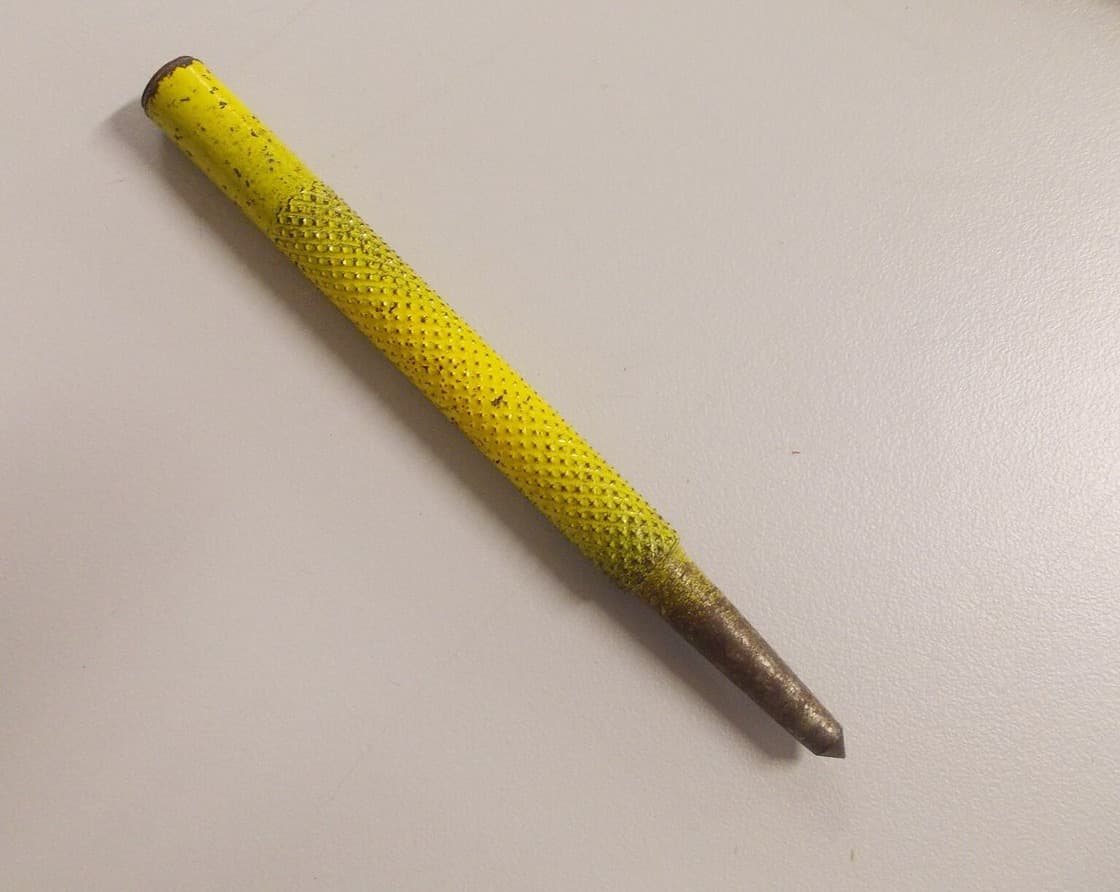
CC0 Public Domain
This blueprint is released under CC0. You are free to copy, modify, distribute, and use this work for any purpose, without asking permission.
Support the Maker by purchasing products through their Blueprint where they earn a Maker Commission set by Vendors, or create a new iteration of this Blueprint and include it as a connection in your own Blueprint to share revenue.