ART
BEAUTY & WELLNESS
CRAFT
CULTURE & HISTORY
ENTERTAINMENT
ENVIRONMENT
FOOD & DRINKS
REVERSE ENGINEERING
SCIENCES
SPORTS
TECHNOLOGY
WEARABLES
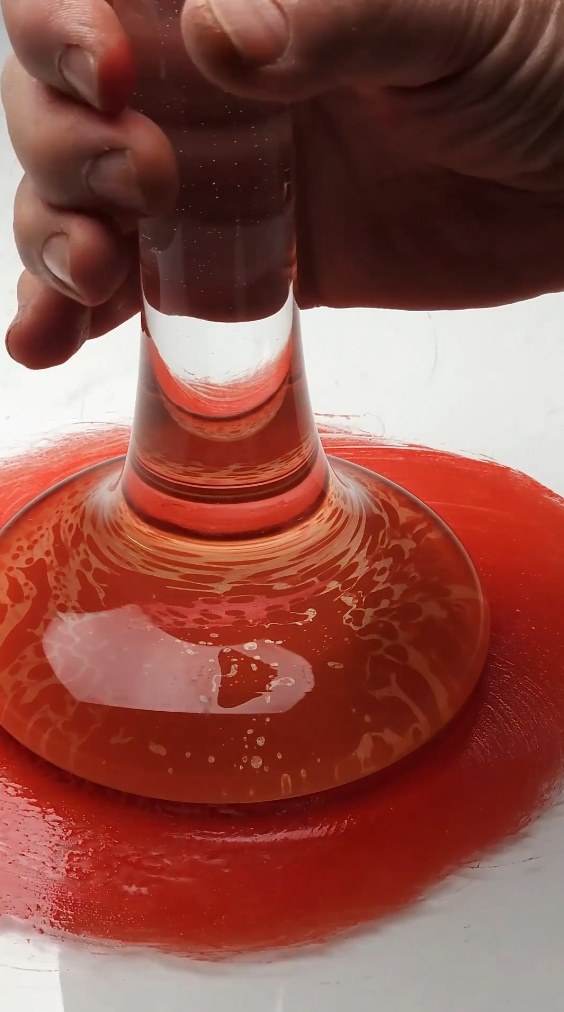


Glass Muller and Slab for Grinding Pigments
Painters and colourmen grind pigment into oil or gum with a muller, a heavy bell of glass or stone with a flat face, rubbed over a slab; Andrew Ure (1839) describes indigo and gold leaf ground this way. Gather glass rod into a solid bell in the flame, anneal it, then grind its face and a glass slab against each other with grit so they bite.
The picture: grinding a red pigment with a glass muller.
Intermediate
A day with annealing and grinding
Instructions
1
1
Gather the glass
Gather the glass
Melt the end of thick borosilicate rod in the torch and keep feeding rod into the gather, turning, until you have a heavy, bubble-free lump.
Materials for this step:
 Borosilicate Glass Rod4 pieces
Tools needed:
 Bench Glassblowing Torch
 Safety Glasses
 Heat-Resistant Gloves
2
2
Shape the bell
Shape the bell
Press the soft lump on the marver to a flat-faced bell and draw the top into a knob to hold. Keep it turning so it stays round.
Tools needed:
Bench Glassblowing Torch MarverHeat-Resistant Gloves
3
3
Anneal slowly
Anneal slowly
A thick solid piece cracks if it cools fast: put it straight into the kiln at annealing heat, soak it well and cool very slowly.
Tools needed:
 Kiln
Kiln4
4
Cut the slab
Cut the slab
Cut a square of thick glass sheet for the slab.
Materials for this step:
 Glass Sheet1 piece
Tools needed:
 Glass CutterSafety Glasses
5
5
Grind them together
Grind them together
Put wet grit on the slab and rub the muller face over it in figure-eights until both surfaces are evenly frosted and flat to each other. Wash clean.
Materials for this step:
 Silicon Carbide Grit50 g
 Water2 liters
6
6
Glass for the muller
Glass for the muller
Loading Jupyter Notebook...
Materials
4- 4 piecesPlaceholder
- 1 piecePlaceholder
- Placeholder
- 2 litersPlaceholder
This blueprint makes

Related Blueprints
These blueprints share knowledge with this one — techniques, materials, or principles that connect them in the learning graph.
CC0 Public Domain
This blueprint is released under CC0. You are free to copy, modify, distribute, and use this work for any purpose, without asking permission.
Support the Maker by purchasing products through their Blueprint where they earn a Maker Commission set by Vendors, or create a new iteration of this Blueprint and include it as a connection in your own Blueprint to share revenue.