
GPS Position Logger
Instructions
Solder the GPS shield headers
Solder the GPS shield headers
The kit contains the shield, an EM-506 receiver with its interface cable, and R3 headers. Solder the headers to the shield.
Materials for this step:
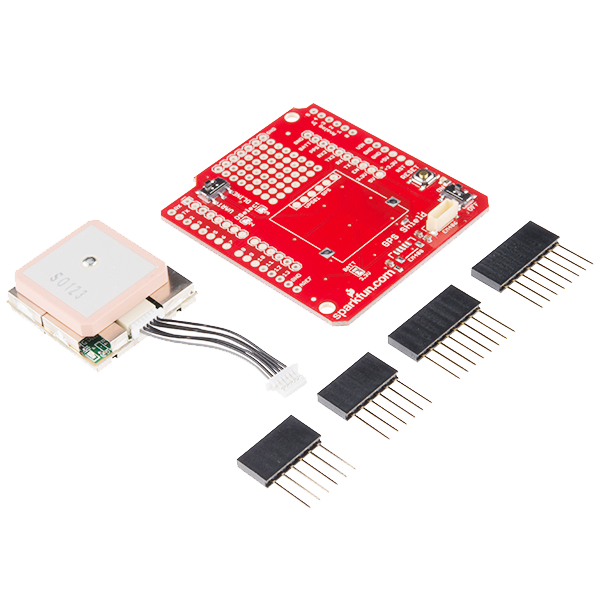 SparkFun GPS Shield Kit1 kit
Tools needed:
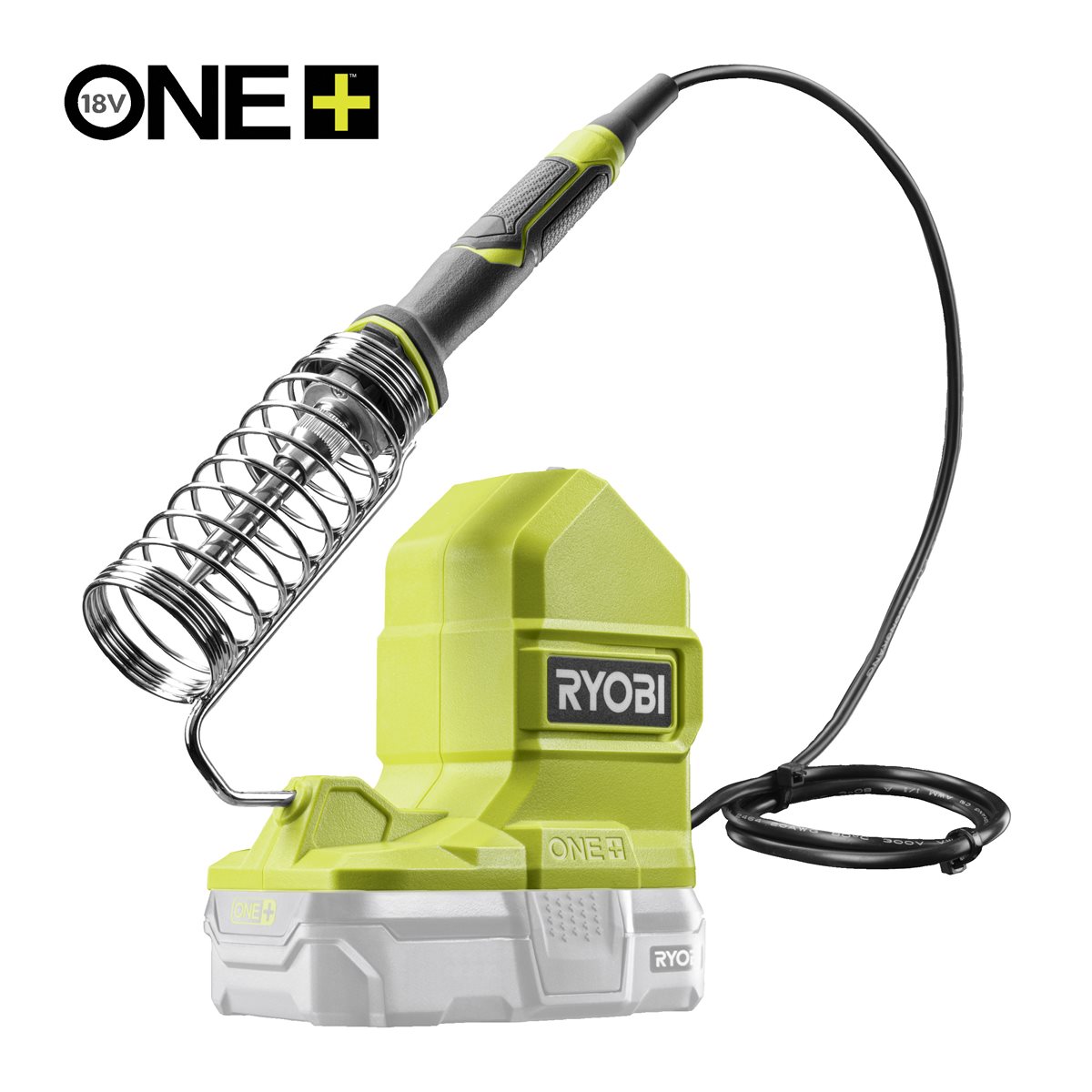 Ryobi ONE+ RSI18-0 Cordless Soldering Iron
Stack both shields and check for pin clashes
Stack both shields and check for pin clashes
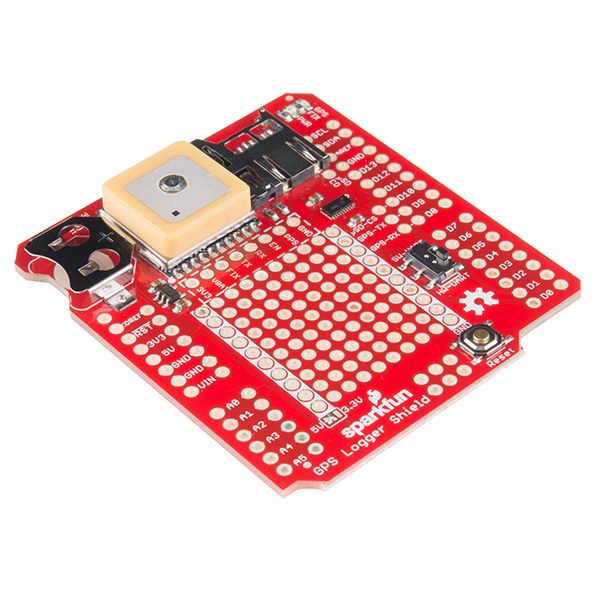
Plug the EM-506 into the shield's connector, then stack GPS shield and microSD shield on the Uno.
- GPS shield: receiver on D2/D3 with its switch in the DLINE position.
- microSD shield: SPI on D11/D12/D13, card select on D8.
Materials for this step:
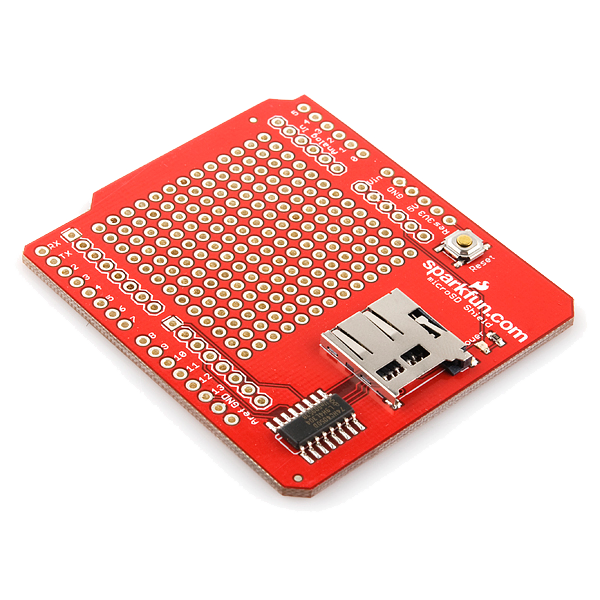 microSD Shield1 piece
 Arduino Uno R31 piece
Power, and read raw NMEA before parsing anything
Power, and read raw NMEA before parsing anything
USB-B from the computer while testing; 7–12 V on the barrel jack once it runs standalone.
Before writing any parser, print the receiver's output straight through and look at it. You should see comma-separated sentences beginning with $.
Sentences arriving with empty position fields mean the receiver is alive and talking but has no fix yet. That is the normal cold-start state — not a fault.Tools needed:
 USB-B Cable
Upload the logging sketch
Upload the logging sketch
No GPS library needed — the sketch reads NMEA directly, so nothing is hidden behind an abstraction. SD and SPI ship with the IDE. Format the card FAT32 first.
Take it outside for the first fix
Take it outside for the first fix
Put the unit under open sky, powered, and leave it. Watch for the fix indicator before judging the build.
Testing a GPS receiver indoors and concluding it is broken is the single most common failure in this project. A cold start with no stored almanac legitimately takes minutes.Materials
4- SparkFun GPS Shield Kit10% commission1 kit$54.66
- microSD Shield10% commission1 piece$14.24
- Placeholder
- Placeholder
Tools Required
2- Ryobi ONE+ RSI18-0 Cordless Soldering Iron3% commission$93.11
- 1 vendor sell this, none ship to you yetPlaceholder
This blueprint makes
CC0 Public Domain
This blueprint is released under CC0. You are free to copy, modify, distribute, and use this work for any purpose, without asking permission.
Support the Maker by purchasing products through their Blueprint where they earn a Maker Commission set by Vendors, or create a new iteration of this Blueprint and include it as a connection in your own Blueprint to share revenue.