ART
BEAUTY & WELLNESS
CRAFT
CULTURE & HISTORY
ENTERTAINMENT
ENVIRONMENT
FOOD & DRINKS
REVERSE ENGINEERING
SCIENCES
SPORTS
TECHNOLOGY
WEARABLES
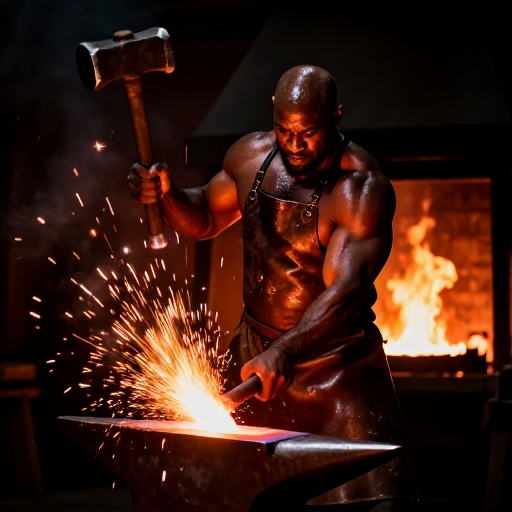

Grinding Wheel: Vitrified, Clay-Bonded (Machinery's Handbook, 1924)
The common machine-shop wheel: abrasive grains held in a bond of clay and fluxes, moulded and fired until the clay partly melts and vitrifies. Porous and free-cutting, unaffected by water, acids, oils, heat or cold.
Source: Machinery's Handbook (1924), pp. 1101-1102. Unknown: proportions and temperatures. Picture: the handbook's text.
Advanced
100+ hours firing, a week cooling
Instructions
1
1
Mix and mould
Mix and mould
Mix suitable clays and fluxes with the abrasive grain and mould the wheels. Not given: proportions.
Materials for this step:
 Aluminium Oxide Abrasive Grit1 piece
 Ball Clay1 piece
 Feldspar Chunk1 flux
 Water1 piece
Tools needed:
 Mixing Bowl Set
 Mold
 Wooden Mallet
2
2
Fire and cool
Fire and cool
Burn the wheels continuously for 100 hours or more, longer for bigger wheels, raising the heat gradually until the clay partly melts and vitrifies. Cool slowly for a week, guarding against sudden temperature changes; as it cools the clay binds the grains.
Tools needed:
 Kiln
Materials
4- Placeholder
- 1 piecePlaceholder
- 1 fluxPlaceholder
- 1 piecePlaceholder
This blueprint makes

CC0 Public Domain
This blueprint is released under CC0. You are free to copy, modify, distribute, and use this work for any purpose, without asking permission.
Support the Maker by purchasing products through their Blueprint where they earn a Maker Commission set by Vendors, or create a new iteration of this Blueprint and include it as a connection in your own Blueprint to share revenue.