ART
BEAUTY & WELLNESS
CRAFT
CULTURE & HISTORY
ENTERTAINMENT
ENVIRONMENT
FOOD & DRINKS
REVERSE ENGINEERING
SCIENCES
SPORTS
TECHNOLOGY
WEARABLES
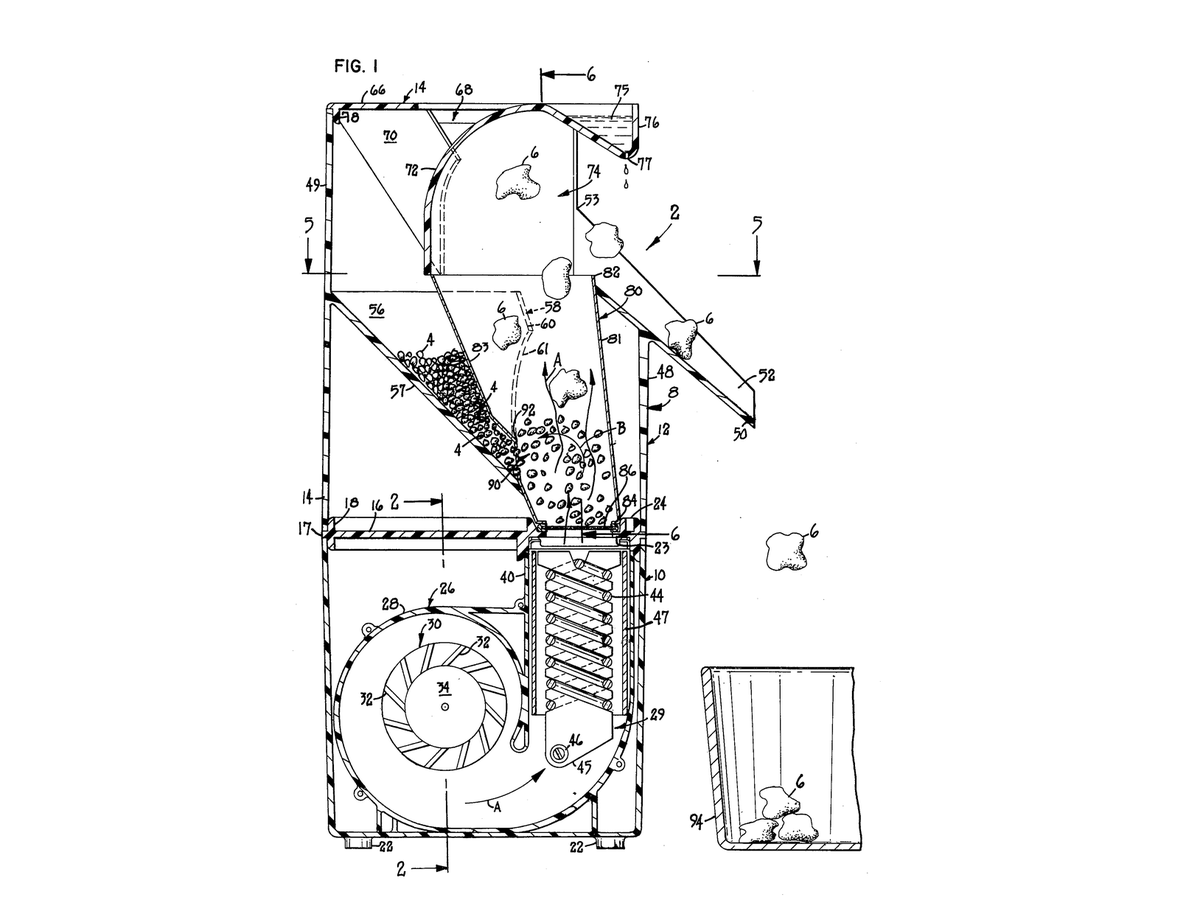


Hot-Air Popcorn Popper
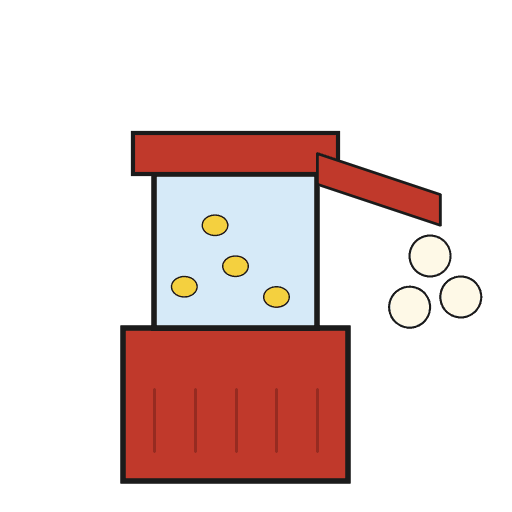
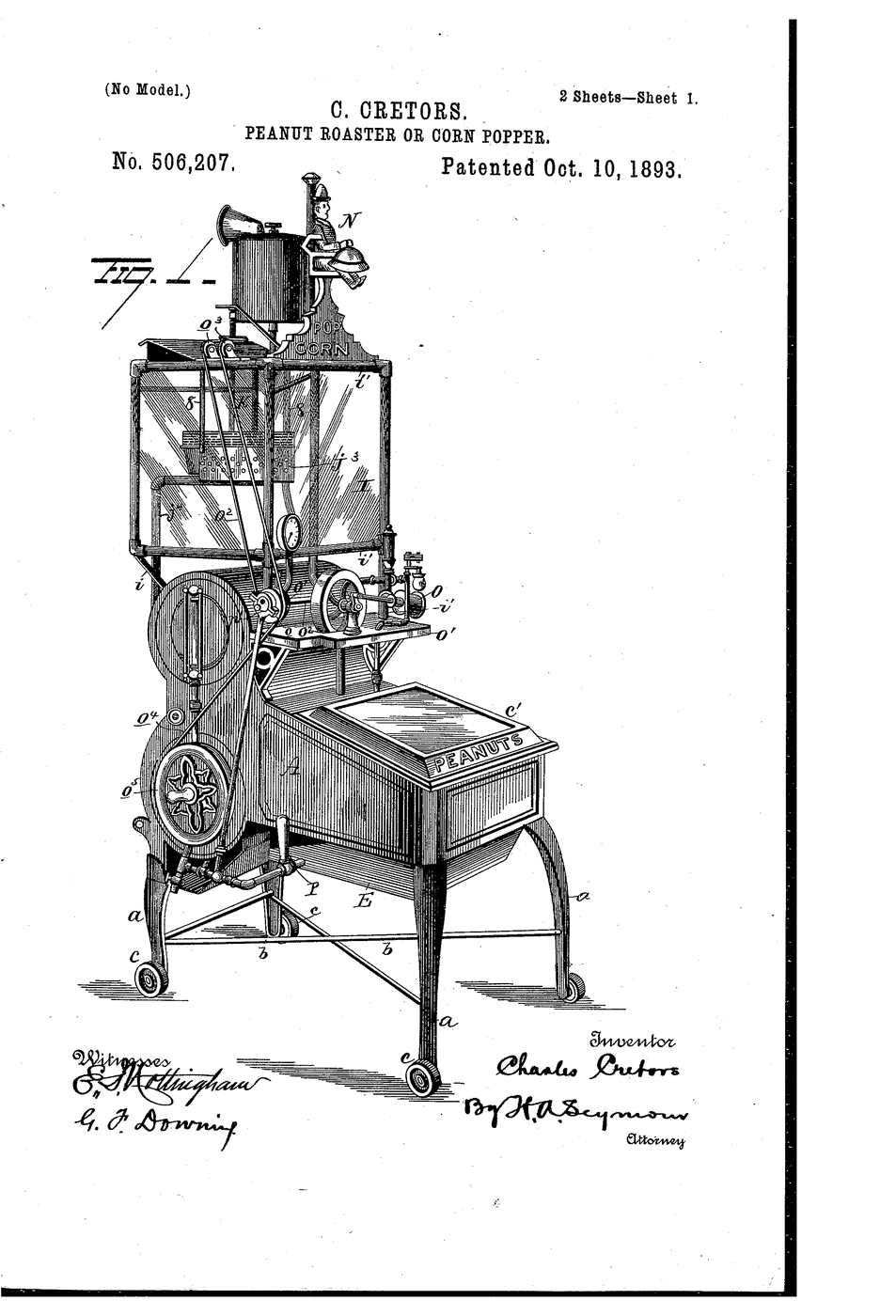
Cretors' machine, already published, pops corn in hot oil in a heated kettle - the oil carries heat to the kernels and stays in the popcorn afterwards. The rung above it carries the heat in air instead: a blast up through a perforated floor tumbles the kernels, and the popped ones, being light and large, are blown straight out of the chamber before they can scorch.
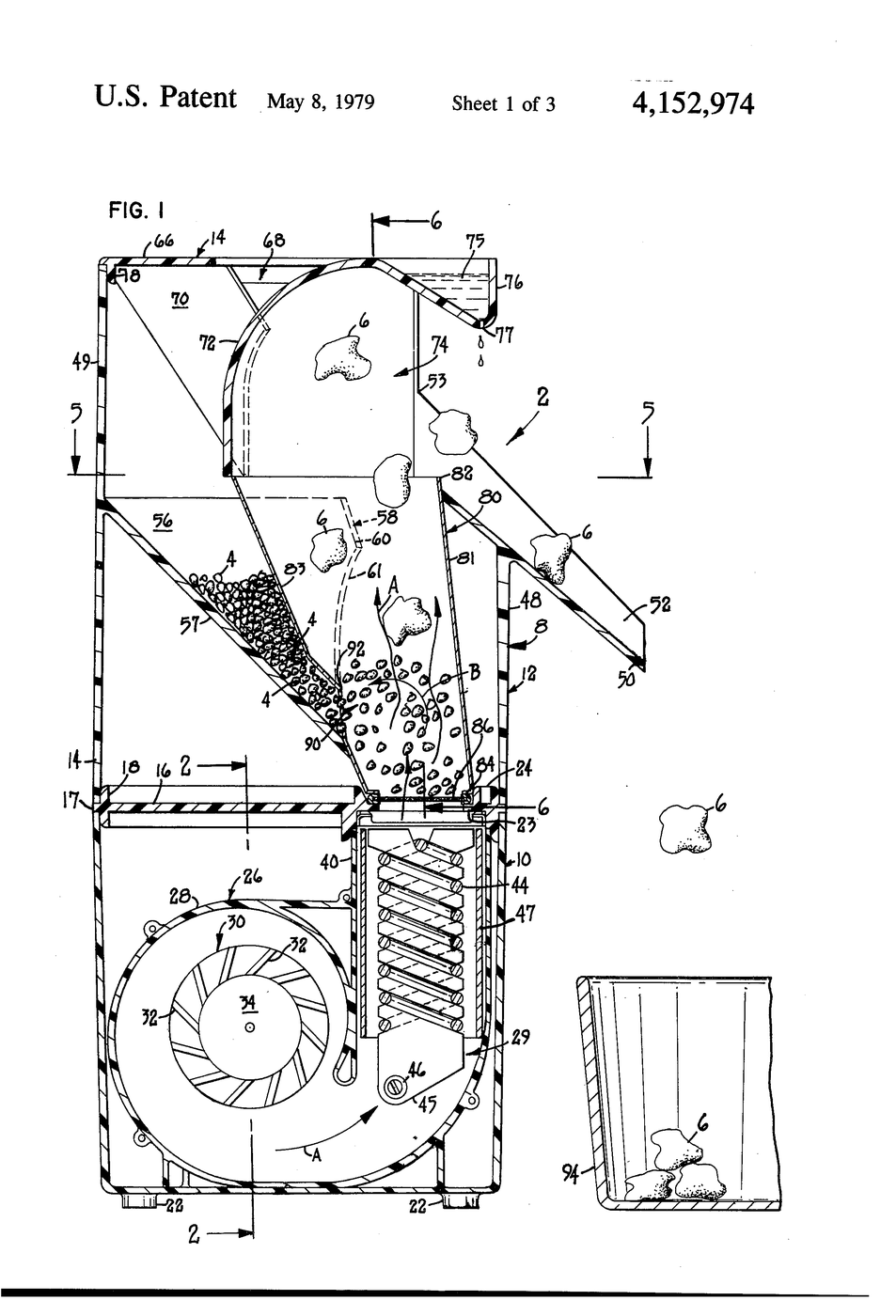
**US 4,152,974**, "Hot air corn popper", Lawrence J. Tienor, assigned to National Presto Industries, filed 16. June 1978, granted 8. May 1979: a popping vessel closed at the bottom by "a perforated grill, the perforations of the grill being smaller than the size of unpopped corn kernels", with hot air driven up through it.
**You build that chamber** from a steel can and mesh, blow it with a heat gun on a stand, and compare its yield with a pan of oil.
Intermediate
2 hours
Instructions
1
1
Cut the chamber
Cut the chamber
Remove both ends of a 100 mm steel food can and deburr. Cut a disc of stainless mesh to fit inside and fix it 20 mm from one end: kernels must sit on it, air must pass, and no kernel must fall through.
Materials for this step:
 Tin Can1 piece
 Food-Grade Stainless Steel Mesh1 piece
Tools needed:
 Tin Snips
 Metal File
 Clear Safety Glasses
2
2
Stand it over the gun
Stand it over the gun
Clamp the heat gun upright, nozzle up, on a non-flammable surface, and set the can above it so all the air goes through the mesh. Angle the top of the can over a bowl. Never hold either in your hands while it runs.
Tools needed:
 Heat Gun
 Welding Gloves
 Large Mixing Bowl (Glass)
3
3
Find the air temperature
Find the air temperature
Run the gun on its lower setting and read the air at the mesh with the infrared thermometer aimed at a scrap of steel resting there. Aim for about 200 °C: hotter scorches, cooler will not pop.
Tools needed:
 Infrared Thermometer
4
4
Pop by air
Pop by air
Weigh 50 g of kernels into the chamber and run until popping slows to one every few seconds. Catch the popcorn in the bowl. Weigh what did not pop and measure the popcorn's volume in a jug.
Materials for this step:
 Popcorn Kernels50 g
Tools needed:
 Digital Kitchen Scale
 Graduated Cylinder
 Stopwatch
5
5
Pop in oil
Pop in oil
For comparison, pop another 50 g in a covered saucepan with 15 ml of oil over a medium hob. Weigh the unpopped kernels and measure the volume the same way.
Materials for this step:
 Cooking Oil15 mlPopcorn Kernels50 g
Tools needed:
 SaucepanDigital Kitchen Scale
6
6
Pressure and yield
Pressure and yield
Loading Jupyter Notebook...
7
7
History & Context
History & Context
**What the patent specifies:** an upward hot-air flow through a perforated grill whose holes are smaller than a kernel, popping the corn and carrying the popped kernels out to a receptacle. **Modern build (derived):** a steel can, stainless mesh and a heat gun on a stand.
Hot-air poppers sold in millions in the 1970s and 80s as the oil-free way to make popcorn. Their limits: no oil means seasoning will not stick; the airstream throws unpopped kernels out too if it is too strong; and the corn must be fresh enough to hold its water.
Materials
4- 1 piecePlaceholder
- Placeholder
- 50 gPlaceholder
- 15 mlPlaceholder
Tools Required
11- Placeholder
- Placeholder
- Placeholder
- 1 vendor sell this, none ship to you yetPlaceholder
- Placeholder
- Placeholder
- Placeholder
- Placeholder
- Placeholder
- Placeholder
- Placeholder
This blueprint makes

Related Blueprints
These blueprints share knowledge with this one — techniques, materials, or principles that connect them in the learning graph.
CC0 Public Domain
This blueprint is released under CC0. You are free to copy, modify, distribute, and use this work for any purpose, without asking permission.
Support the Maker by purchasing products through their Blueprint where they earn a Maker Commission set by Vendors, or create a new iteration of this Blueprint and include it as a connection in your own Blueprint to share revenue.