ART
BEAUTY & WELLNESS
CRAFT
CULTURE & HISTORY
ENTERTAINMENT
ENVIRONMENT
FOOD & DRINKS
REVERSE ENGINEERING
SCIENCES
SPORTS
TECHNOLOGY
WEARABLES
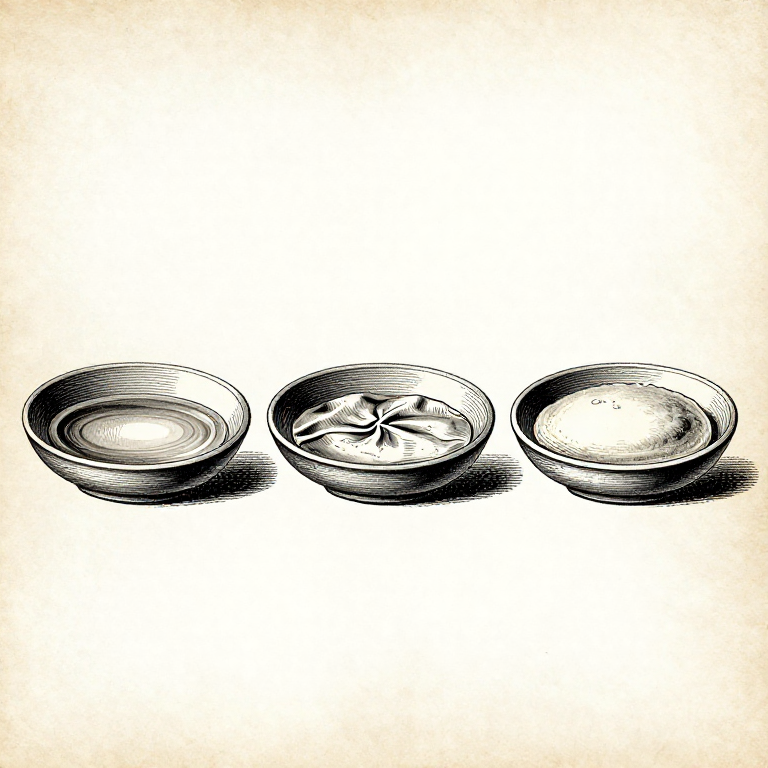
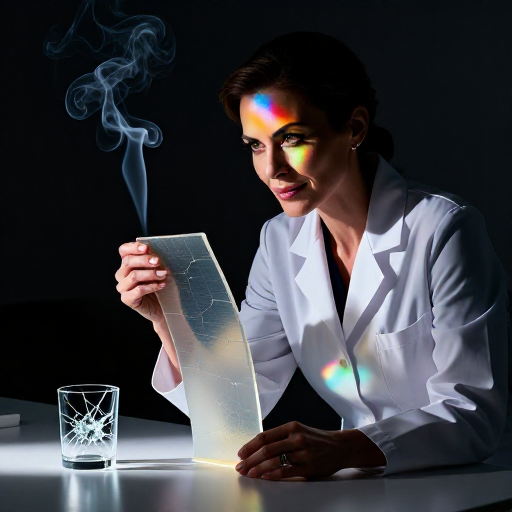

Drying Is Not Evaporating: Three Different Mechanisms, Three Different Films
"Dry" means three completely different things depending on the binder, and confusing them is behind most surprises with paint.
EVAPORATION: the liquid leaves and the solid it was carrying is left behind, unchanged. Watercolour dries this way, which is why it re-dissolves in water for ever.
COALESCENCE: suspended polymer particles are pushed together as the water leaves and fuse into a continuous film. Acrylic does this, and it is irreversible. OXIDATIVE CROSS-LINKING: the binder reacts with oxygen from the air and builds a new molecule that did not exist before. Drying oils do this, which is why oil paint takes years and why it gets harder for decades.
Intermediate
3 hours
Instructions
1
1
Evaporation: reversible, and that is the whole character
Evaporation: reversible, and that is the whole character
Gum arabic dissolves in water and comes out again when the water goes. Nothing chemical has happened, so adding water re-dissolves it completely.
That is why watercolour can be lifted, softened and reworked indefinitely, and why a finished watercolour is so vulnerable — a drop of water on a framed painting damages it in seconds.
It also means watercolour has no real drying TIME in the chemical sense. It is as dry as it will ever be once the water has gone, which is minutes. Layers can be built quickly, at the cost of every layer disturbing the one below.
Materials for this step:
 Gum Arabic1 piece
 Water1 liter
 Earth Pigment Powder Set1 piece
Tools needed:
 Artist Brush Set
 Glass Beaker
 Magnifying Loupe
2
2
Coalescence: one chance, and then it is permanent
Coalescence: one chance, and then it is permanent
Acrylic paint is solid polymer particles suspended in water. As the water leaves, surface tension forces the particles together and they deform and fuse. Once fused they cannot be separated.
So acrylic is workable for minutes and then finished. It cannot be re-wetted, which is why a palette dries into a skin and why a brush left standing is ruined rather than dirty.
It also has a MINIMUM FILM FORMATION TEMPERATURE. Below it the particles are too hard to deform and never fuse properly, so the film is a weak powder that looks right and is not. Painting acrylic in a cold studio produces exactly that, and the fault appears later as chalking.
Materials for this step:
Water1 literEarth Pigment Powder Set1 pieceTools needed:
Artist Brush SetMagnifying Loupe3
3
Oxidative cross-linking: the film gains mass
Oxidative cross-linking: the film gains mass
Loading Jupyter Notebook...
Materials for this step:
 Linseed Oil1 pieceEarth Pigment Powder Set1 piece
Tools needed:
 Precision Scale
 Desktop Computer
4
4
Driers speed it up and cost something
Driers speed it up and cost something
Metal DRIERS — cobalt, manganese, zirconium salts — catalyse the oxidation and can turn a week into a day. They are why 'boiled' linseed oil is called that: it is usually not boiled but dosed with driers.
The cost is that a catalysed film keeps oxidising past the point it should stop. Over-catalysed oil paint becomes brittle and yellows more, and it does so over decades — so the fault appears long after the person who added the drier has stopped painting.
Use as little as will do, and never add driers to an upper layer if the lower ones have none. That would make the top layer dry FIRST, which is the fat-over-lean violation arriving through a different door.
Materials for this step:
 Boiled Linseed Oil1 pieceLinseed Oil1 piece
Tools needed:
Precision ScaleGlass Beaker Nitrile Rubber Gloves
Materials
5- 1 piecePlaceholder
- 2 litersPlaceholder
- 1 piecePlaceholder
- 2 piecesPlaceholder
- 1 piecePlaceholder
Tools Required
6- Placeholder
- Placeholder
- Placeholder
- Placeholder
- Placeholder
- Placeholder
Related Blueprints
These blueprints share knowledge with this one — techniques, materials, or principles that connect them in the learning graph.

CC0 Public Domain
This blueprint is released under CC0. You are free to copy, modify, distribute, and use this work for any purpose, without asking permission.
Support the Maker by purchasing products through their Blueprint where they earn a Maker Commission set by Vendors, or create a new iteration of this Blueprint and include it as a connection in your own Blueprint to share revenue.