ART
BEAUTY & WELLNESS
CRAFT
CULTURE & HISTORY
ENTERTAINMENT
ENVIRONMENT
FOOD & DRINKS
REVERSE ENGINEERING
SCIENCES
SPORTS
TECHNOLOGY
WEARABLES
English

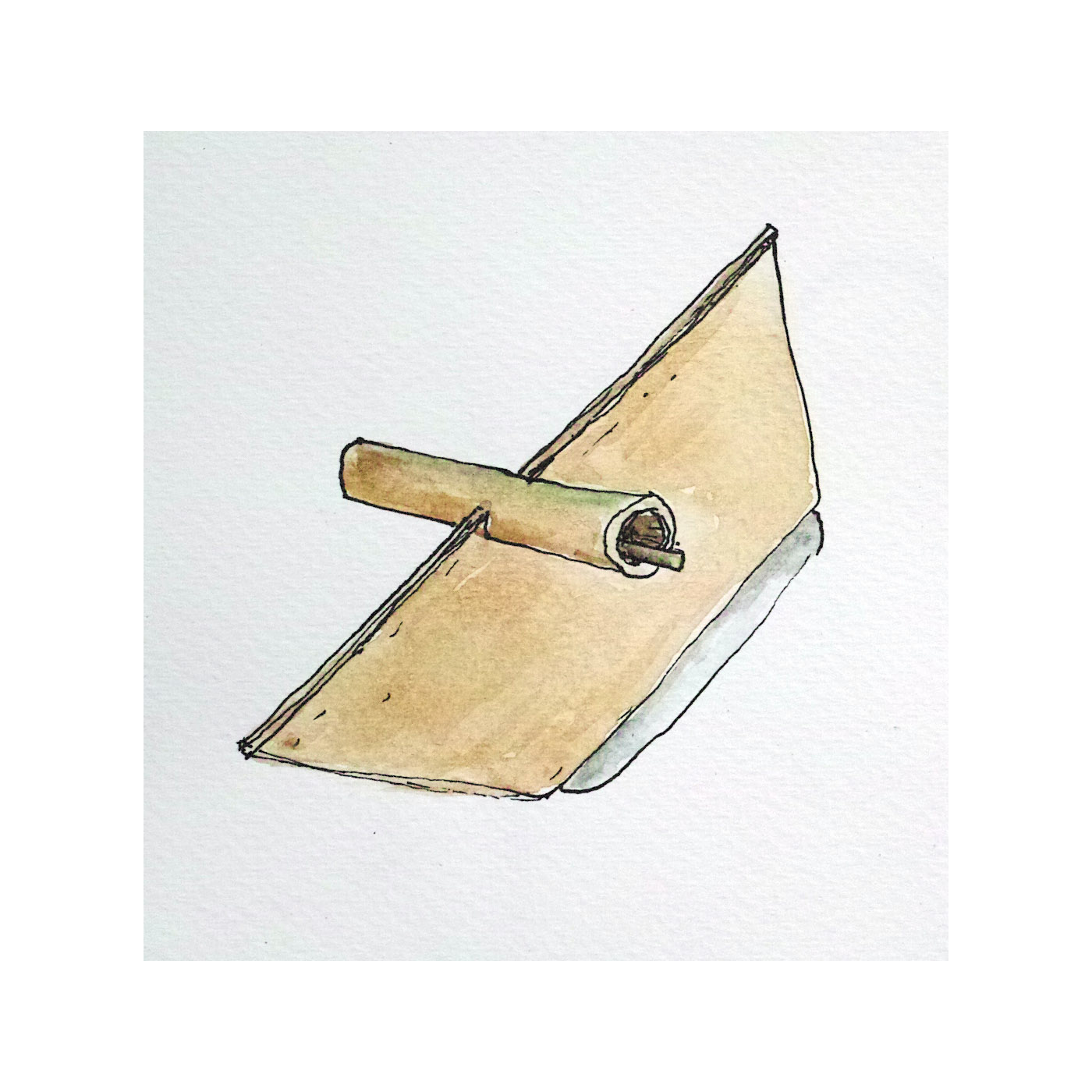
Kae (Southern Thai Rice-Harvesting Finger Knife) — a 5-6 cm Steel Blade Set in a Trapezoid Board, a Crosswise Bamboo Grip, Cutting Rice One Panicle at a Time
แกะ (kae) is the harvesting tool of southern Thai rice farmers, cutting the rice one panicle at a time. It suits the tall local varieties that lodge flat and ripen unevenly; the broad fields of the Central Plains use the sickle to cut many stalks at once.
This blueprint makes a real kae to the sizes in the source.
Beginner
About 1-2 hours
Instructions
1
1
Real sizes
Real sizes
Loading Jupyter Notebook...
2
2
Harvesting tools, before it
Harvesting tools, before it
A sickle cuts rice by the handful; the kae cuts one panicle at a time so no grain is dropped.
3
3
Read from the source
Read from the source
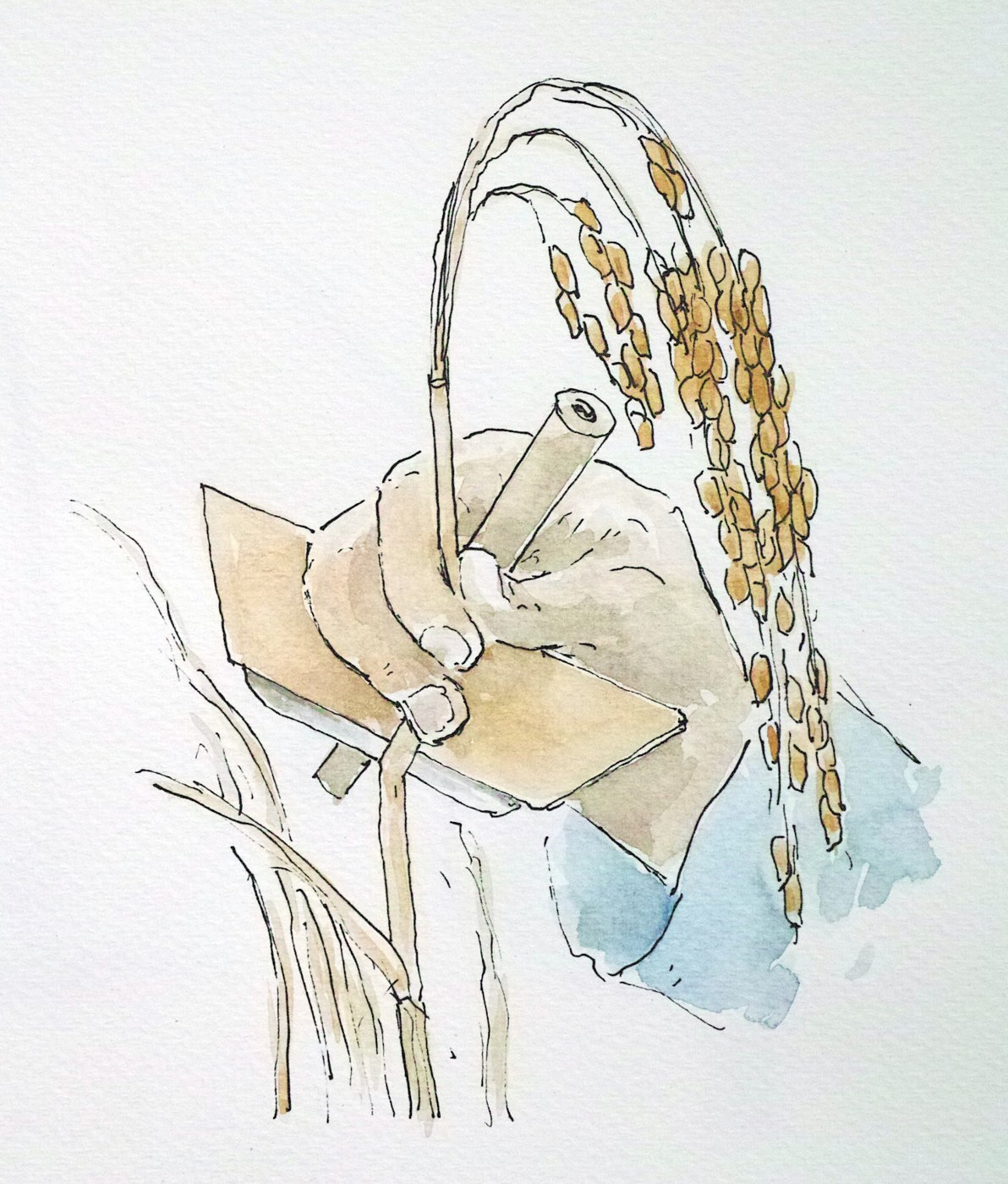
"Put the kae between the middle and ring fingers; with the forefinger and thumb, hold a panicle against the blade and cut one panicle at a time." (Sirindhorn Anthropology Centre, author วุฒิชัย เพชรสุวรรณ (Wutthichai Phetsuwan), CC BY 4.0)
4
4
Board
Board
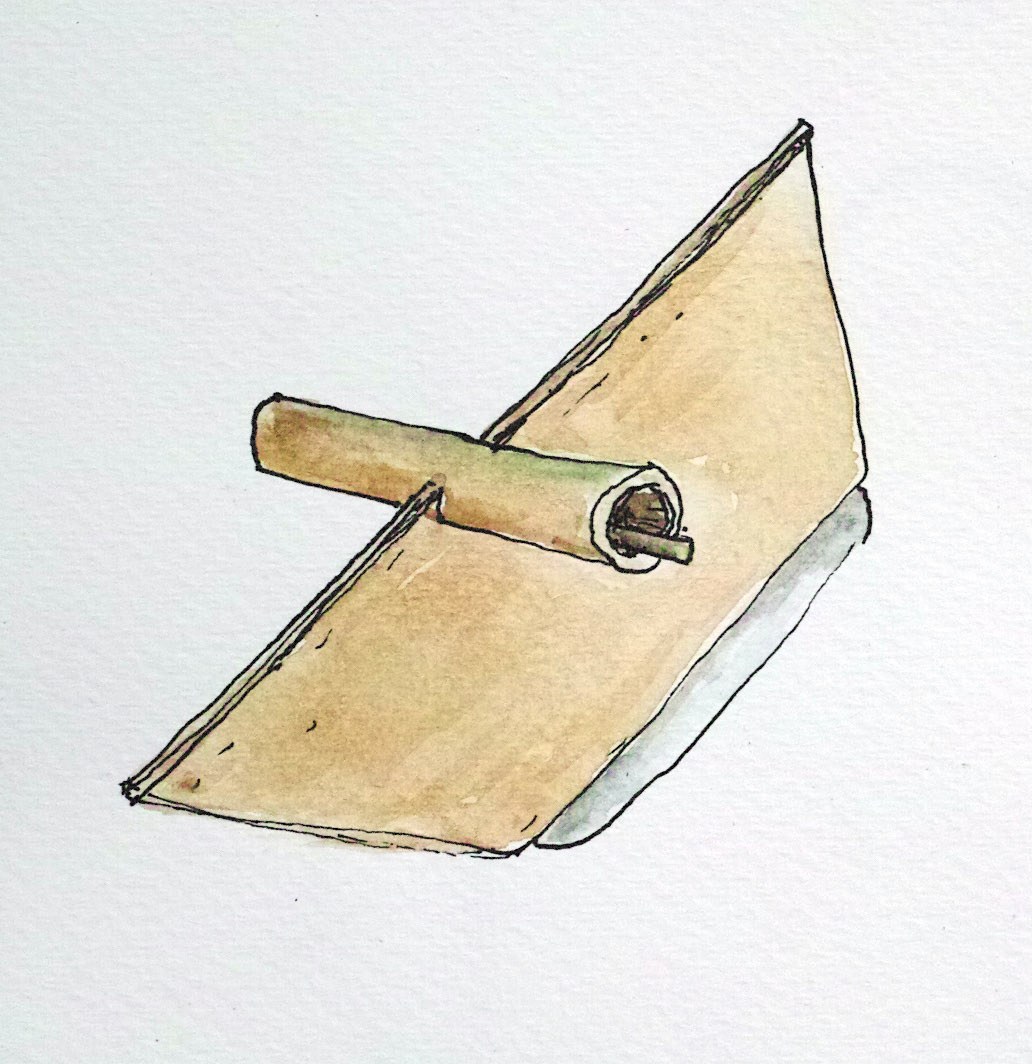
Cut hardwood or light wood, such as tin pet (Alstonia) or khe, into a trapezoid 4 cm wide and 0.5 cm thick, one side 5-6 cm long for the blade and the other 8-9 cm long for the grip.
Materials for this step:
 Board1 piece
Tools needed:
 Hand Saw
 Knife
Knife5
5
Blade
Blade
Use a hardened steel blade 5-6 cm long with two pointed tangs, and hammer the tangs into the short side of the board. Beware of the blade's edge.
Tools needed:
 Hammer
6
6
Grip
Grip
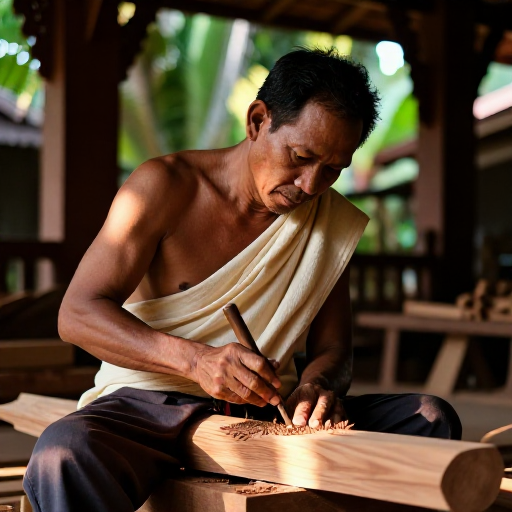
Cut phai ria bamboo about 7-8 cm long and fix it crosswise to the long side of the board as the grip.
Materials for this step:
 Bamboo Poles1 piece
7
7
Real photos
Real photos
Drawings of the kae and how it is held (Sirindhorn Anthropology Centre, author วุฒิชัย เพชรสุวรรณ (Wutthichai Phetsuwan), CC BY 4.0).
8
8
How it is used
How it is used
Slip the kae between the middle and ring fingers, hold a panicle against the blade with forefinger and thumb, and cut one at a time; gather the cut panicles in the other hand. When the hand is full, set them down to tie into a liang bundle, then store them in the rice barn or stack. Beware of the blade's edge.
9
9
Troubleshooting
Troubleshooting
Troubleshooting the kae.
Flow
Loading...
10
10
History and limits
History and limits
Southerners revere Mae Phosop and hold rice sacred; harvesting with the kae drops no grain. Songkhla's well-known kae came from the smithies of Tambon Bo Yang and Ban Bo Sa, now closed as combine harvesters took over. Beware of the blade's edge.
Source: Sirindhorn Anthropology Centre, Traditional Objects of Everyday Use database, "แกะเก็บข้าว", author วุฒิชัย เพชรสุวรรณ (Wutthichai Phetsuwan), ภาคีคนรักเมืองสงขลาสมาคม, Songkhla (CC BY 4.0 licence).
**Limits** The source does not say how the blade is forged, and there is no listing for the steel blade, so it is named in the text.
Related Blueprints
These blueprints share knowledge with this one — techniques, materials, or principles that connect them in the learning graph.

CC0 Public Domain
This blueprint is released under CC0. You are free to copy, modify, distribute, and use this work for any purpose, without asking permission.
Support the Maker by purchasing products through their Blueprint where they earn a Maker Commission set by Vendors, or create a new iteration of this Blueprint and include it as a connection in your own Blueprint to share revenue.