
Cotton Picking and Processing — Gujarat's Cotton Farming
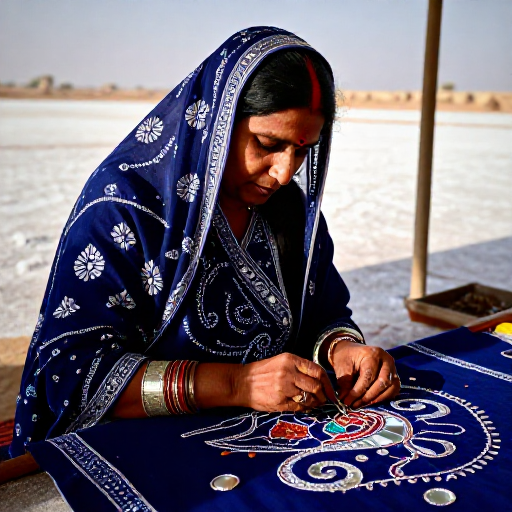
Gujarat is India's largest cotton-producing state, accounting for approximately 35% of the country's total cotton production. This blueprint explains the complete process of hand-picking cotton (Gossypium) and traditional ginning (separating fiber and seeds using a charkhi) in Gujarat.
In Gujarat, mainly Gossypium hirsutum (American Upland cotton) and Gossypium arboreum (desi cotton) are cultivated. Cotton is sown in the kharif season (June-July) and bolls open from October to January. The raw seed cotton is called 'kapas'. This guide covers the process in 12 steps from plant identification to harvest storage.
Instructions
Identify the cotton plant
Identify the cotton plant
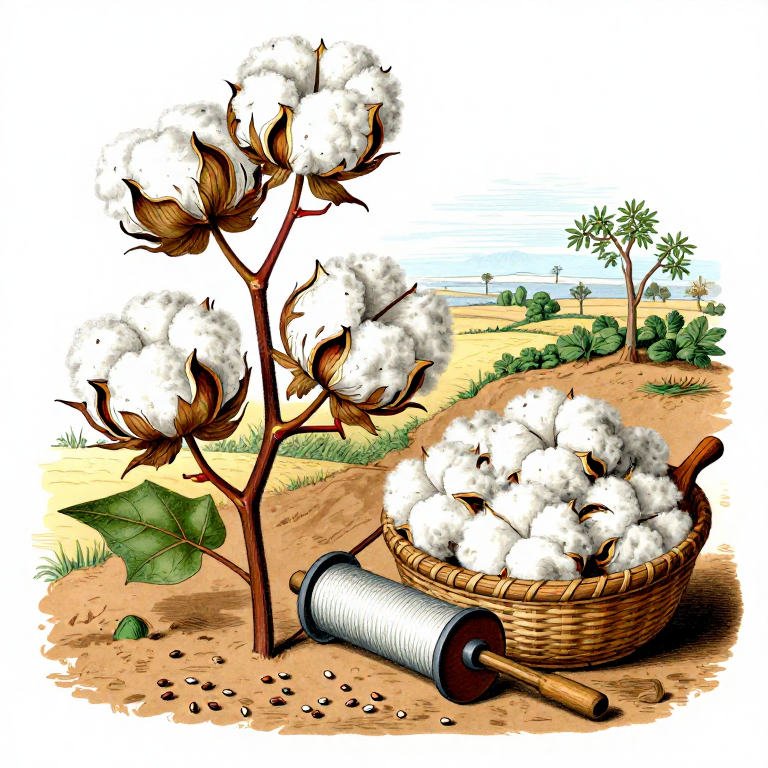
Cotton (Gossypium) is a plant of the Malvaceae family. Two main species are cultivated in Gujarat: Gossypium hirsutum (American Upland, accounting for more than 90% of India's total cotton area) and Gossypium arboreum (Desi cotton, short-stapled but more durable). The plant grows 1-1.5 meters tall, leaves are three to five-angled, and flowers are yellow-white in color which transform into fruit (boll). When the boll matures, it opens and the white fiber inside becomes visible.
Determine the appropriate time for picking
Determine the appropriate time for picking
In Gujarat, cotton is sown in the kharif season during June-July (at the beginning of the monsoon). Cotton bolls start opening 150-180 days after sowing, that is during October to January. Not all bolls on the plant mature together — therefore 3-4 pickings have to be done in one season. The first picking is usually done in October-November, and the last in January-February. Pick early in the morning after the dew has dried — wet cotton increases in weight and quality decreases.
Identify Open Cotton Bolls
Identify Open Cotton Bolls
Pick only fully open cotton bolls. An open boll splits into three to five locules and the white fiber inside swells and comes out. Do not pick green, half-open, or yellow bolls — these are immature and the fiber quality will be poor. Keep diseased bolls (brown, black-spotted) separate — do not mix with healthy fiber.
Hand Method of Picking
Hand Method of Picking
Grasp the lint from the open boll with your fingers and pull. The lint should come out easily — do not use excessive force. Be careful not to break the dry parts of the boll (bract, burr) — this debris mixes with the lint and reduces the grade. Use both hands: hold the stem with one hand and pick the lint with the other hand. A skilled picker can pick 30-40 kg of cotton per day.
Tools needed:
 Cotton Picking Bag (shoulder sling)
Collect picked cotton
Collect picked cotton
Fill the picked cotton into a shoulder-hung picking bag. When the bag is full, empty it into a large burlap sack. Do not compress the cotton — excessive pressure tangles the fibers. Ensure that leaves, twigs, and dust do not mix with the picked cotton. Keep wet or dew-laden cotton separate — moist cotton has a higher risk of developing mold.
Materials for this step:
 Jute Collection Sack4 pieces
Tools needed:
Cotton Picking Bag (shoulder sling)Dry in the sun
Dry in the sun
Spread the picked cotton in thin layers on a clean drying platform or palm mat. Dry in direct sunlight for 2-3 days, turning 2-3 times a day for uniform drying. The moisture content should reduce to 8-10%. Cotton with excess moisture breaks during ginning and develops fungus in storage. Cover in the evening or when it rains. Sun drying in open areas of Gujarat is common — yields are 1500-2000 kg cotton per hectare.
Materials for this step:
 Tarpaulin Sheet1 piece
Tools needed:
 Drying Platform
Remove trash from cotton
Remove trash from cotton
From dried cotton, manually pick out leaves, twigs, dried burr parts, and other trash. This process is called 'cleaning' or 'trash removal'. Clean cotton fetches 5-10% higher prices in the market. Keep stained or diseased cotton bolls separate — they reduce the grade.
Tools needed:
 Sorting Table
Ginning with a churki (separating lint and seed)
Ginning with a churki (separating lint and seed)
Cotton (kapas) = lint + seed. Ginning means separating lint (lint) from seed (seed). In the traditional Gujarati method, a 'churki' (churki) is used — these are two wooden rollers that rotate in opposite directions to each other. Feed cotton between the two rollers — lint comes out ahead and seed remains behind. With a hand churki, 5-8 kg of cotton can be ginned per day. The modern roller gin works on this same principle.
Materials for this step:
 Dried Kapas (seed cotton)5 kg
Tools needed:
 Churki Hand Roller Gin
Fluff the cotton
Fluff the cotton
After ginning, cotton is compressed and tangled. Traditionally, 'dhunai' (bow carding) is used — a large wire bow is struck against a pile of cotton. The vibration of the wire loosens and fluffs the fibers. This process aligns the fibers parallel, removes knots, and separates any remaining fine waste. Fluffed cotton is light, soft, and ready for carding.
Tools needed:
 Dhunai Bow (cotton carding bow)
Check the quality of fiber
Check the quality of fiber
The length of cotton fiber (staple) determines quality. Short staple: less than 21 millimeters — for coarse fabric. Medium staple: 22-25 millimeters — for ordinary fabric. Long staple: 26-32 millimeters — for high quality fabric. To check fiber length, take a few fibers and stretch them — long fibers stretch easily and are stronger. In Gujarat, cotton with medium and long staple is mainly grown.
Tools needed:
 Measuring Ruler
Bundle the cotton in bales
Bundle the cotton in bales
Press the ginned cotton tightly into clean cloth bales. Traditionally, hand pressing creates 20-30 kilogram bales. Bind each bale securely with rope or cloth strips. Write the weight, grade (fiber length), and date on each bale. Also store cottonseed separately — it is used for cottonseed oil and animal feed (oilcake).
Materials for this step:
 Clean Cotton Baling Cloth2 pieces
 Binding Rope5 meters
Storage
Storage
Store dried runi seeds in a dry, well-ventilated warehouse. Keep the seeds elevated from the ground — place them on wooden planks or platforms. Keep away from moisture — if humidity exceeds 8-10%, fungus and deterioration occur. Keep the warehouse clean for protection from rats and insects. Properly stored runi maintains quality for many months. Farmers in Gujarat sell cotton in the APMC (Agricultural Produce Market Committee) market.
Tools needed:
 Wooden Storage Platform
Materials
5- 4 piecesPlaceholder
- 1 piecePlaceholder
- Placeholder
- 2 piecesPlaceholder
- 5 metersPlaceholder
Tools Required
7- Placeholder
- Placeholder
- Placeholder
- Placeholder
- Placeholder
- Placeholder
- Placeholder
This blueprint makes

CC0 Public Domain
This blueprint is released under CC0. You are free to copy, modify, distribute, and use this work for any purpose, without asking permission.
Support the Maker by purchasing products through their Blueprint where they earn a Maker Commission set by Vendors, or create a new iteration of this Blueprint and include it as a connection in your own Blueprint to share revenue.