ART
BEAUTY & WELLNESS
CRAFT
CULTURE & HISTORY
ENTERTAINMENT
ENVIRONMENT
FOOD & DRINKS
REVERSE ENGINEERING
SCIENCES
SPORTS
TECHNOLOGY
WEARABLES
English
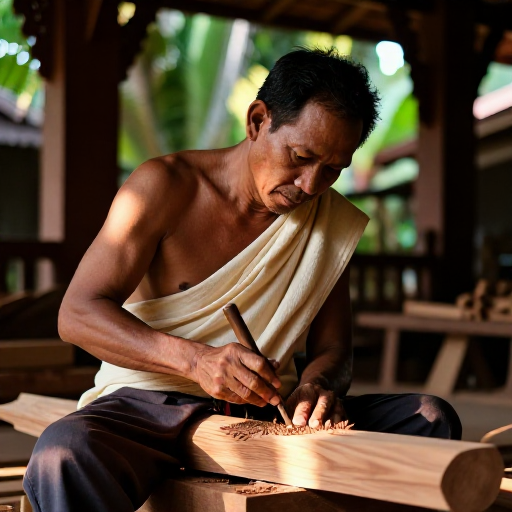

Kha Yang (Bamboo Stilts, Kok Kek, Thok Thek) — Two 2-5 m Bamboo Poles with a Branch Stub or Hardwood Peg Wrapped in Cloth as the Footrest; 50 m Races, Ages 10 and Up
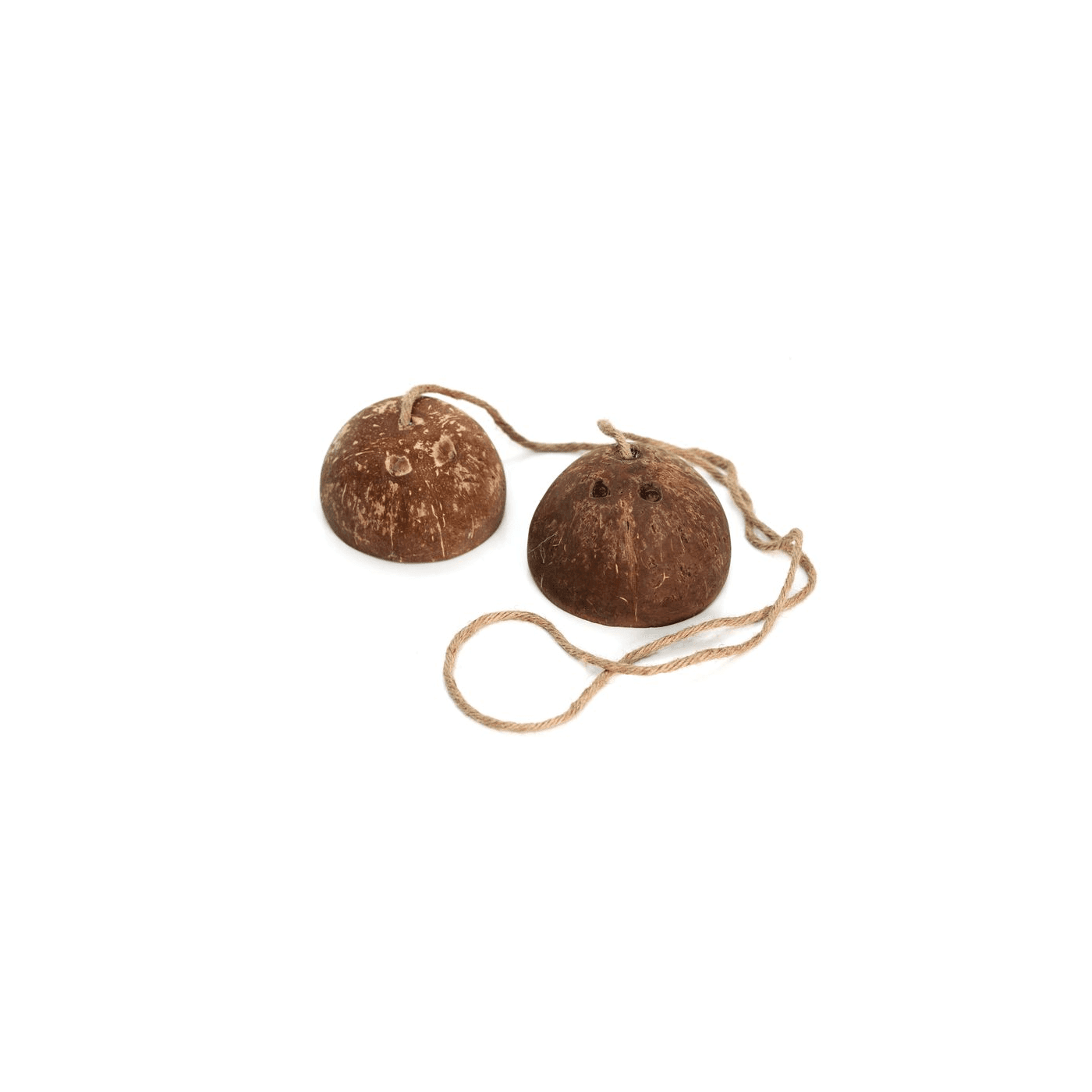
ขาหยั่ง (kha yang; also kha yang, kok kek, thok thek, kong keng) is a folk toy: two bamboo poles serve as walking legs, like artificial legs, raising the walker higher. Like walking on coconut shells, they were used to walk through mud.
This blueprint makes real kha yang to the sizes in the source.
Intermediate
About 1-2 hours
Instructions
1
1
Real sizes
Real sizes
Loading Jupyter Notebook...
2
2
Coconut-shell walking, before it
Coconut-shell walking, before it
The i ko lifts the walker a little off the ground on coconut shells; the kha yang lifts the walker high on long bamboo poles, for walking through mud.
3
3
Read from the source
Read from the source
"Kha yang is usually played by children aged 10 and over; small children who play may get hurt." (Sirindhorn Anthropology Centre, author not named, CC BY 4.0)
4
4
Bamboo legs
Bamboo legs
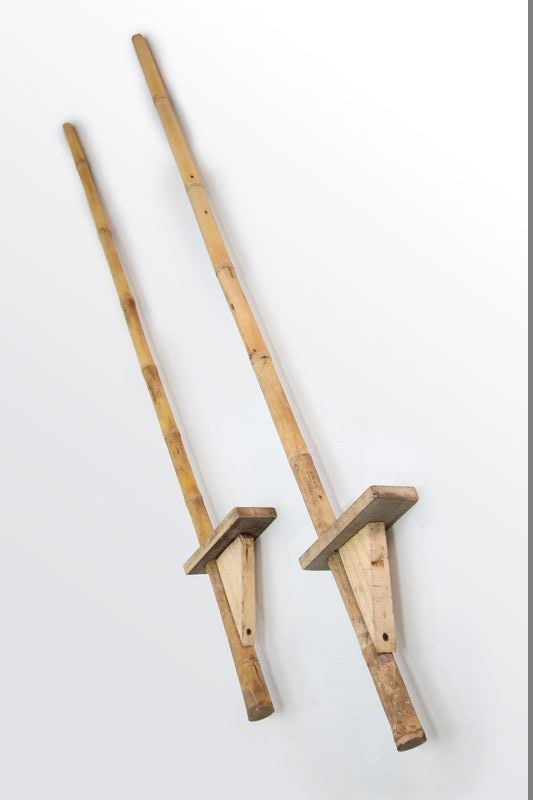
Choose 2 strong bamboo poles of suitable size, about 2-5 metres long, and shave them smooth, leaving a strong branch stub on each to stand on.
Materials for this step:
 Bamboo Poles1 piece
Tools needed:
 Knife
Knife5
5
Footrest pegs
Footrest pegs
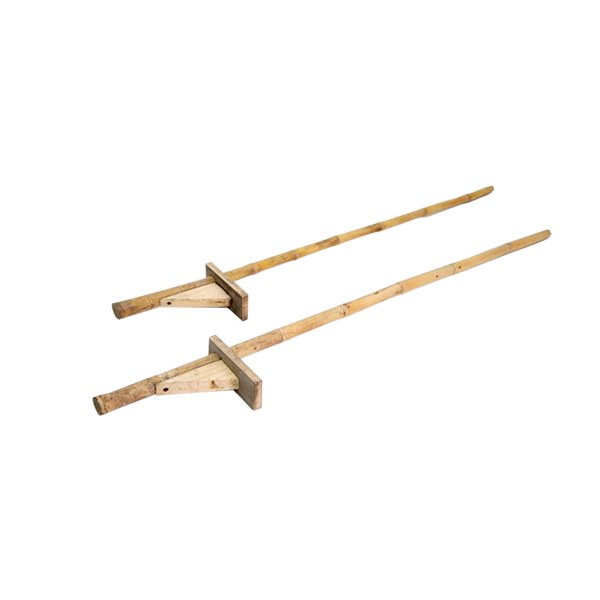
If the branch stubs are not strong enough, drill holes in the poles at equal heights and fit hardwood pegs or pins to stand on.
Materials for this step:
 Hardwood Block1 piece
6
6
Wrap in cloth
Wrap in cloth
Wrap the wooden pegs in cloth so they do not hurt the feet.
Materials for this step:
 Fabric1 piece
7
7
Real photos
Real photos
Photos of real kha yang (Sirindhorn Anthropology Centre, author not named, CC BY 4.0)
8
8
How to play
How to play
Step onto the pegs one foot at a time, then walk or run as fast as you can. Races run 50 metres from the start line to the finish; players must stay on the poles all the way, and anyone who falls goes back to the start. The finish is judged by the line of the body crossing it.
9
9
Troubleshooting
Troubleshooting
Troubleshooting the kha yang.
Flow
Loading...
10
10
History and limits
History and limits
Rural households tethered cattle and buffalo under the house, making the ground dirty, so people walked on coconut shells; later kha yang came into use where the mud was deeper. The name thok thek comes from "thok" (long) and "thek" (gangling). Small children who play may get hurt.
Source: Sirindhorn Anthropology Centre, Traditional Objects of Everyday Use database, "โก๋งเก๋ง", author not named (CC BY 4.0 licence).
**Limits** The source gives no height for the footrests and no peg size.
Materials
3- 1 piecePlaceholder
- 1 piecePlaceholder
- 1 piecePlaceholder
Related Blueprints
These blueprints share knowledge with this one — techniques, materials, or principles that connect them in the learning graph.
CC0 Public Domain
This blueprint is released under CC0. You are free to copy, modify, distribute, and use this work for any purpose, without asking permission.
Support the Maker by purchasing products through their Blueprint where they earn a Maker Commission set by Vendors, or create a new iteration of this Blueprint and include it as a connection in your own Blueprint to share revenue.