ART
BEAUTY & WELLNESS
CRAFT
CULTURE & HISTORY
ENTERTAINMENT
ENVIRONMENT
FOOD & DRINKS
REVERSE ENGINEERING
SCIENCES
SPORTS
TECHNOLOGY
WEARABLES
Translated

ครกกระเดื่อง (krok kradueang) — a Long Beam on Two Posts: Tread on Its End, and the Pestle Drops to Pound Rice in a Wooden Mortar
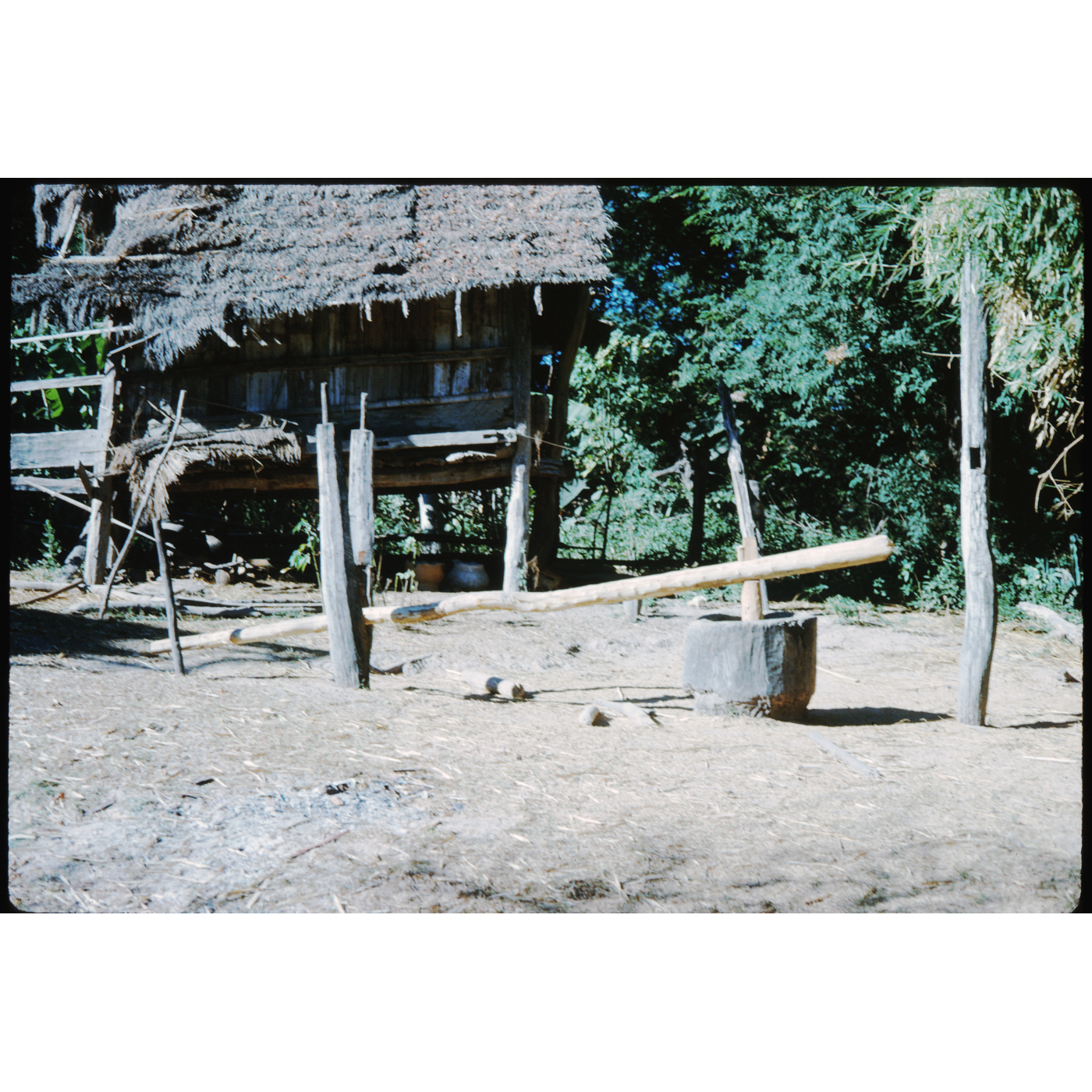
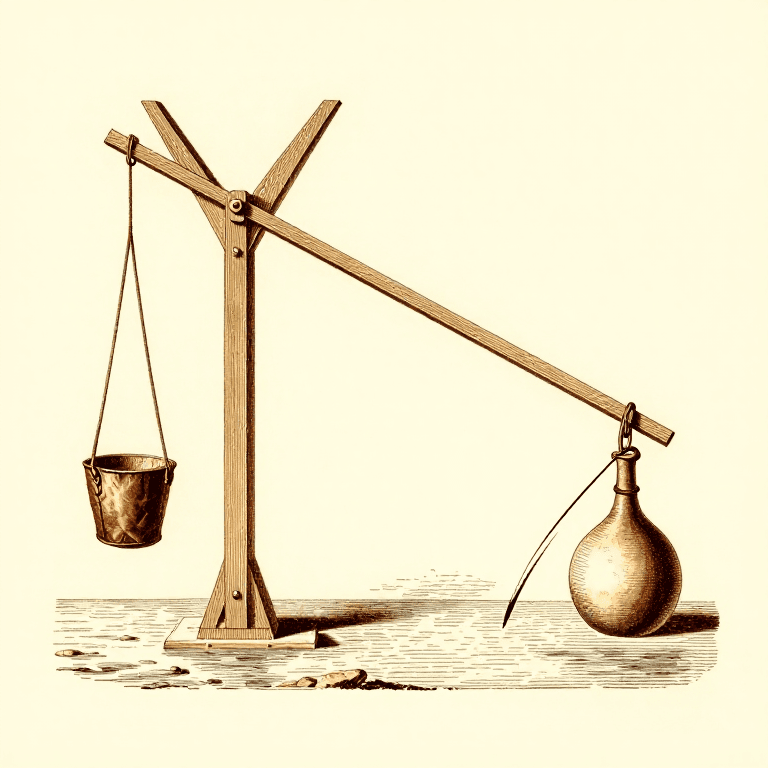
ครกกระเดื่อง (krok kradueang) is a folk tool for pounding rice, beans, maize and flour; it is also called krok kradok or mong.
This blueprint builds a real krok kradueang from wood, to the sizes in the source.
Beginner
Several days (digging the mortar and setting the posts)
Instructions
1
1
Real sizes
Real sizes
Loading Jupyter Notebook...
2
2
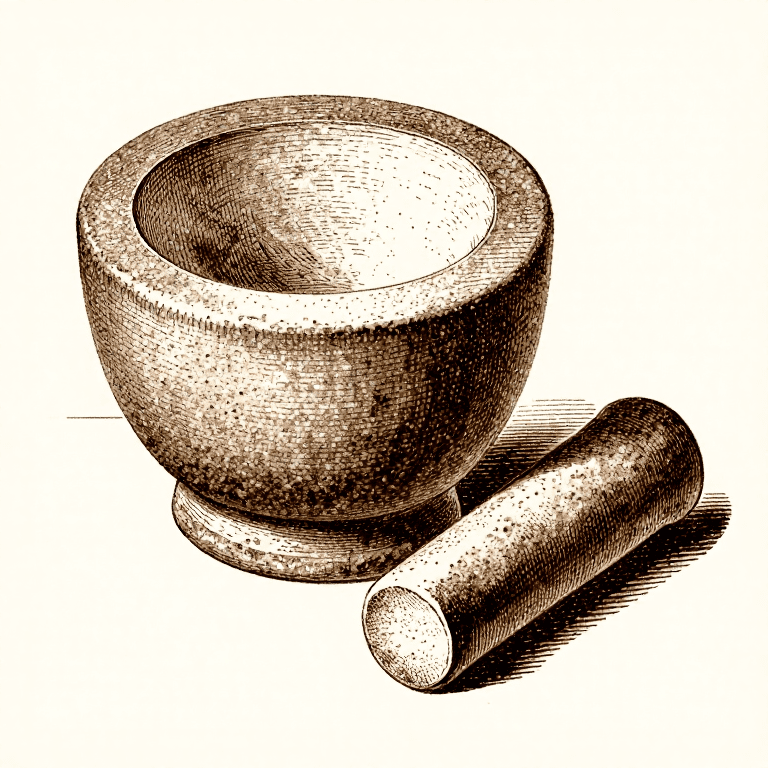
Mortar and pestle before it
Mortar and pestle before it
A stone mortar and pestle is pounded by hand; the krok kradueang uses a beam and the weight of the foot instead of the arms.
3
3
Read from the source
Read from the source
"To use it, set the wooden mortar in line with the pestle. Once rice, or maize on the cob, is put into the bowl, press with the foot on the end of the beam on the side held by the two posts; the pestle rises like playing on a seesaw, and when the foot eases off the pestle drops into the bowl. Pounding takes two people working together: one treads, and the other stirs or turns the rice in the bowl so that it is pounded evenly." (Sirindhorn Anthropology Centre, database of traditional everyday objects)
4
4
The mortar
The mortar
Cut a large log about 50-60 cm high and hollow its top into a deep bowl that holds about one thang of paddy.
Materials for this step:
 Log1 piece
Tools needed:
 Adze
Adze Chisel Set - Wood
 Wooden Mallet
5
5
Posts and axle
Posts and axle
Set two posts in line and bury them firmly in the ground. Cut a hole or notch in the middle of each post with a chisel and pass a wooden axle through both, parallel to the ground.
Materials for this step:
 Wooden Stake2 pieces
 Hardwood Dowels1 piece
Tools needed:
 Auger
Auger6
6
Beam and pestle
Beam and pestle
Make a beam 3-4 metres long, bore a hole near one end and fit the pestle in it for pounding. Fix the beam to the axle at the posts and set the mortar under the pestle.
Materials for this step:
 Teak Lumber1 piece
 Hardwood Block1 piece
Tools needed:
 Hand Saw
7
7
Real photos
Real photos
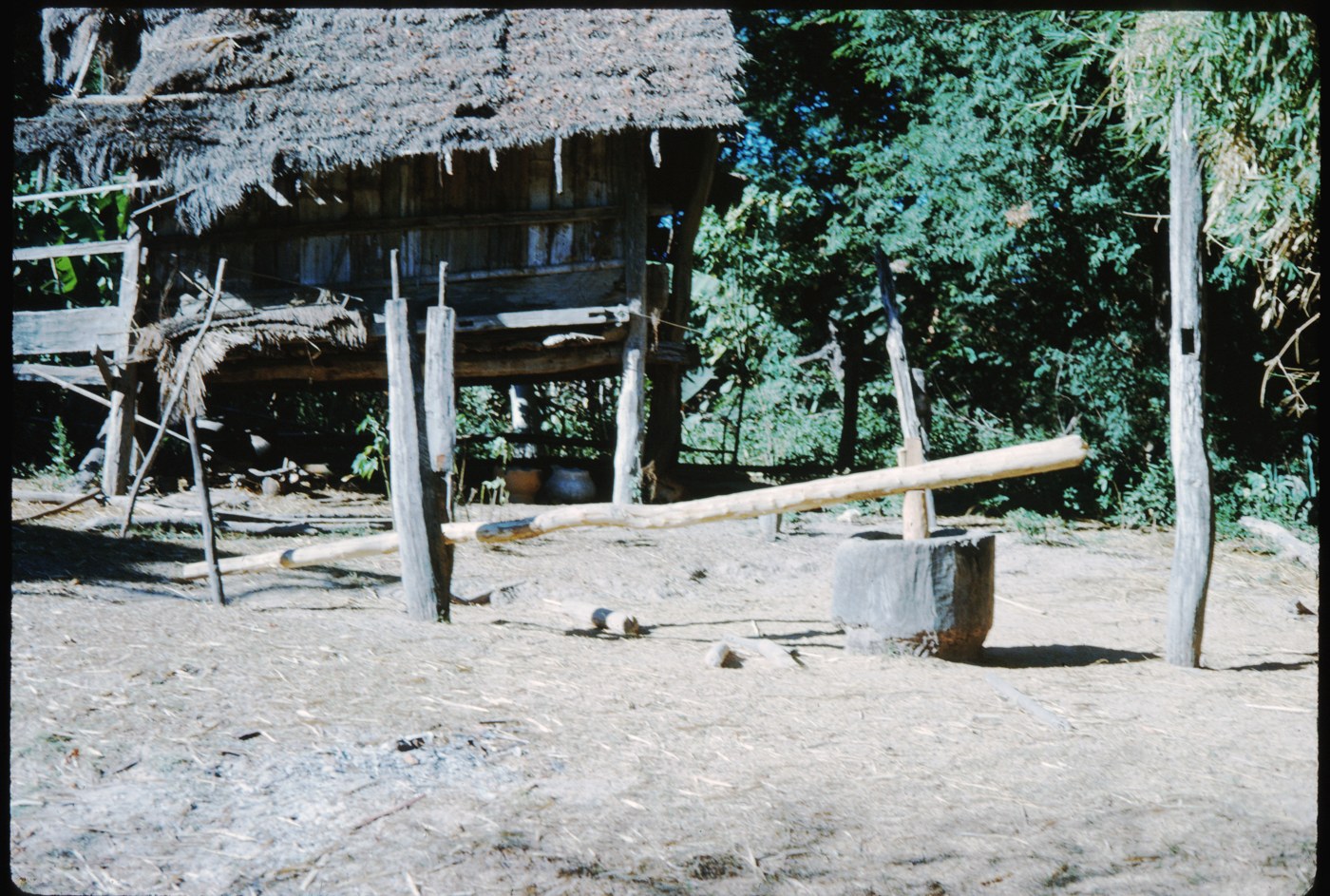
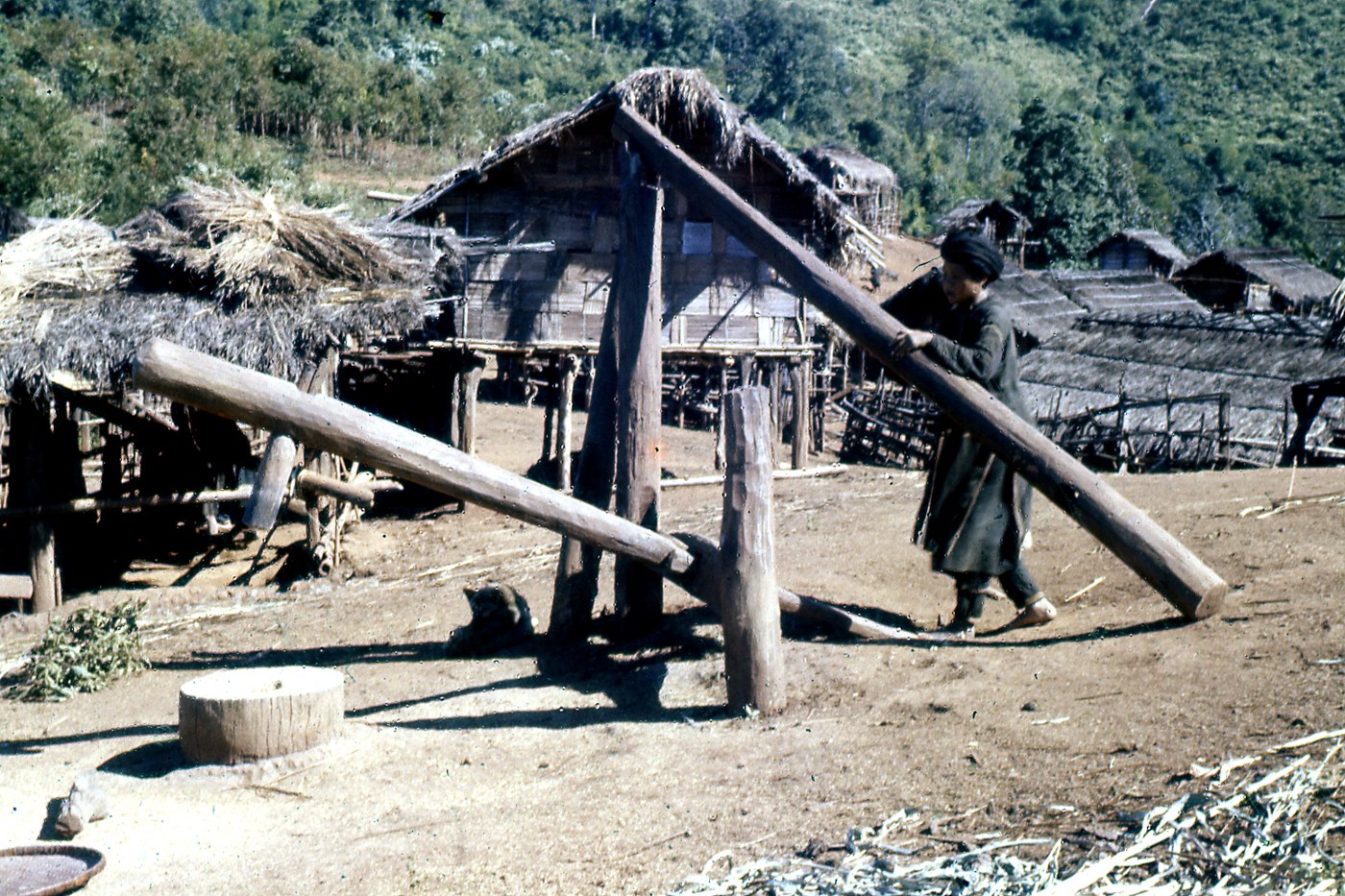
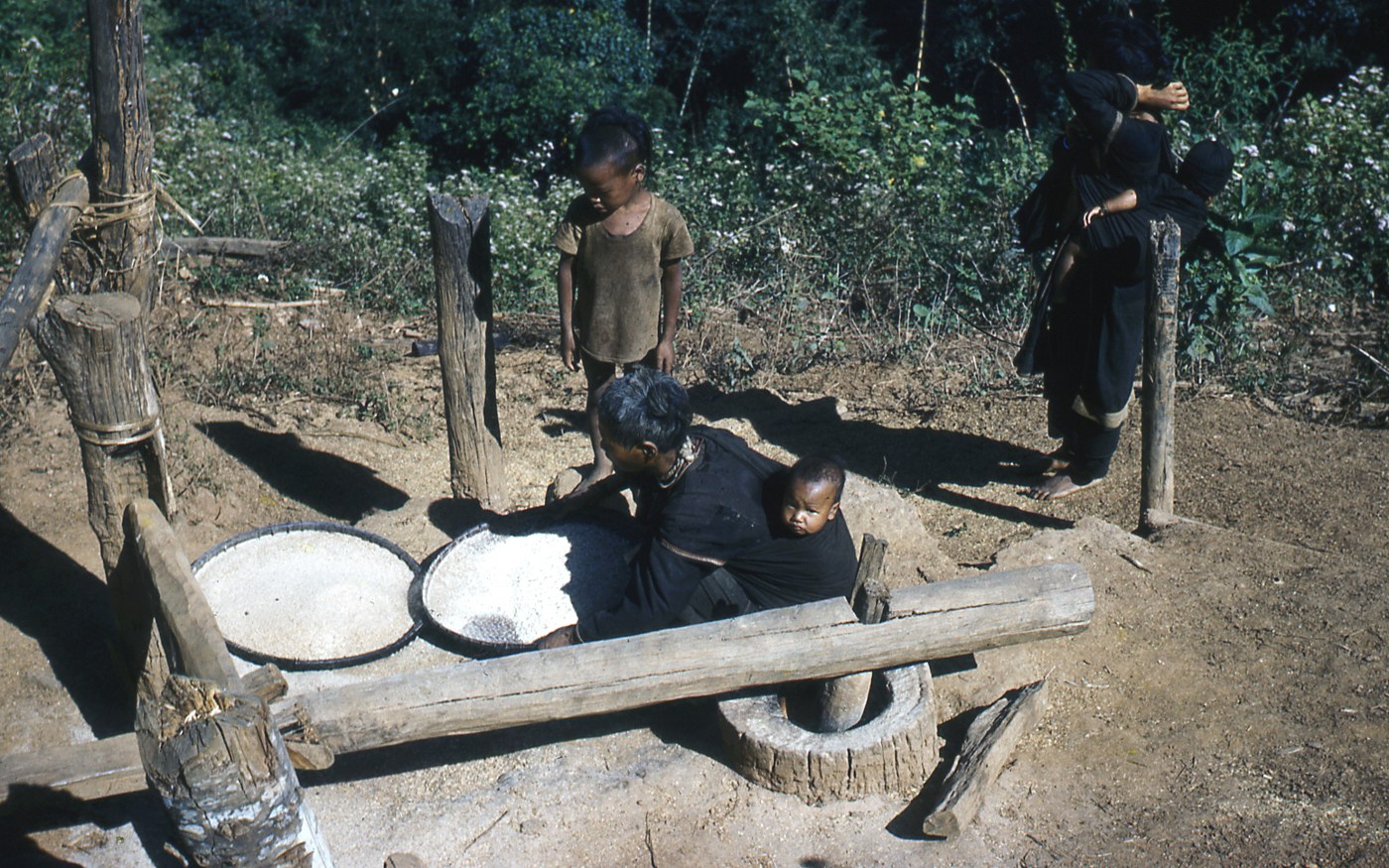
Real photos of a ครกกระเดื่อง (krok kradueang) (Sirindhorn Anthropology Centre, author พิชชา ทองขลิบ (Phitcha Thongkhlip), CC BY 4.0)
8
8
How to use it
How to use it
Put the rice in the bowl. Tread on the end of the beam at the posts: the pestle rises like a seesaw. Ease off and the pestle drops into the bowl. It takes two people: one treads, the other stirs and turns the rice in the bowl. Mind your hands as the pestle drops, then winnow the rice in a flat basket.
9
9
Troubleshooting
Troubleshooting
Troubleshooting the krok kradueang.
Flow
Loading...
10
10
History and limits
History and limits
Today the krok kradueang is rarely used; it may still be found in ethnic communities such as the Lisu, Hmong and Akha. The pounded paddy is winnowed in a flat basket so the dust blows away, then the paddy, husks and grit are picked out before the milled rice is cooked.
Source: Sirindhorn Anthropology Centre, Traditional Objects of Everyday Use database, "ครกกระเดื่อง" (CC BY 4.0 licence).
**Limits** The source gives neither the spacing of the posts nor the position of the pestle on the beam; adjust them so it works.
Materials
5- 1 piecePlaceholder
- 2 piecesPlaceholder
- 1 piecePlaceholder
- Teak Lumber10% commission1 piecePlaceholder
- 1 piecePlaceholder
Related Blueprints
These blueprints share knowledge with this one — techniques, materials, or principles that connect them in the learning graph.




CC0 Public Domain
This blueprint is released under CC0. You are free to copy, modify, distribute, and use this work for any purpose, without asking permission.
Support the Maker by purchasing products through their Blueprint where they earn a Maker Commission set by Vendors, or create a new iteration of this Blueprint and include it as a connection in your own Blueprint to share revenue.