ART
BEAUTY & WELLNESS
CRAFT
CULTURE & HISTORY
ENTERTAINMENT
ENVIRONMENT
FOOD & DRINKS
REVERSE ENGINEERING
SCIENCES
SPORTS
TECHNOLOGY
WEARABLES
English

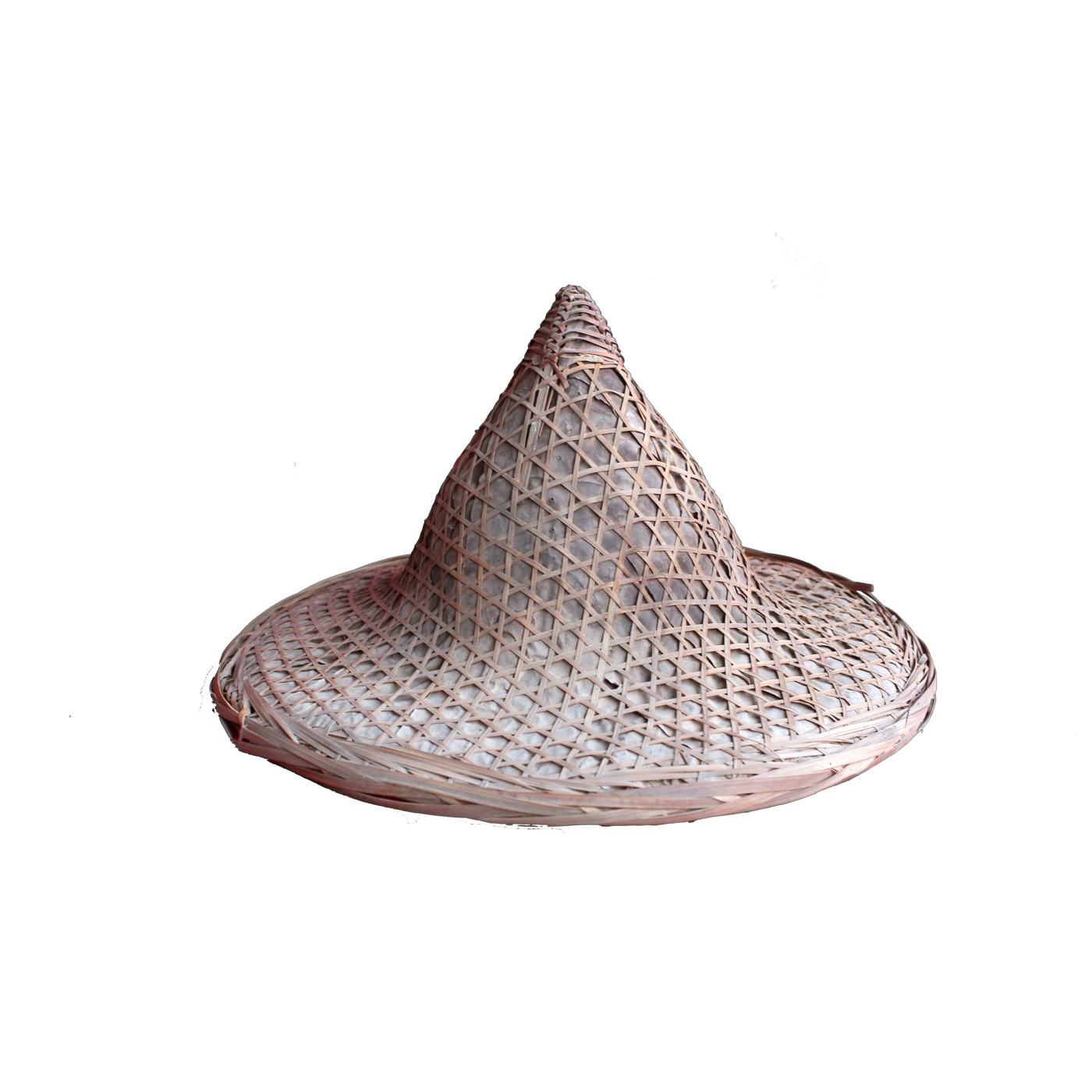
Kuai Loei (Chinese-Thai Bamboo-Leaf Hat) — a Wide, Pointed Hat, Two Woven Phai Si Suk Shells Pressing Cured Phai Tong Leaves, Coated with Yang Oil
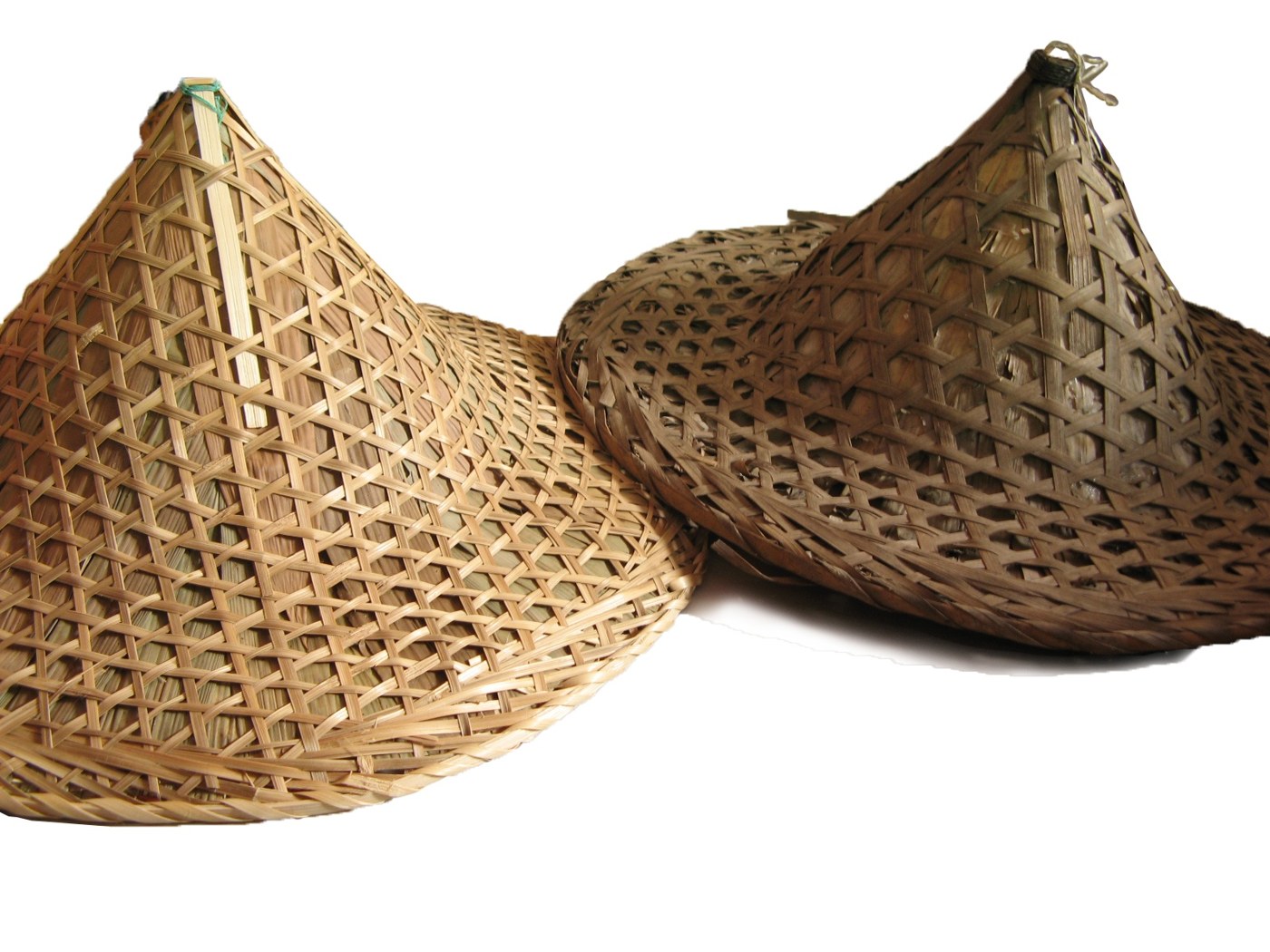
ก่วยเล้ย (kuai loei; also muak chek, kui loei) is a wide-brimmed, round, pointed hat against sun and rain. Chinese settlers in Thailand wore it paddling to sell goods and working their gardens; some used it to cover watermelons against insects.
This blueprint weaves a real kuai loei by the method of Pa Chaluai Chaichuangchot of Amphawa, as given in the source.
Intermediate
1 day of weaving (plus preparing materials)
Instructions
1
1
Size
Size
Loading Jupyter Notebook...
2
2
Open weaving, before it
Open weaving, before it
The kuai loei frame is woven in an open check like a chalom's mesh, but in two shells with bamboo leaves pressed between them.
3
3
Read from the source
Read from the source
"Curing builds up heat; the bamboo leaves turn yellow and fall from the branches, and are laid flat and kept, usable for as long as a year." (Sirindhorn Anthropology Centre, authors ประพีร์ภัทร พิเสฎฐศลาศัย (Praphiphat Phisetthasalasai) and นวลพรรณ บุญธรรม (Nuanphan Boontham), CC BY 4.0)
4
4
Cure the leaves and split the strips
Cure the leaves and split the strips
Cut branches of phai tong bamboo; old leaves last longer than young. Lay other leaves as a bed, put the bamboo leaves on, wrap them in leaves and weigh them down with a heavy log; cure until the leaves yellow and drop from the branches, then lay them flat to keep. Split phai si suk bamboo into thin, long strips with a thin knife, and soak them in water to soften before weaving.
Materials for this step:
 Bamboo Poles1 piece
Tools needed:
 Knife
Knife5
5
Weave frame and outer shell
Weave frame and outer shell
Weave the frame over a bo (mould) in an open check like a chalom's mesh, rising to a pointed crown on a round base. Weave the outer shell the same way with wider strips.
6
6
Press the leaves and rim
Press the leaves and rim
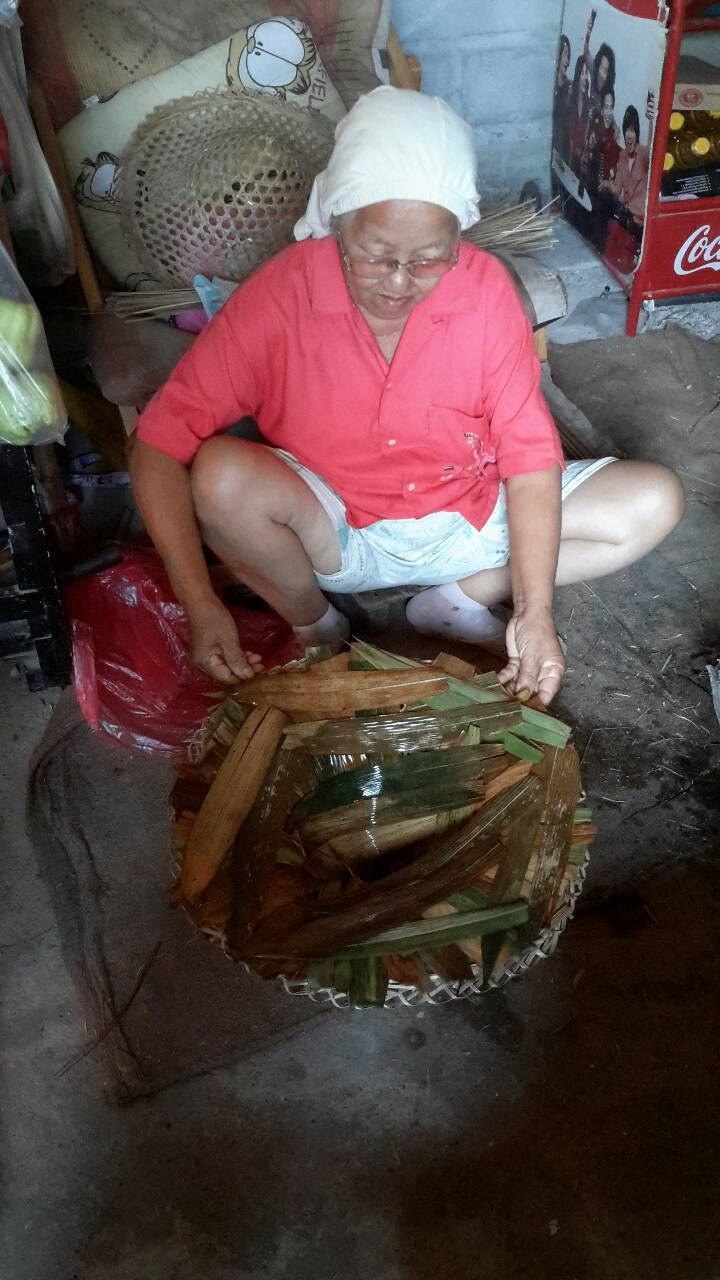
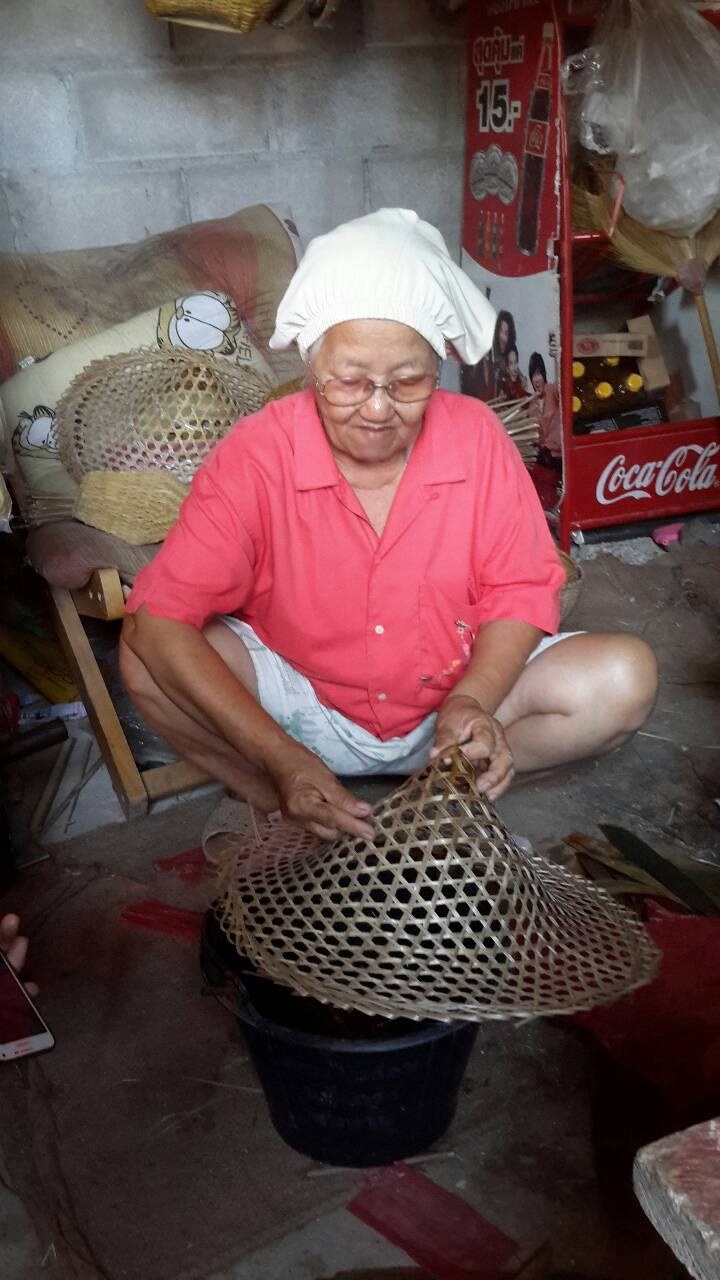
Lay wet paper overlapping all round the frame (Pa Chaluai now uses a plastic bag instead, to keep water out better), then lay soaked bamboo leaves over it, and press the outer shell on top. Bind the rim with strips. Fit the peak: two bamboo pieces bent and crossed into four legs and pushed in (or braid it from rattan or khla). Coat the outside with yang oil or wood finish, dry thoroughly, and add a chin strap.
Materials for this step:
 Paper1 piece
7
7
Real photos
Real photos
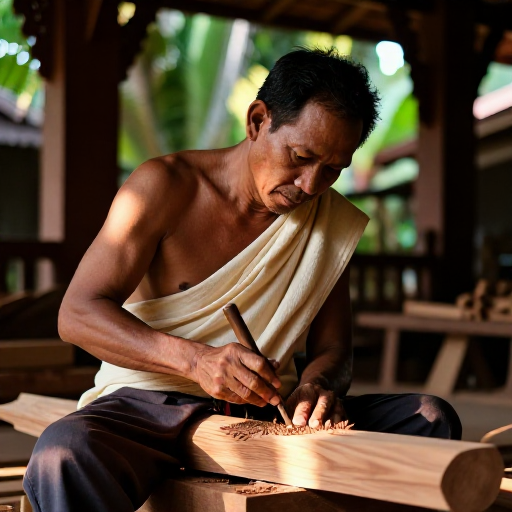
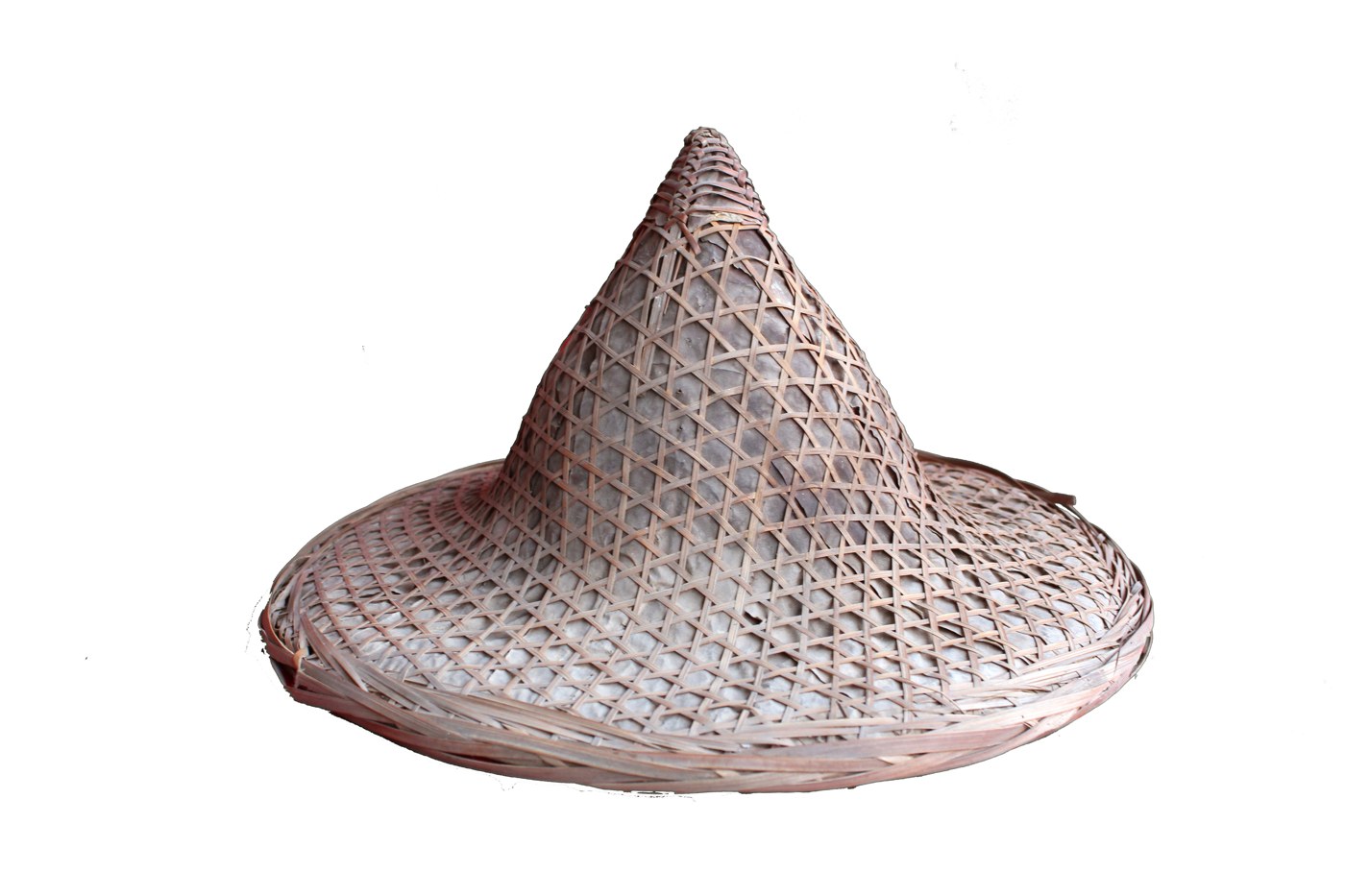
Photos of real kuai loei and of Pa Chaluai Chaichuangchot weaving one (Sirindhorn Anthropology Centre, authors ประพีร์ภัทร พิเสฎฐศลาศัย (Praphiphat Phisetthasalasai) and นวลพรรณ บุญธรรม (Nuanphan Boontham), CC BY 4.0).
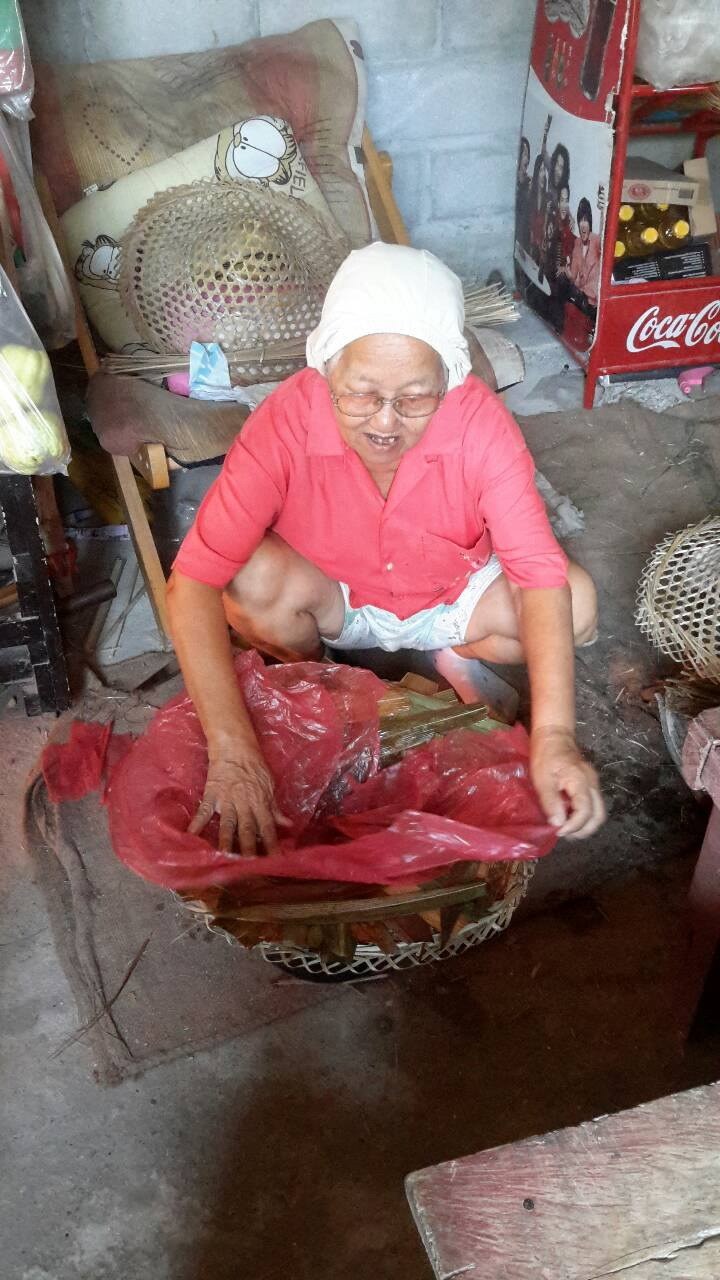
8
8
How it is used
How it is used
Wear it against sun and rain when gardening, trading or travelling, with the chin strap fastened so it does not blow off. Small ones can cover fruit, such as watermelons, against boring insects.
9
9
Troubleshooting
Troubleshooting
Troubleshooting the kuai loei.
Flow
Loading...
10
10
History and limits
History and limits
Pa Chaluai learned the kuai loei from her father, whose father came from China to grow vegetables in Nakhon Pathom; they once supplied Suphan Buri watermelon growers. Amphawa gardeners still favour it because it is light and lets heat out. The 24-mesh size is hard to weave and hardly anyone makes it now. Take care with the knife when splitting strips.
Source: Sirindhorn Anthropology Centre, Traditional Objects of Everyday Use database, "ก่วยเล้ย", authors ประพีร์ภัทร พิเสฎฐศลาศัย (Praphiphat Phisetthasalasai) and นวลพรรณ บุญธรรม (Nuanphan Boontham), Tang Siam Ha Museum, Samut Songkhram (CC BY 4.0 licence).
**Limits** The source gives no diameter for each size and no shape for the mould, and there is no listing for bamboo leaves or yang oil, so they are named in the text.
Related Blueprints
These blueprints share knowledge with this one — techniques, materials, or principles that connect them in the learning graph.
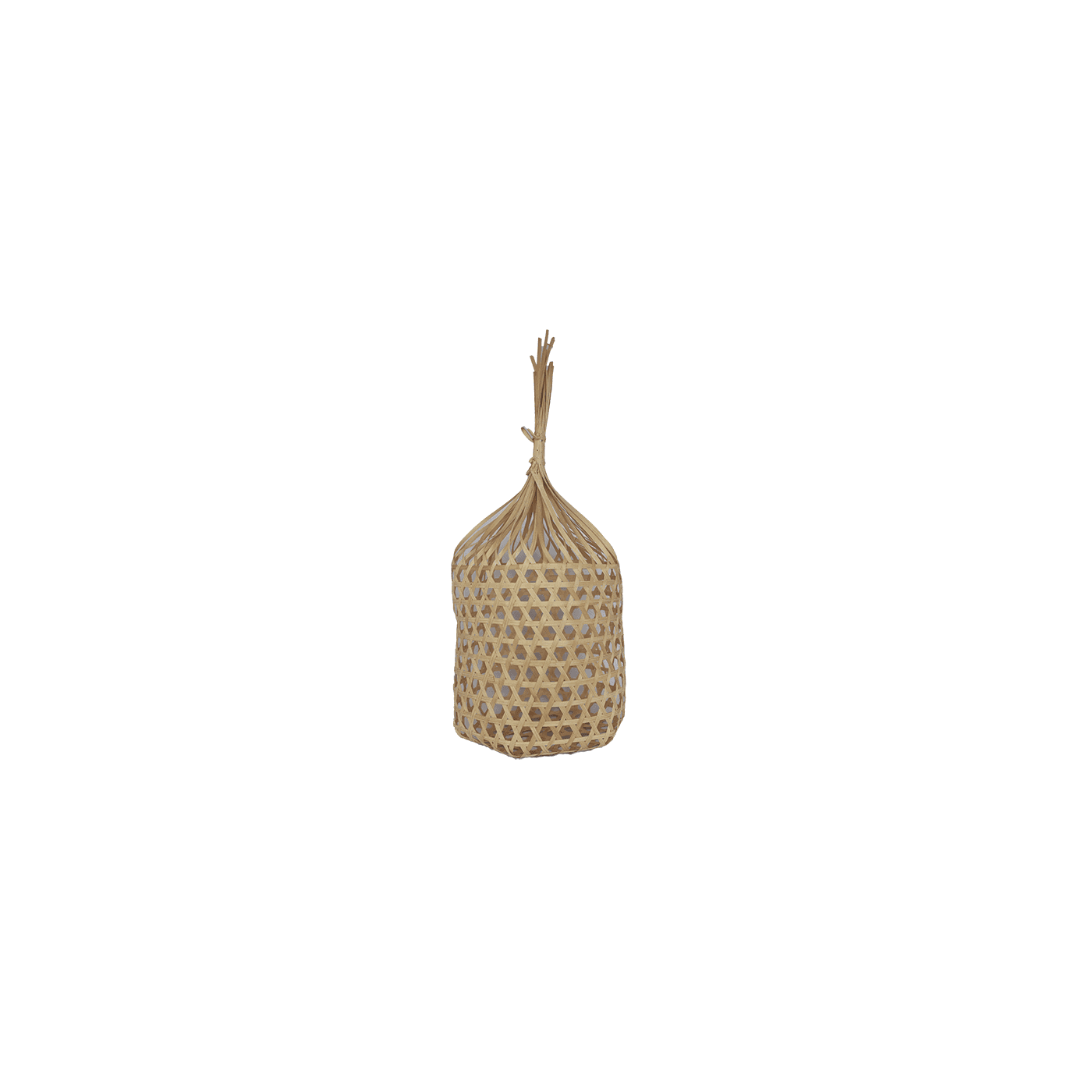
CC0 Public Domain
This blueprint is released under CC0. You are free to copy, modify, distribute, and use this work for any purpose, without asking permission.
Support the Maker by purchasing products through their Blueprint where they earn a Maker Commission set by Vendors, or create a new iteration of this Blueprint and include it as a connection in your own Blueprint to share revenue.